
Introduction
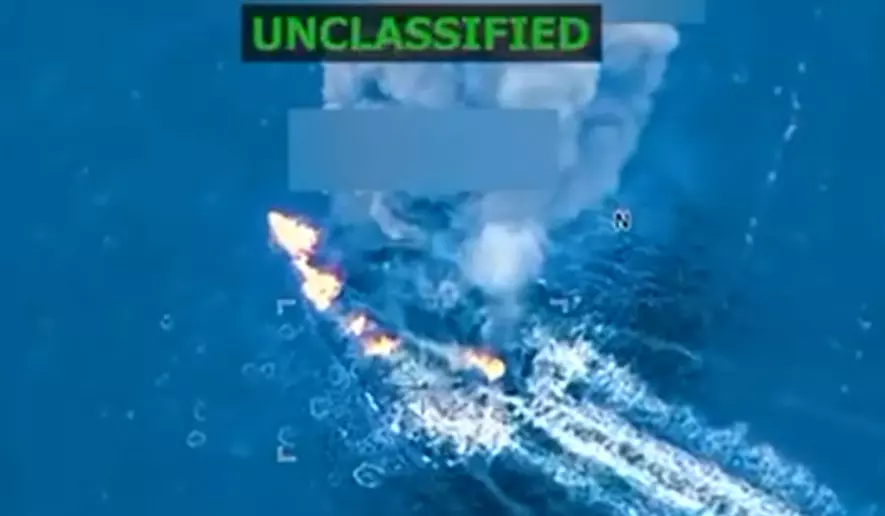
The Trump administration’s military campaign against alleged drug trafficking vessels in the Caribbean and Eastern Pacific has ignited one of the most contentious legal and ethical debates in recent U.S. foreign policy. Since September 2, 2025, at least 21 military strikes have killed 83 people on boats the administration claims were carrying drugs and operated by “narco-terrorists.” The controversy reached a critical point when CNN and other outlets reported that Defense Secretary Pete Hegseth ordered a second strike on September 2 to kill survivors clinging to a burning vessel—an action that Senator Mark Kelly (D-AZ) and other lawmakers have characterized as potentially constituting war crimes.
This article examines the central arguments on both sides of this profound debate: those who contend these strikes violate fundamental principles of law and morality, and those who defend them as necessary, lawful actions to protect American lives from an existential drug threat.
The “War Crime” Accusation: Core Arguments
Legal Framework Violations
Critics of the strikes argue they violate multiple established principles of both U.S. and international law:
1. Civilian vs. Combatant Status
The fundamental legal objection centers on whether drug traffickers can legitimately be classified as combatants in an armed conflict. John Bellinger, former legal adviser to the State Department and National Security Council, argues that drug traffickers’ actions “do not fit the accepted international definition of an armed conflict.” He emphasizes that “unlike Al Qaida, these groups are not engaged in an armed conflict with the United States and their members are not combatants.”
Many legal experts contend that suspected drug smugglers are civilians engaging in criminal activity, not enemy combatants. This distinction is critical because the Law of Armed Conflict (LOAC) permits killing enemy fighters even when they pose no immediate threat, but civilians can only be targeted in very limited circumstances. Democratic Senator Ruben Gallego of Arizona called the strikes “sanctioned murder,” while Republican Senator Rand Paul of Kentucky characterized them as “extrajudicial killings.”
2. The September 2 “Survivor Strike” Controversy
The most inflammatory allegation involves the September 2 incident, where, according to multiple sources speaking to CNN and The Washington Post, Defense Secretary Hegseth ordered personnel to “kill everybody” on the vessel. After the initial missile strike left at least two survivors clinging to the burning wreckage, a second strike was reportedly ordered specifically to kill these individuals.
Senator Mark Kelly stated unequivocally on CNN’s “State of the Union”: “If that is true, if what has been reported is accurate, I’ve got serious concerns about anybody in that chain of command stepping over a line that they should never step over. We are not Russia. We’re not Iraq. We hold ourselves to a very high standard of professionalism.”
The Former Judge Advocates General (JAGs) Working Group—comprising retired military legal advisers—issued a stark assessment: Hegseth’s order could constitute “war crimes, murder, or both.” They explained that even if the Trump administration’s “non-international armed conflict” designation were accepted, “orders to kill helpless, wounded combatants who are ‘hors de combat’ and defenseless are clear violations of the Laws of War and constitute war crimes.”
If the strikes are not considered part of an armed conflict, the group noted, “these orders to kill helpless civilians clinging to the wreckage of a vessel our military destroyed would subject everyone from [the defense secretary] down to the individual who pulled the trigger to prosecution under US law for murder.”
3. Geneva Conventions and the Law of Armed Conflict
Even accepting the administration’s armed conflict framework, critics argue the strikes violate core LOAC principles. Under the Geneva Conventions, wounded or incapacitated combatants who are “hors de combat” (out of combat) must be collected and cared for by either side. The deliberate killing of survivors unable to continue fighting would constitute a grave breach of these protections.
United Nations human rights chief Volker Turk condemned the strikes as “extrajudicial killing,” a position shared by the United Kingdom, which stopped sharing intelligence on suspected drug vessels with the U.S. because it believes the attacks are illegal and does not want to be complicit.
4. Lack of Evidence and Transparency
A consistent criticism centers on the administration’s failure to provide evidence supporting its claims. The Trump administration has not:
- Publicly provided specific evidence that targeted vessels were carrying drugs
- Confirmed the identities of those killed or their affiliations with designated terrorist organizations
- Demonstrated that individuals targeted posed an imminent threat justifying lethal force
- Offered a complete public accounting of its legal justification beyond claiming self-defense and Article II authority
Democratic Representative Madeleine Dean stated she viewed “documents around the sinking of these vessels and the murder of the people on those boats” in a classified setting and expressed alarm at “the number of vessels that this administration has taken out without a single consultation of Congress.”
5. Internal Military Legal Dissent
Perhaps most damning is that the senior military lawyer (Judge Advocate General) at U.S. Southern Command, which oversees these operations, reportedly disagreed with the Trump administration’s position that the strikes are lawful. According to six sources with knowledge of the legal advice, this JAG’s concerns were sidelined.
Marine Colonel Paul Meagher, Senior JAG at SOUTHCOM, specifically warned in August that the operations would make service members liable for extrajudicial killing. Admiral Alvin Holsey, commander of U.S. Southern Command, offered to resign during a tense October meeting with Hegseth after raising questions about the legality of the strikes. Multiple uniformed lawyers within the Pentagon’s Office of General Counsel have also raised concerns.
The fact that military legal advisers—whose professional obligation is to provide candid legal counsel—are expressing these reservations adds significant weight to the war crimes allegations.
Targeting and Proportionality Concerns
Misidentification Risk
An Associated Press investigation in northeastern Venezuela found that at least nine men killed in the strikes were not “narco-terrorists” or cartel leaders as claimed, but rather low-level workers taking their first or second smuggling job to earn at least $500. They included laborers, a fisherman, and a motorcycle taxi driver from impoverished communities. Colombian President Gustavo Petro accused the U.S. of killing a Colombian fisherman with no ties to drug smuggling, though the White House disputed this.
Officials have acknowledged not knowing the identities of everyone aboard boats before striking them, raising serious questions about target verification procedures.
The Fentanyl Claim Problem
On October 18, Trump claimed a vessel was “loaded up with mostly Fentanyl”—a rare instance of identifying specific drugs. However, this claim raised red flags among drug policy experts. The State Department’s 2025 “International Narcotics Control Strategy Report” identified Mexico as “the only significant source of illicit fentanyl and fentanyl analogues significantly affecting the United States.” The DEA states fentanyl is “primarily manufactured in foreign clandestine labs and smuggled into the United States through Mexico.”
It would be highly unusual for fentanyl to be trafficked by sea from Venezuela or Colombia, suggesting either a misidentification of the cargo or potentially questionable intelligence.
The Defense of Military Action: Core Arguments
National Security and Self-Defense
Supporters of the strikes, including the Trump administration and congressional allies, present several compelling justifications:
1. Protecting American Lives from an Existential Threat
The administration’s primary argument frames drug trafficking as a direct threat to American national security that justifies military action. Defense Secretary Hegseth has repeatedly emphasized that drug cartels are “poisoning the American people” and that the opioid crisis represents a form of warfare against the United States.
The statistics support the severity of the drug crisis: tens of thousands of Americans die annually from drug overdoses, with fentanyl and other synthetic opioids being the leading cause of death for Americans aged 18-45. Supporters argue that when a threat results in more American deaths than many conventional wars, the use of military force becomes not only justified but morally imperative.
Secretary of State Marco Rubio stated clearly: “We are going to wage combat against drug cartels that are flooding American streets and killing Americans.” This framing positions the strikes as defensive actions protecting the homeland rather than offensive military operations.
2. Designation as Foreign Terrorist Organizations
The administration’s legal framework rests significantly on the designation of drug cartels as Foreign Terrorist Organizations (FTOs). On his first day in office, Trump signed an executive order designating drug cartels as FTOs who “present an unusual and extraordinary threat to the national security, foreign policy, and economy of the United States,” declaring a national emergency.
This designation is not merely symbolic. Under U.S. law, FTO designation triggers specific legal authorities, including the ability to take military action against the organization’s members. The administration argues that Tren de Aragua, a Venezuelan gang designated as an FTO, and other cartels are not mere criminal enterprises but organized groups engaged in activities that threaten U.S. national security, including:
- Mass murder
- Sex trafficking
- Acts of violence and terror across the United States and Western Hemisphere
- Operating under the control of hostile foreign governments (specifically Venezuelan President Nicolás Maduro)
3. Armed Conflict Legal Framework
Trump formally notified Congress on October 1, 2025, that the U.S. was in a “non-international armed conflict” with “unlawful combatants” regarding drug cartels. This legal designation, if valid, fundamentally changes the applicable legal framework.
As the Miami Herald explained regarding armed conflict rules: “In an armed conflict, a country can lawfully kill enemy fighters even when they pose no threat.” This principle distinguishes combat operations from law enforcement, where lethal force requires imminent threat.
Defense Secretary Hegseth has consistently maintained that “our current operations in the Caribbean are lawful under both U.S. and international law, with all actions in compliance with the law of armed conflict—and approved by the best military and civilian lawyers, up and down the chain of command.”
Pentagon spokesperson Sean Parnell emphasized that “every strike has been completely legal, conducted against the operations of a Designated Terrorist Organization, and in defense of vital U.S. national interests.”
4. Article II Constitutional Authority
The administration cites the President’s constitutional authority as Commander in Chief under Article II to take defensive actions to protect the United States. This executive power to defend against threats to national security has deep historical roots and does not require congressional authorization when acting in self-defense.
Hegseth told reporters shortly after the first strike: “We have the absolute and complete authority to conduct that. First of all, just the defense of the American people alone.”
The administration’s position is that drug trafficking at this scale—killing tens of thousands of Americans annually—constitutes an attack on the nation that triggers the President’s inherent defensive powers.
5. Operational Necessity: The “Kill Everybody” Rationale
Regarding the controversial second strike on September 2, supporters offer several operational and legal justifications:
Mission Completion: If the objective was to eliminate the crew transporting illegal drugs as designated terrorist operatives, then ensuring no survivors remained could be viewed as completing the mission rather than committing a war crime.
Preventing Cargo Retrieval: Sources indicate that one concern was survivors could call on other traffickers to retrieve them and recover the cargo, potentially allowing the drugs to continue toward U.S. shores.
Maritime Safety: Pentagon officials told lawmakers the second strike was necessary to sink the vessel so it would not pose a threat to navigation—a standard maritime practice.
Combatant Status: If individuals on the boats are classified as unlawful enemy combatants in an armed conflict, they remain legitimate targets regardless of their temporary condition. The analogy drawn by legal analysts is that paratroopers can be lawfully killed while descending even though they’re temporarily defenseless—their status as combatants, not their current ability to fight, determines targeting legitimacy.
6. Congressional and Executive Precedent
Republican Senator Markwayne Mullin of Oklahoma, a member of the Armed Services Committee, defended the action on CNN: “These individuals don’t care about the lives of our friends and families. Why do we care if we take them out in international water? It is a war because they have declared war on our streets.”
Multiple Republican senators welcomed the initial strikes. Senator Lindsey Graham and Senator Bernie Moreno praised the first attack, with Moreno stating: “Sinking [the] boat saved American lives.”
The administration argues it is applying the same legal framework used against other terrorist organizations, particularly Al Qaeda. Hegseth has explicitly compared the strikes to counterterrorism operations: “The Department will treat them EXACTLY how we treated Al-Qaeda. We will continue to track them, map them, hunt them, and kill them.”
7. Effectiveness and Deterrence
Supporters point to the operational success and deterrent effect of the strikes. The administration argues that:
- Each interdiction prevented potentially lethal drugs from reaching American communities
- The campaign demonstrates resolve and creates deterrence for would-be traffickers
- Trump’s warning after the second strike—”Be warned—If you are transporting drugs that can kill Americans, we are hunting you!”—sends a clear message
Puerto Rico Governor Jennifer Gonzalez thanked the Trump administration for the “fight against drug cartels in our hemisphere,” while Trinidad and Tobago Prime Minister Kamla Persad-Bissessar praised the attacks and encouraged more operations against drug traffickers.
8. Intelligence and Operational Reality
While critics focus on the lack of publicly released evidence, defenders note that intelligence operations necessarily involve classified information that cannot be shared publicly without compromising sources and methods. The administration maintains it has conducted thorough intelligence assessment before each strike, tracking vessels “along known narco-trafficking routes” and “positively identifying” targets before engagement.
The deployment of over 6,000 sailors and Marines, eight warships, and aircraft based in Puerto Rico represents a significant investment of resources, suggesting the administration has intelligence justifying this scale of operation.
The Broader Context: Competing Worldviews
The debate ultimately reflects fundamentally different views on several crucial questions:
The Nature of the Drug Threat: Is drug trafficking best understood as criminal activity requiring law enforcement responses, or as a national security threat requiring military action?
The Scope of Executive War Powers: Does the President have inherent authority to use military force against groups causing mass American casualties without explicit congressional authorization?
The Definition of Armed Conflict: Can economic and social warfare through drug trafficking constitute an “armed conflict” under international law, or does that term require more traditional military activities?
The Balance Between Security and Law: When does the imperative to protect citizens justify actions that may violate traditional legal constraints?
Evidence Requirements: What level of evidence and transparency should be required before using lethal military force in international waters?
Conclusion
The Caribbean boat strikes represent a profound test of legal principles, executive authority, and moral reasoning in the face of an unconventional threat. Both sides of this debate raise serious arguments that deserve careful consideration.
Those calling these actions war crimes point to the fundamental principles of international humanitarian law, the importance of civilian protections, the lack of transparency and evidence, and internal military legal dissent. They argue that abandoning established legal frameworks, even in pursuit of laudable goals, undermines the rule of law and American moral authority.
Defenders of the strikes argue that the unprecedented scale of drug-related deaths constitutes a form of warfare that justifies military responses, that proper legal designations and authorities exist, and that protecting American lives must be the paramount concern. They contend that treating armed terrorist operatives engaged in mass killing with the same legal protections as ordinary civilians misunderstands both the nature of the threat and applicable law.
As bipartisan congressional oversight proceedings move forward, several critical questions must be answered:
- What specific evidence exists regarding the cargo and affiliations of those killed?
- Why were military legal advisers’ concerns overruled?
- Did the September 2 second strike comply with the Law of Armed Conflict?
- What procedures exist for target verification before strikes?
- Is the administration’s “armed conflict” designation legally sustainable?
Senator Mark Kelly’s observation remains salient: “The U.S. military is the most powerful and effective military in the world. And we’ve got to be, you know, precise. We have to be operating in accordance with U.S. law and international law, always.”
Whether these strikes ultimately prove to be justified military action against a genuine threat or unlawful extrajudicial killings will depend on facts still emerging and legal interpretations still being debated. What is certain is that this controversy strikes at the heart of fundamental questions about law, war, and the proper limits of government power—questions that transcend partisan politics and demand serious engagement from all Americans.
I started reading this with the hope that you might have done your research. It took no longer than Point 2 of the “justifications” section (“Designation as an FTO”) to realize you hadn’t. Here is what designating an FTO does, straight from the State Department’s website (https://www.state.gov/foreign-terrorist-organizations/). (Spoiler: military force is not authorized just because a group is an FTO).
“Legal Ramifications of Designation
1. It is unlawful for a person in the United States or subject to the jurisdiction of the United States to knowingly provide “material support or resources” to a designated FTO. (The term “material support or resources” is defined in 18 U.S.C. § 2339A(b)(1) as ” any property, tangible or intangible, or service, including currency or monetary instruments or financial securities, financial services, lodging, training, expert advice or assistance, safehouses, false documentation or identification, communications equipment, facilities, weapons, lethal substances, explosives, personnel (1 or more individuals who maybe or include oneself), and transportation, except medicine or religious materials.” 18 U.S.C. § 2339A(b)(2) provides that for these purposes “the term ‘training’ means instruction or teaching designed to impart a specific skill, as opposed to general knowledge.” 18 U.S.C. § 2339A(b)(3) further provides that for these purposes the term ‘expert advice or assistance’ means advice or assistance derived from scientific, technical or other specialized knowledge.’’
2. Representatives and members of a designated FTO, if they are aliens, are inadmissible to and, in certain circumstances, removable from the United States (see 8 U.S.C. §§ 1182 (a)(3)(B)(i)(IV)-(V), 1227 (a)(1)(A)).
3. Any U.S. financial institution that becomes aware that it has possession of or control over funds in which a designated FTO or its agent has an interest must retain possession of or control over the funds and report the funds to the Office of Foreign Assets Control of the U.S. Department of the Treasury.”
These strikes are illegal, and the religious community as a whole needs to push back on them.
Thank you for your comment. However, your criticism fundamentally misunderstands the purpose and structure of this article.
You appear to have missed the clear statement in the Introduction: “This article examines the central arguments on both sides of this profound debate.” This is an analytical examination of competing legal and policy positions—not an advocacy piece asserting that FTO designation alone authorizes military force.
Your point about the State Department’s FTO legal ramifications is already addressed in the article. The piece presents this exact critique in the section titled “The ‘War Crime’ Accusation: Core Arguments,” where it discusses how legal experts like John Bellinger argue that drug traffickers’ actions “do not fit the accepted international definition of an armed conflict” and that “unlike Al Qaida, these groups are not engaged in an armed conflict with the United States”.
The article then presents the administration’s counterarguments—including the FTO designation, the “non-international armed conflict” notification to Congress, Article II constitutional authority, and operational justifications. These are the administration’s stated legal positions, which the article examines critically alongside the opposing view.
If you had continued reading past “Point 2,” you would have found:
• Extensive discussion of violations of Geneva Conventions and Law of Armed Conflict principles
• Internal military legal dissent from the Judge Advocate General at SOUTHCOM
• The Former JAGs Working Group assessment that these could constitute “war crimes, murder, or both”
• Analysis of the lack of evidence and transparency
• Expert legal opinion stating FTO designation does not create armed conflict or authorize targeting
The article’s structure deliberately presents both the arguments that these strikes are illegal war crimes and the administration’s legal defenses, precisely so readers can evaluate the strength of each position with full information.
Your assertion that “these strikes are illegal” represents one position in an ongoing legal debate—the same position thoroughly documented in this article. The fact that respected legal scholars, former military lawyers, and UN officials share your view is extensively covered. But dismissing the administration’s legal framework without examining it does not advance understanding of why this controversy exists or how it might be resolved.
A comprehensive analysis requires presenting both sides’ strongest arguments, which is exactly what this article provides. That is its stated purpose, and criticizing it for fulfilling that purpose suggests you may have approached it expecting advocacy rather than analysis. Furthermore, your call for “the religious community as a whole” to take a position is puzzling given that this article makes no religious claims whatsoever and presents purely legal and policy analysis.