
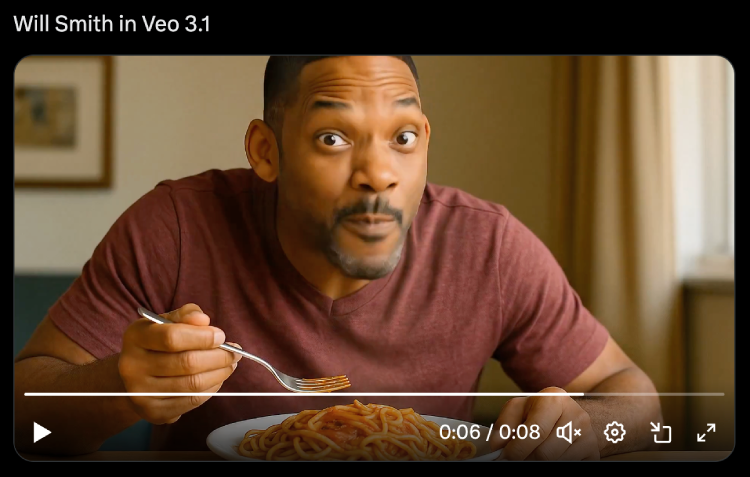
AI video generation has made remarkable progress since 2023, demonstrated by the transformation in how digital models depict Will Smith eating spaghetti. What began as a meme showcasing the limitations of early technology has since become an industry benchmark for AI realism and accuracy.
The Origins of the “Spaghetti Test”
In 2023, a Reddit user used ModelScope, a text-to-video AI tool, to generate a clip of Will Smith eating spaghetti. The resulting video was highly unrealistic, featuring distorted facial features and bizarre animations. The video was so far from reality that Smith didn’t even manage to eat the spaghetti, highlighting common pitfalls of early AI: anatomical errors and cartoonish visuals.
Rapid Advances and Realistic Results
Over the next two years, successive AI models tackled the spaghetti challenge with increasing sophistication. MiniMax, a Chinese AI, delivered more accurate results by 2024, albeit with flaws like unnatural chewing and levitating noodles. Google’s Veo 3 tried to improve the effect, though crunchy noodle sounds revealed its limitations. By the release of Veo 3.1, the video realism had improved further, drawing praise for lifelike rendering.
Today, OpenAI’s Sora stands out as the most realistic video generator, prompting even tighter controls on AI-generated likenesses and intellectual property. Notable incidents involving famous characters and personalities led to additional guardrails, showing both the power and risks of these advanced tools. Competitors like Google and Elon Musk’s xAI are working to catch up, with xAI’s Grok Imagine entering the text-to-video race in 2025.
Will Smith in Veo 3.1 pic.twitter.com/SuK9jky3NW
— ⚡AI Search⚡ (@aisearchio) October 15, 2025
The Legal and Ethical Landscape
As the technology improves, rights holders have responded with increased legal pressure. Studios such as Disney, Universal, and Warner Bros. filed federal cases against AI platforms for using protected likenesses. OpenAI faced a lawsuit from Cameo for naming its facial scan feature “cameos,” resulting in a judge temporarily blocking the use of the term. These actions reflect new concerns as AI’s creative capabilities intersect with copyright and privacy.
Lawmakers have also voiced concerns about AI-generated videos simulating real people saying things they never did, highlighting potential misuse in politics and media. The evolving regulatory landscape signals that passing the “spaghetti test” now requires more than technical skill—it demands careful attention to ethics and legality.
Real-World Adoption
Despite controversy, companies are embracing AI in advertising and media. Coca-Cola recently used platforms like Sora, Veo 3, and Luma AI to create its holiday ad, highlighting commercial interest in newly realistic video generators.