
A Christmas Bible Study on Isaiah 7:14
Introduction: The Tapestry of Prophecy Fulfilled
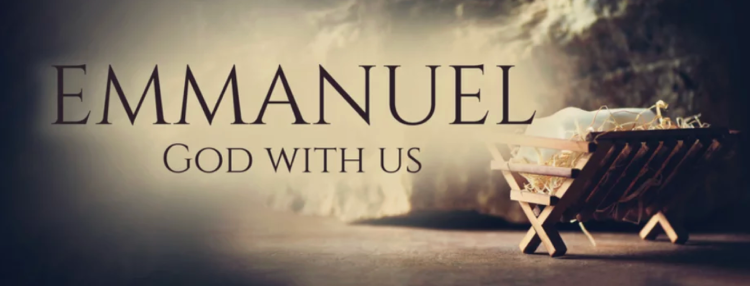
During Pastor Joey’s Christmas sermon today, “Emmanuel, God With Us,” he referenced Isaiah 7:14—that profound prophecy declaring, “Therefore the Lord himself will give you a sign: The virgin will conceive and give birth to a son, and will call him Immanuel.” As familiar as this passage is during the Christmas season, it struck me with fresh force this year: this wasn’t just a beautiful, isolated prediction. Isaiah’s prophecy stands as one thread in an intricate tapestry of over 300 specific Messianic prophecies, penned by different authors across a span of 1,500 years, all converging with stunning precision on one Person—Jesus Christ. The mathematical impossibility of such convergence by mere chance, the historical verifiability of these ancient texts, and the perfect fulfillment in Christ’s life, death, and resurrection form a case for His identity that demands our careful consideration. Emmanuel—God with us—isn’t just a Christmas greeting; it’s the fulfillment of a divine promise woven throughout Scripture, pointing unmistakably to the One who changed everything.
The prophet Micah declared He would be born in Bethlehem (Micah 5:21 But you, O Bethlehem Ephrathah, who are too little to be among the clans of Judah, from you shall come forth for me one who is to be ruler in Israel, whose coming forth is from of old, from ancient days.). Jeremiah foretold His lineage through David (Jeremiah 23:52Behold, the days are coming, declares the Lord, when I will raise up for David a righteous Branch, and he shall reign as king and deal wisely, and shall execute justice and righteousness in the land.). Zechariah prophesied His triumphal entry on a donkey (Zechariah 9:93Rejoice greatly, O daughter of Zion! Shout aloud, O daughter of Jerusalem! Behold, your king is coming to you; righteous and having salvation is he, humble and mounted on a donkey, on a colt, the foal of a donkey.) and His betrayal for thirty pieces of silver (Zechariah 11:12-134Then I said to them, “If it seems good to you, give me my wages; but if not, keep them.” And they weighed out as my wages thirty pieces of silver. Then the Lord said to me, “Throw it to the potter”—the lordly price at which I was priced by them. So I took the thirty pieces of silver and threw them into the house of the Lord, to the potter.). Isaiah spoke of His suffering servant’s death (Isaiah 53) and His virgin birth (Isaiah 7:145Therefore the Lord himself will give you a sign. Behold, the virgin shall conceive and bear a son, and shall call his name Immanuel.). Psalm 22 described crucifixion in vivid detail—written 1,000 years before this Roman method of execution was even invented.
What are the odds? Mathematicians calculate that just eight prophecies being fulfilled by chance in one person would be 1 in 100,000,000,000,000,000. Yet Jesus fulfilled not eight, but hundreds. This isn’t a coincidence—this is divine orchestration, God’s fingerprint across history, pointing us to the One who would change everything.
And today, we focus on one of the most beloved and contested prophecies of all: Isaiah 7:14, where God promises a virgin birth that would bring forth Emmanuel—God with us.
Therefore, the Lord himself will give you a sign. Behold, the virgin
shall conceive and bear a son, and shall call his name Immanuel.
The Promise in the Darkness
Picture Jerusalem in 735 BC. King Ahaz sits trembling on his throne as enemy armies surround his city. The Syro-Ephraimite coalition—an alliance between Syria and northern Israel—threatens to overthrow Judah and install their own puppet king. Fear grips the royal court like an icy wind. “The heart of Ahaz and the heart of his people shook as the trees of the forest shake before the wind” (Isaiah 7:2, ESV).
In this moment of national crisis, God sends the prophet Isaiah with an incredible offer: “Ask a sign of the LORD your God; let it be deep as Sheol or high as heaven” (Isaiah 7:11, ESV). Imagine that! The Creator of the universe offers to perform any miracle Ahaz can conceive to prove His power and faithfulness.
But Ahaz, in false piety masking his unbelief, refuses: “I will not ask, and I will not put the LORD to the test” (Isaiah 7:12, ESV). This isn’t humility—it’s rebellion. Ahaz doesn’t want God’s help because he’s already planning to seek alliance with Assyria, trusting in human power rather than divine promise.
Isaiah’s response crackles with holy indignation: “Hear then, O house of David! Is it too little for you to weary men, that you weary my God also?” (Isaiah 7:13, ESV). Then comes the prophecy that would echo through the centuries: “Therefore the Lord himself will give you a sign. Behold, the virgin shall conceive and bear a son, and shall call his name Immanuel” (Isaiah 7:14, ESV).
The Hebrew word here is almah—a young woman of marriageable age who has not known a man. When the Jewish scholars translated the Old Testament into Greek three centuries before Christ, they chose parthenos—virgin—
This wasn’t merely about immediate deliverance from Syria and Israel. God was looking beyond the temporal crisis to humanity’s greatest need—deliverance from sin and death itself.
The Magi: Following Ancient Light
Seven centuries later, in the palaces and observatories of ancient Persia and Babylon, learned men called Magi studied the heavens with passionate intensity. These weren’t mere astrologers practicing pagan divination—they were keepers of ancient wisdom, custodians of texts and traditions that included the prophecies given during Israel’s exile.
Remember, Daniel had served as chief of the wise men in Babylon (Daniel 2:486Then the king gave Daniel high honors and many great gifts, and made him ruler over the whole province of Babylon and chief prefect over all the wise men of Babylon.). For seventy years, faithful Jews had lived among these Eastern scholars, and the Hebrew Scriptures had taken root in these foreign courts. The Magi possessed scrolls containing Moses’ prophecy of a coming star: “I see him, but not now; I behold him, but not near: a star shall come out of Jacob, and a scepter shall rise out of Israel” (Numbers 24:17, ESV).
They had studied Jeremiah’s prediction of the Babylonian captivity lasting seventy years, and Daniel’s vision of seventy weeks that would conclude with the Messiah’s coming. These weren’t casual readers—they were scholars who had calculated times and seasons, watching for the signs God had promised through Hebrew prophets.
When that supernatural star appeared—not following natural astronomical patterns but moving as divine providence directed—the Magi recognized what many in Israel missed. They understood Isaiah’s prophecy of the virgin birth, Micah’s prediction of Bethlehem as the birthplace, and David’s psalms declaring the Messiah as King of all nations.
So they journeyed, following ancient light toward a greater Light. They came not as curious observers but as worshipers, bringing gifts that acknowledged Jesus’ threefold office: gold for the King, frankincense for the High Priest, and myrrh for the Suffering Servant who would die for the sins of the world.
How remarkable that Gentile scholars, studying Hebrew prophecy in foreign lands, would be among the first to recognize and worship the newborn King, while the religious leaders in Jerusalem remained ignorant of His birth. God’s truth transcends ethnic boundaries—whoever seeks Him with a sincere heart will find Him.
Emmanuel: The Heart of the Promise
The name Emmanuel carries the weight of eternity. In those three syllables, we find the answer to humanity’s deepest longing and greatest problem. Since Eden’s fall, mankind has experienced the tragic reality of separation from God. Sin creates a chasm that human effort cannot bridge, a debt that human goodness cannot pay.
But God, in His unfathomable love, chose to bridge that chasm Himself. “And the Word became flesh and dwelt among us, and we have seen his glory, glory as of the only Son from the Father, full of grace and truth” (John 1:14, ESV).
The virgin birth isn’t merely a biological miracle—it’s a theological necessity. Jesus needed to be fully human to represent us, yet without sin’s corruption to qualify as our substitute. Born of a human mother, He shared our nature. Conceived by the Holy Spirit, He remained holy, harmless, and undefiled.
Consider what this means: the infinite God compressed Himself into embryonic life. The One who spoke galaxies into existence became dependent on a teenage girl’s faith and Joseph’s obedience. The Creator of time entered time. The Author of life experienced human limitation, hunger, fatigue, and temptation—yet without sin.
When Mary first felt that divine life stirring within her womb, when she felt tiny hands and feet pressing against her ribs, she was carrying the answer to every longing heart, the solution to every human problem, the hope of every age. Emmanuel—God with us—not as a distant deity but as an intimate Savior, not as a condemning judge but as a merciful Redeemer.
This is the scandal and glory of Christmas: God didn’t send a messenger or delegate an angel to accomplish our salvation. He came Himself, in person, permanently joining divine and human nature in one miraculous Person.
The Light That Darkness Cannot Overcome
Isaiah’s prophecy echoes through the New Testament with increasing brilliance. Matthew records its fulfillment: “All this took place to fulfill what the Lord had spoken by the prophet: ‘Behold, the virgin shall conceive and bear a son, and they shall call his name Immanuel’ (which means, God with us)” (Matthew 1:22-23, ESV).
But the promise extends beyond the nativity. Jesus declared, “And behold, I am with you always, to the end of the age” (Matthew 28:20, ESV). The Emmanuel promise doesn’t conclude with childhood—it defines His entire mission and eternal presence.
When He calmed storms, Emmanuel demonstrated God’s power over creation. When He healed the sick, Emmanuel revealed God’s compassion for human suffering. When He welcomed sinners, Emmanuel displayed God’s heart for the lost. When He wept at Lazarus’ tomb, Emmanuel showed that God understands our grief. When He died on the cross, Emmanuel proved that God’s love knows no limits.
And when He rose from the dead, Emmanuel conquered humanity’s greatest enemies: sin, death, and hell itself.
The light that shone in Bethlehem’s stable was the same light that blazed from the empty tomb. The child born of a virgin became the man who would give His life as a ransom for many, then rise in triumph as the firstborn from the dead.
A Personal Invitation
Perhaps you’ve heard this story countless times. Maybe Christmas has become routine, its wonder dimmed by familiarity or clouded by life’s difficulties. But today, consider afresh what Isaiah’s prophecy really means.
God saw your need before you were born. He knew every struggle you would face, every tear you would shed, every question that would burden your heart. And in His perfect love, He devised a plan not just to help you from a distance, but to join you in your humanity, to walk in your shoes, to bear your burdens.
Jesus didn’t come merely to teach good morals or provide inspiration. He came to accomplish what you could never achieve—perfect righteousness before God and complete payment for sin’s penalty. He lived the life you should have lived and died the death you deserved to die.
The virgin birth points to His qualification as your Substitute. His sinless life demonstrates His worthiness to represent you. His sacrificial death reveals the price of your redemption. His bodily resurrection proves His victory over everything that separates you from God.
If you’ve never trusted Jesus Christ as your personal Savior, Christmas offers you the greatest gift imaginable: forgiveness of sins, peace with God, and eternal life. You don’t have to earn it, deserve it, or work for it. Jesus has already done everything necessary. You need only believe—trust in Him alone for your salvation.
The same God who fulfilled every prophecy concerning Christ’s first coming has promised to fulfill every prophecy about His second coming. Jesus said, “I will come again and will take you to myself, that where I am you may be also” (John 14:3, ESV).
Someday, Emmanuel will return—not as a helpless infant but as conquering King. Those who have trusted Him will experience the ultimate fulfillment of His promise: “God with us” for all eternity, in a place where sin never enters, sorrow never touches, and separation never occurs.
Conclusion: The Greatest Story Ever Told
As we conclude, remember that Isaiah 7:14 is more than ancient prophecy—it’s a personal invitation. The virgin-born Son isn’t merely a historical figure but a living Savior who says to you this day: “Come to me, all who labor and are heavy laden, and I will give you rest” (Matthew 11:28, ESV).
The promise of Emmanuel didn’t end with Christ’s ascension—it continues wherever His people gather, wherever His Word is proclaimed, wherever hearts turn to Him in faith. He remains God with us, Immanuel, our eternal Savior and Friend.
Will you receive Him? Will you let the light of the world illuminate your darkness? Will you allow the Prince of Peace to bring peace to your troubled heart?
The greatest gift ever given awaits your acceptance. Emmanuel has come—God with us, now and forever.
This article was generated with the assistance of artificial intelligence tools from ClaudeAI. While efforts have been made to ensure accuracy and relevance, the content reflects AI-generated insights and may not fully represent human expertise or editorial oversight. It has been carefully edited by this author.