
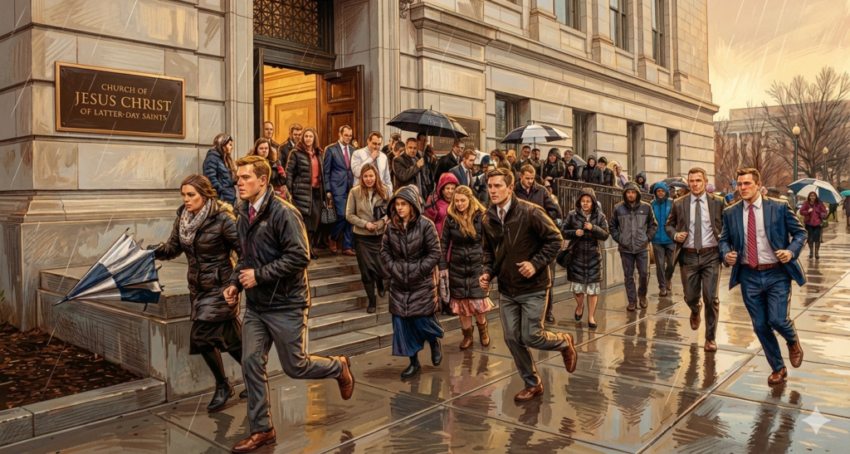
Who Are They, What Happened, and Where Are They Now?
The Church of Jesus Christ of Latter-day Saints, with its approximately seventeen million members worldwide, has long projected an image of unity, doctrinal certainty, and divine mandate. Founded by Joseph Smith in 1830 in the Burned-Over District of upstate New York—a region so named for the intensity of religious revivals that swept through it during the Second Great Awakening—the church has grown from a small religious movement, often persecuted and driven from state to state, into a global institution with significant financial, political, and cultural influence extending across six continents and into virtually every nation on earth.
Its members—commonly called Mormons, though the church now strongly discourages that term in favor of the full name or “Latter-day Saints”—are known for their distinctive practices that set them apart from mainstream Christianity: strict abstinence from alcohol, tobacco, coffee, and tea as part of the Word of Wisdom health code revealed to Joseph Smith in 1833; intense emphasis on family relationships, genealogical research, and temple work performed vicariously for deceased ancestors who never had the opportunity to accept the gospel in mortality; a lay clergy system that demands significant time commitments from ordinary members who receive no financial compensation for their ecclesiastical service, from the local bishop who might spend twenty or more hours per week on church duties to the Relief Society president coordinating welfare efforts for struggling families; and an elaborate temple system where the most sacred ordinances—including eternal marriage that binds families together not just until death but for eternity, and proxy baptisms for the dead that offer salvation to those who died without hearing the restored gospel—are performed in secret, with members strictly prohibited from discussing temple ceremonies outside temple walls even with close family members who have not received their own endowments.
The church’s headquarters in Salt Lake City, Utah—a gleaming complex of office buildings, conference centers, and the iconic Salt Lake Temple that took forty years to construct—is presided over by the First Presidency (the prophet-president and his two counselors) and the Quorum of the Twelve Apostles, men sustained by members as prophets, seers, and revelators who receive divine guidance for the church and the world. From this center, church leadership directs a vast organizational structure encompassing stakes (regional units roughly equivalent to Catholic dioceses, each containing between five and twelve wards), wards (local congregations similar to parishes, typically comprising 300-500 members), missions (organized units for proselytizing, with approximately 400 missions worldwide and over 50,000 full-time missionaries serving at any given time), temples (now numbering over 300 worldwide including those announced, under construction, or in operation), universities (including Brigham Young University’s main campus in Provo, Utah, with satellite campuses in Idaho and Hawaii, plus the church-owned business college system), and extensive business enterprises whose total value has been estimated at well over one hundred billion dollars according to leaked documents, whistleblower testimony, and investigative journalism.
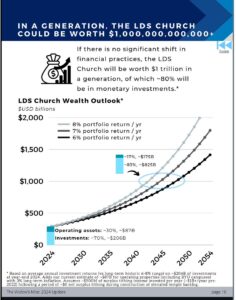 The church’s financial holdings are staggering in their scope and have become increasingly controversial as details have emerged through leaks and investigative reporting. The church owns Deseret Management Corporation, a holding company controlling media properties, including the Deseret News newspaper and KSL television and radio stations in Salt Lake City. It owns Bonneville International, one of the largest radio broadcasting companies in the United States. It owns AgReserves Inc., which operates one of the largest cattle ranching operations in the United States with properties in Florida, Nebraska, and other states totaling approximately two million acres. It owns City Creek Center, a luxury shopping mall adjacent to Temple Square in downtown Salt Lake City that cost approximately two billion dollars to develop—a project that drew criticism from some members who questioned why sacred tithing funds were being used for high-end retail when humanitarian needs worldwide went unmet. Most significantly, the church maintains an investment fund called Ensign Peak Advisors that a whistleblower estimated held approximately one hundred billion dollars in 2019—a sum that would make it one of the largest investment funds in the United States, accumulated over decades through tithing contributions from members who were told their donations would be used to build the kingdom of God but were never informed that billions were being stockpiled in investment accounts rather than spent on charitable or ecclesiastical purposes.
Yet beneath this impressive surface of unified faith, institutional power, and accumulated wealth lies a growing phenomenon that church leadership has struggled to address with any lasting success despite various initiatives, adjustments to curriculum, and public relations efforts: the departure of prominent, high-profile members whose exits have reverberated throughout Mormon culture and far beyond into mainstream media coverage and public consciousness. These are not merely the disaffected rank-and-file members who quietly stop attending Sacrament Meeting, allow their temple recommends to lapse, and slip into what church researchers and sociologists call “the less-active population”—a phenomenon common to all religious traditions and one that various estimates suggest affects between one-third and two-thirds of those baptized as Latter-day Saints, depending on how activity is measured and which populations are studied.
Rather, the prominent defectors examined in this article include an extraordinary range of accomplished individuals: scholars whose painstaking archival research over decades has fundamentally challenged official historical narratives about church origins, the translation of scripture, and the character of founding prophet Joseph Smith; celebrities whose very public departures have made international headlines and generated extensive media coverage that has introduced millions to controversies the church would prefer to keep quiet; high-ranking ecclesiastical leaders who have lost their faith after decades of devoted service at the highest levels of church governance, some of whom had received the church’s most sacred ordinances reserved for only the most faithful; activists whose advocacy for women’s ordination to the priesthood or full inclusion of LGBTQ+ members has resulted in formal excommunication through the church’s disciplinary council system, which members are instructed to view as a loving and corrective rather than punitive process but which critics describe as ecclesiastical courts designed primarily to maintain institutional control through fear of social and spiritual consequences; and entrepreneurs, professionals, and ordinary members whose departures demonstrate that doubt and disaffection reach across all demographics of Mormon society.
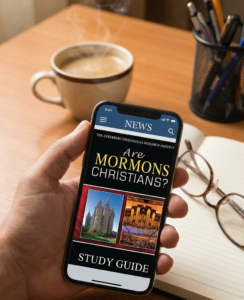 These high-profile departures represent a broader pattern of disaffection driven by multiple intersecting factors that have intensified dramatically in the internet age. First, unprecedented access to historical information through digital archives, online databases, and countless websites has made troubling documentation available to any curious member with a smartphone—information that was previously accessible only to scholars with university affiliations and archive privileges who could travel to Salt Lake City or other research locations. Second, rapidly evolving social values regarding gender equality, sexual orientation, and gender identity, and the proper relationship between religious authority and individual conscience, have created cognitive dissonance for members whose moral intuitions increasingly conflict with official church positions. Third, fundamental and irresolvable questions about the church’s historical truth claims regarding Book of Mormon antiquity, Book of Abraham authenticity, the nature of Joseph Smith’s prophetic revelations, and the divine mandate of current church leadership have become impossible to avoid as information has proliferated. Fourth, growing concerns about financial transparency have emerged as information about the church’s vast accumulated wealth has become public, raising questions about whether tithing funds are being used as donors intended and whether the church’s charitable expenditures are proportionate to its resources. Fifth, particularly painful questions about the treatment of marginalized communities have driven many away, especially LGBTQ+ members who face church policies effectively demanding lifelong celibacy regardless of their desires for companionship and family, denying temple blessings to those in same-sex relationships, and creating environments where LGBTQ+ youth experience dramatically elevated rates of depression, anxiety, and suicidality.
The internet age has fundamentally and irreversibly altered the information landscape for Latter-day Saints in ways that church leadership has struggled to comprehend and address. A teenager in rural Idaho, a convert in Brazil, a returned missionary in Japan, or a lifelong member in Salt Lake City can now encounter troubling historical information—documentation that was once available only to dedicated researchers working in the LDS Church History Library’s restricted collections or in university special collections requiring advance permission and in-person visits—with a simple Google search conducted in moments of curiosity or doubt. What was once dismissed by church leaders and faithful members alike as “anti-Mormon propaganda” disseminated by hostile evangelical Christians seeking to destroy the faith, embittered former members nursing personal grievances, or professional critics making careers from attacking the church now sits on official church websites in the form of Gospel Topics Essays.
These thirteen essays, published between 2013 and 2015 in response to growing awareness that members were discovering troubling information and leaving in unprecedented numbers, acknowledge many of the issues that have driven members away from the church. The essays address: Joseph Smith’s practice of plural marriage, acknowledging that he married approximately thirty to forty women including some as young as fourteen years old, some who were already legally married to other living men (a practice scholars call polyandry), and some who were coerced through religious authority and promises of eternal salvation for themselves and their families; the racial priesthood and temple ban that excluded members of African descent from holding the priesthood or participating in temple ordinances from Brigham Young’s administration until a 1978 revelation ended the restriction, with no clear doctrinal explanation ever offered for why the ban was instituted or why it was lifted when it was; the translation of the Book of Mormon, acknowledging that Joseph Smith used a folk magic seer stone placed in a hat rather than the Urim and Thummim spectacles described in official artistic depictions and lesson manuals for generations; the Book of Abraham, acknowledging that the surviving papyri Joseph claimed to translate contain ordinary Egyptian funerary texts that Egyptologists can now read and that bear no relationship to the text Joseph produced, while offering various theories to explain this apparent discrepancy; and the multiple accounts of the First Vision, acknowledging that Joseph’s descriptions of this foundational event varied significantly over time in ways that critics argue undermine the official narrative.
This article examines the stories of twenty of the most prominent individuals who have left the LDS Church—whether through voluntary resignation letters submitted to church headquarters requesting formal removal from membership records, excommunication following a disciplinary council conducted by local priesthood leaders, or gradual disengagement while remaining technically on church membership records as names continue to appear in ward directories even when individuals have not attended in years or decades. Their stories span six decades of Mormon history, from pioneering researchers of the 1960s who worked from photocopies in cramped apartments without institutional support or internet resources, to contemporary podcasters building online communities of thousands, to celebrities whose departures have been covered by the New York Times, the Washington Post, National Public Radio, and major television networks, including ABC News and CNN.
PART I: THE PIONEERS OF MORMON CRITICAL RESEARCH
1. JERALD AND SANDRA TANNER
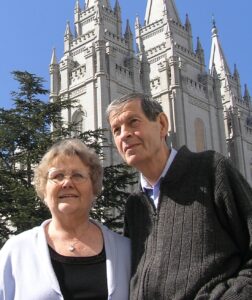 No examination of Mormon defectors can be complete without beginning with Jerald and Sandra Tanner, the husband-and-wife team who essentially created the field of critical Mormon studies as a sustained scholarly enterprise spanning multiple decades of dedicated research, writing, and publishing from the 1960s until well into the twenty-first century. More than any other individuals, the Tanners established the documentary methodology, built the archival resources, and demonstrated the persistence necessary to challenge the official historical narratives promulgated by the LDS Church’s Correlation Department.
Sandra McGee Tanner holds a particularly remarkable heritage that makes her departure from the church symbolically powerful beyond what any ordinary member’s exit could achieve. She is the great-great-granddaughter of Brigham Young himself—the man who succeeded Joseph Smith as prophet after Smith’s 1844 assassination by a mob at Carthage Jail, who led the Mormon pioneers in their epic migration across the Great Plains to the Salt Lake Valley, who established the theocratic governance of the Utah Territory as both church president and territorial governor simultaneously, who directed the colonization of the Intermountain West with settlements from Canada to Mexico, and who practiced plural marriage with approximately fifty-five wives and fathered fifty-seven children. As a direct descendant of this towering figure in Mormon history—a man venerated as a prophet second only to Joseph Smith himself in the church’s hierarchy of founding leaders—Sandra’s questioning of the faith carried a symbolic weight that few other critics could ever match. When Brigham Young’s own great-great-granddaughter concluded that the church he helped build was founded on falsehood, that judgment commanded attention even from those inclined to dismiss criticism as anti-Mormon bigotry.
Jerald Tanner, born in 1938, was raised in a family with equally deep Mormon roots extending back to John Tanner, a prosperous New York farmer and convert to the early church who donated most of his significant wealth—estimated at the modern equivalent of hundreds of thousands of dollars—to help pay crushing church debts in Kirtland, Ohio during the financial crises of the late 1830s, and who made further sacrifices in Nauvoo, Illinois, receiving in exchange Brigham Young’s promise that he would never lack for the necessities of life. The Tanner family history was woven into the foundational narrative of the Restoration itself, with ancestors who knew Joseph Smith personally, who sacrificed comfort and security for what they believed was God’s true church restored to the earth in the latter days, and who endured persecution, poverty, and the hardships of pioneer life for the sake of their testimonies.
Both Jerald and Sandra grew up completely immersed in Mormon culture during the mid-twentieth century, when the church dominated Utah society even more thoroughly than it does today. Temple marriages were expected as the only acceptable path for faithful young Latter-day Saints. Missions were anticipated for young men as a rite of passage into responsible adulthood. Large families were encouraged as a righteous duty. Career choices were often influenced by church connections and the desire to remain within the Mormon cultural orbit. Every expectation was that Jerald and Sandra would remain faithful members throughout their lives, raise large families in the covenant, serve in ward and stake callings, and eventually achieve exaltation in the celestial kingdom alongside their pioneer forebears who had sacrificed so much to establish Zion in the Rocky Mountains.
Instead, both began independently experiencing doubts about the church—doubts that faithful members were taught to suppress through prayer and scripture study, to attribute to personal unworthiness requiring repentance, or to dismiss as temptations from Satan seeking to destroy faith. When Jerald and Sandra met, they discovered common ground in their questioning and found in each other intellectual companions willing to pursue truth wherever the evidence led. They married in 1959 and resigned from the LDS Church in 1960—a radical step in an era when leaving the church meant social ostracism from virtually everyone one knew, family rupture as parents and siblings struggled to understand how a loved one could abandon the faith, potential loss of employment in Utah’s church-dominated economy, and the forfeiture of nearly every meaningful relationship built over a lifetime within the Mormon community.
That same year, they founded the Utah Lighthouse Ministry, which would become their life’s work for over four decades of tireless research, writing, and publishing. Operating from a modest location in Salt Lake City—within walking distance of Temple Square itself, in deliberate symbolic proximity to the church headquarters they were now dedicating their lives to challenging—they began the painstaking work of documenting historical and doctrinal issues within Mormonism that the church’s Correlation Department had carefully excised from official publications, curriculum materials, and approved histories.
Their methodology distinguished them from earlier critics of Mormonism. Rather than simply making theological arguments against Mormon doctrine from a Protestant or evangelical perspective, or publishing personal attacks on church leaders based on rumor and innuendo, the Tanners focused on locating, preserving, and publishing source documents that allowed readers to evaluate evidence for themselves. They haunted archives and libraries. They cultivated relationships with collectors and disaffected insiders who could provide access to materials. They invested their limited resources in photocopying equipment that allowed them to reproduce documents and distribute them to anyone interested. Their most famous publication, “Mormonism: Shadow or Reality?” first published in 1964 and expanded through multiple editions over the following decades, became the foundational text of Mormon criticism for an entire generation of researchers and questioning members—a comprehensive compilation of documentary evidence addressing Book of Mormon problems, Book of Abraham controversies, changes to revelations, polygamy, temple ceremonies, and numerous other topics.
Their work included publishing the Joseph Smith Egyptian Papers, which revealed the process by which the Book of Abraham was produced and allowed Egyptologists to assess Joseph’s claimed translation against the surviving papyri. They reprinted early LDS periodicals containing statements by Brigham Young and other church leaders that had been quietly dropped from official histories and lesson manuals—statements about blood atonement as a doctrine requiring the shedding of apostates’ blood to atone for certain sins, the Adam-God theory teaching that Adam was actually God the Father in a mortal body, and other teachings the modern church found embarrassing and incompatible with its contemporary image. They documented manuscript evidence showing significant changes to foundational texts, including the Book of Mormon, the Book of Commandments (later revised as the Doctrine and Covenants with substantial additions and alterations), and Joseph Smith’s personal history, demonstrating that what the church presented as unchanging revealed truth had in fact been repeatedly modified over time.
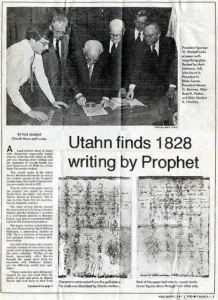 One of their most significant contributions to understanding Mormon history came during the Mark Hofmann forgery scandal of the 1980s—a case that continues to fascinate true crime enthusiasts, historians of religion, and students of institutional deception. Hofmann, a returned Mormon missionary who had lost his faith but retained deep knowledge of church history and the world of rare document collecting, produced fake historical documents of extraordinary sophistication. Using period-appropriate paper that he aged artificially, inks formulated to match nineteenth-century compositions, and handwriting skills honed through careful study of authentic examples, he created forgeries that fooled virtually everyone who examined them.
Hofmann sold his creations to the LDS Church and private collectors for substantial sums—sometimes hundreds of thousands of dollars per item. His most famous forgery, the “Salamander Letter,” purported to be a letter from early Mormon Martin Harris describing Joseph Smith’s treasure-seeking activities in terms that drew heavily on folk magic traditions rather than divine revelation—a white salamander guarding golden treasure rather than an angel directing a prophet. The church purchased this and other embarrassing documents, apparently hoping to acquire them quietly and prevent public examination of materials that challenged faith-promoting narratives. This strategy backfired spectacularly when Hofmann, facing financial pressure from his increasingly elaborate schemes and the demands of maintaining multiple fraudulent identities and transactions, murdered two people with pipe bombs in October 1985 to cover his crimes. He was eventually caught, confessed to the forgeries, and was sentenced to life in prison, where he remains to this day.
During the height of the Hofmann affair, when church leaders, professional archivists at the LDS Church Historical Department, and academic historians at major universities were all accepting his documents as genuine, the Tanners publicly expressed doubts about the authenticity of several Hofmann items. Drawing on their decades of experience with genuine nineteenth-century Mormon documents—an expertise born of countless hours spent examining, comparing, and analyzing authentic materials—they identified anomalies that others had missed or ignored. Their skepticism, initially dismissed by those who viewed them as biased critics eager to believe anything negative about the church, was completely vindicated when Hofmann’s crimes and forgeries were exposed. This episode dramatically enhanced their credibility among both critics and some faithful scholars who had been completely taken in by Hofmann’s skillful deceptions, demonstrating that the Tanners’ documentary expertise was superior to that of credentialed professionals with institutional resources.
Jerald Tanner passed away in 2006, having devoted most of his adult life to documenting Mormon history and making primary sources available to anyone interested in evaluating the evidence. Sandra continued their ministry for many years afterward, maintaining research operations, corresponding with researchers worldwide, answering questions from the curious and the doubting, and welcoming visitors to their Salt Lake City location. The physical Utah Lighthouse Ministry bookstore—long a pilgrimage destination for researchers, curious members experiencing the first stirrings of doubt, journalists working on Mormon-related stories, and ex-Mormons seeking validation and community with others who had walked similar paths—finally closed in 2023 as Sandra’s advancing age made continued operation impractical.
However, their extensive archive of documents and publications remains freely available online at utlm.org, where a new generation of researchers can access materials that were once available only to those who could travel to Salt Lake City or order through the mail and wait weeks for delivery. The website contains hundreds of articles, full-text versions of their books, scanned primary documents, and other resources that continue to serve anyone seeking to understand Mormon history from a critical perspective. Many of the issues they documented decades ago—often at high personal cost, including social ostracism, accusations of anti-Mormon bigotry, threats, and the loss of family relationships—are now acknowledged in the church’s own Gospel Topics Essays. This represents a vindication, however belated and partial, of their documentary work and their insistence that members deserved access to accurate historical information even when that information challenged faith.
PART II: DIGITAL AGE VOICES AND COMMUNITY BUILDERS
2. JOHN DEHLIN
 John Parkinson Dehlin represents the crucial transition from isolated doubters researching alone in pre-Internet obscurity to connected communities of questioning Mormons supporting each other through faith transitions in real time across digital platforms. More than any other single individual, Dehlin created the infrastructure—technological, social, and emotional—that transformed the experience of Mormon faith crisis from a lonely, shameful struggle endured in silence to a shared journey undertaken with the support of thousands who understood.
Born in Boise, Idaho, and raised in Katy, Texas, Dehlin followed a conventional path through Mormon young adulthood. He attended Brigham Young University, the church’s flagship educational institution in Provo, Utah, where he graduated summa cum laude with a bachelor’s degree in political science in 1993. This academic achievement demonstrated intellectual capability that could not be dismissed—Dehlin was not someone who had simply “failed” at Mormonism due to laziness, stupidity, or unwillingness to do the work of maintaining faith. He later earned a master’s degree in Instructional Technology in 2007 and a doctorate in clinical and counseling psychology from Utah State University in 2015. These credentials gave him professional expertise in understanding the psychological dimensions of faith transition, religious trauma, and identity reformation that pure critics of the church without clinical training often lacked.
In September 2005, after experiencing his own doubts about the faith but finding reasons to remain a member rather than leave immediately, Dehlin created the Mormon Stories podcast. His initial vision was not to tear down the church or lead members away, but rather to create a space for faithful members who struggled with difficult questions and wanted to find a way to stay connected to their community, their families, and their spiritual home. The podcast began as an open discussion forum for Latter-day Saint issues that official church venues—Sunday School classes, priesthood quorums, Relief Society meetings, General Conference addresses—refused to address honestly or even acknowledge existed. Dehlin hoped to help listeners find reasons to remain in the church by showing them they were not alone in their struggles and by modeling a thoughtful, nuanced engagement with challenging material.
The podcast quickly found an audience far larger than Dehlin had anticipated. Members who had felt completely alone in their doubts—who had been taught that questioning indicated personal unworthiness, insufficient faith, or susceptibility to Satan’s deceptions—discovered through Mormon Stories that thousands of others shared their concerns. For perhaps the first time in Mormon history, isolated doubters scattered across the globe could hear that they were not crazy, not sinful, not spiritually defective, but rather were grappling honestly with legitimate intellectual and moral concerns that the church had chosen to suppress rather than address. The sense of relief, validation, and community that listeners reported was profound and transformative.
Over time, the podcast evolved beyond its original mission of supporting questioning members who wanted to remain in the church. As Dehlin’s own faith journey progressed and as he interviewed hundreds of individuals who had ultimately concluded they could not remain LDS, Mormon Stories became increasingly a platform for those experiencing faith crises to process their experiences publicly and for those who had already left to share their stories, find community, and build new lives outside the faith tradition that had shaped their entire existence. The show’s interview style—long-form conversations extending for hours across multiple episodes, empathetic listening without judgment or agenda, and willingness to explore difficult topics that faithful members were trained to avoid—made it a lifeline for many who were navigating faith transitions without support from family or community.
Dehlin’s excommunication came in February 2015, following a lengthy and very public disciplinary process that had been initiated the previous year and covered extensively in both Mormon and mainstream media. His stake president cited apostasy as the grounds for excommunication, pointing specifically to three categories of behavior that church leaders found unacceptable: Dehlin’s public support for same-sex marriage at a time when the church was actively campaigning against marriage equality and had played a significant financial and organizational role in California’s Proposition 8; his advocacy for women’s ordination to the priesthood through his public association with and support for the Ordain Women movement led by Kate Kelly; and his persistent public criticism of church leaders and teachings that church authorities viewed as incompatible with the sustaining covenant members make to support those called to positions of authority.
In a move that provided unprecedented transparency into the church’s normally secretive disciplinary process, Dehlin recorded portions of his interviews with his bishop and stake president, which he later released publicly. These recordings revealed the tension between Dehlin’s expressed desire to remain connected to his faith community—to maintain relationships, participate in services, and contribute positively—and church leaders’ insistence that continued membership required either retracting his public positions or accepting excommunication as the inevitable consequence of refusing to be silent. The recordings showed local leaders who seemed personally uncomfortable with the process but felt bound by directives from higher church authorities who had apparently decided that Dehlin’s public influence had grown too large to tolerate. His appeal to the First Presidency in Salt Lake City was rejected in March 2015, making his excommunication final and permanent unless he sought rebaptism after demonstrating prolonged repentance and silence.
Dehlin continues to operate the Mormon Stories podcast through the Open Stories Foundation, a 501(c)(3) nonprofit organization he founded in 2011. The podcast has become arguably the most prominent platform in the ex-Mormon community, with hundreds of hours of content featuring interviews with scholars specializing in Mormon history and scripture, former members sharing their faith crisis experiences, current members still navigating doubt while trying to remain in the church, and notable public figures whose departures have garnered significant attention. Beyond the podcast itself, Dehlin has expanded into conferences, retreats, and therapeutic programs designed to help people process religious trauma.
However, Dehlin’s organization has faced criticism regarding financial transparency that has troubled some supporters. In 2022, the Salt Lake Tribune reported that former employees had filed an IRS whistleblower complaint alleging that Dehlin’s personal compensation—which reached $236,021 in 2019, representing approximately 60 percent of the Open Stories Foundation’s total revenue from podcast donations and other sources—raised serious concerns about nonprofit governance and potential conflicts of interest. The complainants alleged that Dehlin treated the charitable organization as a personal income vehicle and resisted board oversight. Dehlin has defended his compensation as appropriate for his role as the primary content creator, host, and face of the organization, who has devoted his career full-time to this work.
3. JEREMY RUNNELLS
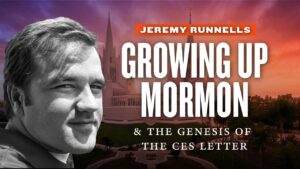 Jeremy Runnells represents perhaps the most dramatic single-document impact on the Mormon faith crisis in the internet age—proof that in an era of viral content and social media sharing, one person with a compelling presentation can reach millions and fundamentally alter the information landscape for an entire religious tradition. His “Letter to a CES Director,” commonly known as the “CES Letter,” has been read by hundreds of thousands and is cited by former members more than any other single resource as the catalyst for their departures.
A seventh-generation Mormon whose ancestry traced back to the earliest days of the Restoration, Runnells was raised in Southern California and embodied the ideal Latter-day Saint trajectory that church members call the “covenant path“: Eagle Scout demonstrating leadership and moral character, Brigham Young University graduate showing intellectual commitment to a church-owned institution, and returned missionary proving willingness to sacrifice two years of young adulthood to proselytizing. His family’s Mormon heritage stretched back to the pioneer era, with ancestors who had known Joseph Smith personally, who had crossed the plains to Utah in the great migration of the 1840s and 1850s, and who had helped build the kingdom of God in the desert.
In early 2012, Runnells experienced a faith crisis after encountering troubling information about church history through internet research. Like many members who had been raised with a simplified, faith-promoting version of Mormon history carefully crafted by the church’s Correlation Department, he was not prepared for the complexity, controversy, and apparent deception he discovered when he began researching with sources beyond official church publications. The issues he encountered—problems with Book of Mormon historicity, controversies surrounding the Book of Abraham, the troubling details of Joseph Smith’s polygamous and polyandrous marriages, DNA evidence contradicting scriptural claims about Indigenous American ancestry, the multiple conflicting accounts of the First Vision—had been carefully omitted from church curriculum for generations, leaving members like Runnells vulnerable to severe cognitive dissonance when they encountered this information unexpectedly.
At the suggestion of his grandfather—who hoped a Church Educational System director with expertise in religious education could resolve Jeremy’s concerns and restore his faith—Runnells wrote a letter outlining his questions. This letter, which he titled “Letter to a CES Director” and which the world now knows as the “CES Letter,” was initially an 84-page document meticulously detailing historical and theological problems with the church’s truth claims, complete with citations to church-approved sources, scholarly works, and official documents. The comprehensive scope was unprecedented: anachronisms in the Book of Mormon suggesting nineteenth-century composition rather than ancient origin; fundamental problems with the Book of Abraham’s claimed translation; Joseph Smith’s practice of polygamy and polyandry including marriages to teenage girls and other men’s wives; the multiple conflicting accounts of the First Vision; the use of a folk magic seer stone in producing the Book of Mormon text; DNA evidence demonstrating that Indigenous Americans descended from Asian migrants rather than Israelites; and numerous other historical and doctrinal concerns.
The CES Letter went viral within the ex-Mormon community and beyond, shared across social media platforms, discussed in Reddit forums and Facebook groups, and eventually translated into numerous languages to reach questioning members worldwide. It became perhaps the most widely cited single document by those questioning their faith—a comprehensive compilation that brought together in one accessible place issues that had previously required years of research across scattered sources to discover. The church has never provided an official institutional response to the document, though various unofficial apologists operating through organizations like FairMormon have published rebuttals that Runnells has systematically addressed with updated versions.
“… faith is believing and hoping when there is little evidence for or against something. Delusion is believing when there is an abundance of evidence against something.”
― Jeremy Runnells, Letter To A CES Director
Runnells was legally deaf, which added a poignant dimension to his public advocacy. In April 2016, summoned to a disciplinary council for apostasy at his local stake center in American Fork, Utah, and the event became a public spectacle. A crowd gathered outside the church building to support him, holding signs, documenting the event for social media, and transforming what the church intended as a private disciplinary matter into a public relations crisis. Rather than waiting passively for the council’s predetermined decision, Runnells dramatically resigned his membership during the proceeding itself, delivering a prepared statement that concluded: “So, this is a kangaroo court. I’m done with this court. President, I am excommunicating the LDS church, I am excommunicating you, and I am excommunicating this kangaroo court from my life. Here is my resignation letter. Goodbye.” The moment was captured on video and shared widely, becoming a viral symbol of defiance that inspired countless others to stand up to church authority rather than submit meekly to disciplinary proceedings.
4. VALERIE AND NATHAN HAMAKER

Valerie and Nathan Hamaker represent the newest generation of prominent LDS defectors, their departure occurring as recently as March 2025. Their story demonstrates that the pattern of high-profile exits continues unabated and that the church’s disciplinary apparatus remains active in silencing those who question official teachings publicly.
Valerie is a licensed mental health counselor with professional expertise in helping people navigate psychological challenges, including grief, loss, anxiety, depression, and religious trauma. Nathan is an ophthalmologist. Both are accomplished professionals whose departure cannot be dismissed as the result of educational deficiency, intellectual inadequacy, or personal moral failure—the explanations faithful members often reach for when trying to understand why anyone would leave what they believe is God’s true church. Both were active, temple-recommend-holding members with ward callings when they began their podcast “Latter Day Struggles” in 2022.
The podcast was created to address the faith crises many Latter-day Saints were experiencing—to offer support, perspective, and community for those struggling to reconcile their doubts with their religious commitments. Drawing on Valerie’s professional expertise in mental health, the show approached faith crisis not as a spiritual failure requiring repentance but as a psychological process requiring support and understanding. This framing alone was subversive of official church messaging, which teaches that doubt reflects personal unworthiness rather than legitimate intellectual or moral concerns. The show accumulated over one million downloads within its first few years, demonstrating significant hunger for resources that took questioning members seriously.
The Hamakers’ problems with church leadership began in August 2023, when they visited their bishop for what they expected to be a routine temple recommend renewal. To their shock, the bishop refused to conduct the recommended interview at all, telling Valerie: “I can’t give you the interview because you think you’re worthy, but I don’t.” The primary issue was their podcast’s teaching that members could legitimately pay tithing to any charitable organization that they felt was helping God’s children, rather than exclusively to the institutional church as officially required. This position, while perhaps reasonable from a lay perspective focused on helping those in need, contradicts official church teaching that tithing must go to the church itself to be counted as valid obedience to the law of tithing.
When their concerns escalated to the stake level, the situation deteriorated further. The stake president reportedly stood in a Fast Sunday testimony meeting and publicly referred to the Hamakers as “bad kids”—a stunning breach of pastoral discretion and confidentiality that humiliated them before their entire ward community. Rather than submit to a disciplinary council—a process that Valerie, drawing on her professional expertise in psychological dynamics, described as “fundamentally exploitative and spiritually abusive in nature”—the couple resigned their membership in March 2025.
In public statements following their resignation, Valerie emphasized that their departure came precisely because they care about the Mormon faith tradition, not because they wanted to destroy it: “As paradoxical as it may seem, it’s because we care about this tradition that we are opening our mouths.” They have expressed no anger toward their former leaders, whom Valerie described as “good guys” who “couldn’t pull away from the loyalties that bind them to the system.” This framing—departure as an act of love for a tradition that has lost its way rather than as rejection motivated by bitterness or personal grievance—represents a sophisticated approach that may resonate with questioning members who still feel deep affection for their Mormon heritage.
PART III: HIGH-PROFILE INSTITUTIONAL INSIDERS
5. HANS MATTSSON
 Hans Mattsson’s departure carries particular weight because of his position within the church’s leadership hierarchy. Unlike the previous defectors profiled—researchers, podcasters, and mental health professionals operating outside official church structures—Mattsson was himself a high-ranking church leader whose loss of faith occurred while he was serving in one of the most prestigious callings available to members outside Salt Lake City.
A third-generation Swedish Mormon, Mattsson grew up in a country where Latter-day Saints are a tiny minority rather than the dominant cultural force they represent in Utah and other parts of the American West. He rose through local church leadership positions and was eventually called to serve as an Area Authority Seventy from 2000 to 2005—a position that placed him in the third tier of church-wide leadership, below only the First Presidency and Quorum of the Twelve Apostles, and above the regional and local leaders who administer the church’s day-to-day operations. He was the first Swede ever called to this position, making him a role model and source of pride for Nordic members who had long seen church leadership as dominated by American culture and perspectives.
Mattsson’s faith crisis began when Swedish members started approaching him with questions about troubling aspects of church history—questions he could not answer despite his leadership position and decades of church service. Rather than dismiss these concerns as he was expected to do, or attribute them to the questioners’ spiritual inadequacies, Mattsson began researching the issues himself. What he found deeply disturbed him. The discrepancies between what he had been taught and what the historical record revealed seemed irreconcilable. He struggled privately for years, trying to find a way to maintain his faith while acknowledging the problems he had discovered.
In 2010, recognizing that Swedish members were leaving in significant numbers over historical concerns, the church organized what became known as the “Swedish Rescue“—a special fireside featuring LDS Church Historian Marlin Jensen and Assistant Church Historian Richard Turley, sent from Salt Lake City to address the concerns of questioning Swedish Saints. Mattsson attended this meeting with the hope that satisfactory answers would be provided. Instead, he found the responses evasive, inadequate, and in some cases factually questionable. The “rescue” mission failed to rescue him.
In 2013, Mattsson went public with his doubts through an extended interview on Mormon Stories and a feature article in the New York Times—media exposure that brought his story to millions who had never heard of a faith crisis in Mormon leadership. His interview revealed several stunning details. Most explosively, he disclosed that he had received the Second Anointing—a secret ordinance reserved for only the most faithful members, administered personally by an apostle, which guarantees the recipient’s exaltation in the celestial kingdom regardless of any future sins short of murder or denying the Holy Ghost. Mattsson revealed that Elder M. Russell Ballard of the Quorum of the Twelve Apostles had personally administered this ordinance to him and his wife. The implications were staggering: if even someone who had received the church’s highest saving ordinance, administered by one of the Lord’s chosen apostles, could lose his faith entirely, what did that say about the church’s claims?
Mattsson published a book titled “Truth Seeking” in 2018, detailing his journey from faithful leader to public doubter. He and his wife relocated to Spain. As of recent reports, he remains technically a member of the church—his name still on membership records—but has publicly expressed complete loss of belief in the church’s foundational truth claims.
6. JEFF T. GREEN
 Jeff T. Green represents a different category of high-profile defector: the billionaire whose departure carried both symbolic significance and potential financial implications for an institution that depends on tithing from its wealthiest members. Green is the founder, chief executive officer, and chairman of The Trade Desk, a digital advertising technology company whose success has made him one of the richest people to publicly leave the LDS Church, with an estimated net worth exceeding five billion dollars.
Like many prominent defectors, Green’s Mormon credentials were impeccable. He graduated from Brigham Young University, demonstrating a commitment to church-sponsored education. He served a full-time proselyting mission, sacrificing two years of young adulthood to spread the gospel. He married in the temple, establishing an eternal family unit in accordance with church teachings. He raised his children in the faith. From the outside, he appeared to be exactly the kind of successful, faithful member the church celebrates as evidence that Mormon values produce worldly success.
Green had quietly stopped practicing Mormonism about a decade before his public resignation, maintaining nominal membership while no longer attending services, paying tithing, or participating in church activities. But in December 2021, he made his departure official and very public. In a letter addressed to LDS Church President Russell M. Nelson, which he simultaneously shared with media outlets including the New York Times, Green announced that he was formally resigning his membership along with eleven members of his extended family.
Wealthiest Utah native resigns from the LDS Church: “The church is actively and currently doing harm in the world,” advertising tech billionaire Jeff T. Green writes to President Russell M. Nelson.
His letter cited several specific concerns that had driven him away: the church’s estimated one hundred billion dollars or more in accumulated assets alongside what he viewed as grossly insufficient humanitarian expenditures; the church’s active opposition to women’s rights and civil rights for LGBTQ+ individuals; and a systematic lack of transparency about how tithing funds were collected, invested, and spent. Coming from someone with Green’s financial expertise and resources, these criticisms carried particular credibility. He had built a billion-dollar company; he understood money, investments, and organizational finance in ways few critics could match.
Green backed his departure with significant financial commitments to causes the church opposes. He donated six hundred thousand dollars to Equality Utah, an organization advocating for LGBTQ+ rights in a state where the church’s influence has historically blocked such progress. This donation represented a direct rebuke to church policies on homosexuality and a signal that Green intended to use his resources actively against positions he found morally objectionable.
7. STEVE BENSON

Stephen Reed Benson, who died on July 8, 2025, at the age of seventy-one from complications of a stroke, occupied a unique position among Mormon defectors: he was the grandson of a church president. His departure from the faith represented rejection not just of the institution but of his own family’s central place within it.
Benson’s grandfather was Ezra Taft Benson, who served as United States Secretary of Agriculture under President Dwight D. Eisenhower before becoming president of the LDS Church from 1985 until he died in 1994. Ezra Taft Benson was a towering figure in twentieth-century Mormonism—a member of the Quorum of the Twelve Apostles for over four decades, a prominent conservative political voice, and eventually the prophet whom faithful members sustained as God’s spokesman on earth. Steve Benson grew up in this atmosphere of religious and political prominence, attending Brigham Young University, serving a proselyting mission in Japan, and beginning a career as an editorial cartoonist.
Benson built a distinguished career at The Arizona Republic, where his political cartoons earned him the Pulitzer Prize for Editorial Cartooning in 1993—the highest recognition available in his field. His talent was undeniable, but his willingness to satirize public figures regardless of their religious affiliation eventually brought him into conflict with the church.
The conflicts began in the late 1980s when Benson drew a cartoon satirizing Evan Mecham, who had become the first Mormon elected governor of Arizona before being impeached and removed from office amid multiple scandals. Benson’s cartoon, titled “The Second Coming,” depicted Mecham descending from heaven holding “the Book of Moron, by Ev Mecham”—a satirical reference to the Book of Mormon that outraged many church members who viewed any mockery of sacred texts as unacceptable, regardless of the target. In 1988, Benson was released from his position on the stake high council, a local leadership body, in what he believed was retaliation for the cartoon.
The final break came in 1993, when Benson publicly stated that his grandfather, then ninety-four years old and serving as church president, was suffering from senility so severe that he could no longer function as a leader—and that church authorities were concealing this incapacity from members who were being asked to sustain Ezra Taft Benson as a prophet receiving divine revelation. This accusation—that the church was perpetuating a fraud by presenting an incapacitated man as God’s spokesman—represented a fundamental challenge to institutional legitimacy. Benson requested that his name be removed from church membership records, citing “spiritual suffocation” and what he described as years of abuse and intolerance from church leaders who could not accept a member who refused to remain silent about what he perceived as corruption.
Following his departure, Benson became actively involved with secular humanist and atheist organizations, speaking at conventions of the Freedom From Religion Foundation and contributing to publications challenging religious belief generally. He continued his cartooning career at The Arizona Republic until 2019 and later worked for the Arizona Mirror until 2023. He died in Gilbert, Arizona, having spent over three decades as one of the church’s most prominent and persistent critics.
PART IV: LGBTQ+ VOICES AND THE CONFLICT OF IDENTITY
8. DAVID ARCHULETA

David Archuleta’s story represents the agonizing conflict between authentic identity and religious belonging that countless LGBTQ+ Latter-day Saints have experienced. As a public figure whose journey from closeted Mormon celebrity to openly queer artist has been extensively documented in media coverage, Archuleta has become a powerful symbol of both the damage church teachings can inflict on LGBTQ+ members and the possibility of liberation and joy on the other side of faith transition.
Archuleta became a household name in 2008 as the runner-up on American Idol’s seventh season. At just sixteen years old, his powerful voice and wholesome image made him a national phenomenon. For Mormon audiences in particular, he was a source of immense pride—a young Latter-day Saint succeeding on a massive public stage while maintaining the clean-cut image church culture celebrated. He was held up as an example of what faithful young members could achieve without compromising their values.
In 2012, at the height of his musical career, Archuleta made a decision that shocked the entertainment industry but delighted the Mormon community: he put his music on hold to serve a two-year proselyting mission in Chile. This sacrifice—walking away from fame, money, and momentum to knock on doors and teach the gospel in a foreign country—cemented his status as a role model for young Latter-day Saints. He was the good Mormon boy made good, proof that faith and worldly success were compatible.
Throughout this period, however, Archuleta was struggling privately with his sexuality in ways his public image completely obscured. He has since revealed that he came out to his family as gay in 2014, three years before making any public acknowledgment. But rather than accepting himself, he spent years trying to conform to church expectations. He broke off three separate engagements to women—relationships he entered hoping that marriage to a woman would somehow resolve or suppress his attraction to men. He has spoken publicly about seriously contemplating suicide during this period, viewing death as preferable to either acting on his authentic desires or continuing to live in constant denial and self-suppression.
“The church is very much emphasized on family; you’re supposed to get married and have babies, create family, and that is your ultimate purpose in life. You have to get married and have children in order to receive the highest form of heaven. I knew I wouldn’t be able to get that. So I thought it would be better to take my life than to strip myself away from the highest heaven.”
The depth of his repression is illustrated by a stunning detail he has shared in interviews: his first kiss with a man came at age thirty. For three decades, including years as a teenage heartthrob and years as a young adult navigating the dating world, he had never allowed himself the basic human experience of romantic physical affection with someone he was actually attracted to.
In June 2021, Archuleta publicly came out as queer, initially describing himself as “maybe a spectrum of bisexual” before later embracing queer as his preferred term. He has since revealed that church apostles—members of the Quorum of the Twelve, the church’s second-highest governing body—personally met with him and urged him to “find a good girl” and remain in the church rather than pursuing same-sex relationships. The following year, he officially stepped away from the LDS Church, describing a “faith crisis” that required him to “deconstruct everything” he had been taught about God, morality, and himself.
His mother’s initial response to his coming out was rejection—an experience painfully common for LGBTQ+ individuals in religious families. But in a development that offers hope for family reconciliation, his mother eventually changed her position so dramatically that she left the church herself in solidarity with her son.
Today, at thirty-four, Archuleta has fully embraced his identity. He performs at Pride events. His recent music, including the EP “Earthly Delights,” explicitly celebrates queer joy and sensuality in ways that would have been unthinkable during his Mormon celebrity period. He describes himself as being in “indulgence mode”—exploring romances with men, going to clubs and festivals, taking substances he would never have touched as a faithful member, and generally experiencing the young adulthood that his religious upbringing had denied him for decades. He is working on a memoir that will detail his journey in full.
9. KATE KELLY

Kate Kelly’s excommunication in 2014 represented the church’s response to organized feminist activism in ways that drew international media attention and galvanized both supporters and critics. As the founder of Ordain Women, she challenged the church’s male-only priesthood directly and publicly, forcing an institution that preferred to handle dissent quietly to respond to organized protest.
Kelly is a human rights attorney whose professional work involves advocating for the marginalized and challenging institutional power structures. She brought this orientation to her Mormon faith, viewing the exclusion of women from priesthood ordination not as divinely mandated gender complementarity but as discrimination that contradicted the church’s stated commitment to the worth of all souls. In 2013, she founded Ordain Women, a movement that asked a simple question: Why can’t women hold the priesthood?
The organization staged public demonstrations that forced the church to respond. Most notably, Ordain Women members requested admission to the priesthood session of General Conference—a meeting traditionally restricted to male members—creating a visible confrontation at Temple Square that news cameras documented for national and international audiences. These tactics, borrowed from the civil rights and feminist movements Kelly had studied professionally, brought attention to gender inequality in the church in ways that quiet, internal advocacy never had.
The church’s response came in June 2014, when Kelly was excommunicated for apostasy. The proceedings were held in her former ward in Virginia, though she had recently moved to Utah, meaning she was tried in absentia without the opportunity to defend herself in person. Her appeal to the First Presidency was denied. The excommunication generated substantial media coverage, with outlets including the New York Times, NPR, and major television networks covering the story of a feminist lawyer expelled from her church for advocating women’s equality.
“I’ve done nothing wrong and have nothing to repent. Once the church changes to be a more inclusive place and once women are ordained, that’s a place I’d feel welcome.”
Kelly stepped down from leadership of Ordain Women in 2015, though the organization continues to operate without her. In 2019, she publicly came out as queer and began a relationship with Jamie Manson, a Catholic feminist writer and activist. She has continued her advocacy work in secular contexts, including campaigns for the Equal Rights Amendment and reproductive rights. Her journey from Mormon feminist to excommunicated queer activist illustrates how multiple threads of dissent—gender-based and sexuality-based—often interweave in individual lives.
PART V: THE SEPTEMBER SIX AND MORMON INTELLECTUALS
September 1993 marked a watershed moment in the relationship between the LDS Church and its intellectual community. Within a span of a few weeks, six prominent Mormon scholars, writers, and activists were either excommunicated or disfellowshipped in what critics immediately labeled a coordinated purge of dissent. The “September Six,” as they came to be known, represented the church’s willingness to discipline members not for moral failings like adultery, dishonesty, or criminal behavior, but for intellectual inquiry, historical research, and advocacy that challenged official narratives.
10. LAVINA FIELDING ANDERSON

Lavina Fielding Anderson was a respected editor and writer within Mormon intellectual circles, having worked for the official church magazine Ensign and contributed to various scholarly publications. Her excommunication came for documenting what she termed “ecclesiastical abuse”—systematically compiling instances where church leaders at various levels had mistreated members who asked difficult questions, expressed heterodox views, or failed to conform to expected patterns of belief and behavior.
Her article in Dialogue: A Journal of Mormon Thought, published before her discipline, represented one of the first systematic examinations of how the institutional church handled dissent. By collecting and publishing these accounts, she challenged the narrative that discipline was always administered lovingly and appropriately, revealing patterns of intimidation, coercion, and abuse of ecclesiastical power. Unlike some who are expelled from religious communities and then sever all ties, Anderson continued attending her ward’s services as a non-member for decades. She sat in the pews, participated in discussions where permitted, and maintained her commitment to the community even while denied full participation.
In 2019, her local leaders—apparently moved by her decades of faithful attendance despite her formal exclusion—recommended that the First Presidency approve her rebaptism. The request was denied, demonstrating that Salt Lake City intended her punishment to be permanent regardless of local leaders’ wishes. Lavina Fielding Anderson died in October 2023, having spent thirty years attending a church that refused to let her rejoin.
11. D. MICHAEL QUINN

D. Michael Quinn was the most accomplished academic historian among the September Six, and his excommunication represented the church’s rejection of scholarly standards in favor of institutional control over historical narrative. A former professor at Brigham Young University with a doctorate in history from Yale, Quinn had produced groundbreaking scholarship on Mormon history using rigorous archival methods and academic standards of evidence.
His research documented uncomfortable truths the church preferred to suppress. His work on post-Manifesto polygamy proved that church leaders had authorized new plural marriages for years after the 1890 Manifesto supposedly ended the practice—essentially demonstrating that the church had lied to the federal government and its own members about abandoning polygamy. His research on early Mormon folk magic traditions contextualized Joseph Smith’s treasure-seeking activities within the magical worldview common in early nineteenth-century America, challenging narratives that presented Smith’s religious innovations as entirely unprecedented divine revelation.
The tragic reality is that there have been occasions when [Mormon] Church leaders, teachers, and writers have not told the truth they knew about difficulties of the Mormon past, but have offered to the Saints instead a mixture of platitudes, half-truths, omissions, and plausible denials.
~ D. Michael Quinn
After his excommunication, Quinn came out as gay—adding another dimension to his exclusion from an institution that condemned homosexuality as sinful. Despite everything, he continued to consider himself a believing Mormon until he died in 2021, exemplifying the complex relationship many maintain with a tradition that has rejected them.
12-15. OTHER SEPTEMBER SIX MEMBERS
Paul Toscano, an attorney, was excommunicated for public criticism of church leaders that authorities deemed incompatible with the sustaining covenant members make. His wife, Margaret, a professor advocating feminist theology, was excommunicated separately in 2000.
Maxine Hanks, a feminist theologian, was excommunicated for editing “Women and Authority: Re-emerging Mormon Feminism,” a collection exploring women’s roles in Mormon theology. Uniquely among the September Six, she was rebaptized in 2012—nearly two decades later—suggesting some softening of attitudes toward feminist scholarship.
Avraham Gileadi, a scholar of Hebrew and Isaiah, was excommunicated for his scriptural interpretations but rebaptized in 1996, just three years later, suggesting his case may have been an error or his particular views deemed less threatening upon reconsideration.
Lynne Kanavel Whitesides, president of the Mormon Women’s Forum, was disfellowshipped rather than excommunicated for advocating discussion of Heavenly Mother—the Mormon belief in a divine feminine. She died in July 2025, having never been fully restored to membership.
PART VI: ALTERNATIVE MOVEMENTS AND WOULD-BE REFORMERS
16. DENVER SNUFFER
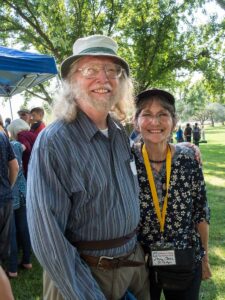
Denver Snuffer Jr. represents a unique category among Mormon defectors: the would-be reformer who believes the mainstream LDS Church has completely lost its way but who seeks to preserve and restore what he views as authentic Mormonism rather than abandon the tradition entirely. Unlike critics who conclude that Joseph Smith was a fraud and Mormonism a false religion, Snuffer maintains that Smith was a true prophet whose genuine revelations have been corrupted, suppressed, and betrayed by the institutional church that claims to continue his work.
A Utah attorney by profession, Snuffer remained an active, temple-attending member for decades while developing distinctive theological views through extensive personal study of early Mormon texts, Joseph Smith’s original revelations and teachings, and his own claimed spiritual experiences. He began writing and lecturing on these views, attracting followers who found his interpretation of Mormonism more compelling than what they heard in official church meetings.
His central argument, developed across multiple books and hundreds of blog posts and lectures, is that the LDS Church lost divine authority and priesthood power shortly after Joseph Smith’s death. According to Snuffer, the successors who claimed to lead the church—Brigham Young and all who followed—did not actually possess the keys and authority they claimed. The institutional church, in his view, has substituted bureaucratic administration for prophetic revelation, correlation committees for divine guidance, and obedience to human leaders for direct relationship with God. True Mormonism, Snuffer argues, requires returning to Smith’s original vision of a religion where anyone could receive revelation, where priesthood was not controlled by hierarchical gatekeepers, and where Zion would be built through spiritual equality rather than institutional obedience.
Most dramatically, Snuffer claims to have received personal visitations from Jesus Christ—experiences he has described in detail in his writings. These claimed encounters brand him, in the eyes of his followers, as a prophetic figure even as he repeatedly insists that he is not a prophet and does not want to be treated as one.
Snuffer’s excommunication came in September 2013 after he refused church leaders’ demands to cease publication and distribution of his book “Passing the Heavenly Gift,” which laid out his argument that the church had lost its authority. The excommunication occurred exactly forty years to the day after his baptism—a timing that Snuffer interpreted as spiritually significant. He continued attending LDS services with his wife for some time after his excommunication, maintaining that his commitment to Mormonism had not wavered even as the institution rejected him.
Denver Snuffer: Never Been A Dissident
I am not and have never been a “dissident” in the LDS Church.
I do not want to reform the LDS Church. I do not want to manage it, or join in managing it, or change its management. There is no “cause” I advocate in the hope of altering a policy or procedure of the LDS Church. Their policies, procedures, programs, choices, how it spends its money, what it builds or who it employs are all matters I am indifferent to.
Those who want to get the LDS Church to ordain women are dissidents. Those who want to have the Book of Abraham abandoned, or want to wear pants (a convention, not a policy), or seek to have homosexuals married are the work of dissidents. There are many causes and many dissidents. I am not one. They are welcome to their causes.
I was converted to a religion which I understood was restored by Jesus Christ through Joseph Smith and contained the latest clarifications, corrections, additions and explanations God wanted me to understand. I am still converted to that religion.
At one time I briefly identified the religion with the LDS Church. But that lasted only a few months. With a little reflection, it was apparent the religion was not the institution. All the other organized religions I was familiar with held the Bible to be God’s complete statement of faith. It was not to be added to or expanded upon. The new religion I accepted taught me to believe God spoke still, and revelation would continue. God likewise talked with me for the first time when I joined this new religion. If God hadn’t spoken to me in answer to sincere prayer, I would not have become Mormon.
The movement that has grown around his teachings—sometimes called the “Remnant” movement—now includes over fifty fellowships scattered across the United States and in several other countries. These groups practice what they describe as radically democratic Mormonism: no formal leadership hierarchies, no paid clergy, no mandatory tithing, no centralized correlation of beliefs, and emphasis on each individual’s direct access to revelation. In 2017, participants in the movement voted to canonize new scriptures, including Snuffer’s revelations and teachings, collected in volumes called “Teachings and Commandments” that replace portions of the standard Doctrine and Covenants.
Church leaders in Salt Lake City have identified Snuffer as a particular threat precisely because he draws away believing Mormons rather than simply producing ex-Mormons who abandon the tradition entirely. His followers continue to believe in Joseph Smith, the Book of Mormon, temple ordinances, and continuing revelation—they simply believe the LDS Church no longer possesses what it claims.
17. MARTHA BECK

Martha Nibley Beck occupies a complicated position among Mormon defectors because of both her family background and the controversial nature of her departure. She is the daughter of Hugh Nibley, who was arguably the most famous LDS scholar and apologist of the twentieth century—a Brigham Young University professor whose dense, erudite defenses of the Book of Mormon and Book of Abraham against critics made him a towering figure among intellectually inclined Latter-day Saints.
Born in Provo, Utah, in 1962, the seventh of eight children, Martha grew up at the very heart of Mormon intellectual culture. Her father was regularly quoted in church publications, consulted by church leaders on scholarly matters, and venerated by generations of BYU students and faithful members seeking intellectual foundations for their testimonies. She earned bachelor’s, master’s, and doctoral degrees from Harvard University, demonstrating academic capability that her father’s admirers could not dismiss.
Beck’s 2005 memoir, “Leaving the Saints: How I Lost the Mormons and Found My Faith,” was deeply controversial for its central claim: that she had been sexually abused by her father from approximately ages five to eight. Beck wrote that she had suppressed memories of this abuse and recovered them only later in life through therapy—placing her account within the contested and controversial field of recovered memory testimony, which remains disputed among psychologists and legal scholars.
Our culture had trapped us… Many Latter-day Saints lived in mental and social prisons that perpetuated precisely the kind of insanity with which I’d grown up. It wasn’t slavery, but it was a powerful form of bondage: the belief that God had ordained a pattern of secrets and silence, that religious authority always trumped one’s individual sense of right and wrong, that the evidence of the senses must bow to the demands of orthodoxy, no matter how insane. It was a kind of institutionalized madness, and its shackles were all the more confining for existing almost entirely in the human mind.
— Quote from Martha Beck, Leaving the Saints
All seven of Beck’s siblings have publicly disputed her allegations, with some calling the book “a work of fiction” and expressing outrage at what they view as a false attack on their deceased father’s legacy. The family reportedly considered legal action against her. Critics of the book have also pointed to what they describe as exaggerations and inaccuracies in her portrayal of Mormon culture and her own upbringing beyond the abuse allegations. Hugh Nibley died in 2005, shortly after the book’s publication, without ever being able to respond fully to his daughter’s claims.
Beck has since come out as queer and built a successful career completely outside Mormon contexts. She works as a life coach and author, writes a column for Oprah Daily, and has published numerous books on personal transformation, authentic living, and escaping unhealthy patterns. She rarely addresses Mormonism directly in her current work.
PART VII: ADDITIONAL NOTABLE DEFECTORS
18. TOM PHILLIPS
Tom Phillips, a British former stake president, gained international attention in 2014 when he attempted to prosecute LDS Church President Thomas S. Monson for fraud in English courts. He argued that the church made false representations about its foundational claims—including the historicity of the Book of Mormon and the literal reality of the First Vision—to obtain tithing money from members who would not have paid if they had known the truth about church origins.
Phillips had served as stake president in England, one of the highest local leadership positions available. More significantly for his later activism, he had received the Second Anointing—the secret ordinance that guarantees celestial exaltation regardless of future sins short of murder or denying the Holy Ghost. His willingness to discuss this ordinance publicly violated what had been a strict taboo; recipients were forbidden from even acknowledging its existence. By speaking about his Second Anointing experience, Phillips gave outsiders unprecedented insight into ceremonies known previously only to the church’s inner circle.
I am not an angry ‘anti-Mormon’, I am pro truth. I served diligently in the Church because I honestly believed (‘knew’) it to be true. Once I found out otherwise I could not, as encouraged by Church leaders, just continue in the faith so that I could keep my family. I could not live a lie.
Though the fraud prosecution was ultimately dismissed by British courts, which ruled that theological claims were not proper subjects for fraud prosecution, the case generated substantial international media coverage. The church was forced to respond to criticisms in a legal forum it could not control, and the spectacle of a church president being summoned to court—even unsuccessfully—damaged the institution’s image of unassailable respectability.
19. SIMON SOUTHERTON

Simon Southerton is an Australian molecular biologist whose scientific work directly challenged one of the Book of Mormon’s central claims: that Indigenous Americans are descendants of Israelite peoples who migrated to the Americas around 600 BCE. The Book of Mormon presents Native Americans as descended from the family of Lehi, a Jewish prophet who fled Jerusalem before its destruction by Babylon. For generations, church leaders taught this as literal history, and the book’s title page explicitly identifies its purpose as coming forth to show the Lamanites—understood to be Indigenous Americans—their Israelite heritage.
Southerton’s DNA research, published in his 2004 book “Losing a Lost Tribe: Native Americans, DNA, and the Mormon Church,” demonstrated conclusively that Indigenous American populations are descended from Asian migrants who crossed the Bering land bridge thousands of years before Lehi’s supposed journey. No genetic evidence supports any Israelite contribution to Indigenous American ancestry. The scientific case was overwhelming and irrefutable.
The church has responded to this evidence by quietly revising its position. The Book of Mormon introduction, which once stated that the Lamanites are “the principal ancestors of the American Indians,” was changed in 2006 to say they are “among the ancestors”—a significant theological retreat that acknowledges Indigenous Americans had other, non-Israelite ancestry. Apologists have developed “limited geography” theories suggesting that Book of Mormon peoples occupied a small area and their genetic signature was overwhelmed by larger existing populations. These explanations allow some version of the book’s historical claims to survive, but they represent substantial departures from what prophets taught for over a century.
My faith crisis occurred in August 1998 after experiencing a brief, but intense, period of cognitive dissonance. I was a bishop at the time. Until I went to sleep on the 2nd August I had a firm testimony. When I woke the next day I knew, with absolute certainty, the church wasn’t true. This unconscious epiphany occurred after a couple of weeks of study and serious reflection.
I think the most harmful aspect of Mormonism is that it cuts you off from the real world. Growing up in the church we were constantly told the world was evil and getting worse, and that our generation of Latter-day Saint youth was the most special to come to earth. As young priesthood holders we were also taught we had more authority to act for God than the Pope. This us vs them messaging, which is reinforced in every General Conference, affected the way I looked at non-Mormons and the rest of the world.
The most joyful part of leaving the church has been discovering that the world is not as evil as the church makes out. According to many important metrics, it is actually getting better. There are plenty of genuinely good and honest people who have no faith at all. Because our lives are no longer completely absorbed with Mormonism we have had time to develop numerous friendships with non-Mormons. These friendships are simpler to maintain because they are built on mutual respect. We have also formed very close friendships with many other former members of the church in Australia and around the world.
This pattern of quiet revision is hardly unique to the DNA controversy. Whenever the LDS Church faces evidence that undermines foundational claims—whether historical, doctrinal, or archaeological—it tends to adapt its official narratives and documents without public acknowledgment of error. Key manuals, lesson materials, and online essays are periodically updated to soften former absolutist statements, often reframing them as “interpretations” or “opinions of their time.” In doing so, the institution subtly rewrites its own past, allowing older teachings to fade from collective memory while maintaining an appearance of unbroken prophetic consistency.
20. RYAN MCKNIGHT (MORMONLEAKS)
Ryan McKnight founded MormonLeaks in 2016 (later renamed Truth and Transparency Foundation) as a platform for publishing leaked documents from within the LDS Church. Operating on the WikiLeaks model, the organization accepts anonymous submissions from church employees, volunteers, and members with access to sensitive materials, then verifies and publishes documents that reveal aspects of church operations hidden from ordinary members and the public.
MormonLeaks has released numerous significant documents over the years: information about General Authority compensation revealing that top leaders receive six-figure “living allowances” contrary to the church’s claims of an entirely unpaid lay ministry; materials about missionary training and the psychological pressures placed on young missionaries; disciplinary proceedings and handbooks revealing how dissent is managed; internal communications about handling sensitive issues like sexual abuse allegations and how to respond to media inquiries; and financial documents providing glimpses into the church’s vast wealth and spending priorities.
McKnight represents a new form of Mormon dissent suited to the digital age: systematic exposure of institutional secrets through whistleblowing and document publication rather than personal testimony, theological argument, or historical research. His work assumes that transparency itself is valuable—that members and the public deserve to know what happens inside an institution that demands so much of its adherents.
CONCLUSION: COMMON THEMES AND FUTURE IMPLICATIONS
Examining these twenty prominent defectors reveals several recurring themes that illuminate both why members leave and what their departures mean for the church’s future.
The most common factor across these diverse cases involves historical truth claims. From the Tanners in the 1960s to the Hamakers in 2025, questioning members have been troubled by the same fundamental issues: problems with Book of Mormon historicity including anachronisms suggesting nineteenth-century composition rather than ancient American origin; controversies surrounding the Book of Abraham where surviving papyri contain ordinary Egyptian funerary texts unrelated to the published translation; the troubling details of Joseph Smith’s practice of polygamy and polyandry including marriages to teenagers and other men’s wives; multiple contradictory accounts of the First Vision; use of a folk magic seer stone in producing the Book of Mormon; DNA evidence demonstrating that Indigenous Americans descended from Asian migrants rather than Israelites; and the racial priesthood ban that excluded Black members from full participation until 1978 without doctrinal explanation. The church’s Gospel Topics Essays now acknowledge many of these issues, but the essays have proven a double-edged sword—validating critics’ claims while failing to provide satisfactory explanations for many members.
LGBTQ+ issues have become increasingly prominent as reasons for departure, reflecting broader social changes that have made the church’s teachings on homosexuality increasingly difficult for many to accept. David Archuleta’s story of suicidal ideation, broken engagements to women, and suppression of his authentic self until age thirty represents a pattern experienced by countless LGBTQ+ Latter-day Saints. As acceptance of LGBTQ+ identities has become mainstream in secular society, the church’s insistence that same-sex attraction is disordered and same-sex relationships are sinful has driven away not only LGBTQ+ members themselves but also family members and allies who cannot accept discrimination against people they love.
Financial transparency has emerged as a significant concern as information about the church’s wealth has become public. Jeff Green’s criticism of the church’s hundred-billion-dollar investment portfolio—accumulated through tithing paid by members, including those in poverty—resonated with many troubled by the gap between institutional wealth and charitable expenditure. The Hamakers’ discipline for suggesting tithing could support other charities highlights continued institutional sensitivity about finances.
The September Six excommunications demonstrated the church’s willingness to discipline members for intellectual inquiry rather than moral failings, sending a message that scholarly honesty would not be tolerated when it conflicted with institutional narratives. Three decades later, tension between intellectual freedom and obedience remains unresolved.
Perhaps most striking is how many defectors maintain deep connections to Mormon identity even after leaving the institutional church. John Dehlin considers himself culturally Mormon. Hans Mattsson continued attending services as a doubter. Lavina Fielding Anderson attended her ward for thirty years after excommunication. Denver Snuffer’s entire movement is an attempt to preserve authentic Mormonism. The question of what it means to be Mormon without being a member in good standing remains open for millions navigating that liminal space.
The church faces a fundamental challenge: the information environment that allowed it to control its own narrative for generations no longer exists. Any member with a smartphone can access critical perspectives instantly. High-profile departures prove that doubt reaches the highest leadership levels. Alternative communities provide support. Whether incremental adaptations will stem departures or simply raise expectations for reform remains the central question for the church’s future.
What is certain is that these stories represent not isolated failures but a pattern of intelligent, accomplished individuals who found the church’s claims wanting when examined honestly. Their experiences illuminate fault lines—historical, ethical, financial, and social—that seem unlikely to disappear. The question is not whether there will be more prominent defectors. There certainly will be. The question is how the institution will respond.
In its systematic efforts to silence, discredit, and punish those who challenge its truth claims, the LDS Church may well represent the most aggressive institutional response to religious dissent since the medieval Catholic Church—an organization that, through the Inquisition beginning in the twelfth century, authorized the burning of heretics at the stake as the ultimate sanction against theological deviation. While the modern LDS Church obviously employs social, legal, and ecclesiastical weapons rather than literal fire, the underlying impulse remains strikingly similar: the institutional conviction that dissent poses an existential threat requiring coordinated suppression rather than substantive engagement. Church discipline councils, excommunication of scholars and questioners, legal intimidation of critics, carefully orchestrated reputation campaigns, and the cultivation of an internal culture where doubt itself is treated as moral failure—these represent the contemporary tools of an organization that, like its medieval predecessor, has concluded that preserving institutional authority matters more than pursuing truth wherever it leads. The irony, of course, is that a church founded on Joseph Smith’s claim that all existing Christian creeds were “an abomination” has become precisely the kind of institution that cannot tolerate others making similar critical judgments about its own creeds.
SOURCES AND FURTHER READING
This article draws on numerous primary and secondary sources including: Wikipedia articles on the September Six, individual defectors, and related Mormon history topics; Religion News Service coverage of contemporary departures including the Hamakers and Denver Snuffer’s movement; Salt Lake Tribune reporting on faith crises, church discipline, and institutional issues; Deseret News historical archives; Mormon Stories Podcast interviews and recordings; CES Letter Foundation materials; Utah Lighthouse Ministry archives and publications; MormonThink documentation; and mainstream media coverage from the New York Times, Washington Post, Good Morning America, Daily Beast, American Songwriter, Slate, NPR, and other outlets.
Key online resources: cesletter.org (CES Letter), mormonstories.org (Mormon Stories Podcast), utlm.org (Utah Lighthouse Ministry), mormonthink.com (MormonThink), religionnews.com (Religion News Service), sltrib.com (Salt Lake Tribune).
This article was developed with the assistance of artificial intelligence tools, which have proven to be valuable research assets across numerous academic disciplines. While AI-generated insights informed much of this work, all content has been carefully reviewed, supplemented with additional research and pertinent sources, and edited by the author to ensure accuracy, factual fidelity, and relevance to the reader.