
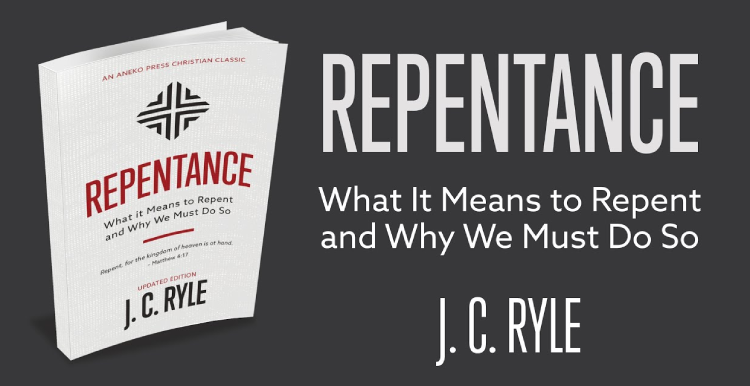
Download the PDF to print at home (4 pages): Repentance
Introduction: The Foundation of the Gospel Message
J.C. Ryle’s classic work “Repentance” centers on the sobering words of Jesus Christ from Luke 13:3-5: “Except you repent, you will all likewise perish.” While these words may initially appear stern and severe, Ryle explains they emanate from the lips of divine love—spoken by the One who left heaven, lived humbly for thirty-three years, and died for humanity’s sins. The apparent harshness of Christ’s warning is analogous to a midnight cry of “Fire!”—unwelcome in the moment but potentially life-saving in its urgency. These words of warning are, in truth, words of tender love that could deliver precious souls from eternal destruction.
Ryle structures his treatise around three fundamental questions that form the backbone of Christian understanding about repentance: What is the nature of repentance? Why is repentance necessary? What encouragements exist to lead people to repent? Throughout this work, the nineteenth-century Anglican bishop demonstrates both theological precision and pastoral warmth, making profound biblical truth accessible to readers of all backgrounds.
I. The Nature of Repentance: Understanding What It Truly Is
Ryle begins by establishing that repentance represents one of Christianity’s foundational doctrines, appearing at least sixty times throughout the New Testament. It was the first doctrine preached by Jesus Christ when He commanded, “Repent, and believe the Gospel” (Mark 1:15). The apostles proclaimed repentance when sent forth (Mark 6:12), and Jesus instructed His disciples that repentance and remission of sins should be preached in His name among all nations (Luke 24:47). Peter’s first sermons concluded with the appeal: “Repent, and be baptized.” This biblical emphasis underscores repentance as no peripheral matter but rather an essential element of saving faith.
At its core, repentance constitutes a thorough, radical change of the human heart regarding sin. Ryle explains that all people are born with an innate love for sin, taking to it as naturally as birds take to flying and fish to swimming. Children require no instruction in deceitfulness, selfishness, passion, self-will, gluttony, pride, and foolishness—these spring up spontaneously as natural products of the fallen human heart. This universal corruption provides irrefutable evidence of humanity’s fall and depravity. When the Holy Spirit changes this natural heart and casts out the innate love of sin, the transformation that occurs is what Scripture calls “repentance.”
The Five Marks of True Repentance
Ryle meticulously dissects repentance to reveal its component parts, offering readers a clear understanding of genuine conversion versus counterfeit religion:
First, true repentance begins with knowledge of sin. The eyes of the penitent person are opened to see the full extent and breadth of God’s holy law and their enormous transgressions against it. Those who previously considered themselves “good people” with “good hearts” discover they have been under a massive delusion. They realize that in God’s sight, they are wicked, guilty, corrupt, and evil. Their pride collapses, their high thoughts melt away, and they see themselves as great sinners before a holy God.
Second, true repentance works deep sorrow for sin. The heart becomes touched with profound remorse over past transgressions. The penitent person feels cut to the heart when thinking about how madly and wickedly they have lived. They mourn over wasted time, misspent talents, God dishonored, and their own soul injured. The remembrance of these things becomes grievous, and the burden sometimes feels nearly intolerable.
Third, true repentance produces confession of sin. The tongue of the repentant person is loosed. They feel compelled to speak with the God against whom they have sinned. An internal conviction drives them to cry out to God, pray to God, and talk with God about their soul’s condition. They must pour out their heart and acknowledge their guilt and vileness before the throne of grace.
Fourth, true repentance shows itself in a thorough breaking off from sin. The penitent person not only feels and speaks but also acts. They flee from sin as from a plague and break off from old, sinful habits and practices. They labor to live a new and holy life, striving to be a new person with a new heart. They endeavor in all relationships—whether as parent, child, husband, wife, master, or servant—to live according to God’s will.
Fifth, true repentance produces in the heart a settled habit of deep hatred for all sin. The mind of the penitent person becomes habitually holy. They abhor what is evil and cleave to what is good. Though they may fall short of their own desires and experience ongoing struggles with indwelling corruption, their hearts generally turn toward God and away from evil. They desire to be completely done with sin once and for all, recognizing that while they are not what they should be, they are also no longer what they once were.
The Inseparable Companion of Faith
Ryle emphasizes that true repentance never exists alone in any person’s heart—it always has a blessed companion. Repentance is invariably accompanied by living faith in the Lord Jesus Christ. Wherever faith exists, there is repentance; wherever repentance exists, there is always faith. Just as one cannot have the sun without light, ice without cold, fire without heat, or water without moisture, one will never find true faith without true repentance, nor true repentance without living faith. These two graces always proceed side by side, inseparable companions in the Christian life.
II. The Necessity of Repentance: Why It Cannot Be Avoided
The text from Luke 13 clearly establishes repentance’s absolute necessity of repentance. Christ’s words are distinct, express, and emphatic: “Except you repent, you shall all likewise perish.” Ryle stresses that all people—without exception—need repentance toward God. This requirement extends far beyond thieves, murderers, drunkards, adulterers, fornicators, and prison inmates. Every person born of Adam stands in desperate need of repentance.
The queen upon her throne and the pauper in the workhouse, the wealthy in their drawing rooms and servants in the kitchen, university professors and ignorant laborers in the field—all by nature require repentance. All are born in sin, and all must repent and be converted if they would be saved. All must have their hearts fundamentally changed about sin. All must repent as well as believe the Gospel. There are absolutely no exceptions to this divine requirement.
Three Concrete Reasons for Universal Repentance
Ryle provides three compelling reasons why repentance stands as an inescapable necessity for every human being:
Without repentance, there is no forgiveness of sins. Scripture consistently links these two realities. Repentance and remission of sins are joined together in Christ’s commission to His disciples. Peter declared at Pentecost that people must repent and be baptized for the remission of sins. Paul testified before King Agrippa that he preached that people should repent and turn to God, and do works befitting repentance. The unchanging principle remains: without repentance, there can be no pardon for sin.
Without repentance, there is no happiness in the present life. The impenitent person carries the heavy burden of guilt and uneasiness. They cannot find true peace or satisfaction in earthly pleasures, possessions, or achievements. Their conscience remains troubled, and they lack the joy that comes from reconciliation with God. Only through repentance can a person experience genuine contentment and peace with their Creator.
Without repentance, there can be no fitness for the world to come. Heaven is a prepared place for prepared people. The impenitent heart, still clinging to sin and alienated from God, possesses no capacity to enjoy heaven’s holy atmosphere. Without a fundamental change of heart about sin, a person would find heaven’s worship, fellowship, and holiness completely foreign and uncomfortable. Repentance prepares the soul for its eternal dwelling place.
III. The Encouragements to Repentance: Reasons for Hope
Though repentance is necessary and the human heart is naturally resistant to change, Ryle insists that abundant encouragements exist—great, broad, wide, full, and free. He presents five powerful motivations designed to strengthen every heart and stir people to repent without delay.
The Gracious Savior
Ryle places Christ first and foremost as the greatest encouragement to repentance. He urges doubting souls to look at Christ and think of Christ. Jesus can save to the uttermost all who come to God through Him (Hebrews 7:251Consequently, he is able to save to the uttermost[a] those who draw near to God through him, since he always lives to make intercession for them.). He is anointed as both Prince and Savior to give repentance as well as forgiveness of sins (Acts 5:312God exalted him at his right hand as Leader and Savior, to give repentance to Israel and forgiveness of sins.). Christ is no austere man but infinitely wise and loving. He despises no one who comes to Him. There is a Priest ready for every sinner—no ordained intermediary is necessary. Jesus Christ Himself serves as the true High Priest who can give absolution and send repentant souls away with light hearts and perfect peace.
The Gracious Invitations of Scripture
The Bible overflows with invitations to the weary and heavy-laden. God declares through the prophet Ezekiel: “As I live, says the Lord God, I have no pleasure in the death of the wicked. Turn! Turn! Why will you die?” (Ezekiel 33:11). Jesus announced that there is joy in the presence of the angels of God over one sinner who repents (Luke 15:103Just so, I tell you, there is joy before the angels of God over one sinner who repents.). These words demonstrate God’s genuine desire for human repentance and salvation.
The Encouraging Promises of God’s Word
Scripture contains countless promises to those who seek God with repentant hearts. The principle remains constant: “Whoever confesses and forsakes his sins shall find mercy” (Proverbs 28:13). God pledges to receive all who come to Him through Christ, refusing none who approach in genuine repentance and faith.
The Powerful Parables of Christ
Ryle points to Jesus’ memorable parables that illustrate divine grace toward repentant sinners. The parable of the Pharisee and the tax collector demonstrates that the humble, repentant publican went home justified rather than the self-righteous Pharisee. The parable of the prodigal son shows a father running to embrace his wayward child who returns home in repentance. These stories powerfully communicate God’s eagerness to welcome repentant sinners.
The Example of Forgiven Sinners
Biblical history provides numerous examples of great sinners who found mercy through repentance. Manasseh, one of Judah’s most wicked kings, repented and was forgiven. The thief on the cross, in his final hours, turned to Christ and heard the promise of paradise. Mary Magdalene, from whom seven demons had been cast out, became a devoted follower of Jesus. These examples demonstrate that no sin is too great, no sinner too far gone, to be saved through genuine repentance.
Conclusion: The Urgent Call
Ryle concludes his treatise by emphasizing that repentance represents a work of God’s grace that no one should delay seeking. While the penitent person experiences ongoing struggles with remaining sin and often falls short of their own desires, the essential transformation has occurred—their heart’s general bias now turns toward God and away from evil. The Christian life involves continuous growth in holiness and conformity to Christ’s image.
The impenitent person stands without excuse. God has provided every encouragement, removed every legitimate obstacle, and offered full pardon through Christ. The choice confronting each reader is clear: repent and live, or refuse and perish. Time is precious, death is certain, and eternity is long. Ryle urges his readers to arise today, flee to Christ, and repent without delay, knowing that in Him they will find a gracious Savior who turns away none who come to Him in faith and repentance.
Throughout this masterful work, J.C. Ryle demonstrates why he remains recognized as one of the nineteenth century’s greatest biblical expositors. His treatment of repentance combines theological depth with pastoral sensitivity, doctrinal precision with practical application, and unwavering biblical fidelity with compassionate urgency. The result is a timeless classic that continues to call sinners to salvation and believers to deeper consecration.
Amen!