
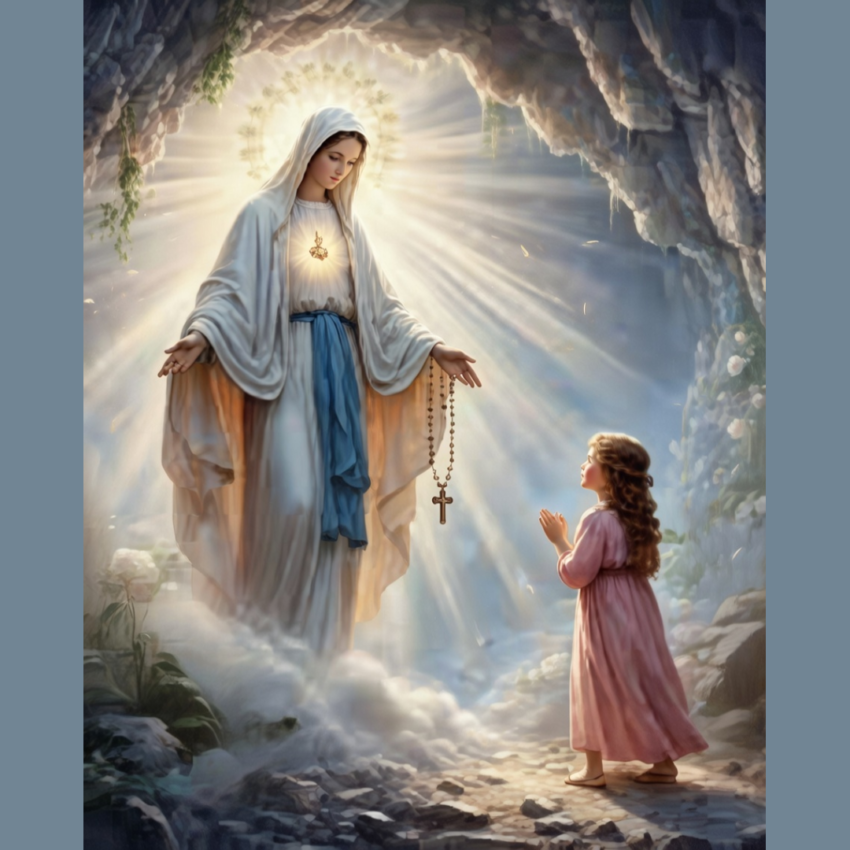
The Biblical Examination of Prayer to Mary:
A Scholarly Theological Analysis
Introduction: The Catholic Practice of Praying to Mary
Among the most distinctive features of Roman Catholic piety is the practice of praying to Mary, the mother of Jesus. This devotional tradition encompasses a rich tapestry of practices, including the recitation of the Rosary, the Hail Mary prayer, novenas dedicated to various Marian titles, and pilgrimages to shrines associated with reported apparitions of the Virgin. The Catholic Church employs the term hyperdulia to describe the special veneration accorded to Mary, distinguishing it from the ordinary dulia (honor) given to saints and the latria (worship) reserved exclusively for God. The theological apparatus surrounding Marian devotion is elaborate and sophisticated, yet the question remains: Does this practice find warrant in the New Testament Scriptures?
Catholic theology has developed an impressive array of arguments to support Marian veneration and prayer. The Council of Ephesus in 431 A.D. formally ratified the title Theotokos (“God-bearer” or “Mother of God”) for Mary, a designation that, while originally intended to affirm Christ’s divine nature against Nestorian heresy, subsequently became the theological foundation for an ever-expanding Mariology. Over subsequent centuries, Catholic doctrine developed additional teachings including Mary’s perpetual virginity (affirmed at the Second Council of Constantinople in 553), her Immaculate Conception (defined as dogma by Pope Pius IX in 1854), and her bodily Assumption into heaven (proclaimed by Pope Pius XII in 1950). These doctrines, combined with teachings about Mary’s role as a co-redemptrix and mediatrix of graces, form the theological justification for directing prayers toward her.
However, a careful examination of the New Testament reveals a conspicuous absence of exegetical support for these developed doctrines and practices. The earliest Christians, as reflected in the apostolic writings, appear to have been unfamiliar with anything resembling the elaborate Marian piety that would emerge centuries later. Historical research confirms that veneration of Mary developed gradually, with the first recorded prayers addressed to Mary appearing no earlier than the third century (the Sub tuum praesidium papyrus, dated variously between 250-600 A.D.). The first and second centuries of Christianity show no evidence of Marian prayer, a significant lacuna that raises fundamental questions about whether this practice can claim apostolic warrant.
This article undertakes a comprehensive examination of the New Testament’s teaching on prayer, recognizing that Catholic and Protestant traditions have approached this subject from different theological frameworks, each with its own internal coherence and historical development. Rather than approaching this study with predetermined conclusions, we shall carefully examine the relevant biblical texts, consider their theological implications within their original contexts, and thoughtfully compare how both Protestant and Catholic traditions have interpreted these passages. Our aim is not to diminish the sincere faith of believers on either side of this theological conversation, but to engage in the kind of careful exegesis that honors Scripture and respects the deeply held convictions of Christians who have wrestled with these questions for centuries. In the spirit of charitable inquiry, we will present the strongest arguments from each perspective before offering conclusions rooted in the biblical evidence.
A Comprehensive Examination of New Testament Teaching on Prayer
Jesus’ Instruction on Prayer: The Model Prayer
The most explicit and authoritative teaching on prayer in the New Testament comes from Jesus himself. In Matthew 6:9-1319 Pray then like this: “Our Father in heaven, hallowed be your name. 10 Your kingdom come, your will be done, on earth as it is in heaven. 11 Give us this day our daily bread, 12 and forgive us our debts, as we also have forgiven our debtors. 13 And lead us not into temptation, but deliver us from evil., commonly known as the Lord’s Prayer, Jesus provides his disciples with a paradigm for prayer. The opening address is striking in its directness: “Our Father in heaven, hallowed be your name” (Matthew 6:9, ESV). Jesus instructs his followers to address their prayers directly to God the Father, without any intermediary figure. The prayer encompasses petitions regarding God’s glory (“hallowed be your name, your kingdom come, your will be done”), daily provision (“give us this day our daily bread”), forgiveness (“forgive us our debts”), and spiritual protection (“lead us not into temptation, but deliver us from evil”).
Notably absent from this model prayer is any reference to Mary or any other intermediary. Jesus does not instruct his disciples to approach God through his mother, through angels, or through any human mediator. The relationship established is immediate and direct: believers are invited to address God as “Father,” a term of intimate relationship made possible through Christ’s redemptive work. As New Testament scholar Ulrich Luz observes, Jesus employs the everyday Aramaic term Abba rather than the formal Hebrew of synagogue liturgy, emphasizing the directness and intimacy of the relationship between the believer and God.
Christ as the One Mediator: 1 Timothy 2:1-5
Perhaps the most theologically decisive text regarding the question of intermediaries in prayer is 1 Timothy 2:5, which states unequivocally: “For there is one God, and there is one mediator between God and men, the man Christ Jesus” (ESV). The Greek term mesitēs2one who intervenes between two, either in order to make or restore peace and friendship, or form a compact, or for ratifying a covenant a medium of communication, arbitrator (μεσίτης) denotes one who intervenes between two parties; to establish or restore a relationship. Paul’s declaration is emphatic and exclusive: there is one (εἷς) mediator, not several mediators of varying degrees.
The context of this passage is crucial. Paul has just urged “that supplications, prayers, intercessions, and thanksgivings be made for all people.” (1 Timothy 2:1). The ground for this universal scope of prayer is God’s desire “that all people be saved and come to the knowledge of the truth.” (v. 4). The singular mediation of Christ is presented as the theological basis for confident, direct prayer to God. As Robert Yarbrough notes in his Pillar New Testament Commentary, Christ’s unique mediatorial role means that “we come to God through faith in His Son, who is the only means of salvation. There is no other go-between.”
Catholic apologists often respond by distinguishing between Christ’s unique role as mediator of redemption and the secondary or subordinate mediation of intercessory prayer by saints. They note that Paul commands Christians to intercede for one another (1 Timothy 2:13First of all, then, I urge that supplications, prayers, intercessions, and thanksgivings be made for all people,), arguing that if we can ask living believers to pray for us, surely we can ask deceased saints to do the same. However, this argument conflates two distinct categories: the horizontal fellowship of believers within the visible church and the vertical relationship between creatures and their Creator. When Paul instructs Christians to pray for one another, he is addressing the mutual edification of the earthly church, not establishing a pattern of prayer directed toward departed believers.
Access to God Through Christ: Hebrews 4:14-16 and 7:25
The Epistle to the Hebrews develops the theme of Christ’s unique mediation with particular emphasis on his high priestly ministry. Hebrews 4:14-16 declares: “Since then we have a great high priest who has passed through the heavens, Jesus, the Son of God, let us hold fast our confession. For we do not have a high priest who is unable to sympathize with our weaknesses, but one who in every respect has been tempted as we are, yet without sin. Let us then with confidence draw near to the throne of grace, that we may receive mercy and find grace to help in time of need.”
The theological argument of Hebrews is that Jesus has superseded and fulfilled the Old Testament priesthood. Under the old covenant, worshippers required human priests to mediate their approach to God. Under the new covenant, believers enjoy direct access to God’s throne through Christ. The exhortation to “draw near to the throne of grace” envisions believers approaching God directly through Christ, not through additional intermediaries who stand between believers and their High Priest.
Hebrews 7:25 reinforces this point: “Consequently, he is able to save to the uttermost those who draw near to God through him, since he always lives to make intercession for them.” Christ’s eternal intercession renders unnecessary any supplementary intercessors. He “always lives” to perform this ministry, meaning there is no circumstance, no time, no need that exceeds his intercessory capacity. To interpose Mary or any saint between the believer and Christ is to imply an insufficiency in Christ’s mediatorial work that the text explicitly denies.
Prayer in Jesus’ Name: John 14:13-14 and 16:23-24
In his farewell discourse, Jesus provides further instruction on the nature of Christian prayer. In John 14:13-14, he promises: “Whatever you ask in my name, this I will do, that the Father may be glorified in the Son. If you ask me anything in my name, I will do it.” Similarly, in John 16:23-24: “In that day you will ask nothing of me. Truly, truly, I say to you, whatever you ask of the Father in my name, he will give it to you. Until now you have asked nothing in my name. Ask, and you will receive, that your joy may be full.”
The pattern established here is clear: prayer is to be directed to the Father in the name of Jesus. The phrase “in my name” signifies more than a verbal formula appended to prayers; it indicates prayer that is consistent with Christ’s character, will, and redemptive purposes, offered based on His authority and merit. Significantly, Jesus nowhere instructs his disciples to pray to him through Mary or to invoke Mary’s name alongside his own. The omission is telling, particularly given the opportunity presented by Mary’s presence in the immediate context of Jesus’ ministry.
The Spirit’s Role in Prayer: Romans 8:26-27
Paul’s treatment of prayer in Romans 8 introduces another dimension: the role of the Holy Spirit. “Likewise, the Spirit helps us in our weakness. For we do not know what to pray for as we ought, but the Spirit himself intercedes for us with groanings too deep for words. And he who searches hearts knows what is the mind of the Spirit, because the Spirit intercedes for the saints according to the will of God.” (Romans 8:26-27).
The New Testament thus presents a Trinitarian framework for prayer: believers address the Father, through the Son, in the power of the Spirit. The Spirit, who dwells within believers, assists in articulating prayers that accord with God’s will. This indwelling ministry of the Spirit provides direct, personal assistance in prayer—assistance that the New Testament nowhere suggests Mary provides or is capable of providing. The Spirit’s role as divine helper in prayer further underscores the sufficiency of the provisions God has made for believers’ communion with him.
Mary in the New Testament: A Limited Portrait
An examination of Mary’s portrayal in the New Testament provides essential context for evaluating Marian devotion. Mary appears in the birth narratives of Matthew and Luke, at the wedding in Cana (John 2:1-12), briefly during Jesus’ ministry when she arrives with his brothers (Mark 3:31-35431 And his mother and his brothers came, and standing outside they sent to him and called him. 32 And a crowd was sitting around him, and they said to him, “Your mother and your brothers are outside, seeking you.” 33 And he answered them, “Who are my mother and my brothers?” 34 And looking about at those who sat around him, he said, “Here are my mother and my brothers! 35 For whoever does the will of God, he is my brother and sister and mother.”; Matthew 12:46-50546 While he was still speaking to the people, behold, his mother and his brothers[a] stood outside, asking to speak to him.[b] 48 But he replied to the man who told him, “Who is my mother, and who are my brothers?” 49 And stretching out his hand toward his disciples, he said, “Here are my mother and my brothers! 50 For whoever does the will of my Father in heaven is my brother and sister and mother.”), at the cross (John 19:25-27625 but standing by the cross of Jesus were his mother and his mother’s sister, Mary the wife of Clopas, and Mary Magdalene. 26 When Jesus saw his mother and the disciple whom he loved standing nearby, he said to his mother, “Woman, behold, your son!” 27 Then he said to the disciple, “Behold, your mother!” And from that hour the disciple took her to his own home.), and among those gathered in the upper room awaiting Pentecost (Acts 1:147All these with one accord were devoting themselves to prayer, together with the women and Mary the mother of Jesus, and his brothers.). Beyond these passages, Mary receives only indirect reference, most notably in Galatians 4:4: “God sent forth his Son, born of woman.”
Several observations are pertinent. First, the New Testament presents Mary as a woman of exemplary faith who responded obediently to God’s call (Luke 1:388And Mary said, “Behold, I am the servant[a] of the Lord; let it be to me according to your word.” And the angel departed from her.). Her Magnificat (Luke 1:46-55) is a beautiful expression of humble worship. Elizabeth’s blessing (“Blessed are you among women, and blessed is the fruit of your womb!”) acknowledges Mary’s unique privilege as the mother of the Messiah. Second, and equally important, nowhere in the New Testament is Mary presented as an object of prayer, an intercessor for believers, or a figure to whom devotion should be directed. The apostolic writings, which address numerous aspects of Christian worship and practice, are entirely silent on any devotional attention to Mary.
The incident at the wedding in Cana (John 2:1-12) is sometimes cited as evidence of Mary’s intercessory role, as she brings the need for wine to Jesus’ attention. However, this narrative describes an earthly interaction between a mother and son, not a paradigm for post-resurrection intercession. Moreover, Jesus’ response to Mary (“Woman, what does this have to do with me?”) seems designed to establish appropriate distance between familial relationship and messianic mission. Similarly, Jesus’ words from the cross (“Woman, behold, your son!… Behold, your mother!” John 19:26-27) are best understood as provision for Mary’s care rather than a mystical installation of Mary as spiritual mother of all believers.
Theological Implications: Why Prayer to Mary Is Problematic
The Sufficiency of Christ’s Mediation
The cumulative witness of the New Testament presents Christ as entirely sufficient for every aspect of the believer’s relationship with God. He is the way, the truth, and the life; no one comes to the Father except through him (John 14:69Jesus said to him, “I am the way, and the truth, and the life. No one comes to the Father except through me.). He is the one mediator between God and humanity (1 Timothy 2:510For there is one God, and there is one mediator between God and men, the man[a] Christ Jesus,). He is the great high priest through whom believers confidently approach God’s throne (Hebrews 4:14-161114 Since then we have a great high priest who has passed through the heavens, Jesus, the Son of God, let us hold fast our confession. 15 For we do not have a high priest who is unable to sympathize with our weaknesses, but one who in every respect has been tempted as we are, yet without sin. 16 Let us then with confidence draw near to the throne of grace, that we may receive mercy and find grace to help in time of need.). He ever lives to intercede for his people (Hebrews 7:2512Consequently, he is able to save to the uttermost[a] those who draw near to God through him, since he always lives to make intercession for them.). To introduce additional mediators or intercessors between believers and Christ implicitly diminishes the sufficiency of Christ’s completed work.
The Catholic response that Mary’s intercession does not diminish Christ’s unique mediation but participates in it raises more questions than it answers. The Second Vatican Council’s Lumen Gentium states that Mary’s “salvific influence on men… flows forth from the superabundance of the merits of Christ, rests on His mediation, depends entirely on it and draws all its power from it.” Yet if Mary’s intercession depends entirely on Christ’s mediation, why is it necessary at all? The New Testament nowhere suggests that Christ’s intercession requires supplementation, even of a subordinate nature. The elaborate theological apparatus developed to explain Mary’s intercessory role appears designed to justify a practice that lacks a biblical foundation rather than to expound biblical teaching.
The Problem of Communication with the Dead
Prayer to Mary necessarily involves addressing a deceased human being. Catholic theology affirms that Mary, like other saints, is alive in heaven and able to hear and respond to prayers. However, the Old Testament explicitly prohibits attempting to communicate with the dead. Deuteronomy 18:10-121310 There shall not be found among you anyone who burns his son or his daughter as an offering, anyone who practices divination or tells fortunes or interprets omens, or a sorcerer 11 or a charmer or a medium or a necromancer or one who inquires of the dead, 12 for whoever does these things is an abomination to the Lord. And because of these abominations, the Lord your God is driving them out before you. lists consulting the dead among detestable practices forbidden to Israel. The account of Saul consulting the medium at Endor (1 Samuel 28) presents such an attempt as a grievous sin reflecting Saul’s desperate separation from God.
Catholics distinguish between necromancy (forbidden attempts to conjure spirits for information) and the invocation of saints (requesting their intercession). Yet this distinction does not fully resolve the difficulty. The New Testament nowhere authorizes or models prayer to deceased believers. The assumption that departed saints can hear the prayers of millions of people simultaneously worldwide attributes to created beings a form of omniscience that Scripture reserves for God alone. As Karl Barth pointedly observed, Catholic Mariology tends toward elevating Mary to a quasi-divine status, which he considered “a sick theological development.”
The Absence of Apostolic Example
Perhaps most telling is the complete absence of Marian prayer in the apostolic church. The book of Acts presents numerous prayer scenes: the disciples praying in the upper room (1:1414All these with one accord were devoting themselves to prayer, together with the women and Mary the mother of Jesus, and his brothers.), the church praying for Peter’s release from prison (12:515So Peter was kept in prison, but earnest prayer for him was made to God by the church.), Paul and Silas praying in the Philippian jail (16:2516About midnight Paul and Silas were praying and singing hymns to God, and the prisoners were listening to them,). In none of these instances is prayer directed to Mary or any other saint. The apostolic letters contain many instructions about prayer and many prayers themselves, yet none invoke Mary. If praying to Mary were a legitimate and valuable practice, surely the apostles would have mentioned it at least once.
Historical research by recognized scholars of early Christianity confirms that Marian prayer developed gradually over centuries rather than being present from the apostolic era. Philip Schaff, in his magisterial History of the Christian Church (1884, vol. 3), observes that “the entire silence of history respecting the worship of the Virgin down to the end of the fourth century, proves clearly that it was foreign to the original spirit of Christianity, and belongs among the many innovations of the post-Nicene age.” Schaff further notes that “the numerous writings of Athanasius, Basil, Chrysostom, and Augustine, furnish no example of an invocation of Mary.” J.N.D. Kelly, in his standard work Early Christian Doctrines, demonstrates that early Church Fathers such as Irenaeus, Tertullian, and Origen, while developing the Eve-Mary typology, “had not the least scruple about attributing faults to her,” with Origen insisting “that, like all human beings, she needed redemption from her sins”—a perspective quite different from later Marian veneration. Jaroslav Pelikan, Sterling Professor of History at Yale and author of the five-volume The Christian Tradition, traces in his Mary Through the Centuries how “the bits of information provided about her were expanded into a full-blown doctrine” through a gradual historical process. These eminent historians—representing Protestant, Anglican, and later Orthodox perspectives—concur that first and second century Christians would have found prayers directed to Mary an unfamiliar practice, and that what we now recognize as Marian devotion emerged through centuries of theological development rather than apostolic precedent.
Protestant and Catholic Perspectives Compared
The Catholic Position
Catholic theology grounds Marian devotion in several arguments. First, the Church points to the continuity of tradition, arguing that Marian veneration developed under the guidance of the Holy Spirit within the Church and therefore bears divine sanction. The Sub tuum praesidium papyrus demonstrates that Christians were praying to Mary by at least the third century (though some scholars date it considerably later). Second, Catholics argue from the “communion of saints,” maintaining that the Church encompasses both the living and the dead, and that believers may request intercession from saints in heaven just as they request prayers from believers on earth. Third, Catholics cite Mary’s unique role in salvation history as the God-bearer (Theotokos), arguing that her intimate relationship with Christ qualifies her uniquely to intercede with him.
Catholic apologists emphasize the distinction between latria (worship, due to God alone) and dulia/hyperdulia (veneration, appropriately given to saints and especially Mary). They insist that Catholics do not worship Mary but honor her and request her prayers. The official Catechism states: “From the most ancient times the Blessed Virgin has been honored with the title of ‘Mother of God,’ to whose protection the faithful fly in all their dangers and needs.”
The Protestant Response
Protestants acknowledge Mary as a profoundly blessed woman who played a unique and irreplaceable role in salvation history. She is the Virgin Mother of our Lord, the faithful handmaid who responded to Gabriel’s announcement with humble obedience. Early Reformers, including Luther, Calvin, and Zwingli, expressed high regard for Mary. Luther affirmed Mary’s perpetual virginity and her status as Theotokos. Zwingli declared, “I esteem immensely the Mother of God.” These Reformers honored Mary within appropriate biblical boundaries.
However, Protestants contend that Catholic devotion to Mary places her in a role that Scripture does not support, thereby diverting honor that properly belongs to God and Christ alone. The Protestant concerns may be summarized as follows:
- Sola Scriptura: The practice of praying to Mary lacks biblical warrant. Neither Jesus nor the apostles taught or modeled it. The New Testament provides abundant instruction on prayer without any reference to invoking Mary.
- Solus Christus: Christ alone is our mediator and intercessor. His completed work is entirely sufficient for our access to God. To interpose Mary between believers and Christ implies a deficiency in Christ’s mediatorial ministry.
- Practical Concerns: However carefully the distinction between worship and veneration is articulated in official teaching, in popular piety, Marian devotion often appears indistinguishable from worship. The elaborate titles (Queen of Heaven, Mediatrix of All Graces), the extensive liturgical apparatus, and the fervent devotion directed toward Mary raise concerns about where veneration ends and worship begins.
- Historical Development: The gradual development of Marian devotion over centuries, rather than its presence from the beginning, suggests innovation rather than preservation of apostolic faith. The most elaborate expressions of Marian piety (Immaculate Conception, Assumption, titles such as Queen of Heaven) emerged in the medieval period and later, far removed from apostolic Christianity.
Karl Barth expressed the Protestant concern with characteristic directness: “Wherever Mary is venerated, and devotion to her takes place, there the Church of Christ does not exist.” While many Protestants would state the matter less starkly, Barth articulates the fundamental concern that Marian devotion represents a departure from biblical Christianity that threatens the centrality of Christ.
Conclusion: An Assessment Based on New Testament Teaching
This examination of New Testament teaching on prayer yields clear conclusions. The New Testament consistently presents prayer as communication directed to God, offered in the name of Jesus Christ, enabled by the Holy Spirit. Jesus taught his disciples to pray directly to the Father (Matthew 6:917Pray then like this: “Our Father in heaven, hallowed be your name.). Paul declared that there is one mediator between God and humanity, the man Christ Jesus (1 Timothy 2:518For there is one God, and there is one mediator between God and men, the man[a] Christ Jesus,). The author of Hebrews urged believers to approach God’s throne confidently through their great high priest (Hebrews 4:14-161914 Since then we have a great high priest who has passed through the heavens, Jesus, the Son of God, let us hold fast our confession. 15 For we do not have a high priest who is unable to sympathize with our weaknesses, but one who in every respect has been tempted as we are, yet without sin. 16 Let us then with confidence draw near to the throne of grace, that we may receive mercy and find grace to help in time of need.). John recorded Jesus’ instruction to pray to the Father in his name (John 14:13-142013 Whatever you ask in my name, this I will do, that the Father may be glorified in the Son. 14 If you ask me[a] anything in my name, I will do it.; 16:23-242123 In that day you will ask nothing of me. Truly, truly, I say to you, whatever you ask of the Father in my name, he will give it to you. 24 Until now you have asked nothing in my name. Ask, and you will receive, that your joy may be full.). Paul explained that the Spirit helps believers in their prayers (Romans 8:26-27). This consistent pattern admits no supplementary intercessors between believers and God.
Mary is presented in the New Testament as a woman of exemplary faith who was uniquely blessed to bear the Son of God. She deserves our admiration and respect. But she is nowhere presented as an object of prayer, a mediator of grace, or a necessary intermediary between believers and Christ. The practice of praying to Mary, however ancient and however sincerely practiced, represents a development beyond and contrary to the teaching of Scripture.
The elaborate theological constructs developed to justify Marian devotion—the distinction between worship and veneration, the concept of subordinate mediation, the doctrine of the communion of saints as including interchange between living and dead—these represent human reasoning attempting to justify practices that lack apostolic warrant. When Jesus taught his disciples to pray, he directed them to the Father. When the apostles established churches throughout the Roman world, they taught believers to approach God through Christ. The Catholic practice of praying to Mary, however well-intentioned, diverts attention from the all-sufficient Savior to a human creature, however blessed.
In the final analysis, Protestants see Mary as a profoundly blessed woman whose faith and obedience should inspire all believers. But we believe that Catholic devotion places her in a role that Scripture does not support, diverting honor from God and Christ. The New Testament calls us to pray to the Father, through the Son, in the Spirit—and to find in this Trinitarian pattern all the access to God we need. The additions of later centuries, however venerable, cannot substitute for the simplicity and sufficiency of the apostolic gospel.
Perhaps, in the final analysis, that’s enough theology for one Sunday. If you’ve made it this far, thank you for your attention and wrestling through these ideas with me. Your comments, as always, are welcome below – whether you’re adding your blessing, pushing back, or simply sharing how this lands for you.
Soli Deo Gloria.
Bibliography
Barth, Karl. Church Dogmatics, Vol. I, Part 2. Edinburgh: T&T Clark, 1956.
France, R. T. The Gospel of Matthew: The New International Commentary on the New Testament. Grand Rapids: Eerdmans, 2007.
Grisar, Hartmann. Luther. Translated by E. M. Lamond. London: Kegan Paul, 1913-1917.
Luz, Ulrich. Matthew 1-7: A Commentary (Hermeneia). Minneapolis: Fortress Press, 2007.
Pope Paul VI. Marialis Cultus. Apostolic Exhortation. Vatican, 1974.
Second Vatican Council. Lumen Gentium. Dogmatic Constitution on the Church. Vatican, 1964.
Yarbrough, Robert. The Letters to Timothy and Titus: Pillar New Testament Commentary. Grand Rapids: Eerdmans, 2018.