
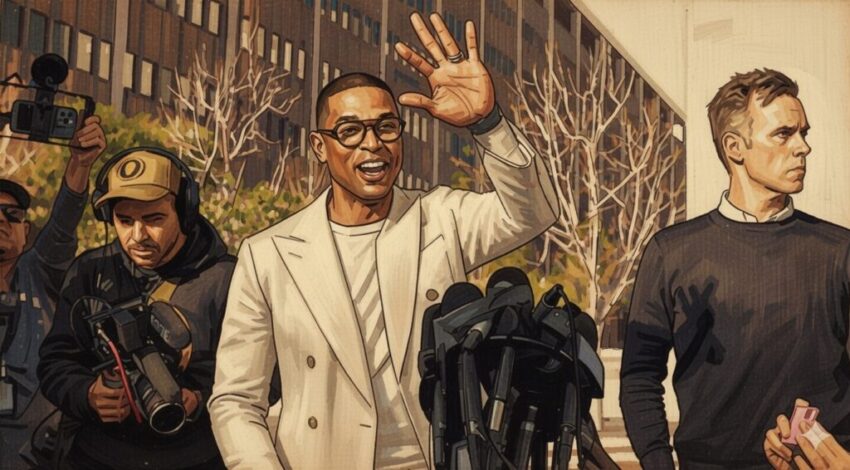
On January 18, 2026, anti-ICE protesters disrupted a Sunday service at Cities Church in St. Paul, Minnesota, chanting “ICE out” and “Justice for Renee Good”—referencing a U.S. citizen killed by an ICE officer earlier that month—to target Pastor David Easterwood, who also heads ICE’s local field office. Former CNN anchor Don Lemon entered the church with the group, livestreamed the chaos, interviewed the pastor, and defended the actions by stating, “This is what the First Amendment is about” and invoking freedoms of speech and assembly. The incident has sparked federal charges under civil rights laws, arrests of organizers, and debate over whether such disruptions qualify as protected protest or criminal trespass, directly echoing Supreme Court precedent in Lloyd Corp. v. Tanner.bbc+2
The Incident Unfolded
Protesters, organized under “Operation Pullup” by figures like Nekima Levy Armstrong, planned to “disrupt business as usual” by interrupting Pastor Jonathan Parnell’s sermon with shouts and chants, creating what prosecutors called a “takeover-style attack.” Video footage shows congregants shouting back amid fears of violence, with Lemon and journalist Georgia Fort surrounding Parnell with questions, which the indictment described as intimidation. Church leaders asked the group to leave, but they persisted until services halted, prompting immediate backlash from President Trump, Attorney General Pam Bondi, and Christian leaders urging protection for worshippers.nytimes+2
Lemon positioned himself as a neutral reporter, telling viewers, “We’re not part of the activists; we’re merely here to report on them,” though prosecutors allege he knew the protest’s disruptive intent and broadcast it to traumatize attendees. This occurred amid heightened Twin Cities tensions from Trump administration ICE deployments, but inside the church—a private Southern Baptist Convention affiliate—the action shifted from public dissent to interior confrontation.nytimes+3
Legal Precedent: Lloyd Corp. v. Tanner
In Lloyd Corp. v. Tanner (1972), the Supreme Court ruled 5-4 that a privately owned shopping center open to the public is not a “public forum” for First Amendment speech, allowing owners to prohibit Vietnam War handbilling inside despite adjacent public sidewalks. Justice Powell emphasized no “dedication” to public use occurs merely by inviting shoppers; owners can enforce conduct rules and eject violators without violating free speech rights.constitutionallawreporter+1
This directly applies to churches, as affirmed in cases like State v. Steinmann (1990): private property retains exclusionary power even for invited gatherings. Protests remain protected on nearby public streets or sidewalks, but entering without permission or refusing to leave constitutes trespass—under Minnesota Stat. § 609.605, a misdemeanor punishable by up to 90 days in jail or $1,000 fine. FIRE.org explicitly rejected First Amendment defenses for the Cities Church disruption, noting no right exists to “commandeer” worship services, regardless of cause.abcnews.go+1
Federal Charges and Early Court Rulings
A federal grand jury indicted nine, including Lemon and Fort, for conspiracy to infringe religious exercise rights (18 U.S.C. § 241) and FACE Act violations (18 U.S.C. § 248), which ban force, threats, or obstruction interfering with worship. Organizers Armstrong and Chauntyll Allen faced initial arrests, but Magistrate Judge Douglas Micko rejected FACE charges for lack of probable cause—no evidence of force or threats—and released them with conditions like staying off church property.nytimes+1
Micko refused Lemon’s complaint entirely, citing insufficient basis despite DOJ pushes; his attorney Abbe Lowell hailed it as affirming “First Amendment protected work.” Bondi, on-site, expressed fury, vowing continued pursuit via grand jury or other paths, amid accusations of politicized prosecution under the Trump DOJ. Similar pushback has hit federal surges before, with judges dismissing 21% of complaints in D.C. last year.abcnews.go+1
Relation to Lloyd and Broader Implications
Lemon’s entry and filming tested Lloyd‘s boundaries: journalism offers no “shield” for trespass or aiding disruption, per Assistant AG Harmeet Dhillon. Churches, like malls, control internal rules; Minnesota’s § 609.28 further criminalizes obstructing religious access as a gross misdemeanor. While protesters could legally chant outside, interior actions mirrored unprotected mall leafleting—uninvited speech halting core activities.bbc+3
This fits a pattern: 415 hostile church incidents in 2024, including disruptions, per Family Research Council. FACE Act, originally for clinics, now guards worship; recent arrests signal DOJ enforcement against “sanctuary” protests blurring into interference.thefire+1
Potential Outcomes for Lemon
Lemon faces uncertain paths, blending legal, professional, and media fallout.
-
Charges Revived and Conviction: DOJ indicts via grand jury (as with others), leading to trial; if convicted on conspiracy/FACE, expect 1-10 years prison plus fines, though First Amendment appeals could reach Supreme Court, citing Lloyd to affirm church property rights.abcnews.go+1
-
Case Dismissal or Acquittal: Courts uphold Micko’s probable cause rejection, dropping charges; Lemon emerges vindicated, boosting his independent media profile via victim narrative against “Trump DOJ silencing.”cnn+1
-
Plea or Settlement: Negotiates misdemeanor trespass plea for probation, avoiding felony record; allows quiet exit while signaling DOJ leniency for journalists.[abcnews.go]
-
Career Boost or Backlash: Win amplifies his anti-ICE reporting audience; loss tarnishes credibility, with critics highlighting “activist” over reporter role, potentially limiting platforms.kccu+1
Brutally, Lemon’s real-time advocacy blurred lines—his mic amplified chants, arguably aiding obstruction—weakening press shield claims under Lloyd‘s private-property logic. Outcomes hinge on evidence of coordination versus observation, but precedent favors churches’ sanctity over roving protest.[bbc]
UPDATE, Feb. 4, 2026:
Newsbusters:Top 10 Worst Media Reactions to Don Lemon’s Arrest
The article criticizes prominent liberal media figures for what it portrays as over-the-top, hypocritical, and historically extreme reactions to former CNN anchor Don Lemon’s arrest after he entered a St. Paul church during a protest-related incident.
The piece argues that many TV hosts, commentators, and journalists framed Lemon’s arrest as an authoritarian attack on press freedom, likening it to crackdowns in dictatorships and Nazi Germany, while allegedly ignoring or downplaying similar actions taken against right-leaning journalists in the past.
- Claims that the U.S. under Trump is acting like Russia, China, or Turkey toward journalists.
- CNN voices calling Lemon’s arrest “terrifying” and insisting “journalism is not a crime.”
- Friends and colleagues portraying Lemon as a targeted symbol and his arrest as a “gift to authoritarian governments.”
- Joy Behar likening Lemon’s actions to Eisenhower bringing reporters to Nazi concentration camps.
- The View co-hosts saying the White House is sending a “chilling message” and targeting Black journalists.
- Jim Acosta accusing Trump of “trying to criminalize journalism” and engaging in “dangerous, dictator stuff.”
- Acosta describing MAGA as a “fascist movement” and saying all good Americans should be angry about Lemon’s arrest.
- Rick Wilson comparing the situation to being in Nazi Germany in 1936 and warning of repression.
- Harvey Levin warning of a slide toward dictatorship and invoking Neville Chamberlain’s failure to see Hitler coming.
- Jimmy Kimmel joking that Lemon was “arrested for committing journalism” under the current administration.
First Things: Don Lemon Gets the First Amendment Wrong
Lemon’s attempt to sanitize the intrusion by posing as a reporter should fool no one. Covering illegal activity is not simple “news.” It could arguably be conspiracy. At the very least, it broaches questions about a so-called journalist’s duties of restraint. Confusion about the priority of rights in the First Amendment should not be used to cloak it.