
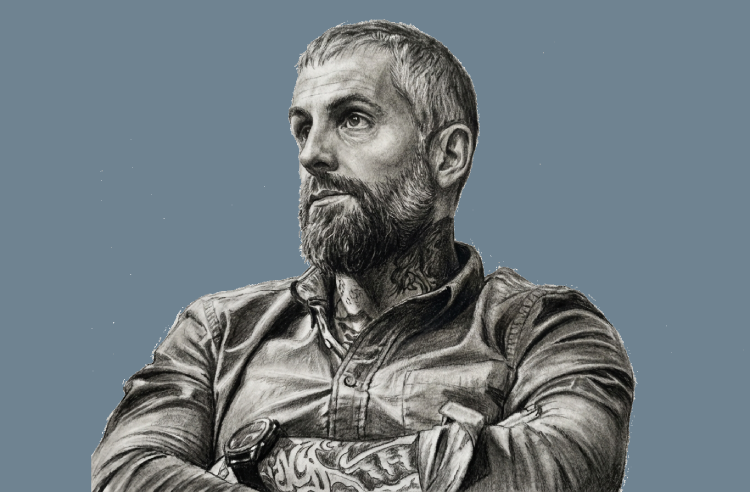
An Examination of the Former Officer’s Transformation
and His Explosive Call for Armed Resistance Against ICE
January 2026
“It’s time for the American people to organize and to utilize their Second Amendment right to protect themselves from what has clearly become an unaccountable and lawless agency that’s killing Americans.”
— Michael Fanone, January 2026
Introduction
In the days following the fatal shooting of Renee Nicole Good by an ICE agent in Minneapolis on January 7, 2026, former Metropolitan Police Officer Michael Fanone made statements that represent a dramatic escalation in his ongoing criticism of the Trump administration’s immigration enforcement policies. In a video interview, Fanone explicitly called for Americans to use their Second Amendment rights to “protect themselves” from Immigration and Customs Enforcement—language that critics characterize as a call to arms against federal law enforcement.
This statement marks a significant departure from Fanone’s previous rhetoric, which—while often profane and confrontational—had not previously advocated armed civilian resistance against government agencies. It arrives at a moment of intense national tension over immigration enforcement, following a shooting that has produced starkly conflicting narratives from federal and local officials.
This analysis examines Fanone’s background, the evolution of his public commentary since January 6, 2021, and the context surrounding his most recent—and most incendiary—statements.
Part I: Background and Credentials
Law Enforcement Career
Michael Fanone, born September 3, 1980, served approximately twenty years in law enforcement. His career began with the United States Capitol Police following the September 11 attacks, after which he transferred to the Metropolitan Police Department of the District of Columbia, where he served in the First District until his retirement in December 2021.
During his career, Fanone worked primarily as a plain-clothes and undercover officer investigating narcotics trafficking. According to official records and his congressional biography, he participated in more than 2,000 arrests for violent crimes and drug offenses, served as a special task force officer for the FBI, ATF, and DEA, and earned more than three dozen commendations.
This extensive law enforcement background is relevant to evaluating his current statements: Fanone speaks not as an outside activist but as someone with two decades of experience in federal and local law enforcement operations.
Political Evolution
Fanone voted for Donald Trump in the 2016 presidential election. By his own account, he was drawn to Trump’s support for law enforcement and frustrated by what he perceived as anti-police sentiment from liberal politicians and media. He has stated that he stopped supporting Trump after the dismissal of FBI Director James Comey and comments he perceived as anti-Asian—a concern that became personal given that three of his four daughters are Asian American.
This political trajectory—from Trump voter to fierce administration critic—is central to understanding both how Fanone presents himself and how different audiences receive his statements. Supporters cite it as evidence of intellectual honesty; critics argue his transformation was opportunistically timed for a media career.
Part II: The January 6 Experience
On January 6, 2021, Fanone self-deployed to the U.S. Capitol in response to radio calls for assistance. The events that followed are documented by body-camera footage, witness testimony, and criminal prosecutions that resulted in substantial prison sentences for his attackers.
According to this evidence, Fanone was dragged from the police line into the crowd, where rioters beat him with pipes and a flagpole, stunned him multiple times with a Taser at the base of his skull, sprayed him with chemical irritants, and threatened to kill him with his own gun. He suffered a heart attack, a concussion, a traumatic brain injury, and was later diagnosed with post-traumatic stress disorder.
The men who attacked Fanone were prosecuted and received significant prison sentences: Daniel Rodriguez (12½ years), Christopher Quaglin (12 years), Albuquerque Head (96 months), and Thomas Sibick (50 months). On January 20, 2025, President Trump pardoned all of these individuals as part of blanket clemency for approximately 1,500 January 6 defendants.
These facts are not in dispute. The pardons of his attackers, combined with ongoing harassment and threats against himself and his family, form the backdrop against which Fanone’s subsequent public advocacy must be understood.
Part III: Post-January 6 Public Role
Congressional Testimony and Media Career
Fanone testified before the House Select Committee investigating January 6 on July 27, 2021, delivering emotional testimony that included his memorable statement: “I feel like I went to hell and back to protect them and the people in this room. But too many are now telling me that hell doesn’t exist—or that hell actually wasn’t that bad.”
He joined CNN as an on-air contributor and law enforcement analyst in January 2022, a role he held until November 2023. He published a memoir, “Hold the Line: The Insurrection and One Cop’s Battle for America’s Soul,” in October 2022. On January 6, 2023, he received the Presidential Citizens Medal from President Biden.
Throughout this period, Fanone’s rhetoric was confrontational and often profane, but focused primarily on accountability for January 6 and criticism of politicians he believed had enabled or minimized the attack. He called Josh Hawley “a bitch,” labeled Jim Jordan an “insurrectionist,” and described Republicans as “a party of traitors.” He also criticized Democrats, recently calling House Democratic Leader Hakeem Jeffries “a coward” and characterizing the two parties as “one party of traitors and one party of cowards.”
Escalating Criticism of ICE
Following President Trump’s August 2025 federal takeover of Washington, D.C., law enforcement—which deployed National Guard troops and placed the Metropolitan Police Department under federal control—Fanone’s criticism expanded to encompass immigration enforcement agencies.
In an October 2025 MSNBC appearance, Fanone described ICE as “a lawless, unaccountable agency” that had become “a national police force for the Trump administration.” He called ICE “Donald Trump’s Police Department” and urged federal agents to “quit your job” if they were being “co-opted by the Trump administration to do things that are immoral, unethical and, in many cases, unconstitutional.”
This rhetoric, while heated, remained within the bounds of political criticism. The statements he made following the Minneapolis shooting represent a qualitative escalation.
Part IV: The Minneapolis Shooting and Fanone’s Response
The Incident
On January 7, 2026, an ICE agent fatally shot Renee Nicole Good, a 37-year-old U.S. citizen and mother of three, during an immigration enforcement operation in Minneapolis. The shooting produced starkly conflicting accounts from federal and local officials.
Department of Homeland Security spokesperson Tricia McLaughlin claimed Good had “weaponized her vehicle, attempting to run over our law enforcement officers in an attempt to kill them.” Minneapolis Mayor Jacob Frey disputed this characterization, stating that video evidence shows “that is bullshit.” Minneapolis Police Chief Brian O’Hara said there was “nothing to indicate that this woman was the target of any law enforcement investigation or activity.”
Vice President JD Vance defended the shooting, writing on social media: “You can accept that this woman’s death is a tragedy while acknowledging it’s a tragedy of her own making. Don’t illegally interfere in federal law enforcement operations and try to run over our officers with your car.” Homeland Security Secretary Kristi Noem also defended the agent’s actions.
The shooting prompted protests in Minneapolis and nationwide, with Minnesota Governor Tim Walz preparing a National Guard deployment and declaring a “Day of Unity” in Good’s honor. Multiple Democratic officials, including Rep. Alexandria Ocasio-Cortez and New York City Mayor Zohran Mamdani, characterized the killing as “murder” or “state violence.”
A newly released body cam footage clearly shows the ICE officer was struck by Renee Good’s vehicle during the Minneapolis incident, fully supporting the official account of a justified defensive shooting.
This aligns with Officer Ross’s prior experience being dragged 100 yards by a suspect vehicle last summer, where he sustained severe injuries—a context that underscores the real dangers agents face.
Twisting bystander clips to push a false narrative ignores the facts and endangers law enforcement; kudos for sharing the truth.
New footage from the ICE officer who shot Renee Good shows that she did in fact ram into him with her car pretty hard.pic.twitter.com/soObuTUCsK
— Leftism (@LeftismForU) January 9, 2026
Fanone’s Statement
In a video interview following the shooting, Fanone delivered an extended critique of ICE and local officials’ response. The key passage, transcribed in full:
“And this ain’t the first time that we’ve seen ICE and CBP abuse their power. It’s probably the millionth fucking time that we’ve seen this happen. And it’s not even the first time that someone has been seriously injured or lost their lives. And so these politicians and these local state and municipal law enforcement agencies need to wake the fuck up.”
“You know, I appreciate the foul language coming out of the mouth of the mayor of Minneapolis. And I think that his sentiment in the moment was appropriate. That being said. What are you doing? What are you directing your law enforcement agencies to do to protect your citizens? How are you going about doing that? I don’t need to hear from the chief of police that we all need to remain calm and protest peacefully. Fuck you and fuck that. What are you doing to keep me safe? What are you doing to keep my mother safe, my sister safe, you know, my community safe from these thugs?”
“That’s what I need to hear coming out of these agents or these officers, because if you’re not going to do it, then it’s time for the American people to organize and to utilize their Second Amendment right to protect themselves from what has clearly become an unaccountable and lawless agency that’s killing Americans.”
Part V: Analysis
The Significance of the Statement
Fanone’s invocation of the Second Amendment in the context of resisting federal law enforcement represents a dramatic departure from his previous public statements. While he has consistently criticized the Trump administration, ICE, and what he views as lawless federal conduct, he had not previously called for armed civilian resistance.
The statement carries particular weight given Fanone’s background. As a former law enforcement officer with twenty years of experience, he understands the implications of calling for citizens to arm themselves against federal agents. As someone who nearly died at the hands of a violent crowd on January 6, he has personal experience with what happens when civilians take up arms against those they perceive as enemies of the Constitution.
The parallel is uncomfortable but unavoidable: many January 6 participants believed they were exercising their constitutional rights against a government they viewed as illegitimate and tyrannical. Fanone now appears to be advocating a similar posture toward ICE—an agency he characterizes with the same terms (“lawless,” “unaccountable,” “killing Americans”) that January 6 participants used to describe the federal government they attacked.
Competing Interpretations
Those who defend Fanone’s statement may argue that he is invoking the foundational American principle that citizens have a right to defend themselves against government tyranny—the very principle the Second Amendment was designed to protect. They may point to documented instances of ICE agents using excessive force, operating without identification, and now killing a U.S. citizen under disputed circumstances. From this perspective, Fanone is not inciting violence but articulating a constitutional principle in response to genuine government overreach.
Those who condemn the statement will argue that a former law enforcement officer calling for armed resistance against federal agents is reckless and potentially dangerous, regardless of one’s views on immigration policy. They will note that ICE agents are law enforcement officers performing their duties under lawful authority, and that disputes about their conduct should be resolved through legal and political channels—not through armed confrontation. From this perspective, Fanone has crossed a line from criticism into incitement.
The legal question of whether Fanone’s statement constitutes protected political speech or actionable incitement is beyond the scope of this analysis. The First Amendment provides broad protection for political rhetoric, including advocacy of illegal action, unless it is “directed to inciting or producing imminent lawless action and is likely to incite or produce such action” (Brandenburg v. Ohio, 1969). Fanone’s statement appears to be general political advocacy rather than a specific call to immediate violence, but the distinction is one that legal experts and potentially courts may need to evaluate.
Context and Trajectory
Fanone’s evolution over the past five years traces an arc from Trump voter to assault victim to congressional witness to media commentator to, now, advocate for armed resistance against federal law enforcement. Each stage has been driven by events: the January 6 attack, the pardons of his attackers, the federal takeover of D.C. law enforcement, and now the Minneapolis shooting.
Whether this trajectory represents principled escalation in response to genuine government lawlessness or a descent into extremism driven by personal grievance and media incentives depends largely on how one evaluates the underlying facts. Those who believe ICE has become a dangerous, unaccountable force may see Fanone as a canary in the coal mine. Those who believe ICE is lawfully enforcing immigration policy may see him as a radicalized former officer whose trauma has distorted his judgment.
What is clear is that Fanone has moved from being a witness to January 6 to being an active participant in the most contentious debates of the current political moment—and that his latest statement places him in a position that will be difficult to walk back.
Conclusion
Michael Fanone’s call for Americans to “utilize their Second Amendment right to protect themselves” from ICE represents a watershed moment in his public advocacy. A former law enforcement officer, decorated for his service and nearly killed defending the Capitol, has now explicitly advocated armed resistance against a federal law enforcement agency.
The statement cannot be understood outside its context: the Minneapolis shooting of an unarmed U.S. citizen, the conflicting accounts of what occurred, the broader pattern of aggressive ICE tactics that critics have documented, and the personal history that has made Fanone both a credible voice on law enforcement issues and, potentially, someone whose judgment has been shaped by trauma and grievance.
Supporters will see a former officer who has witnessed government lawlessness firsthand—first on January 6, when federal officials failed to protect the Capitol, and now through ICE operations he views as unconstitutional—finally concluding that peaceful channels have failed. Critics will see a man who has lost perspective, whose hatred of the current administration has led him to advocate the very kind of political violence he once stood against.
The question of whether Fanone’s commentary is “factually helpful” or “merely antagonistic” toward the current administration now has a clear answer: his latest statement transcends both categories. He is no longer merely criticizing the administration; he is calling for armed resistance against it. Whether that call is justified by circumstances or represents a dangerous escalation is a judgment each reader must make based on the evidence presented.
What cannot be disputed is that Michael Fanone—the officer who nearly died defending American democracy on January 6, 2021—has now called for citizens to take up arms against the federal government. The implications of that statement, and the response it generates, may well shape the trajectory of an already volatile national moment.
— END —