
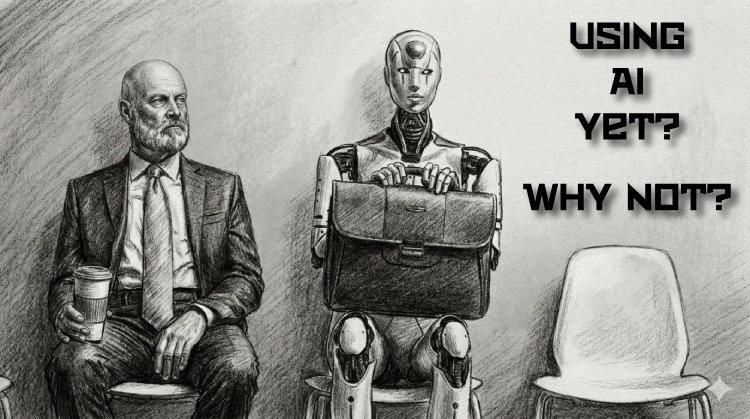
Did you refuse to use the Internet when it was first introduced because it was a defense-funded computer network by the U.S. military’s ARPANET? Of course not. Today, the notion seems absurd—yet many people exhibit similar resistance toward artificial intelligence, viewing it with suspicion despite its increasingly integral role in modern life. Just as the Internet transformed from a military project into an indispensable tool that connects billions globally, AI is transitioning from specialized laboratories into the fabric of our daily existence. The question isn’t whether AI will shape our future, but whether we’ll understand it well enough to navigate that future wisely.
Understanding AI: More Than Science Fiction
Artificial intelligence, at its core, refers to computer systems designed to perform tasks that typically require human intelligence. These tasks include learning from experience, recognizing patterns, understanding language, making decisions, and solving problems. Rather than following rigid, pre-programmed instructions, AI systems use algorithms and vast amounts of data to identify patterns and improve their performance over time—a process called machine learning.
Think of AI not as a single technology but as an umbrella term covering various approaches. Machine learning allows systems to learn from data without explicit programming. Deep learning, a subset of machine learning, uses neural networks modeled loosely after the human brain to process complex information. Natural language processing enables computers to understand and generate human language, while computer vision allows machines to interpret visual information from the world.
The fundamental principle underlying modern AI is surprisingly straightforward: expose a system to enough examples, and it can learn to recognize patterns and make predictions. When your email filters spam, when Netflix recommends your next binge-worthy series, or when your smartphone recognizes your face, you’re experiencing AI in action.
AI’s Universal Reach: Already Everywhere You Look
The versatility of artificial intelligence has led to its adoption across virtually every sector of modern society, often in ways that remain invisible to the average person.
Healthcare has witnessed revolutionary AI applications. Diagnostic algorithms now detect certain cancers and eye diseases with accuracy matching or exceeding specialist physicians. IBM’s Watson assists oncologists in developing personalized treatment plans by analyzing medical literature and patient data. During the COVID-19 pandemic, AI accelerated vaccine development and helped predict outbreak patterns.
In finance, AI systems detect fraudulent transactions in real-time, analyze market trends, power algorithmic trading, and provide personalized financial advice through robo-advisors. Your bank’s fraud detection system likely prevented unauthorized charges on your account without you ever knowing.
Education is being transformed through adaptive learning platforms that customize content to individual student needs, automated grading systems that provide instant feedback, and AI tutors available 24/7. These tools don’t replace teachers but augment their ability to reach every student effectively.
Transportation showcases some of AI’s most visible applications. Beyond the development of autonomous vehicles, AI optimizes traffic flow in smart cities, powers navigation apps like Google Maps and Waze, and helps airlines optimize routes and predict maintenance needs. The logistics algorithms ensuring your online orders arrive on time rely heavily on artificial intelligence.
And yes, even traditional Christianity finds benefit from incorporating AI in a believer’s daily walk. AI-powered Bible study tools offer original language word studies, cross-reference searches, and contextual analysis that once required extensive theological libraries. Sermon preparation benefits from AI transcription services and research assistants that help pastors identify relevant passages and historical context. Prayer apps use AI to organize prayer requests and send timely reminders for intercession. For apologetics and evangelism, AI can help believers research complex theological questions, understand opposing worldviews, and communicate gospel truths more effectively in our digital age. Christian podcasters and content creators use AI for editing, transcription, and reaching wider audiences with biblical teaching. These tools don’t replace the Holy Spirit’s work or personal devotion, but they can enhance our ability to study Scripture deeply, serve others effectively, and steward our time wisely in kingdom work.
These examples merely scratch the surface. AI influences agriculture through precision farming, shapes entertainment through content recommendations, enhances cybersecurity, assists in scientific research, and even helps combat climate change through energy optimization.
The Double-Edged Algorithm: Weighing AI’s Impact
Like any transformative technology, artificial intelligence presents both remarkable opportunities and legitimate concerns.
Advantages:
- Enhanced Efficiency: AI automates repetitive tasks, allowing humans to focus on creative and strategic work
- Improved Decision-Making: By analyzing vast datasets beyond human capacity, AI uncovers insights that lead to better-informed choices
- 24/7 Availability: AI systems work continuously without fatigue, providing constant service
- Personalization: From healthcare to education to entertainment, AI tailors experiences to individual needs
- Problem-Solving at Scale: AI tackles complex challenges in climate science, drug discovery, and space exploration that would overwhelm traditional approaches
Disadvantages:
- Job Displacement: Automation threatens certain employment sectors, requiring workforce adaptation and retraining
- Privacy Concerns: AI systems require vast amounts of data, raising questions about surveillance and personal information security
- Algorithmic Bias: AI can perpetuate or amplify existing societal biases present in training data
- Accountability Issues: When AI makes mistakes, determining responsibility becomes complicated
- Dependence and Deskilling: Over-reliance on AI might erode certain human capabilities
- Ethical Dilemmas: Questions about AI in warfare, criminal justice, and life-or-death decisions remain unresolved
The balanced perspective recognizes that AI itself is neither inherently good nor evil—its impact depends on how we develop, deploy, and regulate it. Dismissing AI wholesale means forfeiting influence over these crucial decisions.
AI and You: The Personal Impact
For the average person, AI already functions as an invisible assistant throughout daily life. Your smartphone’s virtual assistant, predictive text, and photo organization use AI. Streaming services employ AI to recommend content. Social media feeds are curated by AI algorithms. Online shopping suggestions, smart home devices, and even your car’s advanced safety features increasingly rely on artificial intelligence.
The benefits manifest practically: saved time through automation, personalized services that better meet individual needs, enhanced safety features in vehicles and homes, and access to tools that were once available only to specialists or large organizations. A small business owner can now access AI-powered marketing tools that were previously exclusive to corporations with massive budgets.
However, drawbacks exist too. Filter bubbles created by recommendation algorithms can limit exposure to diverse perspectives. Privacy erodes as AI systems collect personal data. The constant optimization of digital environments for engagement can prove addictive. For those without technical literacy, AI-driven systems can feel alienating or opaque.
The critical insight is that AI will increasingly mediate our interactions with information, services, and even other people. Understanding its basic functioning empowers individuals to use these tools wisely rather than being passively shaped by them.
The Imperative of Understanding: Preparing for Tomorrow
Embracing AI literacy isn’t about becoming a data scientist—it’s about being an informed participant in an AI-shaped world. Several compelling reasons demand this engagement.
Economic Necessity: The World Economic Forum predicts that AI will create 97 million new jobs by 2025 while displacing 85 million others. Those who understand AI’s capabilities and limitations will be best positioned to navigate this transition. Basic AI literacy is becoming as fundamental as computer literacy was a generation ago.
Civic Responsibility: AI increasingly influences public policy, from criminal justice algorithms to resource allocation in government services. Democratic participation requires understanding the tools shaping society. How can citizens meaningfully engage in debates about facial recognition, algorithmic bias, or AI regulation without a basic comprehension of these systems?
Personal Agency: Understanding AI helps individuals make informed choices about privacy, data sharing, and technology use. It demystifies systems that otherwise seem like inscrutable “black boxes,” returning a measure of control to users.
Ethical Stewardship: As people created in God’s image with the capacity for creativity and innovation, Christians shouldn’t fear technology but engage it thoughtfully. AI raises profound questions about human dignity, work, creativity, and the nature of intelligence itself—questions that benefit from biblical wisdom alongside technical understanding.
The trajectory is clear: AI will become more sophisticated and more integrated into daily life, not less. The choice isn’t whether to live in an AI-influenced world—we already do—but whether we’ll understand that world well enough to shape it toward human flourishing.
Moving Forward with Wisdom
Just as our ancestors who initially feared the Internet would find today’s connected world unimaginable, future generations will likely view current AI anxiety as shortsighted. Yet the parallel isn’t about dismissing concerns but about choosing informed engagement over fearful retreat.
The Internet’s evolution teaches valuable lessons. Early concerns about privacy, misinformation, and social impact weren’t unfounded—they were insufficiently addressed. We have the opportunity to learn from those mistakes, approaching AI with eyes wide open to both its promise and its perils.
Understanding AI doesn’t require endorsing every application or dismissing legitimate concerns. It means equipping ourselves to ask better questions, make wiser choices, and contribute meaningfully to conversations shaping technology’s role in society. The future belongs not to those who resist change, but to those who engage it with knowledge, discernment, and purpose.
The real question isn’t whether you’ll use AI—you already are. The question is whether you’ll understand what you’re using.