
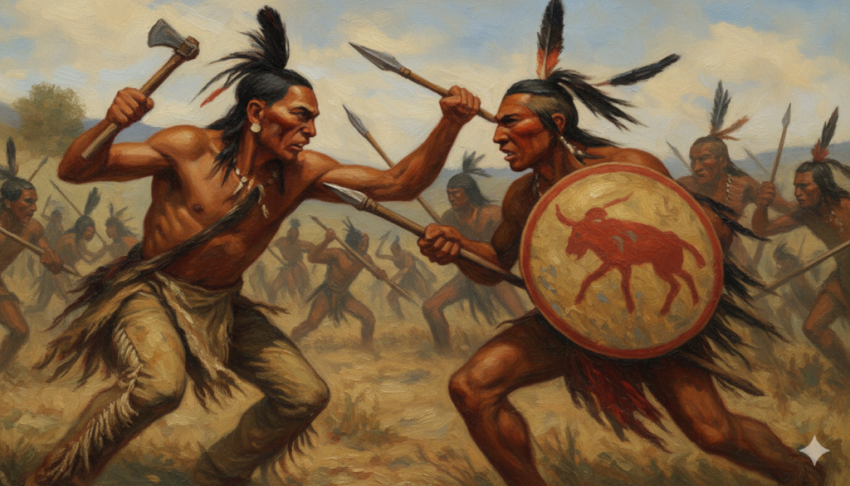
Long before European trappers paddled Minnesota’s waterways, the region’s indigenous peoples were locked in cycles of territorial conflict that shaped the land’s human geography for centuries.
The Dakota Dominance
The Dakota Sioux controlled much of what became Minnesota by the 17th century, but this dominance came through generations of warfare. Archaeological evidence and oral traditions reveal that the Dakota themselves displaced earlier peoples, including ancestors of the Fox and Iowa tribes, through sustained military campaigns. The Dakotas’ strategic position along the Mississippi and Minnesota rivers provided both economic advantages and defensive strongholds—assets worth fighting for.
The Ojibwe Invasion
The most consequential pre-colonial conflict began around 1640 when Ojibwe bands, pressured by eastern conflicts and drawn by rich hunting grounds, began pushing westward from the Great Lakes. What followed was nearly 150 years of intermittent warfare. The Ojibwe, armed with superior numbers and eventually European weapons acquired through Great Lakes trading networks, systematically drove Dakota bands from northern Minnesota’s forests.
Contemporary accounts from the early 1700s describe pitched battles at Mille Lacs Lake and along the Rum River. The Ojibwe employed scorched-earth tactics, burning Dakota villages and destroying food stores to force permanent relocation. By 1750, the Dakota had largely retreated to southern Minnesota’s prairies, a strategic withdrawal that fundamentally altered both tribes’ territorial claims and cultural practices.
The Fox Wars Connection
Minnesota’s conflicts extended beyond the Dakota-Ojibwe rivalry. Fox (Meskwaki) war parties regularly raided into Dakota territory during the early 18th century, seeking captives and plunder. These raids intensified as the Fox faced their own existential crisis farther east, creating a cascade of violence that rippled across the upper Mississippi Valley. Dakota warriors responded with retaliatory expeditions that reached into present-day Wisconsin and Iowa.
Strategic Motivations
These conflicts weren’t random violence but calculated competition for strategic resources. Wild rice beds, maple groves, deer yards, and river fisheries represented survival itself. Oral histories from both Dakota and Ojibwe traditions preserve detailed accounts of battles fought over specific hunting territories and seasonal camps. The prairies’ buffalo herds and the forests’ furbearing animals were worth defending—and worth dying for.
The Archaeology of Violence
Burial sites across Minnesota tell this story in bone. Skeletal remains from pre-contact and early contact periods show evidence of violent trauma: embedded arrow points, defensive wounds, and mass graves, suggesting casualties from raids. Fortified village sites with palisades and defensive earthworks in both Dakota and Ojibwe territories indicate sustained threat levels requiring permanent defensive infrastructure.
Conclusion
Minnesota’s indigenous history before sustained European settlement was marked by sophisticated military cultures engaged in strategic territorial competition. These were not primitive skirmishes but calculated campaigns for control of valuable landscapes. Understanding this reality doesn’t diminish indigenous peoples’ humanity—it affirms their complexity as societies facing the same challenges of survival, territory, and power that have driven human conflict across millennia and continents. The myth of pre-contact peace serves neither historical accuracy nor genuine respect for Native American agency and experience.