
“As It Is Written”: Who Is Really Twisting the Scriptures?
❧ ✦ ❧
Introduction: An Apostle in the Dock
Every generation produces someone who discovers, apparently for the first time, that the Apostle Paul was a fraud. The charge is never new, but it always arrives sounding new, because it is usually made by someone who is sincere, energetic, and convinced that the church has been asleep for two thousand years. The latest version comes from Kay Podgee, an atheist-turned-Christian content creator whose recent video makes a sweeping accusation in plain language:
Paul is the false apostle that Jesus mentions in the book of Revelation… He disagrees with Jesus’ words, with the apostles’ words, the law, the prophets. By his own admission, he says that the 12 actual apostles rejected him.
— Kay Podgee, video transcript is below)
Here is the full transcript [Click HERE to close]
–
“Paul is the false apostle that Jesus mentions in the book of Revelation. I’ve been pretty quiet about my beliefs on this because there are some things in his writings that are true, but there’s equally as much that’s completely not true. Twisted, he misquotes Old Testament scriptures left and right.
He disagrees with Jesus’ words, with the apostles’ words, the law, the prophets. By his own admission, he says that the 12 actual apostles rejected him. He couldn’t get a letter from the church in Jerusalem, which was ran by James, Jesus’ brother, and Jesus’ family.
Paul himself says that certain men came from James to correct him. James is Jesus’ brother. He also complains about so-called pillars.
He’s talking about James, John, and Peter. So I’m going to show you a ton of scripture that supports what I’m saying, and I know the knee-jerk reaction for a lot of Christians is to say, oh, you really think that God would allow somebody like that in the writings of the Bible? Yeah, because he said that he would. He said that the deception would be so strong that even the elect could be deceived by it if possible.
He also repeatedly says that he would send false prophets to test us, and God repeatedly shows that when people refuse the truth of the commandments, the law, the truth of Christ, the light of God, and they choose delusion, God will also choose their delusions. I’ve been working on printing and pasting the references that Paul is referencing or things that directly refute what he’s trying to say because I want to show people that he creates the most complex web of subtle lies ever. He mangles the scriptures and creates things out of thin air or things that just don’t exist in scripture, but 99.99% of Pauline Christians have never even read anything outside of Paul’s letters, so they have no clue.
I’m going to show you just a few parts out of Romans that I already worked on. So this is a really popular passage for lawless people. He says, as it is written, just like how Satan does.
Every time he says this, it should set off alarm bells that you have to go and find what he’s talking about because Satan twists the scriptures and before he does it, he says, it is written. None is righteous. No, not one.
No one understands. No one seeks for God. All have turned aside.
Together they have become worthless. No one does good. Not even one.
Their throat is an open grave. They use their tongues to deceive. The venom of asps is under their lips.
Their mouth is full of curses and bitterness. So first of all, he only quotes out of the Greek Septuagint, which is probably an issue in and of itself. This is a direct quote of Psalm 14, but look at where he stops the quote.
Do not all the workers of iniquity know? So this is about the workers of iniquity. These people that use this as like their justification, they are set up to hear, depart from me. I never knew you, you workers of iniquity.
Do not all the workers of iniquity know? So this passage is about the evildoers that are going to be condemned, but people don’t know because they don’t research. They don’t ask God. They don’t read the Old Testament.
People can be mad at me all they want, but the truth of the matter is, if I’m wrong, then that means that I was just overly zealous for Jesus and the Father. If Pauline Christians are wrong, they don’t have a saving doctrine.”
That is a serious indictment. If it were true, nearly half of the New Testament would have to be torn out, the book of Acts would become a work of propaganda, the Second Epistle of Peter would be exposed as either a forgery or a blunder, and the entire historic church — including the very men who sat at the feet of the apostle John — would stand convicted of having embraced a deceiver. Claims of that size deserve to be tested, not dismissed with a shrug. Ms. Podgee invites exactly that: she promises to show “a ton of scripture” supporting her view and challenges Christians to go back and check Paul’s sources for themselves.
This essay accepts that challenge. We will go where she asks us to go — to Revelation, to Galatians, to Acts, to the Psalms, and to the Greek text behind them — and we will let the witnesses she names speak for themselves: Jesus, the Twelve, James the Lord’s brother, Peter, and John. The conclusion will not be a surprise to anyone who has read the New Testament carefully, but the route to it may be. On every point where Ms. Podgee claims Paul twisted Scripture, the evidence shows that the twisting has run in the other direction.
❧ ✦ ❧
The Witness of Revelation Itself
Ephesus: The Church Paul Planted
The foundation of Ms. Podgee’s case is a single verse in the letter of the risen Christ to the church at Ephesus:
I know thy works, and thy labour, and thy patience, and how thou canst not bear them which are evil: and thou hast tried them which say they are apostles, and are not, and hast found them liars.
— Revelation 2:2 (KJV) — https://www.biblegateway.com/passage/?search=Revelation%202%3A1-7&version=KJV
Notice first what the verse does not say. It names no one. It does not say “Paul,” it does not describe a man from Tarsus, and it does not mention letters, Gentiles, circumcision, or any doctrine associated with Paul. The Greek simply speaks of tous legontas heautous apostolous kai ouk eisin — “those who call themselves apostles and are not.” To read Paul into that phrase, one must first decide that Paul is a false apostle and then import that conclusion into a text that never raises his name. That is not exegesis; it is eisegesis.
Notice second, the city. Of all the churches in the ancient world, Ephesus is the one most thoroughly bound up with Paul. He spent the better part of three years there (Acts 19:8–10; 20:31). His preaching was so effective that the silversmiths who made shrines for Artemis rioted against him (Acts 19:23–41). And when he said goodbye to the Ephesian elders on the beach at Miletus, he gave them a warning that reads like a preface to Revelation 2:2:
For I know this, that after my departing shall grievous wolves enter in among you, not sparing the flock. Also of your own selves shall men arise, speaking perverse things, to draw away disciples after them.
— Paul to the Ephesian elders, Acts 20:29–30 (KJV) — https://www.biblegateway.com/passage/?search=Acts%2020%3A28-31&version=KJV
Paul told the Ephesians to expect impostors. Decades later, the risen Christ commends the Ephesians for doing precisely what Paul told them to do: testing the self-proclaimed apostles and exposing them. The church that Christ praises for its discernment was the church Paul founded and trained. If Paul himself were the liar in view, we would have to believe that the Ephesian believers spent forty years cherishing the letters of the very man Christ was rebuking them for tolerating — while Christ commended them for not tolerating him. The scenario collapses under its own weight.
The Only “False Apostles” in the New Testament
There is a further irony. The word “false apostles” — pseudapostoloi — occurs exactly once in the entire Greek New Testament, and it was written by Paul:
For such are false apostles, deceitful workers, transforming themselves into the apostles of Christ.
— 2 Corinthians 11:13 (KJV) — https://www.biblegateway.com/passage/?search=2%20Corinthians%2011%3A12-15&version=KJV
Paul spent much of 2 Corinthians 10–13 doing exactly what Revelation 2:2 commends: exposing men who claimed apostolic authority, carried letters of recommendation, preached “another Jesus,” and preyed on the flock. The Ephesian church’s practice of testing apostles was not a reaction against Paul. It was a habit Paul taught them.
Paul and the Twelve Foundation Stones
Some who share Ms. Podgee’s view also point to Revelation 21:14, where the wall of the New Jerusalem rests on twelve foundations bearing “the names of the twelve apostles of the Lamb,” and conclude that there is no room for a thirteenth. But Paul never claimed to be one of the Twelve. He carefully distinguished himself from them. In 1 Corinthians 15:5–8, he lists the resurrection appearances to “the twelve,” then to “all the apostles,” and then, “last of all,” to himself, “as of one born out of due time.” The New Testament uses “apostle” for a wider circle than the Twelve — Barnabas is called an apostle alongside Paul in Acts 14:14 — and Paul’s commission came not from a vote of the Eleven but from the risen Christ, who said of him, “He is a chosen vessel unto me, to bear my name before the Gentiles, and kings, and the children of Israel” (Acts 9:15). Paul did not need a foundation stone in the wall of the New Jerusalem; he was content to be a master builder laying the one foundation, “which is Jesus Christ” (1 Corinthians 3:10–11).
What John’s Own Disciples Believed
If anyone in the second century would have known whom the risen Christ meant in Revelation 2:2, it would have been the disciples of John himself and the bishops of the very churches addressed in Revelation 2–3. Polycarp of Smyrna — a disciple of John and the bishop of one of the seven churches — wrote to the Philippians early in the second century:
For neither I, nor any other such one, can come up to the wisdom of the blessed and glorified Paul. He, when among you, accurately and steadfastly taught the word of truth in the presence of those who were then alive.
— Polycarp, Epistle to the Philippians 3, ANF vol. 1 — https://www.newadvent.org/fathers/0136.htm
Ignatius of Antioch, writing to the Ephesians themselves on his way to martyrdom, reminded them that they were “initiated into the mysteries of the Gospel with Paul, the holy, the martyred, the deservedly most happy” (Ignatius, To the Ephesians 12). These are not later Western theologians inventing a “Pauline Christianity.” They are the second generation of the very communities Revelation addresses, and they read Revelation 2:2 as praise for Ephesus’s faithfulness — a faithfulness that included honoring Paul.
❧ ✦ ❧
Rejected by the Twelve? What Galatians Actually Says
Ms. Podgee claims that “by his own admission” Paul says the Twelve rejected him. This is the most checkable claim in her transcript, and it is simply false. Paul’s own account in Galatians 1–2 says the opposite.
Fifteen Days with Peter
Then after three years I went up to Jerusalem to see Peter, and abode with him fifteen days. But other of the apostles saw I none, save James the Lord’s brother.
— Galatians 1:18–19 (KJV) — https://www.biblegateway.com/passage/?search=Galatians%201%3A18-24&version=KJV
The verb Paul uses for “see” is historēsai — the root of our word “history” — and it carries the sense of visiting in order to inquire and become acquainted. Paul spent two weeks as Peter’s guest and met James. Nothing in the text suggests rejection. Paul adds that the churches of Judea “glorified God in me” when they heard that their former persecutor was now preaching the faith (Galatians 1:24).
The Right Hand of Fellowship
Fourteen years later Paul returned to Jerusalem and laid his gospel before the leaders of the church privately (Galatians 2:2). Here is the result, in his own words:
And when James, Cephas, and John, who seemed to be pillars, perceived the grace that was given unto me, they gave to me and Barnabas the right hands of fellowship; that we should go unto the heathen, and they unto the circumcision.
— Galatians 2:9 (KJV) — https://www.biblegateway.com/passage/?search=Galatians%202%3A1-10&version=KJV
James, Peter, and John — the three names Ms. Podgee invokes against Paul — extended to him the right hand of fellowship, a formal gesture of partnership and mutual recognition. They “added nothing” to his gospel (2:6). They recognized that the same God who “wrought effectually in Peter to the apostleship of the circumcision” had worked “mighty in me toward the Gentiles” (2:8). They asked only that Paul remember the poor, “the same which I also was forward to do” (2:10). This is the passage Ms. Podgee cites as evidence of rejection. It is, in fact, the clearest statement of acceptance in the New Testament.
“So-Called Pillars”?
Ms. Podgee hears contempt in Paul’s phrase “who seemed to be pillars.” The Greek is hoi dokountes styloi einai — “those reputed to be pillars” or “those recognized as pillars.” Commentators have long debated the tone, but even the most skeptical reading does not get us to rejection. Paul’s point in Galatians 1–2 is that his gospel did not originate with human authorities, however eminent, but by revelation from Christ (1:11–12). He is defending his independence, not attacking the apostles’ integrity. That is why, in the same breath, he says “whatsoever they were, it maketh no matter to me: God accepteth no man’s person” (2:6) — and then reports that these same pillars endorsed him. A man complaining about colleagues does not usually announce that they shook his hand and approved his work.
“Certain Men Came from James”
The episode at Antioch is the strongest card in Ms. Podgee’s hand, so it deserves careful attention:
For before that certain came from James, he did eat with the Gentiles: but when they were come, he withdrew and separated himself, fearing them which were of the circumcision. And the other Jews dissembled likewise with him; insomuch that Barnabas also was carried away with their dissimulation.
— Galatians 2:12–13 (KJV) — https://www.biblegateway.com/passage/?search=Galatians%202%3A11-16&version=KJV
Read it slowly. The men who came “from James” did not come to correct Paul; the text never says they addressed Paul at all. The person who changed his behavior was Peter, who had been eating with Gentile believers and then withdrew out of fear. Paul did not rebuke James. He rebuked Peter — and the charge was not false doctrine but hypocrisy (Greek hypokrisis, “dissimulation”), acting against what Peter himself already believed. Peter had been shown on a Joppa rooftop that he must not call any man common or unclean (Acts 10:28), and he would later stand before the Jerusalem council and declare that God “put no difference between us and them, purifying their hearts by faith” (Acts 15:9). Paul was holding Peter to Peter’s own convictions.
And what did the Jerusalem church say about men who went out from James’s circle and unsettled Gentile believers? We have their official answer:
Forasmuch as we have heard, that certain which went out from us have troubled you with words, subverting your souls, saying, Ye must be circumcised, and keep the law: to whom we gave no such commandment: It seemed good unto us, being assembled with one accord, to send chosen men unto you with our beloved Barnabas and Paul, men that have hazarded their lives for the name of our Lord Jesus Christ.
— The Jerusalem Council’s letter, Acts 15:24–26 (KJV) — https://www.biblegateway.com/passage/?search=Acts%2015%3A22-29&version=KJV
The apostles and elders in Jerusalem disowned the troublemakers — “to whom we gave no such commandment” — and called Paul “our beloved.”
❧ ✦ ❧
The Letter He Supposedly Couldn’t Get
Ms. Podgee asserts that Paul “couldn’t get a letter from the church in Jerusalem, which was ran by James.” The quotation just cited refutes this directly. Acts 15:22–29 records that the apostles and elders, with the whole church, wrote a letter and sent it to Antioch, Syria, and Cilicia by the hand of Paul and Barnabas, accompanied by Judas and Silas. James is the one who proposed its contents (Acts 15:13–21). Paul and Silas then carried “the decrees … that were ordained of the apostles and elders which were at Jerusalem” from city to city (Acts 16:4).
The claim probably grows out of a misreading of 2 Corinthians 3:1, where Paul asks whether he needs “epistles of commendation” to the Corinthians “as some others.” But Paul’s point there is that the Corinthian church itself is his letter of recommendation, “written not with ink, but with the Spirit of the living God” (3:2–3). The ones flourishing letters of commendation were the very false apostles he goes on to expose in chapter 11. When Paul later arrived in Jerusalem for the last time, Luke records that “the brethren received us gladly,” that Paul went in to James with all the elders present, and that when they heard what God had done among the Gentiles, “they glorified the Lord” (Acts 21:17–20). That is not the reception of a man the Jerusalem church refused to recognize.
❧ ✦ ❧
Peter’s Final Verdict on Paul
If Ms. Podgee wishes to call the Twelve as witnesses, she must let Peter finish his testimony. In what is presented as his final letter, Peter writes:
Even as our beloved brother Paul also according to the wisdom given unto him hath written unto you; as also in all his epistles, speaking in them of these things; in which are some things hard to be understood, which they that are unlearned and unstable wrest, as they do also the other scriptures, unto their own destruction.
— 2 Peter 3:15–16 (KJV) — https://www.biblegateway.com/passage/?search=2%20Peter%203%3A14-18&version=KJV
Three things stand out. First, Peter calls Paul “our beloved brother” — the man supposedly rejected by the Twelve is embraced by name by the chief of the Twelve. Second, Peter places “all his epistles” alongside “the other scriptures,” an extraordinary statement of their standing. Third, Peter warns that Paul’s letters contain some things hard to understand, which the unlearned and unstable wrest — Greek streblōsin, “twist” or “distort” — to their own destruction.
Ms. Podgee says Paul is the one who twists the Scriptures. Peter says the danger lies with those who twist Paul. The apostle she claims as an ally has already ruled on the question.
❧ ✦ ❧
Does Paul Contradict Jesus, the Law, and the Prophets?
Paul on the Law
Ms. Podgee describes Romans 3 as “a really popular passage for lawless people,” implying that Paul’s gospel licenses disregard for God’s commandments. Paul anticipated the misunderstanding and shut the door on it in the same chapter:
Do we then make void the law through faith? God forbid: yea, we establish the law.
— Romans 3:31 (KJV) — https://www.biblegateway.com/passage/?search=Romans%203%3A27-31&version=KJV
Paul’s doctrine is not that the law is bad, but that it cannot justify a sinner. “Wherefore the law is holy, and the commandment holy, and just, and good” (Romans 7:12). What Paul denies is that anyone can earn a righteous standing before God by keeping it, because no one keeps it perfectly. That is not a contradiction of Jesus; it is the logic of Jesus’ own Sermon on the Mount, which raised the standard from outward murder to inward anger and from adultery to lust (Matthew 5:21–28), and of His parable of the Pharisee and the tax collector, in which it was the man who pleaded for mercy, not the man who listed his obedience, who “went down to his house justified” (Luke 18:14).
Paul’s summary of the moral law is, word for word, the summary Jesus gave:
Thou shalt not commit adultery, Thou shalt not kill, Thou shalt not steal, Thou shalt not bear false witness, Thou shalt not covet; and if there be any other commandment, it is briefly comprehended in this saying, namely, Thou shalt love thy neighbour as thyself. Love worketh no ill to his neighbour: therefore love is the fulfilling of the law.
— Romans 13:9–10 (KJV); compare Matthew 22:37–40 — https://www.biblegateway.com/passage/?search=Romans%2013%3A8-10&version=KJV
Paul Against Lawlessness
Far from championing lawlessness, Paul is the New Testament writer who most forcefully condemns it. He gave us the title “the man of lawlessness” (ho anthrōpos tēs anomias, 2 Thessalonians 2:3) for the coming deceiver. He asked, “Shall we continue in sin, that grace may abound? God forbid” (Romans 6:1–2). He warned that those who practice the works of the flesh “shall not inherit the kingdom of God” (Galatians 5:21). And he taught that grace itself is a teacher of holiness:
For the grace of God that bringeth salvation hath appeared to all men, teaching us that, denying ungodliness and worldly lusts, we should live soberly, righteously, and godly, in this present world … who gave himself for us, that he might redeem us from all iniquity, and purify unto himself a peculiar people, zealous of good works.
— Titus 2:11–12, 14 (KJV) — https://www.biblegateway.com/passage/?search=Titus%202%3A11-14&version=KJV
The word translated “iniquity” in Titus 2:14 is anomia — “lawlessness.” Christ died, Paul says, to redeem us from lawlessness. If some readers abuse Paul to excuse sin, the fault lies with them, exactly as Peter warned.
Paul and the Words of Jesus
Paul also passed on Jesus’ teaching deliberately and with care. On divorce he writes, “unto the married I command, yet not I, but the Lord” (1 Corinthians 7:10), then distinguishes his own counsel where Jesus had not spoken (7:12). His account of the Lord’s Supper (1 Corinthians 11:23–25) is the earliest written record of Jesus’ words at the table, and it closely matches Luke 22:19–20. A man determined to replace Jesus with his own religion does not take such pains to separate the Lord’s commands from his own.
❧ ✦ ❧
“As It Is Written”: Is Paul Speaking Satan’s Language?
Ms. Podgee says that whenever Paul writes “as it is written,” alarm bells should ring, because Satan said “it is written” when he tempted Jesus. The devil indeed used the formula once, in Matthew 4:6 (and its parallel in Luke 4:10). But in the same scene, Jesus used it first — and three times in all, to the devil’s once:
But he answered and said, It is written, Man shall not live by bread alone, but by every word that proceedeth out of the mouth of God.
— Matthew 4:4 (KJV) — https://www.biblegateway.com/passage/?search=Matthew%204%3A1-11&version=KJV
Jesus continued to use the phrase throughout His ministry (Matthew 11:10; 21:13; 26:24, 31; Mark 7:6; 14:27; Luke 24:46; John 6:45). Peter used it (Acts 1:20; 1 Peter 1:16). And James — the very James Ms. Podgee sets against Paul — introduced his decisive Scripture citation at the Jerusalem council with these words: “To this agree the words of the prophets; as it is written” (Acts 15:15). If the formula is a satanic tell, then Jesus, Peter, and James are all implicated. The test proves too much and therefore proves nothing. The issue is never whether someone cites Scripture, but whether he cites it faithfully. So let us test Paul exactly where Ms. Podgee chose to test him.
❧ ✦ ❧
Romans 3 and Psalm 14: Who Is Really Cutting the Quote?
What Psalm 14 Actually Says
Ms. Podgee argues that Paul quoted Psalm 14 but stopped just before verse 4, “Have all the workers of iniquity no knowledge?” — thereby hiding the fact that the psalm describes only the wicked, not everyone. Here are the verses Paul quoted, in context:
The LORD looked down from heaven upon the children of men, to see if there were any that did understand, and seek God. They are all gone aside, they are all together become filthy: there is none that doeth good, no, not one.
— Psalm 14:2–3 (KJV) — https://www.biblegateway.com/passage/?search=Psalm%2014&version=KJV
Who is the Lord surveying? Not a subset of evildoers, but “the children of men” — bĕnê ʾādām, the sons of Adam, humanity as such. And what is His verdict? “They are all gone aside … there is none that doeth good, no, not one.” The universal language is David’s, not Paul’s. Paul did not stretch the psalm; he quoted the part of it that is already universal. The psalm then turns, in verse 4, to a particular class of oppressors who “eat up my people as they eat bread,” and in verse 5 to “the generation of the righteous,” in whose midst God dwells. But the righteous of Psalm 14 are not people who escaped the verdict of verse 3. They are those who “make the LORD their refuge” (14:6), whose standing is God’s gift. That is precisely Paul’s point.
What Paul Was Arguing
Ms. Podgee also stops the quotation too early — on Paul’s side. Romans 3:10 does not begin a new thought; it completes a sentence that starts in verse 9 and is explained in verses 19–20:
What then? are we better than they? No, in no wise: for we have before proved both Jews and Gentiles, that they are all under sin; as it is written, There is none righteous, no, not one … Now we know that what things soever the law saith, it saith to them who are under the law: that every mouth may be stopped, and all the world may become guilty before God.
— Romans 3:9–10, 19 (KJV) — https://www.biblegateway.com/passage/?search=Romans%203%3A9-20&version=KJV
Paul’s argument is aimed at a reader who assumed that the Psalms’ condemnations described other people — pagans, oppressors, “the workers of iniquity” — while covenant Israel stood safely among the righteous. Paul answers: the law speaks to those under the law. These indictments come from Israel’s own Scriptures, and they include Israel. That is why his chain of quotations (Psalms 14:1–3; 5:9; 140:3; 10:7; Isaiah 59:7–8; Psalm 36:1) draws one of its links from Isaiah 59, a chapter addressed not to the nations but to Israel: “Your iniquities have separated between you and your God” (Isaiah 59:2). Paul did not miss the context. He understood it better than his critic.
Nor is Paul’s conclusion foreign to the Old Testament. David prayed, “Enter not into judgment with thy servant: for in thy sight shall no man living be justified” (Psalm 143:2) — the very verse Paul echoes in Romans 3:20 and Galatians 2:16. Solomon confessed, “There is not a just man upon earth, that doeth good, and sinneth not” (Ecclesiastes 7:20; compare 1 Kings 8:46). And Jesus said, “There is none good but one, that is, God” (Mark 10:18), and addressed even His disciples as those who, “being evil,” still know how to give good gifts (Matthew 7:11). Paul’s reading of Psalm 14 sits in the mainstream of the Law, the Prophets, the Writings, and the words of Christ.
Finally, Paul does not leave his readers under condemnation. The very next verses announce “the righteousness of God without the law … being witnessed by the law and the prophets” (Romans 3:21) — a righteousness given through faith in Christ. Paul insists that this gift is “witnessed by the law and the prophets,” which is the opposite of disagreeing with them.
The Septuagint Charge
Ms. Podgee adds that Paul “only quotes out of the Greek Septuagint, which is probably an issue in and of itself.” It is neither accurate nor an issue. Paul sometimes follows the Septuagint, sometimes the Hebrew, and sometimes offers his own rendering. More importantly, the same pattern appears throughout the New Testament — including on the lips of Jesus and James.
When Jesus rebuked the Pharisees, He quoted Isaiah 29:13 as “in vain they do worship me, teaching for doctrines the commandments of men” (Matthew 15:9). That wording follows the Greek Septuagint; the Hebrew reads, “their fear toward me is taught by the precept of men.” When the children cried “Hosanna” in the temple, Jesus answered with Psalm 8:2 in a form that reads “thou hast perfected praise” (Matthew 21:16) — again the Septuagint; the Hebrew reads “ordained strength.” Even the verse Ms. Podgee herself invokes — “depart from me, ye that work iniquity” (Matthew 7:23) — is Jesus’ use of Psalm 6:8, and Matthew’s Greek phrase hoi ergazomenoi tēn anomian matches the Septuagint wording of that psalm.
Most striking of all is James. At the Jerusalem council, the Lord’s brother settled the question of Gentile inclusion by citing Amos 9:11–12:
After this I will return, and will build again the tabernacle of David, which is fallen down … that the residue of men might seek after the Lord, and all the Gentiles, upon whom my name is called, saith the Lord, who doeth all these things.
— James at the Jerusalem Council, Acts 15:16–17 (KJV) — https://www.biblegateway.com/passage/?search=Acts%2015%3A13-21&version=KJV
The Hebrew text of Amos 9:12 reads, “That they may possess the remnant of Edom.” James’s wording — “that the residue of men might seek after the Lord” — is the Septuagint’s. If quoting the Septuagint discredits Paul, it discredits James, the leader Ms. Podgee holds up as the standard of authentic apostolic Christianity.
One technical note is worth adding for careful readers. Some Septuagint manuscripts of Psalm 14 (Psalm 13 in the Greek numbering) contain extra lines that match the rest of Paul’s chain in Romans 3:13–18, and those lines also found their way into some later psalters. Most textual scholars regard them as a later scribal harmonization to Romans, not as Paul’s source. Anyone comparing Romans 3 with a Greek or older English psalter should be aware of this, lest the borrowing be read in the wrong direction. In Romans itself, Paul plainly signals a chain of several texts, not a single “direct quote of Psalm 14.”
❧ ✦ ❧
Deception, Delusion, and the Test of a True Apostle
Using Paul to Refute Paul
Ms. Podgee rightly reminds us that Jesus warned of deceivers so persuasive that they would mislead, “if it were possible … the very elect” (Matthew 24:24), and that God may give those who refuse the truth over to their chosen delusions (Isaiah 66:4). But the clearest New Testament statement of that principle is Paul’s: because some “received not the love of the truth, that they might be saved … God shall send them strong delusion, that they should believe a lie” (2 Thessalonians 2:10–11). The warning against deception that Ms. Podgee deploys against Paul is, in its sharpest New Testament form, a warning from Paul.
The Biblical Tests
Scripture does give us tests for false prophets and apostles. Deuteronomy 13:1–3 asks whether the prophet leads the people “after other gods.” Jesus said, “By their fruits ye shall know them” (Matthew 7:16). John taught that “every spirit that confesseth that Jesus Christ is come in the flesh is of God” (1 John 4:2). Apply these tests to Paul. He preached one God, the God of Israel (1 Corinthians 8:6). He confessed Jesus Christ crucified, buried, and risen. And he insisted that this message was not his private invention but the shared gospel of the apostles:
For I delivered unto you first of all that which I also received, how that Christ died for our sins according to the scriptures; and that he was buried, and that he rose again the third day according to the scriptures … Therefore whether it were I or they, so we preach, and so ye believed.
— 1 Corinthians 15:3–4, 11 (KJV) — https://www.biblegateway.com/passage/?search=1%20Corinthians%2015%3A1-11&version=KJV
“Whether it were they or I” — Paul claims one gospel with the Twelve, and none of them ever contradicted him on it. As for fruits, Paul’s list of sufferings — beatings, stonings, shipwrecks, hunger, sleeplessness, “the care of all the churches” (2 Corinthians 11:23–28) — is hardly the profile of a man in ministry for profit or applause. Clement of Rome, writing to Corinth around AD 96, the period in which Revelation is commonly dated, held Paul up beside Peter as a model of faithful endurance:
Owing to envy, Paul also obtained the reward of patient endurance, after being seven times thrown into captivity, compelled to flee, and stoned. After preaching both in the east and west, he gained the illustrious reputation due to his faith, having taught righteousness to the whole world.
— Clement of Rome, 1 Clement 5, ANF vol. 1 — https://www.newadvent.org/fathers/1010.htm
False apostles in the New Testament are marked by self-promotion and appetite (2 Corinthians 11:20; Romans 16:18). Paul worked with his hands so as not to burden the churches (Acts 20:34; 1 Thessalonians 2:9) and went to his death for the name of Jesus.
What About Balaam and the Nicolaitans?
Some who share Ms. Podgee’s view try to link Paul to the Nicolaitans or to the teaching of Balaam in Revelation 2:6 and 2:14, because Paul permitted eating meat that had been offered to idols. But Paul did no such thing in the sense Revelation condemns. He allowed believers to buy meat in the market without interrogating its history (1 Corinthians 10:25), yet he flatly forbade participation in idol feasts: “Ye cannot drink the cup of the Lord, and the cup of devils: ye cannot be partakers of the Lord’s table, and of the table of devils” (1 Corinthians 10:21). And he commanded, “Flee fornication” (1 Corinthians 6:18). The two sins Revelation ties to Balaam — idolatrous feasting and sexual immorality — are the two sins Paul most forcefully forbids.
❧ ✦ ❧
The Ebionite Echo: An Old Heresy in New Clothes
The claim that Paul betrayed Jesus, the law, and the Jerusalem church is not a new discovery. It is one of the oldest positions in church history. Irenaeus of Lyons, writing around AD 180, described a sect that had already adopted it:
They use the Gospel according to Matthew only, and repudiate the Apostle Paul, maintaining that he was an apostate from the law.
— Irenaeus, Against Heresies 1.26.2, on the Ebionites, ANF vol. 1 — https://www.newadvent.org/fathers/0103126.htm
At the opposite extreme stood Marcion, who rejected the Old Testament and kept only an edited Luke and ten of Paul’s letters. The early church rejected both errors. Against Marcion, it held that the God of Israel and the Father of Jesus Christ are one; against the Ebionites, it held that Paul and the Twelve preached one gospel. The New Testament the church received holds together Matthew and Romans, James and Galatians, Peter’s letters and Paul’s — not because the church was naive about the tensions, but because it recognized, as Peter did, a single apostolic witness. To reject Paul today is not to recover the faith of Jesus’ family; it is to rejoin a sect the apostolic churches had already weighed and found wanting.
Ms. Podgee suggests that “99.99% of Pauline Christians have never even read anything outside of Paul’s letters.” Whatever the reading habits of modern believers, the claim cannot be laid at Paul’s door. His letters are saturated with the Old Testament — they contain close to a hundred explicit quotations from the Law, the Prophets, and the Writings, and countless allusions. Paul did not draw his readers away from the Hebrew Scriptures. He drove them back into them.
❧ ✦ ❧
The Wager of Zeal
Ms. Podgee closes with a wager: “If I’m wrong, then that means that I was just overly zealous for Jesus and the Father. If Pauline Christians are wrong, they don’t have a saving doctrine.” It is an understandable sentiment, but it is not a safe one, and the Bible itself explains why.
Zeal is not self-validating. Paul himself is the cautionary example. Before Damascus, he was the most zealous man in Judaism: “concerning zeal, persecuting the church; touching the righteousness which is in the law, blameless” (Philippians 3:6). His zeal for God led him to fight against God. That is why he later wrote of his own people, with tears, “They have a zeal of God, but not according to knowledge” (Romans 10:2). Zeal that sets itself against God’s chosen messengers does not become harmless because it is sincere.
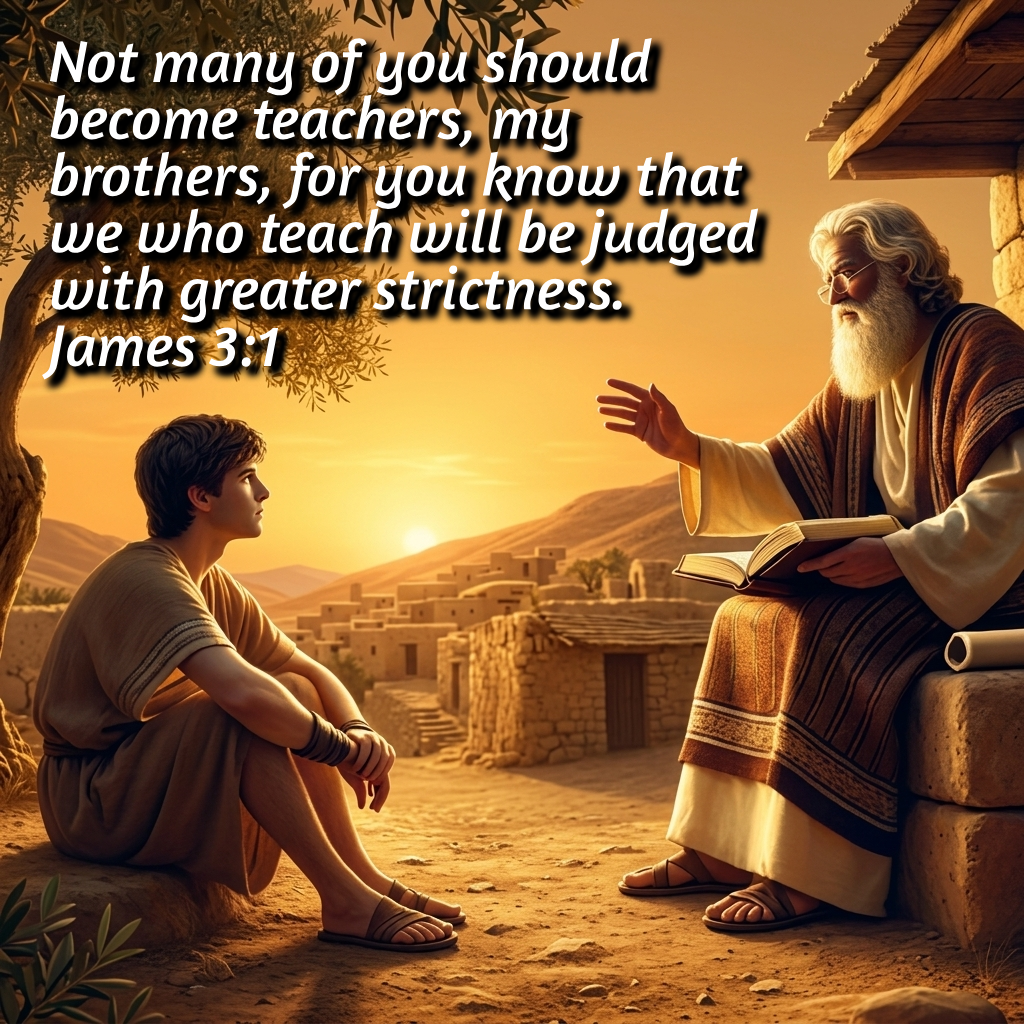
Nor is the cost of being wrong limited to the teacher. James — whom Ms. Podgee honors — warned, “My brethren, be not many masters, knowing that we shall receive the greater condemnation” (James 3:1). A teacher who persuades thousands of viewers to cut thirteen books out of their New Testament, to distrust Acts and 2 Peter, and to regard the gospel that the Twelve endorsed as satanic is not merely risking excessive zeal. She is asking others to stake their souls on her reading. The wager is not between “overly zealous” and “no saving doctrine.” It is between the testimony of Peter, James, John, Luke, and the churches they founded on one side, and a single modern reading of a single unnamed phrase in Revelation 2:2 on the other.
❧ ✦ ❧
Conclusion: The Apostle Who Was Last of All
When the claims in Ms. Podgee’s transcript are tested against the texts she cites, each one fails. Revelation 2:2 never mentions Paul and praises the church Paul founded for following Paul’s own counsel. Galatians records not Paul’s rejection by the pillars but their right hand of fellowship. The Jerusalem church did write a letter, sent it by Paul’s hand, and called him “beloved.” The men “from James” were disowned by James’s own council. Peter called Paul “our beloved brother” and ranked his letters with Scripture. Paul upheld the law as holy, condemned lawlessness by name, and passed on the words of Jesus with care. His use of Psalm 14 is faithful to its universal verdict and to the argument of Romans 3, and his use of the Septuagint is shared by Jesus and by James.
Paul would not have been offended by the charge that he was unworthy to be an apostle. He made that charge against himself:
And last of all he was seen of me also, as of one born out of due time. For I am the least of the apostles, that am not meet to be called an apostle, because I persecuted the church of God. But by the grace of God I am what I am: and his grace which was bestowed upon me was not in vain; but I laboured more abundantly than they all: yet not I, but the grace of God which was with me.
— 1 Corinthians 15:8–10 (KJV) — https://www.biblegateway.com/passage/?search=1%20Corinthians%2015%3A8-10&version=KJV
That is not the voice of a deceiver building a rival religion. It is the voice of a forgiven persecutor who never got over the grace that found him on the Damascus road. Ms. Podgee’s journey from atheism to faith in Christ is itself a testimony to that same grace.
Heresy Born of Half-Knowledge
But grace also warns. Most of the great errors in church history did not begin in malice. They began with partial knowledge held with total confidence: a verse lifted from its setting, a phrase read without the sentence that follows it, a conviction formed before the evidence was weighed. When the Sadducees tried to trap Jesus with a clever reading of the law, He did not praise their zeal. He diagnosed their problem: “Ye do err, not knowing the scriptures, nor the power of God” (Matthew 22:29). The prophet Hosea saw the same danger in Israel:
My people are destroyed for lack of knowledge: because thou hast rejected knowledge, I will also reject thee, that thou shalt be no priest to me.
— Hosea 4:6 (KJV) — https://www.biblegateway.com/passage/?search=Hosea%204%3A6&version=KJV
Notice that Hosea’s sharpest warning falls on the priests, the people responsible for teaching others. Peter applies the same principle to Paul’s letters. Those who twist them, he says, are “unlearned and unstable” (2 Peter 3:16). The Greek amatheis means “untaught”: not unintelligent, but uninstructed. Astēriktoi means “unanchored,” lacking a settled footing. Put the two together and you have a fair description of how heresy spreads in the age of the short video. Confidence moves faster than study. An unnamed phrase in Revelation becomes an indictment. A Psalm is checked against the wrong edition. A sentence from Galatians is read without the verse that answers it. The trouble is rarely that such teachers read too little Scripture. It is that they read it in fragments, and fragments can be arranged to say almost anything.
That is why the stakes are high for anyone who teaches, whether from a pulpit or a phone. “Be not many masters,” James warned, “knowing that we shall receive the greater condemnation” (James 3:1). Sincerity does not make a teaching true, and a large following does not make it safe. The New Testament asks every believer to “try the spirits whether they are of God” (1 John 4:1), and that includes the voices we enjoy hearing. The Bereans are the model. They “received the word with all readiness of mind, and searched the scriptures daily, whether those things were so” (Acts 17:11). Notice what they searched: the whole Scriptures, daily, with open minds. They did not hunt for a few verses to confirm a conclusion already reached.
The Way of Apollos
The New Testament also shows how a gifted teacher with incomplete knowledge can be set right. Apollos was “an eloquent man, and mighty in the scriptures,” fervent in spirit and bold in the synagogue. Yet he knew “only the baptism of John.” Priscilla and Aquila did not shame him publicly. They “took him unto them, and expounded unto him the way of God more perfectly” (Acts 18:24–26). What makes Apollos admirable is not that he was never wrong. It is that he was teachable. He received the correction and went on to become a powerful help to the church.
That is the spirit in which this essay is offered. Its hope is not to win an argument against Ms. Podgee but to invite her, and those who follow her, to take the way of Apollos rather than the way of the Ebionites: to read the whole counsel of God before passing judgment on any part of it, and to read Paul as Peter, James, and John did, as a beloved brother, a fellow servant of the same Lord, and a faithful witness to the gospel by which sinners, Jew and Gentile alike, are made righteous before God.
❧ ✦ ❧
Works Cited
The Holy Bible, King James Version. All Scripture quotations from BibleGateway. https://www.biblegateway.com/
Clement of Rome. The First Epistle of Clement to the Corinthians, chs. 5 and 47. Trans. John Keith. Ante-Nicene Fathers, vol. 1. New Advent. https://www.newadvent.org/fathers/1010.htm
Ignatius of Antioch. Epistle to the Ephesians, ch. 12. Trans. Alexander Roberts and James Donaldson. Ante-Nicene Fathers, vol. 1. New Advent. https://www.newadvent.org/fathers/0104.htm
Irenaeus of Lyons. Against Heresies, 1.26.2. Trans. Alexander Roberts and William Rambaut. Ante-Nicene Fathers, vol. 1. New Advent. https://www.newadvent.org/fathers/0103126.htm
Podgee, Kay. Video transcript on Paul as the “false apostle” of Revelation. Transcript supplied by the author.
Polycarp of Smyrna. Epistle to the Philippians, chs. 3, 9, 11. Trans. Alexander Roberts and James Donaldson. Ante-Nicene Fathers, vol. 1. New Advent. https://www.newadvent.org/fathers/0136.htm
For Further Reading
Bruce, F. F. Paul: Apostle of the Heart Set Free. Grand Rapids: Eerdmans, 1977.
Jobes, Karen H., and Moisés Silva. Invitation to the Septuagint. 2nd ed. Grand Rapids: Baker Academic, 2015.
Longenecker, Richard N. Galatians. Word Biblical Commentary 41. Dallas: Word, 1990.
Moo, Douglas J. The Epistle to the Romans. New International Commentary on the New Testament. Grand Rapids: Eerdmans, 1996.
Colophon: Research and drafting assistance provided by Claude (Anthropic) as a scholarly research collaborator; all editorial decisions and final authority rest with the author. Scripture quotations are from the King James Version.
Kay Podgee (often referred to as Kayla or similar variants in interviews) is a popular independent Christian content creator and self-described former atheist who focuses on biblical cosmology, scripture study, prophecy, symbolism, and alternative/historical interpretations.
Background
She presents herself as transitioning from atheism to being a “forever student of the Most High.” She has described growing up Catholic, which she says contributed to her later atheism (she has called aspects of Catholicism dark or designed to pull people from God). Her shift involved personal experiences (including dreams involving the rapture/Jesus), questioning mainstream science and history, exploring alternative cosmology (firmament/flat-earth ideas), viewing phenomena like UFOs through a spiritual/demonic lens, and independent study of the Bible, antique Bibles, apocrypha (such as Enoch), Hebrew/Greek meanings, and related topics. She positions herself as a researcher rather than a pastor, theologian, or institutional authority, and encourages viewers to test everything against Scripture themselves. She keeps most personal/family details private.
Education
No public formal education, degrees, or academic credentials in theology, biblical studies, or related fields have been documented. She is consistently described and presents herself as self-taught through personal study, antique texts, and online research.
Popularity
She has a significant following across platforms (as of recent data around October 2026): roughly 142,000 YouTube subscribers, hundreds of thousands on Facebook (reports of ~730k), and a substantial Instagram presence (reports of ~340k), plus strong TikTok engagement with individual videos reaching hundreds of thousands to nearly 2 million views. Content includes long-form YouTube deep dives and shorter viral clips. She has appeared in interviews on shows like Skiba News Nation (covering topics such as Nephilim/giants, biblical cosmology, historical mysteries, and confirming she is not AI after rumors about her rapid rise). Her style mixes pattern-seeking in Scripture, antique book discussions, and challenges to mainstream narratives, attracting both engaged fans and critics.
Controversies
She is polarizing within Christian circles, with significant pushback from more traditional or Protestant voices:
Theological positions: This recent video argues that the Apostle Paul is a “false apostle” (citing alleged contradictions with Jesus, the Law, the other apostles, and self-descriptions). This has drawn strong criticism, labeling it heresy. She also teaches that true believers can lose their salvation (rejecting “once saved always saved”), emphasizes ongoing obedience to the Law/Torah and sanctification, and critiques “hyper-grace,” institutional Christianity, and modern church practices. Critics have called her a Judaizer, false teacher, or influenced by Gnosticism/Hebrew Roots-style thinking. Response videos and discussions (e.g., from channels and figures like Protestia or individual debaters) have addressed these claims.
Biblical cosmology and related topics: She promotes a firmament/flat-earth or non-globe model based on biblical descriptions, has discussed Nephilim/giants, Smithsonian cover-ups, antique Bibles revealing doctrinal changes, and other alternative history claims. These draw both support in truther/alternative Christian spaces and accusations of promoting pseudoscience or misinformation.
Other: Early rumors that she was AI (due to rapid growth) were addressed in interviews. She has faced platform issues (e.g., TikTok suspension) and online debates over her views on the Law, repentance, and church culture. She generally frames criticism as resistance to biblical instruction or the “spirit of antichrist,” while maintaining that her goal is investigation rather than dictating beliefs.
Her content is widely available on YouTube (@kaypodgee), with support options like Ko-fi. Views on her accuracy and orthodoxy vary sharply depending on the theological or scientific starting point; primary sources are her own videos and the critiques that have responded to them.