

At East Valley International Church, we view technology like ClaudeAI as a practical extension of faithful stewardship, not a replacement for Spirit-led ministry. Our reasoning is simple: if God can reach someone through any means, why would we artificially restrict the channels through which truth travels?
Consider the person searching online at 3 AM, wrestling with doubt, typing “Does God really care about me?” into a search bar. Should they encounter only shallow religious clichés, or could they discover substantive biblical truth that points them toward Christ? We believe God meets people wherever they are—and increasingly, that’s online.
Throughout history, the Church has adapted its methods while preserving its message. Gutenberg’s printing press revolutionized Scripture distribution. Radio brought sermons into homes. The internet made discipleship resources globally accessible. Each technological shift sparked controversy, yet each ultimately expanded the gospel’s reach.
AI represents simply another tool—more sophisticated than previous ones, certainly, but still just a means of delivering timeless truth. We haven’t changed what we believe or compromised biblical authority. We’ve simply recognized that effective ministry requires meeting people where they actually are, using languages and platforms they actually understand.
The message never changes. The methods always do. That’s not compromise—that’s wisdom.
This Sunday, Pastor Dave Sheveland issued a challenge from Joshua 24:14-16, “The Three Chairs” — The framework of “The Three Generational Chairs” captures one of Scripture’s most sobering patterns—the spiritual trajectory that moves from passionate commitment to comfortable compromise to outright rebellion, often spanning just three generations. This isn’t merely a historical observation but a warning that echoes through biblical history and into our contemporary church experience. The chairs represent not just individuals but generational postures toward God, and understanding them helps us recognize where we sit and, more importantly, where our children and grandchildren may be heading.
Approximate reading time: 30 minutes.
We urge you to engage Pastor Sheveland’s complete message, whether reading the transcription or watching online. That’s where God’s full word to our congregation comes alive. Think of these materials as signposts directing you back to that primary encounter, not as standalone content.
Come to both the worship service and these studies expectantly. Ask the Holy Spirit to transform theological understanding into a life change. Simply accumulating biblical information misses the point entirely—we’re pursuing intimate knowledge of Christ and authentic discipleship that extends far beyond Sunday morning into Monday’s workplace, Wednesday’s family dinner, and every moment in between.
Download the PDF to print at home (12 pages): The Three Chairs
Pastor Dave Sheveland: A Life of Service Across Continents
Pastor Dave Sheveland’s journey reflects a consistent thread—investing in others wherever God leads. After earning his MBA in Global Management from the University of Phoenix, Dave has woven together ministry, education, and mentorship across multiple continents and contexts.
For over two decades (1986-2008), Dave served as a church planter, minister, and missionary throughout Colorado, Arizona, California, and Guam. His missionary work included a teaching stint at JFK High School in Guam from 2000-2002, where he taught remedial math to students needing extra support.
Since 2008, Dave has served dual roles that marry his educational expertise with his pastoral heart. At the University of Phoenix, he counsels students on academics, degree choices, and career paths while training peers as a Resource Consultant. Since 2016, he’s taught 7th grade technology at Horizon Honors in Ahwatukee, Arizona, where he also serves as Academic Counselor and Resource Consultant.
Dave’s recent mission trip to Zambia showcased his continued passion for global ministry. He spoke at a men’s legacy conference, led breakout sessions, preached Sunday services, and visited the impoverished Chianda community to witness Christ Life Church’s feeding and education programs. The journey concluded with visits to Victoria Falls and a safari at Botswana’s Chobe Game Reserve.
Dave lives in Ahwatukee with his wife, Fe Dabalus-Sheveland and has two sons Micah and Kaleb. He continues modeling what it means to serve faithfully across classrooms, counseling offices, and continents.
[Click here] to read the full transcript of this sermon [Click again to close]
(Due to variable audio quality—including background noise, unclear speech, or recording issues—this transcription may contain errors or omissions not present in the original recording. For complete accuracy, please refer to the audio itself or consult with participants about any uncertainties in the text.)
Am I good? Yes. Am I getting that? Yes. Just recently, a whole new meaning, when I grew up with that saying, it says, enjoy your youth, your health, your physical illness. Has a whole new meaning when you’re young. So young people, enjoy your health. We get old. Our bodies fall apart. Just so you know. Why are you limping? Well, I’m getting my second hip replacement surgery done tomorrow. My Christmas present to myself. And then my tooth started hurting. Went to a dentist at the last minute, Tuesday night at six o’clock—or Thursday, I can’t remember. But now I’m scheduled for a root canal on Tuesday afternoon. So enjoy your youth. Brush your teeth. Go to the dentist often, okay?
So we get a new hip and a new tooth, all in six days. I just want to share a little bit about my trip that I was blessed to go on back at the end of June. I had the privilege of going to Zambia, Africa with a team to work on that journey with me. So if we can start on the Zambia slides, we’ll go ahead and—I’m going to share a little bit. I only have about an hour and a half for the slides. We’re going to go into a lot of detail. I’m just kidding. It’s just a flyover.
This is the team of men I went with. We actually went and led and taught the Men’s Legacy Conference. We had about 450 to 500 men show up from all over Zambia. And so these breakout sessions, we talked about personal finance and life skills and enormous norms of life. They’re teaching on building strong marriages with these men. So it was just a terrific time. This guy on my left, Ray Richardson, he’s the one who led the trip, but just a tremendously great group of guys.
And it’s a long flight—from here to London, ten and a half hours, from London to Johannesburg, and then another hour and a half flight to Lusaka, Zambia. Just one quick blessing: trip from Phoenix to England was great. We went to layover, got on the plane in London. And one of the big guys in the back—where is he? Yeah, up in the far right by the A up there—he’s a big guy. And we got on the plane. We’re flying coach. We had one of those double-decker airplanes. We got up on the double-decker plane. Sat in my seat. He sits in front of me, leans back, and the chair breaks.
So I’ve got him—I can’t even put my tray down. I’m thinking, ten and a half hours, this is not going to work. I said, okay Jesus, I don’t know what I’m going to do. The plane takes off, and I go in the back, and I’m going, I’m going to be standing here for the next ten hours. I’m going to have to eat my meal while I’m standing, all that stuff. But anyways, all of a sudden one of the flight attendants goes, are you okay? I said, I’m not one of these whiners and complainers, but what if you know that the chair in front of me broke? And I said, I can’t sit there.
And he goes, yeah, you’re right. He goes, give me a few minutes and I’ll come back. And about five minutes later he comes back and he goes, let’s go to your seat, grab your stuff, and come with me. You guys know what happened, right? Business class. Wow. Leg room, seat room, menus. God was good. Amen. Amen. I was really rested when I got there. Everybody else was like… It’s a blessing because I had the privilege of actually being one of the main speakers for the men’s conference, one of the opening speakers at the conference.
And I had the privilege of preaching at one of their Sunday morning services. It was nice to be able to be rested when I got there. Here we go. At Sunday morning, got to preach. Actually this morning I’m going to share a little bit about what I spoke at the church in Lusaka this morning. Bottom left down here, teaching at the men’s conference. And then a couple up in the far right, that’s the colonel. He was a colonel in the military, then he was a diplomat, and I was one of the church leaders. So they invited us over for a local Zambian lunch one day.
And there’s all the nshima (sic) . It kind of reminded me of Filipino buffet with tilapia and ribs and three different kinds of relishes. It’s like, this is easy, I know all these foods. But once again, it was just great to be able to eat local foods. And then now here’s a lot of the church leaders at Christ’s Way Church we ministered at. Next slide. We did a lot of different things. There’s one area—this is called Chibolya. It’s the middle of Lusaka—probably one of the poorest places I’ve ever been to.
There’s 60,000 people living in a one-mile by one-mile city. Ninety percent of them have no running water or electricity. So it’s called the Chibolya Center. The church actually has an outreach there every day. All day they educate the kids, but they feed the kids one meal every single day—810 kids they feed and educate every day. Some of the girls were doing a dance, so they did a lot of dancing and entertaining for us, and they made us get up on stage and dance. That was not cool.
Here we are—go back a little bit, one more—yeah, here we are feeding the kids. They were packing 20, 30 kids in a room 10 by 10. Their whole meal—most of these kids only had one meal a day—was this little bit of this Zambian nshima and a little sausage. That’s what they got for lunch. That’s what we were feeding them that day. But you can see the happiness and joy in their faces. Okay, next slide.
Upper left, that’s Pastor Mulinga. Well, he’s got quite a story. He started this ministry just about eight, nine years ago. At the end of this year they will have a preschool for kids, preschool through grade 12. So they started that ministry. There’s part of Chibolya Center that we’re walking—kind of Chibolya right there at the bottom. Some of the church service, a little bit of the city. But we did games for the men—it was pretty fun. Yeah, they had to file in the mouth. Yeah, it was pretty fun—friends without checking with us, so maybe even quite more entertaining.
So some of the ministry we were doing there. One thing that’s really good about Pastor Mulinga—when he went back to Zambia to minister, he wanted to start ministry. And so he’s starting up and he met this one guy who says, hey, I want to take some literature, Bible literature, up to the border into another country. Would you be willing to go with me and do this ministry across the border? He wasn’t really as excited about it. So we went with him, not knowing the guy he was with was actually a smuggler.
They got to the border, and that’s when they found out that there were illegal stuff in the car. He was arrested and thrown in prison for over two years. He doesn’t really know about the prisons there. He decided to be Paul in this prison. He was literally taking care of sick people, bathing them every day. He would get meals and take them to the sick people and skip meals for two years. He has to make sure that about 3,000 men came to Christ over those two years in this ministry in the prison.
So, and now here we are that God has truly blessed him in Lusaka, Zambia. They have nine church plants going. I got to meet most of those. These girls out here—they reach out to girls 10 to 15, 10 to 16 year olds where their parents don’t want them, sex trafficked even to their families, or they abandon them, throw them out on the street. So the church rescues these girls, gives them a home, feeds them, clothes them, and teaches them a skill so when they graduate they have a skill to make a living.
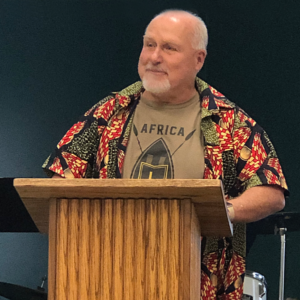
That’s why I’m wearing this shirt—this is one of the shirts that the girls made for us. Problem is, Zambians are really tiny, and us Americans have to know us—we’re kind of great guys. If I hold my shirt ribs out, you’ll know why. I can’t find that. But bless me, these girls are on a scale. They’ve been rescued. They are the most incredibly proud. And then part of the school out in front of the school. And then some of the guys—at the end of our trip we got to go down to Livingstone and got to go to Victoria Falls, one of the seven wonders of the world.
Apparently beautiful—some of the guys that I was with there. This bridge goes from Zambia to Zimbabwe. In fact we entered into Zimbabwe on the bridge. Okay, next slide. Just from a picture—we also got to do a safari at the end of our trip. My blessing was that I got the Zambia revenge the night before the safari. I got really, really sick. I did the safari anyway. I like the vultures, right? That’s Victoria Falls—just absolutely amazing, amazing.
Then one night we got to have dinner on the Zambezi River, and this was our sunset as we were eating dinner at the main Livingstone Lodge there in Livingstone. Okay, next slide. A few more of our safari trips—hippopotamuses, next slide. These are some of the eagles that were there, some giraffes. Next slide. Kind of a picture, a glimpse of what God did in those eight days while we were—it was full-on every day, but we got to see a lot of what God was doing through the church.
So anyways, thank you guys for sponsoring, praying for me and us as we were in Zambia. So if you have questions, yeah, or want to know more. All over the world I’ve been teaching. I’ve got to teach and preach in a lot of different places, in hundreds of churches. And in these travels there seems to be a common theme in a lot of churches. So we’re going to talk about this common theme this morning. This morning we’re going to call it the three chairs.
But before we start, let’s pause and ask God to bless our time. Father, I thank you for this morning. We love you. We thank you. We just thank you for your grace. I feel so gracious and loving. So Lord, we pray for that. And now Lord, as we open your word, may you be honored and glorified here today. In Jesus’ name, amen. These three different chairs that we have up here represent three different generations. Each one here this morning may sit in each one of these chairs.
They also represent three different areas of spiritual growth and where we are spiritually. So we’re going to walk through this journey here this morning. If you have your Bibles, we’re just going to open up to Joshua 24:14–16, where it says, Now fear the Lord and serve him with all faithfulness. Throw away the gods your ancestors worshiped beyond the Euphrates River and in Egypt and serve the Lord. But if serving the Lord seems undesirable to you, then choose for yourselves this day whom you will serve, whether the gods your ancestors served or the gods of the Amorites in whose land you are living. But as for me and my household, we will serve the Lord.
There was a temptation then where there were things spread out and people kind of go their own ways in forgetting who God was. But Joshua here said no—in my house we are going to serve the Lord. So this morning, chair one right here—this is the Joshua chair. This is the chair of commitment. Meaning I’m going to choose every day to know God, to serve God, to make God known, just as Joshua was doing in the Old Testament. So this is the chair of commitment.
That is the chair we desire to be sitting in each and every day, each and every week, where Joshua lived out God’s word in obedience, okay, when we serve the Lord. Chair two—we move over to Judges 2:6, where Joshua had dismissed the Israelites. They went to take possession of the land, each to their own inheritance. The people served the Lord throughout the lifetime of Joshua and of the elders who outlived him and who had seen all the great things the Lord had done for Israel.
So as the generations grew, they spread out across the land, each to their own inheritance, meaning that as they went out they established their own families, their own way of life, meaning they were wandering away from their commitment to God. So these people are considered—1 Kings 11:4 says, As Solomon grew old, his wives turned his heart after other gods. We know Solomon was wise. We know that he shared a lot of things in the Bible. But chair two, after a while, as generations go, eventually Solomon compromised his faith.
So this would be the chair of compromise, meaning we start listening carefully to other religions. We start listening to other gods and saying, I like this more better. This is easier than being a fully devoted follower of Jesus. The chair of compromise. And those verses said we have seen it. So Solomon saw it, but he actually stopped living for Christ and God’s word, and he will lead him to it. Then there’s the third generation. Judges 2:10 says, After that whole generation had been gathered to their ancestors, another generation grew up who knew neither the Lord nor what he had done for Israel.
This was Rehoboam. Rehoboam abandoned his total faith in God. He was rebellious. He did not want anything to do with his father Solomon. So this would be the chair of rebellion. Oftentimes we sit here, but life gets tough. We start listening to other things, start reading other things. This is an easier chair to sit in. I can compromise. I don’t have to be fully devoted, but yet I’m still a Christian with a rebellious heart, but show up every now and then to make myself feel good, but still having a rebellious heart.
So the chair of commitment, chair of compromise, and the chair of rebellion. Back to David—now we know about King David, right? But now thy kingdom shall not continue. The Lord hath sought him a man after his own heart, and the Lord hath commanded him to be captain over his people, because thou hast not kept that which the Lord commanded thee. Acts 13—And when he had removed him, he raised up unto them David to be their king, to whom also he gave testimony and said, I have found David the son of Jesse, a what? A man after mine own heart, which shall fulfill all my will.
Because we know the story of David. Why would God choose David? He was rebellious. He compromised his faith with Bathsheba. He committed murder. And yet God still had a plan for him. He got caught, he repented, and now he sits in this chair. This chair is not only a chair of commitment—this is a chair of someone with a devoted heart, uncompromised. Let’s go back to 1 Kings 11:4. When Solomon grew old, his wives turned his heart after other gods, and his heart was not fully devoted to the Lord his God, as the heart of David his father had been—divided heart.
Not only can we compromise—you guys understand why an undivided heart is one that says there are things in the world I like. I’m not going to give up those things in the world. If I go here, I’m going to have to give up a lot of this fun stuff that I like to do. There’s sin in my life, but I kind of like it. If I go over here, whoa, I’m going to have to change some things in my life. So you have a divided heart. This is the type of person that has a Bible and reads it, but really doesn’t obey.
Okay? And then back to our third chair—1 Kings 12:6, right over there. Listen to friends, but no godly people. Listen to unsaved people, people who did not follow God. So King Rehoboam consulted the elders who had served his father Solomon during his lifetime. How would you advise me to answer these people, he asked. And these elders replied, If today you will be a servant to these people and serve them and give them a favorable answer, they will always be your servants.
But Rehoboam rejected the advice the elders gave him and consulted the young men who had grown up with him and were serving him. He asked them, What’s your advice? How should we answer these people who say to me, Lighten the yoke that your father put on us? The young men who had grown up with him, these people have said to you, Your father put a heavy yoke on us, but make our yoke lighter. Now tell them, My little finger is thicker than my father’s waist. My father laid on you a heavy yoke; I will make it even heavier.
You guys tracking with what that means? Let’s lower our expectations. Let’s just say, let’s not make anybody feel guilty. Let’s just water down God’s word. Let’s make everybody feel comfortable so everybody will like us. Does that make sense? So this chair is people with a dead heart—people who just don’t want to listen to God and God’s word, people who reject the gospel, reject God’s commands. So now we have a dead heart, we have a divided heart, and a devoted heart.
So as you’re processing this this morning, you’re going—I won’t make you stand. They have all those who are—I’m just kidding, okay? Which chair—examine our hearts. We want to be chair one, a devoted heart, a delighted heart, or a dead heart. Some of us may be sitting in each one of these chairs here this morning. So let’s take even a closer look at this. So where do we go from here? Take different areas of our life and how this affects our relationships, our marriages, our family, our work, each and every day.
Chair one—picture of this is you obey God, you obey the Bible, and submit to its authority. Your values come from the Bible in every area of your life—in your marriages, relationships, children, work, wherever you are. Your desire is to be devoted and follow God’s word each and every day. We call these FIT people. This is what I share with them now—be Faithful to God and God’s word. Wake up every day and be Intentional. You know, I’m very intentional about what God wants. I’m not going to do it half-hearted. That’s a challenge.
T—Teach and be Teachable. Meaning you need to be a FIT Christian—Faithful, Intentional, and be Teachable. We are consistent in our walks with God. Chair two—these people respect the Bible. We read it, but we do not live it. The Bible hasn’t collected dust yet on the shelf or on the table, okay? Lifestyle drifts from God’s word. A divided heart rationalizes sin—meaning each one of us here today, we love their days have divided their heart. I mess up. I do things. But God convicts me of those things.
And I have to repent and get right with him. Ask God, God help me in this area of my life. It’s that sanctification process of making us more like him. Our values come from the Bible but other sources. We rationalize our lifestyle. That’s chair two. Chair three—they own a Bible but never open it. Rather than Bible, we may live on horoscopes, looking good. These are the people who conform to the world. These are the better—they don’t know Jesus Christ.
There are people in churches all over the world sitting there and haven’t come to know Jesus yet. Romans 12:1–2 says, Therefore I urge you, brothers and sisters, in view of God’s mercy, to offer your bodies as a living sacrifice, holy and pleasing to God—this is your true and proper worship. Do not conform to the pattern of this world, but be transformed by the renewing of your mind. Then you will be able to test and approve what God’s will is—his good, pleasing and perfect will.
Here’s what happens—yeah, we sit in this chair, right? Yeah. Go get the bed. Do we get comfortable in this chair sometimes? Sweet. I’m serving the church. I’m doing all this good stuff—kind of cruising along. But oftentimes in our comfort we may be finding ourselves compromising thoughts where we end up in chair two, and all of a sudden our hearts become divided. Something bad happens. Can’t figure out what God is. We lose a job. We have financial problems. We have health problems. Our kids rebel.
We’re like, okay, I’m not worthy of being in chair one. This one’s a little bit more comfortable for me. I can show up to church every now and then. I’m going to have to condemn myself. Yeah, you’re a Christ follower, but also your heart has been divided with the world when God has called you to holiness. Okay? There are often times I have to examine—I find myself, I want to be here, but when I find myself sitting here with a divided heart, God begins a good thing. Hey, what are you doing?
My good God, you’re irritating. I don’t like the plan you have for my life. Why does this happen? Why do the physical things happen? Why are you tracking me? All of a sudden we start asking why, why, why. We end up with a divided heart. People right here—yeah, they kind of like you guys. They show up to church thinking they’re safe. Just, you know, the church will save me. Are you very religious? You show up to church.
I refuse to sit in the chair of rebellion. Thank you. But there are people that need Jesus in the church. So I believe us as followers, and the church sometimes misses it—especially us people in chair one. We need to take time, didn’t we? We need time to not only evangelize, make sure they understand God’s word, because if they don’t have a good foundation what’s going to happen—we might get excited, we’re going to end up in chair two.
So my chair one people this morning—we need to step out of our comfort zone and lean into the people that might be in an area of conflict. We also need to lean into people and not be afraid to share the goodness of Jesus—to say, do you really know Jesus Christ? If you’re sitting here this morning and you’re like, please don’t tell me I need to get out of my very comfortable chair. I like it here. I’m going to ask you chair two people—there’s things in your life that are causing that with a divided heart.
You like the world, but you don’t like Jesus as well. Maybe you need to step out of your comfort zone and figure out how you can get into chair one—to become a fully devoted follower of Jesus Christ. Amen. That really means that you are going to have to give things up to bring honor and glory to God. Are we going to mess up? Absolutely. Then God convicts us to repent until we get forgiveness. Okay?
So our desire should be in chair one—to be the Joshua, to be the David, to be the Pauls, the disciples—to fully devote ourselves every day. To be faithful, to be intentional, to be teachable. They don’t know Jesus. It’s been the past eight months teaching has been kind of cool actually. The boldness of my kids at the school—it’s just, they’re wearing Faith Over Fear. One kid wears a sweater that says “Y’all need Jesus.” Every time he gets in trouble they say, you know what Jared, I think you need a little more Jesus today. He just laughs.
I wear my WWJD bracelet. Kids come up and they’re starting to wear their bracelets now. But I have a friend, Officer Jeremy Martin. We’ve been friends for three years since he’s been at the school. He’s been praying for me. We talk, we share, we know everything about each other. And I’d just been praying for his faith because he did not like the church. He had a bad experience at the church. He hadn’t been in like eight years.
So I went in, loved on him every day, loved on me, became friends. And then when the Charlie Kirk assassination attempt happened, it moved him in a different way. He came to me because they wanted me to renew my relationship with Jesus. So in that moment we got to pray. And he’s been coming to a men’s group on Wednesday nights. And God’s just taken him. So he moved from chair three to chair one. It took about three years. He was praying and loving.
Next thing you know he’s inviting people—see, he was out on a walk, met this married kid Daryl. Invited Daryl to a men’s group on Wednesday night. Guess what? Daryl showed up and he’s been there every week. He’s renewed his relationship with Jesus. He’s engaged, living with his girlfriend, and he goes, I need to marry my girlfriend. I can’t keep living with this sin like this. You know what the other cool story is to that? My police officer friend just looked at me and goes, I know this kid from somewhere.
And he got to talking to Daryl, and they got to talking. Officer Martin was one of his officers at a youth camp when Daryl was a teenager—for kids at risk. And Officer Martin was his mentor back at this camp like 20 years ago. And God brought them together, and now God is at work. Now Daryl has moved from chair three and he’s working his way to being in chair one.
So chair one people need to lean to the people to teach. We need to lean into people, not just be comfortable. Teach, disciple, give people accountability to live and leave a legacy for Jesus. Chair two people—I’m asking you today to step out of your comfort zone and move into the chair of one people. Stop compromising. Put away the horoscope. Put away the stuff that is keeping you from knowing Jesus wholeheartedly.
Chair three people—I’m asking today that this might be the day you decide to accept and follow Jesus and become a committed follower of Jesus. You know better now when we’re celebrating the birth of our Savior. Can we pray that today? Amen. Which chair are you in today? Be honest with yourself. Father of Jesus? Or is there compromise? Is there something in my heart that’s keeping me from knowing God fully and honoring Him with everything that I have?
Maybe today you’ve been coming but you’ve never decided to trust Jesus as your Savior. Maybe today is that day. So ask us to pray. Father God, I just pray right now. I pray for each one here, Lord, that we would not lose any generation, Lord. That we would continue to disciple as older, disciple the younger, and teach them to be followers of you. So I pray for our young people here today that they would choose people who are followers of you to teach and train and reach out to their generation.
Putting Jesus first in every area of your life. My prayer is that you become chair one people and do not lose the next generation. If you’re sitting here, you know you’re in chair two—maybe it’s time to examine your heart and say, God, what is hurtful in my life? What is keeping me from being a follower of you? It doesn’t mean you have to be perfect. It just means your desire to give up and to make mistakes that you say, Jesus, I confess. We learn and we grow each and every day as we get closer and closer.
If you don’t know Jesus Christ as your Lord and Savior, you hear the devil and pray that. I’m just going to pray a prayer. If you don’t know him, it’s simple. Just say, Lord Jesus, I need you. I know I’m a sinner and I need a Savior. So Lord, I accept you, Jesus, into my heart, knowing my Savior but my Lord. And I choose to follow you each and every day for the rest of my life. In Jesus’ name. Amen.
Background of Joshua 24: A Nation at the Crossroads
There are moments in history when an entire nation stands at a crossroads, when the choices made in a single day ripple through generations, when leaders must call their people to decide what they truly believe and whom they will truly serve. Joshua 24:14-16 records one such moment—perhaps the most significant covenant renewal ceremony in Israel’s history, occurring at the end of Joshua’s life and leadership.
The book of Joshua has chronicled Israel’s conquest and settlement of the Promised Land. Under Joshua’s leadership, they’ve crossed the Jordan River, conquered Jericho, defeated coalition armies, and divided the land among the twelve tribes. God has fulfilled His promises to Abraham, Isaac, and Jacob. The people who were slaves in Egypt now possess their own land. The generation that wandered in the wilderness has been replaced by one that has seen God’s faithfulness in conquest and settlement.
But military victory and territorial possession don’t guarantee spiritual faithfulness. Joshua, now an old man facing death, gathers all Israel at Shechem for a final challenge. This is not merely a farewell address but a covenant renewal ceremony, a moment when Israel must choose definitively whom they will serve. The location itself is significant—Shechem, where Abraham first built an altar to the Lord in Canaan (Genesis 12:6-7), where Jacob buried foreign gods under an oak tree (Genesis 35:2-412 So Jacob said to his household and to all who were with him, “Put away the foreign gods that are among you and purify yourselves and change your garments. 3 Then let us arise and go up to Bethel, so that I may make there an altar to the God who answers me in the day of my distress and has been with me wherever I have gone.” 4 So they gave to Jacob all the foreign gods that they had, and the rings that were in their ears. Jacob hid them under the terebinth tree that was near Shechem.), and where Joshua had previously led a covenant ceremony (Joshua 8:30-35230 At that time Joshua built an altar to the Lord, the God of Israel, on Mount Ebal, 31 just as Moses the servant of the Lord had commanded the people of Israel, as it is written in the Book of the Law of Moses, “an altar of uncut stones, upon which no man has wielded an iron tool.” And they offered on it burnt offerings to the Lord and sacrificed peace offerings. 32 And there, in the presence of the people of Israel, he wrote on the stones a copy of the law of Moses, which he had written. 33 And all Israel, sojourner as well as native born, with their elders and officers and their judges, stood on opposite sides of the ark before the Levitical priests who carried the ark of the covenant of the Lord, half of them in front of Mount Gerizim and half of them in front of Mount Ebal, just as Moses the servant of the Lord had commanded at the first, to bless the people of Israel. 34 And afterward he read all the words of the law, the blessing and the curse, according to all that is written in the Book of the Law. 35 There was not a word of all that Moses commanded that Joshua did not read before all the assembly of Israel, and the women, and the little ones, and the sojourners who lived[a] among them.).
Joshua 24:14-16 captures the heart of this moment: Joshua’s challenge to the people and their response. These verses present us with the fundamental human question that every person, every generation, every nation must answer: Whom will you serve? The response given here echoes through Scripture and confronts every believer today with the same choice—decisive, public, and costly allegiance to the Lord.
The Text: Joshua 24:14-16
Let us first examine the text itself in two translations:
New International Version (NIV): “Now fear the Lord and serve him with all faithfulness. Throw away the gods your ancestors worshiped beyond the Euphrates River and in Egypt, and serve the Lord. But if serving the Lord seems undesirable to you, then choose for yourselves this day whom you will serve, whether the gods your ancestors served beyond the Euphrates, or the gods of the Amorites, in whose land you are living. But as for me and my household, we will serve the Lord.” Then the people answered, “Far be it from us to forsake the Lord to serve other gods!”
English Standard Version (ESV): “Now therefore fear the Lord and serve him in sincerity and in faithfulness. Put away the gods that your fathers served beyond the River and in Egypt, and serve the Lord. And if it is evil in your eyes to serve the Lord, choose this day whom you will serve, whether the gods your fathers served in the region beyond the River, or the gods of the Amorites in whose land you dwell. But as for me and my house, we will serve the Lord.” Then the people answered, “Far be it from us that we should forsake the Lord to serve other gods…”
Historical and Covenantal Context
To understand Joshua’s challenge, we must grasp Israel’s theological crisis.
The Generational Transition
Joshua, approximately 110 years old, had led Israel for twenty-five years since Moses’ death. As Moses’s former assistant and one of two faithful spies, he commanded Israel’s conquest. Now facing death, Joshua recognized the rising generation hadn’t witnessed the mighty acts that formed their parents’ faith.
The Israelites at Shechem had seen God’s power in Canaan’s conquest but hadn’t experienced Egypt’s slavery or the Red Sea crossing. They knew stories of wilderness manna without tasting it themselves. Their inherited faith remained untested by personal crisis.
Joshua understood each generation must choose for itself. Faith cannot be passed down automatically like inheritance. Each generation must personally encounter God and commit to the covenant. Parental faith, however strong, cannot substitute for personal commitment.
The Syncretistic Temptation
Joshua’s words reveal a shocking reality: even among those witnessing God’s faithfulness, idolatry remained. “Throw away the gods your ancestors worshiped beyond the Euphrates River and in Egypt” (verse 14). Some possessed household idols from Mesopotamia or Egypt.
Settled in Canaan, Israel faced new temptations from the surrounding peoples who worshiped Baal and Asherah. The temptation was hedging bets—worship Yahweh while honoring local deities for harvests and acceptance. This syncretism would plague Israel throughout the judges and monarchy, representing humanity’s desire for God’s blessings without His exclusive claims.
Verse 14: The Call to Undivided Loyalty
“Now fear the Lord and serve him with all faithfulness. Throw away the gods your ancestors worshiped beyond the Euphrates River and in Egypt, and serve the Lord.”
Joshua’s challenge begins with “now therefore”—connecting Israel’s complete salvation history (verses 2-13) to their required response. God’s faithfulness demands our faithfulness. His grace calls for gratitude expressed in obedient service.
“Fear the Lord” encompasses reverential awe and holy respect. This isn’t terror driving us from God but reverence drawing us near while recognizing His holiness and authority. To fear the Lord means taking Him seriously, treating His word as authoritative, and living with accountability awareness.
“Serve him with all faithfulness” translates Hebrew words meaning wholeness, integrity, and truth. Joshua demands wholehearted service—not external conformity but internal devotion. You cannot serve the Lord faithfully while serving other gods. Divided loyalty is no loyalty.
“Throw away the gods” requires decisive, immediate rejection—not gradual reduction but complete removal. References to Mesopotamian and Egyptian gods reveal that some Israelites still cherished family idolatry. You cannot serve the Lord while retaining idols, even hidden ones.
For modern believers, our idols aren’t carved images but anything receiving devotion, belonging to God alone—wealth, success, relationships, reputation, comfort. Joshua’s command remains: throw them away and serve the Lord.
Verse 15: The Challenge to Choose
“But if serving the Lord seems undesirable to you, then choose for yourselves this day whom you will serve, whether the gods your ancestors served beyond the Euphrates, or the gods of the Amorites, in whose land you are living. But as for me and my household, we will serve the Lord.”
“If Serving the Lord Seems Undesirable”
Joshua presents a hypothetical: what if serving the Lord doesn’t appeal to you? What if His demands seem too restrictive, His standards too high, His exclusivity too narrow? The Hebrew phrase translated “seems undesirable” or “is evil in your eyes” suggests something morally offensive or disagreeable.
This is rhetorical—Joshua is not genuinely suggesting that serving the Lord is undesirable. Rather, he’s forcing the people to confront the implications of their divided hearts. If they’re unwilling to put away their idols, they’re essentially saying that exclusive service to Yahweh is unacceptable to them. Joshua makes them face this reality squarely.
This rhetorical technique challenges people to examine their true motivations. Are they (or WE) truly committed to the Lord, or are they just going through religious motions while their hearts are elsewhere? Do they genuinely love God, or do they find His demands burdensome?
“Choose for Yourselves This Day”
Here is the famous call to decision: “Choose for yourselves this day whom you will serve.” This is one of Scripture’s great choice texts, emphasizing human responsibility and the necessity of conscious, deliberate commitment.
Several elements deserve attention:
“Choose for yourselves” – This is personal responsibility. No one can choose for you. Your parents’ faith cannot substitute for yours. Your spouse’s commitment cannot cover your lack of commitment. Your pastor’s dedication cannot compensate for your indifference. Each person must individually choose.
“This day” – The choice is urgent and immediate. Not tomorrow, not when it’s convenient, not after you’ve weighed all options indefinitely. Today—now—choose. Delay is itself a choice, typically a choice for the status quo, for compromise, for divided loyalty.
The call to choose “this day” also implies that the choice must be renewed continually. Today you choose; tomorrow you must choose again. Covenant faithfulness is not a one-time decision but a daily commitment, a continual choosing of God’s ways over competing alternatives.
“Whom you will serve” – Notice Joshua frames this as a choice between masters, not between serving and not serving. Everyone serves someone or something. The question is not whether you’ll serve but whom you’ll serve. Autonomy is an illusion; we’re all slaves to whatever controls our hearts. The only real choice is between good masters and bad, between the Lord who liberates and idols that enslave.
“But as for Me and My Household”
Having laid out the options, Joshua declares his choice: “But as for me and my household, we will serve the Lord.” This is one of Scripture’s most quoted statements, often displayed in Christian homes—and rightly so. But we must understand what Joshua is actually declaring.
Personal commitment – “As for me” emphasizes Joshua’s individual decision. Regardless of what the nation chooses, regardless of cultural trends, regardless of popular opinion, Joshua has made his choice. He will serve the Lord.
This is leadership by example. Joshua doesn’t merely command others to serve the Lord while remaining uncommitted himself. He leads by declaring his own allegiance first. He’s willing to stand alone if necessary. His commitment doesn’t depend on others’ choices.
Household leadership – “And my household” indicates Joshua’s responsibility for and authority over his family. As the household head, he commits not only himself but his entire household to serving the Lord.
This doesn’t mean Joshua can believe for his children or that his faith automatically transfers to them. Each person must personally choose. But it does mean Joshua will lead his household in the right direction, will establish patterns of worship and obedience in his home, will teach God’s word to his family, and will not allow idolatry under his roof.
The household in ancient Israel included not just immediate family but extended family and servants—everyone under the household head’s authority and care. Joshua commits to creating a context where everyone in his sphere of influence will be directed toward serving the Lord.
Present and future tense – “We will serve” is both a present commitment and a future intention. It’s not “we have served” (past faithfulness) or “we would serve” (hypothetical), but “we will serve”—ongoing, continuing, persistent service regardless of circumstances or consequences.
This commitment implies perseverance. Serving the Lord is not a short-term experiment but a lifelong devotion. It’s not dependent on feelings or circumstances but is a settled decision that will govern all future choices.
Verse 16: The People’s Emphatic Response
“Then the people answered, ‘Far be it from us to forsake the Lord to serve other gods!'”
The people’s response is immediate and emphatic. “Far be it from us” translates the Hebrew chalilah, a strong expression of horror—literally, “profane be it to us!” This isn’t casual agreement but emphatic rejection of forsaking the Lord.
They declare that abandoning Yahweh for other gods is unthinkable, utterly contrary to their covenant identity. The word “forsake” (azab) means to abandon a covenant relationship, to break faith with someone deserving loyalty. This emphasizes the relationship—God is not merely a theological concept but a covenant partner who acted in history on Israel’s behalf. Serving other gods means betraying this faithful relationship.
Yet Joshua’s skeptical response proves prophetic. The book of Judges chronicles Israel’s repeated apostasy—forsaking the Lord for Baals and Ashtoreths, exactly what they vowed never to do at Shechem.
This warns us: passionate declarations in emotional moments don’t guarantee consistent faithfulness in daily life when cultural pressure mounts and idols beckon with promises of pleasure or security. Jesus warned about those who say “Lord, Lord” but don’t obey (Luke 6:463Why do you call me ‘Lord, Lord,’ and not do what I tell you?). Verbal commitment must match lived faithfulness.
Pastor Dave: The Three Generational Chairs:
A Review of Spiritual Trajectory
- The Joshua Chair of Commitment
- The Solomon Chair of Compromise
- The Rehoboam Chair of Rebellion
Introduction: The Pattern That Repeats
Scripture reveals a troubling pattern: spiritual vitality rarely survives three generations intact. What begins as passionate devotion in one generation softens into comfortable familiarity in the next, then collapses into outright apostasy in the third. This isn’t abstract theory—it’s a recurring tragedy throughout redemptive history.
Consider Israel after Joshua. The generation that conquered Canaan served the Lord faithfully. Their children, who grew up hearing conquest stories, maintained nominal allegiance. But their grandchildren, who knew neither the Lord nor His mighty works, abandoned Yahweh entirely for Canaanite idols (Judges 2:10-12410 And all that generation also were gathered to their fathers. And there arose another generation after them who did not know the Lord or the work that he had done for Israel. Israel’s Unfaithfulness 11 And the people of Israel did what was evil in the sight of the Lord and served the Baals. 12 And they abandoned the Lord, the God of their fathers, who had brought them out of the land of Egypt. They went after other gods, from among the gods of the peoples who were around them, and bowed down to them. And they provoked the Lord to anger.).
This generational trajectory confronts every believing parent and church leader today. Where does your household stand in this cycle? More critically, what spiritual inheritance are you passing down? Are your children observing genuine faith lived authentically, or merely religious routine performed comfortably?
The pattern warns us: each generation must personally encounter God, not simply inherit religious tradition. Secondhand faith withers. Cultural Christianity crumbles. Only deliberate discipleship—where parents model authentic worship, teach Scripture faithfully, and demonstrate costly obedience—interrupts this devastating three-generation slide toward spiritual emptiness.
The Joshua Chair of Commitment: The First Generation
The first chair is occupied by those who, like Joshua, have personally encountered God’s power and faithfulness. This is the generation that has witnessed miracles, experienced deliverance, and seen God work in undeniable ways. Joshua had been Moses’ assistant, one of only two faithful spies, and the leader who watched walls fall at Jericho, and the sun stand still at Gibeon. His faith wasn’t theoretical—it was forged in the fires of real experience.
Those sitting in the Joshua Chair know what they believe and why. Their faith has been tested and proven. They’ve counted the cost and chosen to pay it. When Joshua declared, “As for me and my household, we will serve the Lord,” it wasn’t empty rhetoric—it was the settled conviction of someone who had walked with God through decades of challenges and triumphs.
Several qualities characterize this first-generation faith. There’s clarity of conviction—Joshua knew exactly who God was and what He required. There’s personal experience—his faith was based on what he himself had witnessed and encountered, not merely on what others told him. There’s a willingness to sacrifice—he had given his entire adult life to God’s purposes, leading Israel through warfare and settlement. And there’s leadership responsibility—he felt the weight of not just his own faithfulness but of directing an entire nation toward covenant obedience.
The Joshua generation typically emerges from crisis or awakening. They’re the immigrants who fled persecution and found religious freedom. They’re the converts who encountered Christ in dramatic conversion experiences. They’re the revival generation that witnessed the Holy Spirit move powerfully in their churches and communities. They’re the church planters and missionaries who left comfort to pursue God’s calling. Their faith is fresh, passionate, tested, and resilient.
But here’s the critical question Pastor Dave’s framework forces us to ask: What happens to the next generation? Can the Joshua Chair’s commitment be passed down, or does something inevitably change when children inherit faith rather than discover it for themselves?
The Solomon Chair of Compromise: The Second Generation
The second chair is occupied by those who, like Solomon, inherited both blessing and responsibility but gradually drifted into compromise. Solomon was David’s son, heir to a united kingdom at its zenith of power and prosperity. He began well—asking God for wisdom rather than wealth, building the magnificent temple, and leading Israel to unprecedented glory. The Queen of Sheba traveled from distant lands to witness his wisdom and wealth. God appeared to him twice, affirming His covenant.
Yet Solomon’s story is tragedy wrapped in gold. Despite his wisdom, despite his knowledge of God’s law, and despite personally experiencing God’s presence, Solomon gradually compromised. He married foreign wives who turned his heart toward their gods. He built high places for pagan worship. The man who built God’s temple also built shrines to Molech and Chemosh. First Kings 11:4 delivers the devastating verdict: “As Solomon grew old, his wives turned his heart after other gods, and his heart was not fully devoted to the Lord his God, as the heart of David his father had been.”
Those sitting in the Solomon Chair represent the second generation—children of the committed, heirs of the faithful. They know the right answers. They’ve been raised in church, attended Bible studies, and memorized Scripture. They’ve inherited theological frameworks and religious practices. They often hold positions of influence and enjoy the fruit of their parents’ faithfulness.
But something subtle has shifted. The faith they possess is more inherited than discovered, more intellectual than experiential, more theoretical than tested. They know about God more than they know God. They maintain religious forms while their hearts slowly drift. They accommodate cultural pressures that their parents resisted. They make “reasonable” compromises that seem minor but accumulate over time.
The Solomon Chair is characterized by gradual drift rather than dramatic rebellion. It’s not wholesale abandonment of faith but incremental compromise. It’s adding rather than replacing—keeping God but also pursuing wealth, success, pleasure, and cultural acceptance. It’s wisdom without devotion, knowledge without obedience, orthodoxy without orthopraxy.5In the study of religion, orthopraxy is correct conduct, both ethical and liturgical, as opposed to faith or grace. Orthopraxy is in contrast with orthodoxy, which emphasizes correct belief. The word is a neoclassical compound—ὀρθοπραξία (orthopraxia) meaning ‘right practice’.
The compromises often seem sophisticated or progressive to those making them. “We’re not as narrow as our parents.” “We’re more culturally engaged.” “We’re showing grace, not judgment.” “Times have changed; we need to adapt.” These rationalizations smooth the path from commitment to compromise, from exclusive devotion to comfortable syncretism.
What makes the Solomon Chair particularly dangerous is that those sitting in it often don’t recognize they’ve left the Joshua Chair. They still attend church, still claim faith, still maintain religious identity. But their hearts—like Solomon’s—are no longer fully devoted to the Lord. They’ve made room for other loves, other priorities, other gods. The drift is real even when unacknowledged.
The Rehoboam Chair of Rebellion: The Third Generation
The third chair is occupied by those who, like Rehoboam, openly rebel against what their grandparents established. Rehoboam was Solomon’s son, the third generation, and his story represents the tragic culmination of spiritual decline. When he ascended to the throne, he faced a critical choice: follow his grandfather David’s faithful path or continue his father Solomon’s compromising trajectory.
He chose worse than either. Rejecting wise counsel, Rehoboam imposed harsh burdens that split the kingdom. Under his reign, Judah abandoned the Lord and engaged in practices even more detestable than the pagan nations (1 Kings 14:22-24622 And Judah did what was evil in the sight of the Lord, and they provoked him to jealousy with their sins that they committed, more than all that their fathers had done. 23 For they also built for themselves high places and pillars and Asherim on every high hill and under every green tree, 24 and there were also male cult prostitutes in the land. They did according to all the abominations of the nations that the Lord drove out before the people of Israel.). They set up sacred stones and Asherah poles on every high hill. Male shrine prostitutes operated throughout the land. The temple Solomon built for God’s glory was ransacked by Egypt within five years of Rehoboam’s reign.
Those sitting in the Rehoboam Chair represent the third generation—grandchildren of the committed, children of the compromisers. They’ve inherited religious forms but not religious faith. They know the vocabulary but reject the values. They’ve watched their parents’ comfortable compromise and concluded that if faith can be negotiated, it can be abandoned. They’re often angry at what they perceive as hypocrisy—their grandparents talked about radical faith while their parents lived practical accommodation.
The Rehoboam generation is characterized by open rebellion rather than gradual drift. Where Solomon compromised privately while maintaining public orthodoxy, Rehoboam rebelled publicly. Where the second generation drifted slowly, the third generation walks away decisively. They’re the church dropouts, the deconstructed, the “spiritual but not religious,” the vocal critics of the faith they were raised in.
Ironically, they’re often more honest than the compromising generation that raised them. They recognize that you can’t serve both God and idols, that faith demands exclusive commitment, that Christianity is either true and worthy of complete devotion or false and worthy of rejection. They’ve watched their parents try to have it both ways and concluded it doesn’t work. So rather than continuing the charade of comfortable Christianity, they abandon it entirely.
The third-generation rebellion takes various forms in contemporary culture. Some reject Christianity intellectually, citing unanswered questions or perceived contradictions that their compromising parents couldn’t address. Some reject it morally, finding biblical standards oppressive compared to cultural alternatives. Some reject it experientially, having seen religious forms without genuine spiritual power. Some reject it relationally, wounded by church hurt or parental hypocrisy.
The Tragic Pattern and Its Modern Manifestations
What makes Pastor Dave’s framework so powerful is that it’s not just ancient history—it’s the repeated pattern we see throughout Scripture and throughout church history. Consider:
Biblical Examples:
- Abraham (faith) → Isaac (passive faith) → Jacob (initially rebellious)
- David (passionate worship) → Solomon (compromise) → Rehoboam (rebellion)
- Hezekiah (revival and reform) → Manasseh (worst king in Judah’s history)
- The judges period: repeatedly, a generation that knew God → a generation that didn’t know God’s mighty acts → a generation that did evil in God’s sight
Church History Examples:
- First-generation believers who risked everything → second-generation cultural Christians → third-generation apostates
- Revival movements that burned hot → institutional churches that maintained forms → dead orthodoxy
- Missionary generation that sacrificed greatly → children who enjoyed the fruit → grandchildren who rejected the mission
Contemporary Examples:
- The Greatest Generation that survived Depression and war, built churches, maintained strong faith → Baby Boomers who inherited prosperity, maintained church attendance but compromised with culture → Millennials and Gen Z who are leaving church in record numbers
- Immigrant families with passionate faith → assimilated second generation → fully secularized third generation
- Church planting movements with radical commitment → established churches with comfortable programs → declining churches struggling to survive
The pattern is remarkably consistent: fiery first generation, faltering second generation, faithless third generation.
Joshua → Solomon → Rehoboam. Commitment → Compromise → Rebellion.
Breaking the Cycle: Lessons and Applications
Understanding this three-chair pattern raises urgent questions: Is this cycle inevitable? Can it be broken? What must each generation do to pass on genuine faith rather than mere religious forms?
For Those in the Joshua Chair (The Committed Generation)
If you’re in the Joshua Chair—if your faith has been tested, proven, and deeply experienced—your responsibility is immense. You must do more than simply maintain your own faithfulness; you must pass on the reality of faith, not just its forms.
Model authentic faith, not religious performance. Your children and grandchildren need to see you actually walking with God, not just going through religious motions. They need to witness prayer that expects answers, faith that takes risks, obedience that costs something, and joy that transcends circumstances.
Tell your story repeatedly. Joshua rehearsed Israel’s history extensively in Joshua 24—not because people enjoyed the stories but because each generation needs to know what God has done. Don’t assume your children know why you believe what you believe. Tell them your testimony. Describe when and how God became real to you. Share the moments when faith was tested and proven.
Create opportunities for the next generation to experience God firsthand. Inherited faith is always weaker than discovered faith. Take your children on mission trips where they see God work. Involve them in ministry where they experience His power. Create space for them to encounter God themselves, not just hear about your encounters.
Teach them to think, not just to obey. Many Joshua-generation believers, zealous for their children’s faithfulness, inadvertently create Rehoboams by demanding obedience without developing understanding. Teach your children and grandchildren why you believe, not just what you believe. Engage their questions. Help them think biblically about cultural issues rather than simply declaring positions.
Warn about the Solomon Chair. Help the next generation recognize the subtle drift toward compromise before it happens. Teach them that small compromises lead to large apostasy, that the drift is gradual and deceptive, that what seems like sophistication or nuance is often the first step toward abandonment.
For Those in the Solomon Chair (The Compromising Generation)
If you recognize yourself in the Solomon Chair—if you’ve gradually drifted from your parents’ passionate faith into comfortable accommodation—the path forward requires honest recognition and decisive action.
Acknowledge the drift. The first step is admitting that you’ve compromised, that your heart isn’t fully devoted to the Lord, that you’ve made room for other gods. This requires brutal honesty about the gap between your professed beliefs and your actual priorities.
Identify your idols. What has captured your heart that doesn’t belong there? Career success? Financial security? Social acceptance? Comfortable lifestyle? Children’s achievements? Your own reputation? Name the gods you’re serving alongside (or instead of) the Lord.
Repent decisively. Solomon’s gradual drift requires a decisive reversal. Throw away the gods, to use Joshua’s language. Make hard choices that demonstrate God’s priority. Cut off compromises. Establish clear boundaries. Return wholeheartedly to exclusive devotion.
Consider your children. Recognize that your compromise is preparing your children for rebellion. If you maintain Christian forms while accommodating worldly values, you’re teaching them that faith doesn’t really matter, that it can be negotiated and adjusted to fit cultural expectations. Your children are watching what you actually value, not what you claim to value.
Pursue an authentic encounter with God. Move beyond inherited, intellectual, theoretical faith to personal, experiential, tested faith. Pray for God to break through your comfortable religion to a genuine relationship. Take risks that require faith. Step into situations where you must depend on God.
For Those in the Rehoboam Chair (The Rebellious Generation)
If you’re in the Rehoboam Chair—if you’ve rejected the faith you were raised in—consider that what you’re rejecting may be the compromised Christianity of the Solomon generation rather than the genuine faith of the Joshua generation.
Distinguish between hypocritical religion and authentic Christianity. Many who abandon faith are actually abandoning the watered-down, culturally compromised version they witnessed in their parents, not the radical, biblical Christianity their grandparents may have lived. Before rejecting Christianity entirely, investigate whether what you’re rejecting is actually Christianity at all.
Recognize your spiritual hunger. The anger and passion with which many third-generation rebels reject faith often reveals spiritual hunger masquerading as skepticism. You care deeply about truth, authenticity, justice, meaning—all things Christianity addresses. Consider whether your rejection is actually a search.
Understand that compromise doesn’t work. Your instinct that you can’t serve both God and the world, that faith requires total commitment or isn’t worth having—this instinct is correct. Jesus Himself said no one can serve two masters. The problem isn’t that Christianity demands too much; it’s that the compromised version you witnessed demanded too little.
Consider the empty alternative. What are you choosing instead of faith? Cultural acceptance? Personal autonomy? Ideological certainty? Pleasure? These are simply new idols replacing old ones. The Rehoboam generation often exchanges one form of slavery for another, thinking they’ve found freedom when they’ve simply changed masters.
Encounter Jesus for yourself. Don’t let your parents’ compromise or grandparents’ fundamentalism define your understanding of Christ. Read the Gospels. Examine Jesus’ actual words and actions. Consider His claims. Investigate the resurrection evidence. Make your own determination about who He is.
Conclusion: Which Chair Will You Choose?
Pastor Dave’s framework of the Three Generational Chairs is ultimately not about fatalism but about choice. The pattern Joshua → Solomon → Rehoboam has repeated throughout history, but it’s not inevitable. Each generation, each individual, can choose which chair to occupy.
The Joshua Chair of Commitment remains available in every generation. First-generation passionate faith isn’t limited to literal first generations. Revival generations, awakening generations, and reformation generations throughout history have occupied the Joshua Chair even though they weren’t the first to believe. The commitment Joshua demonstrated can be recovered, renewed, and embraced afresh.
But it requires recognition of where you currently sit. Are you maintaining genuine devotion or gradually compromising? Are you passing on living faith or dead religion? Are you modeling costly discipleship or comfortable Christianity?
The trajectory from commitment to compromise to rebellion isn’t inevitable, but it’s likely without intentional intervention. Each generation must personally encounter God, personally commit to covenant faithfulness, and personally choose to sit in the Joshua Chair regardless of what previous generations have done.
The question isn’t which chair your parents or grandparents occupied. The question is: Which chair are you sitting in today? And which chair are you preparing the next generation to occupy?
Choose the Joshua Chair. Choose decisive commitment over gradual compromise. Choose an authentic encounter over an inherited religion. Choose costly discipleship over comfortable Christianity. And teach those coming after you to make the same choice, not because you demand it but because they’ve witnessed its reality in your life.
The pattern can be broken. The cycle can be interrupted. But only by those willing to say, with Joshua, “As for me and my household, we will serve the Lord”—and mean it not as a slogan but as a life.
Pastor Dave: Faithful, Intentional, and Teachable: Living Romans 12:1-2
Pastor Dave’s three-word framework—faithful, intentional, and teachable—perfectly captures the essence of Romans 12:1-2,7I appeal to you therefore, brothers, by the mercies of God, to present your bodies as a living sacrifice, holy and acceptable to God, which is your spiritual worship. Do not be conformed to this world, but be transformed by the renewal of your mind, that by testing you may discern what is the will of God, what is good and acceptable and perfect. where Paul urges believers to offer themselves as “living sacrifices” and be “transformed by the renewing of your mind.”
Faithful means consistently presenting ourselves to God, not sporadically or when convenient. Living sacrifices don’t climb off the altar when worship gets difficult. We remain steadfast in devotion through seasons of blessing and trial alike.
Intentional means actively pursuing transformation rather than passively drifting with cultural currents. We don’t accidentally avoid conforming to the world’s patterns—we deliberately choose God’s ways. Transformation requires purposeful engagement with Scripture, corporate worship, and spiritual disciplines that renew our minds.
Teachable means maintaining humble receptivity to God’s reshaping work. Stiff-necked pride resists transformation; teachable spirits welcome correction, embrace growth, and remain open to the Spirit’s conviction. We must stay moldable clay in the Potter’s hands.
Together, these three postures position us for the ongoing transformation Paul describes—moving from world-shaped thinking to God-shaped living, proving in our daily choices what God’s will is: good, pleasing, and perfect.
Pastor Dave: Responsibilities of Choosing the Joshua Chair
Choosing the Joshua Chair of Commitment carries profound responsibilities that extend beyond personal piety to generational impact.
First, model authentic devotion. Those in Chair One must demonstrate genuine faith through consistent prayer, obedience to Scripture, and visible dependence on God—not merely religious performance but an authentic relationship with Christ.
Second, teach diligently. Following Deuteronomy 6:6-7,86 And these words that I command you today shall be on your heart. 7 You shall teach them diligently to your children, and shall talk of them when you sit in your house, and when you walk by the way, and when you lie down, and when you rise. committed believers must intentionally disciple the next generation, teaching God’s Word “when you sit at home and when you walk along the road.” Faith transmission requires deliberate effort, not casual assumption.
Third, lead decisively. Like Joshua declaring “as for me and my household,” Chair One occupants must make bold choices that demonstrate God’s priority—even when countercultural or costly. Leadership by example speaks louder than verbal instruction.
Fourth, remain vigilant. The Joshua Chair requires daily renewal of commitment, ongoing resistance to compromise, and honest self-examination. Yesterday’s faithfulness doesn’t guarantee tomorrow’s—we must choose daily whom we will serve.
Fifth, create environments where the next generation can personally encounter God, not just inherit religious forms.
The Challenge to Those Who Heard
You’ve heard the pattern. You understand the trajectory. You recognize the three chairs—Commitment, Compromise, Rebellion. Now comes the critical question: What will you do with what you know?
This is your “choose this day” moment. Like Israel at Shechem, you cannot remain neutral. Inaction is itself a choice—usually a choice for the status quo, for drift, for the Solomon Chair of gradual compromise.
Examine yourself honestly. Which chair are you actually sitting in? Not which chair you want others to think you occupy, but where you truly are based on your priorities, your choices, your devotion. Does your life demonstrate wholehearted commitment to Christ, or have you slowly accommodated cultural values while maintaining religious forms?
Consider your legacy. What chair are you preparing your children and grandchildren to occupy? They’re watching what you actually treasure, not what you claim to believe. Your compromises today become their rebellion tomorrow.
Choose the Joshua Chair today. Throw away the idols—career ambition, financial security, cultural acceptance, comfortable living—that compete with God for your allegiance. Declare with conviction: “As for me and my household, we will serve the Lord.”
Then choose again tomorrow. And the next day. Covenant faithfulness isn’t a one-time decision but a daily dying to self and living for Christ.
The pattern can be broken, but only by those willing to pay the cost of genuine commitment. Will you be that person? Will yours be that household?