
Introduction
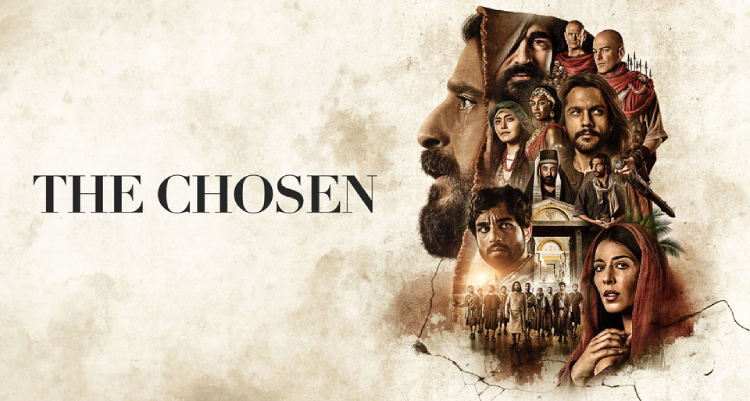
The phenomenon of The Chosen has swept through contemporary Christianity with unprecedented force. This multi-season television series, created by Dallas Jenkins and funded through the largest crowdfunding campaign in media history (over $40 million as of 2023), has reached more than 108 million viewers across 180 countries. As a Biblical scholar who has devoted decades to studying the New Testament and its faithful interpretation, I must approach this cultural moment with both appreciation for the series’ reach and scrutiny of its theological implications. The question before us is not whether The Chosen is entertaining or well-produced—few would dispute its cinematic quality—but whether it represents a biblically legitimate portrayal of Jesus Christ and His followers.
The significance of this inquiry cannot be overstated. When millions of believers and seekers form their understanding of Christ through a dramatized series that adds substantial content to the Gospel narratives, we must ask whether this medium serves the cause of truth or potentially obscures it. As Christians, we bear the responsibility to test all things and hold fast to what is good (1 Thessalonians 5:21), examining whether The Chosen functions as a faithful servant to Scripture or whether it subtly replaces biblical authority with human imagination.
The Nature and Scope of Artistic License
At the heart of the theological debate surrounding The Chosen lies the question of artistic license. The series takes the relatively sparse Gospel accounts—texts that can each be read in approximately two hours—and expands them into what will eventually be seven seasons totaling well over fifty hours of content. This massive expansion necessitates the creation of substantial material not found in Scripture.
Dallas Jenkins, the series creator who holds a degree in Biblical Studies, has assembled an ecumenical advisory panel including a Messianic Jewish rabbi, a Catholic priest, and an evangelical professor of biblical studies. His stated intention is noble: to help viewers see the biblical characters as real people who dealt with recognizable human struggles. To achieve this, the series adds backstories, develops relationships, creates dialogue, and constructs entire narrative arcs for characters who receive only passing mention in the Gospels.
The theological question becomes: when does legitimate artistic interpretation cross the boundary into problematic addition to Scripture? Consider the portrayal of the apostle Matthew as someone on the autism spectrum. While there is no biblical evidence for this characterization, the creators argue it is “plausible” and helps viewers connect with the character. Similarly, the series depicts Peter’s wife, Eden (a name not given in Scripture), experiencing a miscarriage, creating relational tensions that Jesus must resolve. These additions fundamentally alter how viewers understand the biblical narratives and the reasons for Jesus’ actions.
The problem extends beyond mere addition of details. When The Chosen spends hours developing storylines completely absent from Scripture, it risks what Catholic biblical scholar John Christman identifies as “reducing the gospels to sketches of some greater story we have yet to hear.” The inspired Word of God becomes merely a framework upon which human imagination constructs a supposedly fuller narrative. This inverts the proper relationship between Scripture and human creativity.
Theological Concerns with Extra-Biblical Content
The most troubling theological issue emerges when we examine specific content that the series places in Jesus’ mouth. In one scene that has raised significant concern among evangelical scholars, Jesus responds to a disciple’s theological question by saying, “What does your heart tell you?”—as though subjective feeling were a reliable guide to truth. This statement appears nowhere in the canonical Gospels and contradicts the consistent biblical teaching that the human heart is deceitful above all things (Jeremiah 17:9) and that truth comes from God’s revealed Word, not from human intuition.
Critics have noted that this particular formulation bears a striking resemblance to Mormon epistemology, which teaches seekers to pray about the Book of Mormon and trust the subjective “burning in the bosom” as confirmation of truth. Whether this influence is intentional or inadvertent becomes secondary to the fact that such theology finds its way into a series purporting to present Jesus Christ. This raises the specter of Deuteronomy 4:2 and Revelation 22:18-19, which warn against adding to God’s words.
The series also engages in problematic theological invention in its treatment of suffering and healing. In a particularly troubling scene, Jesus explains to James (who has a disability in the series, though Scripture does not indicate this) why he will not be healed. Jesus tells James that he “trusts” him to witness through suffering, that his disability will make his healing ministry more impressive to observers, and that his current suffering is brief compared to the healing he will receive in heaven. This speech, absent from Scripture, reduces human suffering to a divine public relations strategy. It makes Jesus appear to use James’ pain as a means to an end, contradicting fundamental Catholic and Protestant understandings of human dignity and the nature of divine compassion.
Such theological invention becomes dangerous precisely because it is clothed in the authority of a Jesus character speaking on screen. Viewers who lack deep biblical literacy may absorb these ideas as representing authentic Christian teaching, unaware that they are watching human speculation rather than divine revelation.
The Question of Visual Representation
A more fundamental theological objection, raised particularly by Reformed critics, concerns the propriety of visually depicting Jesus Christ at all. The Second Commandment’s prohibition against graven images has historically been understood by many Christians as extending to representations of the divine persons, including the incarnate Christ. The Westminster Larger Catechism explicitly condemns “the making any representation of God, of all or of any of the three persons, either inwardly in our mind, or outwardly in any kind of image or likeness of any creature whatsoever.”
The theological reasoning behind this position deserves serious consideration. God has chosen to reveal Himself through words—inspired, inerrant words that shape our understanding through the Spirit’s illumination as we meditate on Scripture. When we create visual images of Christ, we inevitably create false images, because no human actor or artistic rendering can adequately represent the God-man in His perfect humanity and full deity. Moreover, as John Goodell argues in his pastoral critique, visual images affect us differently from words. They bypass rational processing and appeal directly to emotions, potentially creating attachments to a false Christ of human imagination rather than the true Christ revealed in Scripture.
While Jesus did take flesh and become visible during His earthly ministry, we have no divine warrant to recreate that image for our edification. The resurrected, glorified Christ whom we will one day see face to face remains invisible to us now, and we walk by faith, not by sight (2 Corinthians 5:7). To claim that a dramatization helps us “know Jesus better” may actually violate the principle that “faith comes from hearing, and hearing through the word of Christ” (Romans 10:17).
This concern becomes particularly acute when believers report that watching The Chosen enhances their worship or makes Jesus “more real” to them. If visual representations become vehicles for worship or perceived spiritual growth, have we not created precisely the kind of mediated approach to God that the Reformation sought to eliminate? The question is not whether the actor playing Jesus is talented, but whether any visual representation can serve as an appropriate means of knowing Christ without diminishing the sufficiency and primacy of Scripture.
Ecumenical Partnerships and Theological Confusion
A significant area of concern involves Dallas Jenkins’ partnerships and theological statements regarding those partnerships. The series has been funded and supported by Mormon-owned companies, filmed on property owned by the Church of Jesus Christ of Latter-day Saints, and distributed through companies with LDS connections. When questioned about these relationships, Jenkins made the theologically problematic statement: “We love the same Jesus… I will sink or swim on that statement.”
From an orthodox Christian perspective—whether Catholic, Orthodox, or Protestant—this statement is theologically untenable. The Mormon conception of Jesus as a created being, the spirit brother of Lucifer, who earned his own exaltation and is but one god among many in a polytheistic system, bears no resemblance to the eternal Son of God, second person of the Trinity, who is “very God of very God” as the Nicene Creed confesses. The Jesus of Mormon theology is a different Jesus, and to claim otherwise is to demonstrate a troubling lack of theological discernment—particularly for someone creating a series meant to introduce millions to Christ.
Jenkins’ inclusion of Catholic and Jewish advisors alongside evangelical scholars might seem like admirable ecumenism, but it raises questions about theological coherence. While Catholics and Protestants share far more in common than either shares with Mormonism, there remain significant differences in how each tradition understands Scripture, salvation, and the person of Christ. When these different theological perspectives all contribute to shaping a portrayal of Jesus, whose understanding prevails? How do we ensure that what emerges is orthodox Christianity rather than a theologically muddled compromise?
The concern is not mere sectarian prejudice but theological integrity. If the creator of a series about Jesus cannot clearly articulate the difference between orthodox Christianity and a group historically recognized as a non-Christian cult, what confidence can we have in the series’s theological reliability? This question becomes especially pressing given the documented theological problems already present in the series’s content.
The Problem of Historical and Theological Authority
The Chosen presents a particularly troubling portrayal of how the Gospels came to be written. In the series, the apostle Matthew—depicted as a young, literate man despite historical evidence suggesting that literacy rates in first-century Palestine hovered around 5%—writes down Jesus’ words verbatim, sometimes at Jesus’ explicit request. Mary Magdalene even refers to Matthew as Jesus’ “scribe.” This portrayal fundamentally misrepresents how contemporary biblical scholarship understands the formation of the Gospels.
Catholic biblical scholar Father Raymond Brown and others have demonstrated that the Gospel of John, for instance, was written 60-70 years after Jesus’ death by people who likely had no firsthand experience of the historical Jesus. The Gospel writers were not stenographers taking dictation but authors crafting theological narratives under the inspiration of the Holy Spirit. As Father Donald Senior of the Pontifical Biblical Commission notes, they were “true authors,” not “secretaries.”
By depicting the disciples frantically recording Jesus’ words in real-time, The Chosen promotes a simplistic, fundamentalist view of inspiration that contradicts both Catholic teaching and the considered judgment of mainstream biblical scholarship. This may seem like a minor historical detail, but it shapes how viewers understand biblical authority and interpretation. If people believe the Gospels are simply transcribed eyewitness accounts, they will approach Scripture with interpretive assumptions that scholars across denominational lines recognize as problematic.
This concern about biblical literacy extends beyond the question of Gospel formation. The very length and expansiveness of The Chosen risks making Scripture itself seem inadequate or incomplete. When viewers spend fifty hours watching dramatized accounts with extensive added material, will they still feel the Gospels themselves are sufficient? The series’ website claims that its artistic additions are “designed to support the truth and intention of the Scriptures,” but one must question whether adding thirty or forty hours of human speculation to two hours of divine revelation truly supports Scripture or subtly suggests that Scripture needs human assistance to be engaging or relevant.
The Seduction of Entertainment Culture
We must also address the cultural context in which The Chosen has emerged. We live in an age of unprecedented entertainment saturation, where Christians, like their secular neighbors, are shaped more by screens than by Scripture. Pastor Micah Lang raises a penetrating question in his analysis: “Do we get excited about going to the Word as much as we are excited for the next episode to come out? Or have we gotten lazy and apathetic?”
There exists a real danger that The Chosen feeds Christian consumerism rather than Christian formation. The series provides easy, passive entertainment that requires no effort beyond watching, whereas serious engagement with Scripture demands study, meditation, prayer, and the difficult work of allowing God’s Word to examine and transform us. When believers claim that The Chosen helps them understand Scripture better or love Jesus more, we must ask: could they not achieve this more authentically and reliably by actually reading and studying the Gospels themselves?
The series may unintentionally contribute to biblical illiteracy by providing a substitute for actual Bible reading. If Christians feel they understand Jesus’ life because they have watched The Chosen, they may be less motivated to engage the Scriptures directly. This is particularly concerning given that the series’ added content may create false memories or impressions that viewers conflate with actual biblical content. The human mind naturally struggles to distinguish between vivid visual experiences and textual information, especially when the two are closely related.
Furthermore, the series’ success may pressure other Christian media creators to follow its model, leading to an ever-expanding universe of biblical entertainment that progressively distances the church from direct engagement with Scripture. When Christians gather to watch The Chosen episodes rather than study the Bible together, when Sunday school classes use the series as curriculum, when believers recommend the show more enthusiastically than they recommend Bible reading—these are warning signs of a problematic shift in how we approach divine revelation.
Potential Benefits and the Question of Evangelism
Despite these substantial concerns, we must acknowledge that The Chosen has attracted an enormous audience, including many who would not normally engage with biblical content. Supporters point to testimonials of people coming to faith or returning to church because of the series. Small groups report using episodes to spark conversations about Jesus with seekers. In one account, a church small group watched episodes with Muslim teenagers, using the series as a bridge to Gospel conversations.
These evangelistic outcomes deserve recognition. Paul’s principle of becoming “all things to all people” (1 Corinthians 9:22) suggests that we should utilize various methods to reach people with the Gospel. If The Chosen serves as a contemporary equivalent of medieval mystery plays or Passion narratives that brought biblical stories to life for largely illiterate populations, perhaps we should celebrate its reach rather than criticize its methods.
The series does present Jesus as performing miracles, teaching with authority, claiming divine identity, dying for sins, and rising from the dead—core elements of orthodox Christianity. Much of the added content, while not biblical, is not necessarily anti-biblical. A depiction of Peter having a wife (which we know he had, based on references to his mother-in-law) or Jesus sharing a meal with the disciples (which certainly occurred many times) adds color without necessarily contradicting Scripture.
Moreover, the series demonstrates remarkable production quality that reflects excellence in Christian cultural engagement. For too long, Christian media has been characterized by poor quality, as if God is honored by inferior work. The Chosen shows that Christians can produce content that meets professional standards and attracts a broad audience. This represents a kind of cultural apologetics that shows the Christian story can be compelling without compromising quality or intelligence.
Toward a Balanced Assessment
As a theologian committed to both biblical fidelity and pastoral sensitivity, I find myself pulled between competing concerns. On one hand, the theological problems with The Chosen are real and significant. The series adds substantial extra-biblical content, occasionally puts problematic theology in Jesus’ mouth, promotes questionable understandings of biblical inspiration, and emerges from partnerships that demonstrate concerning theological confusion. The creator’s inability to distinguish between Mormon and Christian understandings of Jesus raises serious questions about the series’ theological reliability.
On the other hand, I cannot ignore the series’ extraordinary reach and the testimonials of spiritual fruit in viewers’ lives. Many believers report that The Chosen has sparked renewed interest in reading the Gospels, prompted meaningful conversations about faith, and helped them see biblical characters as real people facing real struggles. For some seekers, the series has provided a first introduction to Jesus that led them to investigate Christianity further.
The resolution of this tension lies, I believe, in recognizing that The Chosen is neither wholly good nor wholly bad, but a mixed blessing requiring discernment. Scripture calls us to “test everything; hold fast what is good” (1 Thessalonians 5:21), and this is precisely what we must do with cultural products that touch on sacred matters.
For mature believers who are well-grounded in Scripture and capable of distinguishing biblical content from artistic invention, The Chosen can be viewed as historical fiction that may spark imagination and conversation while remaining subordinate to Scripture’s authority. Such viewers can appreciate the series’ artistic achievements while maintaining critical distance from its theological innovations. They can use the series as a conversation starter with seekers while directing people ultimately to Scripture itself.
However, for believers who lack strong biblical literacy, for new converts still forming their understanding of Christ, or for seekers encountering Jesus for the first time, The Chosen presents real dangers. These viewers may not possess the theological tools to separate Scripture from speculation, and they may form understandings of Jesus shaped more by Dallas Jenkins’ imagination than by divine revelation. For such individuals, direct engagement with the Gospels themselves would be far preferable to watching dramatized versions that add substantial interpretive layers.
Conclusion
The Chosen represents both opportunity and danger for contemporary Christianity. Its unprecedented reach offers the possibility of introducing millions to Jesus Christ and sparking interest in biblical Christianity. Its production quality demonstrates that Christians need not produce inferior cultural products. Its success shows that there exists a massive hunger for content about Jesus that transcends typical church audiences.
Yet these benefits come at a cost. The series adds enormous amounts of extra-biblical content, occasionally ventures into problematic theology, promotes questionable understandings of biblical inspiration and authority, and emerges from partnerships that reflect concerning theological confusion. It risks replacing direct Scripture engagement with entertaining dramatization, and it may contribute to biblical illiteracy even as it increases biblical interest.
As theologians and biblical scholars, we must refuse the false choice between uncritical enthusiasm and harsh dismissal. The Chosen is neither a dangerous heresy that all Christians must avoid nor a divine gift that deserves unqualified praise. It is a human cultural product—remarkably successful, often beautiful, sometimes helpful, occasionally problematic—that requires the same discernment we bring to all human enterprises that touch on sacred things.
The ultimate question is not whether The Chosen is perfect (no human work is) but whether it serves Scripture or subtly supplants it, whether it directs people to Christ or to a particular human vision of Christ, whether it strengthens faith or subtly weakens it by making entertainment primary and Scripture secondary. These questions admit no single answer applicable to all believers in all circumstances. They require each person, guided by Scripture, conscience, and the Holy Spirit, to determine whether engaging with The Chosen serves their walk with Christ or hinders it.
What remains non-negotiable is this: Scripture must retain its primacy. No dramatization, however well-produced or widely viewed, can substitute for the inspired, inerrant Word of God. If The Chosen drives people to Scripture, it serves a good purpose. If it replaces Scripture, it becomes an idol, however attractive. The test of the series’ ultimate value will not be its viewership numbers or production budget but whether, in the lives of those who watch it, it increases love for God’s Word and submission to its authority. By this standard, and this standard alone, should The Chosen be judged.
Let us therefore approach this series with both charity and clarity, appreciating its strengths while acknowledging its weaknesses, using it wisely where it helps while refusing to let it replace what it can never equal: the inspired Word of God that alone is “profitable for teaching, for reproof, for correction, and for training in righteousness, that the man of God may be complete, equipped for every good work” (2 Timothy 3:16-17).