
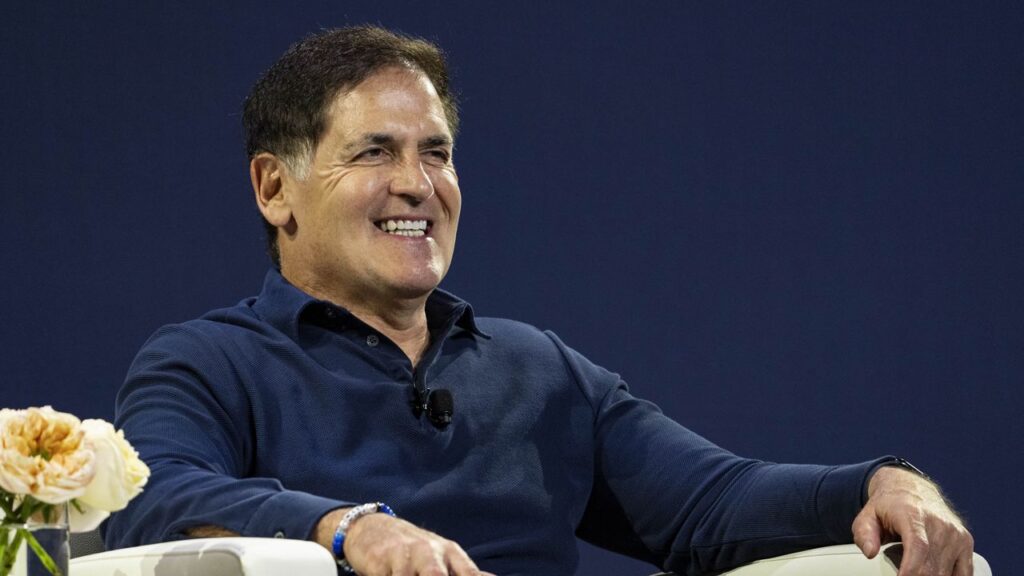
Mark Cuban SLAMS President Trump..
“I’ve known him for 25 years and I don’t trust him — I don’t think he’s moral or ethical..” 👀 pic.twitter.com/C8T2nlfidF
— American AF 🇺🇸 (@iAnonPatriot) December 29, 2025
When billionaire entrepreneur Mark Cuban asserts, “I’ve known him for 25 years,” referring to Donald Trump, the claim deserves scrutiny. In an era where political figures routinely invoke personal relationships to bolster credibility, what evidence exists to substantiate Cuban’s assertion of intimate knowledge?
The Public Record
Cuban and Trump’s documented interactions span primarily from the early 2000s through Trump’s presidential campaigns. Their relationship appears transactional rather than personal—centered on business dealings, reality television, and later, political sparring.
The most concrete connection traces to Cuban’s appearances on Trump’s NBC show “The Apprentice” in 2004, where he served as a guest judge. This business-entertainment intersection represents their most verifiable direct contact. Additionally, both operated in overlapping circles of New York real estate and celebrity culture during the 1990s and 2000s.
The Evolution of Rhetoric
Cuban’s public statements about Trump reveal a relationship defined more by proximity than intimacy. Before Trump’s political ascent, Cuban offered tepid praise, calling Trump “a friend” in some interviews while simultaneously critiquing his business acumen. This ambivalence suggests acquaintance rather than deep friendship.
Post-2015, Cuban became one of Trump’s most vocal critics, endorsing Hillary Clinton in 2016 and attacking Trump’s competence, temperament, and business record. This transformation raises questions: Does genuine 25-year knowledge produce such radical reassessment, or does it reveal the shallowness of the original relationship?
What “Knowing” Means
Cuban has never produced evidence of private dinners, personal phone conversations, family interactions, or the hallmarks of genuine friendship. No photographs exist of the two families vacationing together. No business partnerships bind them beyond Cuban’s brief television appearance.
Instead, Cuban’s “knowledge” appears derived from:
- Shared elite business circles in Manhattan
- Media appearances and industry events
- Public statements and interviews
- Secondary sources and mutual acquaintances
This constitutes networking, not intimacy.
The Credibility Question
Political operatives frequently inflate relationships to claim insider status. Cuban’s assertion serves his anti-Trump narrative, positioning him as someone with special insight into Trump’s character flaws. Yet his evidence remains conspicuously absent.
If Cuban possessed damaging personal knowledge from 25 years of friendship, why hasn’t he revealed specific incidents? Why no private emails, personal anecdotes, or insider details that would validate his claim to intimate knowledge?
Conclusion
Mark Cuban may have known of Donald Trump for 25 years and occupied adjacent social spaces. He may have shaken hands at events, exchanged pleasantries at business functions, and appeared together on television.
But “knowing” someone suggests depth, trust, and personal investment. The evidence indicates Cuban and Trump shared a superficial business acquaintance that soured when Trump entered politics—a relationship Cuban now leverages for political credibility.
Without substantive documentation of genuine friendship or intimate personal interaction, Cuban’s claim appears to be precisely what it is: a rhetorical device designed to legitimize criticism rather than a statement of verifiable fact.
The burden of proof rests with Cuban. Until he produces it, skepticism is warranted.