
An Investigative Exposé on Robert S. McElvaine’s Psychological Projection and Historical Malpractice
When a 77-year-old historian begins psychoanalyzing sitting presidents through recycled Freudian tropes and his niece’s pop-psychology soundbites, one must ask: Who exactly is the “self-made-up man” here?
Robert S. McElvaine’s recent screed, “The Self-Made-Up Man: What Motivates Strongmen,” represents a masterclass in projection, armchair psychology, and the kind of intellectual dishonesty that makes actual historians cringe. Let’s examine what motivates a supposedly serious academic to abandon scholarly rigor for partisan hackery.
The Lincoln Square-Lincoln Project Nexus: When Anti-Trump Advocacy Becomes Liturgy
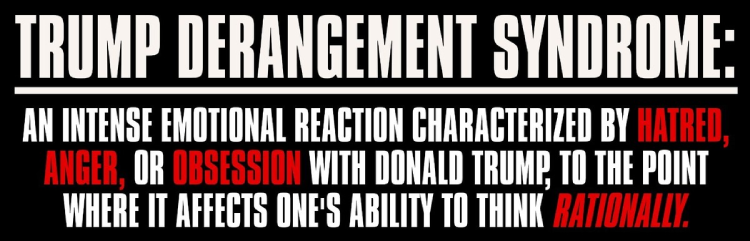
Before dissecting Robert S. McElvaine’s latest therapeutic exercise in Trump Derangement Syndrome, readers deserve context about the platform amplifying his screed. Lincoln Square Media, the digital outlet republishing McElvaine’s essay, exists within the broader ecosystem of professional Never-Trump organizations, most notably sharing ideological DNA—and likely donors—with The Lincoln Project. That disgraced SuperPAC, founded by Republican-turned-grifters like Steve Schmidt and Rick Wilson, transformed opposition to Donald Trump from political disagreement into something resembling religious devotion: complete with orthodoxy (Trump is uniquely evil), heresy trials (for any conservative who supports him), tithing (millions in donor funds, much of which lined founders’ pockets), and eschatological promises (democracy dies if Trump wins—except when he does win, and democracy somehow survives).
The Lincoln Project’s scandal-plagued implosion—involving financial impropriety, sexual harassment cover-ups, and spectacular electoral failure—did nothing to dim the fervor of the Never-Trump faithful. Instead, the movement metastasized across boutique media outlets like Lincoln Square, where resistance catechism gets repackaged as scholarly analysis. McElvaine’s essay represents a perfect specimen of this phenomenon: pseudo-intellectual liturgy for congregants who need constant reassurance that their political opponents aren’t just wrong, but psychologically defective, morally depraved, and existentially threatening. When political opposition becomes religious zealotry, expect theology, not journalism—and McElvaine delivers exactly that.
The Credentials Game: When a Mississippi Professor Plays Doctor
McElvaine holds a PhD in history from SUNY Binghamton and teaches at Millsaps College in Jackson, Mississippi. Notably absent from his CV? Any credentials in psychology, psychiatry, or clinical medicine. Yet here he is, offering confident diagnoses of “serious masculine insecurity,” “twisted minds,” and pathological narcissism—all violations of the American Psychiatric Association’s Goldwater Rule, which prohibits mental health professionals (let alone non-professionals) from offering diagnoses of public figures they haven’t personally examined.
But why let professional ethics get in the way of a good partisan hit piece?
The Niece Who Cried Wolf: Mary Trump’s Credibility Problem
McElvaine leans heavily on Mary L. Trump’s psychological assessments of her uncle. Let’s examine this source with the scrutiny any actual journalist would apply:
Mary Trump, who holds a PhD in clinical psychology, has built an entire cottage industry on maligning her uncle—publishing multiple books, making countless media appearances, and maintaining a lucrative Substack subscription service. She has obvious financial incentives to continue her attacks. Her psychological “insights” consistently violate the Goldwater Rule her own profession established.
More damning: Mary Trump’s relationship with her uncle has been embroiled in family litigation over Fred Trump’s estate for decades. Her 2000 settlement with the Trump family included confidentiality provisions she later violated. This isn’t disinterested clinical observation—it’s a family feud monetized through pop psychology.
McElvaine quotes her assertion that Trump “knows—and feels this very deeply, that he’s unworthy, that he’s unaccomplished, and he’s terrible.” How, precisely, does Mary Trump—or McElvaine—know what Donald Trump “knows” on “an unconscious level”? This isn’t psychology; it’s mind-reading masquerading as expertise.
The Medical Records Mockery: When Sarcasm Replaces Journalism
McElvaine attempts to spin Trump’s cognitive test results into evidence of… what, exactly? He compares Trump’s medical examinations to his own rare eye condition, suggesting that having multiple doctors observe cognitive testing indicates abnormality.
This is either deliberate dishonesty or stunning ignorance of how presidential medical examinations work.
Presidential physicals are observed by multiple physicians precisely because the President’s health is a matter of national security and public interest. These examinations are conducted with maximum transparency and oversight—not because results are abnormal, but because they’re extraordinary in their scrutiny. Every president since the practice became standard has undergone such examinations with multiple medical professionals present.
Trump’s physicians—including Dr. Ronny Jackson, who served under both Obama and Trump—consistently reported excellent cognitive function. Jackson, a rear admiral in the Navy and a board-certified physician, stated Trump scored 30/30 on the Montreal Cognitive Assessment, a result indicating no cognitive impairment whatsoever.
McElvaine’s sarcastic interpretation (“Esteemed ladies and gentlemen, you may never see another cognitive test like this one!“) reveals more about his own wishful thinking than about Trump’s health. He desperately wants Trump to be cognitively impaired, so he twists straightforward medical reports into sinister implications.
The “Mirrorspeak” Accusation: Projection About Projection
McElvaine introduces the concept of “Mirrorspeak”—his term for Trump supposedly projecting his own flaws onto others. The irony is so thick you could cut it with a knife.
Consider what McElvaine does throughout this piece:
- Accuses Trump of insecurity while demonstrating his own insecurity about Trump’s electoral success and continued political relevance
- Claims Trump creates “fake images” of strength while McElvaine constructs an entirely fabricated psychological profile based on no clinical examination
- Suggests Trump is “pathetically weak” while McElvaine’s prose drips with the desperation of someone who cannot accept that voters twice elected someone he despises
- Charges Trump with being “self-made-up” while McElvaine literally makes up diagnoses, motives, and psychological states he has no professional basis to claim
McElvaine’s entire essay is textbook projection—attributing to Trump the very behaviors McElvaine himself exhibits.
The Historical Malpractice: “Throughout History” and Other Sweeping Generalizations
McElvaine writes: “Throughout history, men who are afflicted with serious masculine insecurity have boasted about their ‘manliness’ and how they are bigger and better than other men.”
This is the kind of vapid historical generalization that would earn a failing grade in an undergraduate history seminar. Which men? Which historical periods? What’s the comparative framework? Where’s the historiography?
For a professional historian, McElvaine shows remarkable disinterest in actual historical analysis. He offers no evidence, no citations, no comparative case studies—just sweeping assertions that confirm his preexisting biases.
A real historical examination might explore:
- The evolution of presidential rhetoric across American history
- Comparative analysis of strongman leaders across different cultural contexts
- The relationship between political communication styles and democratic governance
- Actual scholarly literature on authoritarianism (not pop psychology)
Instead, we get amateur Freudian analysis and unsubstantiated claims about “twisted minds” and “pathetic weakness.”
The Sean Spicer “Slip”: When Crowd Sizes Become Freudian
McElvaine triumphantly presents Sean Spicer’s 2017 comment about inaugural crowd sizes (“It’s just unbelievably frustrating when you’re continuously told it’s not big enough”) as “simultaneously a perfect example of a Freudian slip and a revealing window into both the twisted mind of Trump.”
This is undergraduate-level analysis masquerading as insight. Spicer was defending the administration’s crowd size estimates—a matter of public record and photographic evidence, not sexual psychology. The context was clear media criticism of attendance numbers, not some subconscious revelation about genital insecurity.
That McElvaine reads sexual anxiety into a straightforward dispute about crowd sizes tells us far more about McElvaine’s own obsessions than about Trump’s psychology.
The Photoshopped Rocky Image: Symbol or Satire?
McElvaine opens his essay with Trump’s 2019 tweet featuring his head photoshopped onto Rocky Balboa’s body. He treats this as serious evidence of Trump’s self-delusion rather than what it obviously was: internet humor and self-deprecating irony.
Trump has a long history of engaging in over-the-top, tongue-in-cheek self-promotion that his supporters find amusing and his critics take with deadly seriousness. The Rocky image wasn’t Trump claiming to actually have Stallone’s physique—it was participatory internet culture, the kind of meme-sharing that characterized Trump’s entire social media presence.
That McElvaine analyzes this image with the gravitas of a Renaissance art historian examining the Sistine Chapel reveals the professor’s complete inability to understand modern political communication or internet culture.
The Truth Social Rant: Reading Comprehension Failure
McElvaine quotes extensively from a Trump Truth Social post about medical and cognitive examinations, helpfully bolding words like “PERFECT,” “Strong Results,” and “ACED” as if these constitute evidence of psychological pathology.
Let’s apply basic reading comprehension:
Trump underwent multiple medical examinations and cognitive tests. The results were consistently positive. Media outlets, particularly the New York Times, published stories suggesting cognitive decline despite medical evidence to the contrary. Trump responded by pointing to his actual test results and accusing the media of dishonest reporting.
Whether Trump’s language is bombastic is beside the point. The substance of his claim is verifiable: He did undergo these examinations, physicians did report positive results, and media outlets did publish speculative pieces suggesting decline without medical evidence.
McElvaine’s analysis reduces to: “Trump used strong language to defend his cognitive health, therefore he must be cognitively impaired.” This is circular reasoning masquerading as insight.
The Patrick Henry Cosplay: Delusions of Grandeur
McElvaine concludes with perhaps the most revealing moment of his entire essay: “But should he charge me, as he does the New York Times, with sedition and treason for speaking the truth about and demeaning ‘THE PRESIDENT OF THE UNITED STATES’ [it’s wonderful that he places those words about himself in quotation marks; I usually do the same], I will repeat the 1765 words of Patrick Henry, ‘If this be treason, make the most of it!'”
Here we find McElvaine’s own delusions of grandeur on full display. He fantasizes about being persecuted for his brave truth-telling, imagines himself a modern Patrick Henry standing against tyranny, and preemptively martyrs himself for having the “courage” to… publish partisan attacks on Substack.
This is performance radicalism at its most transparent. McElvaine isn’t risking anything. He’s not being censored or silenced. He’s publishing freely on a platform designed for monetized opinion-writing, receiving applause from an ideological echo chamber, and facing zero consequences for his “brave” stance.
The Patrick Henry comparison is particularly risible. Henry was risking execution for opposing the British Crown. McElvaine risks… nothing. He’s a tenured professor at a private college with a Substack subscription service. His “truth-telling” is about as dangerous as a strongly-worded Yelp review.
The Real Motivation: When Academic Relevance Depends on Outrage
What actually motivates McElvaine’s screed? Let’s examine the economic and psychological incentives:
Financial: McElvaine maintains a Substack newsletter called “Musings & Amusings.” Like Mary Trump, he has monetized anti-Trump content. His most outrage-generating posts likely produce the highest engagement and subscription revenue. There’s a direct financial incentive to produce inflammatory content.
Professional: McElvaine teaches at Millsaps College, a small liberal arts school in Mississippi with approximately 800 students. His books include titles like The Great Depression: America, 1929-1941 and Grand Theft Jesus: The Hijacking of Religion in America. His academic career hasn’t produced the kind of prominence that typically comes with positions at elite research universities. Anti-Trump writing offers a path to broader relevance and media attention.
Psychological: McElvaine is 77 years old. He came of age during the cultural upheavals of the 1960s and has spent his career writing from a progressive perspective. Trump represents everything McElvaine opposes—and worse, Trump has been electorally successful despite (or because of) rejecting everything McElvaine’s generation of academics holds dear. The psychological dissonance is evident in every paragraph of his essay.
This isn’t dispassionate historical analysis. It’s therapeutic writing for an aging academic processing his own irrelevance in contemporary American politics.
The Fundamental Dishonesty: Abandoning Scholarly Standards
McElvaine’s essay fails every standard of responsible historical scholarship:
No primary source analysis: He relies entirely on secondary interpretations and partisan commentary rather than examining actual documents, speeches, or policies.
No comparative framework: He offers no historical parallels, no analysis of other political leaders, no contextual grounding that would justify his sweeping claims about “strongmen throughout history.”
No engagement with contrary evidence: He ignores Trump’s actual policy record, his administration’s accomplishments, or any positive assessments from credible sources.
No methodological transparency: He never explains his analytical framework, his evidence standards, or his interpretive methodology.
No acknowledgment of bias: He writes as if his partisan opposition to Trump doesn’t color his analysis, when it obviously determines every conclusion.
This isn’t history. It’s political polemic dressed in academic robes.
The Unanswered Questions: What McElvaine Won’t Address
A serious historian examining Trump’s appeal would grapple with difficult questions:
- Why did Trump win the 2016 election despite universal media opposition?
- Why did he increase his vote share among minorities in 2020?
- Why did he win the 2024 election with an expanded coalition?
- What genuine grievances and concerns do his supporters have?
- What failures of the political establishment created space for Trump’s rise?
McElvaine addresses none of these questions because doing so would require acknowledging that Trump’s supporters might have legitimate reasons for their political choices beyond “masculine insecurity” and identification with a “loser.”
His analysis reduces 75+ million Americans to psychological case studies rather than citizens with genuine political concerns. This isn’t just bad scholarship—it’s fundamentally anti-democratic.
The Bitter Irony: Who’s Really Insecure?
McElvaine’s essay drips with contempt for “pathetically insecure and cowardly men like Donald Trump” and “fake men” who “pose as strongmen.” Yet every paragraph reveals McElvaine’s own insecurity—his desperate need to delegitimize a political figure he cannot defeat at the ballot box.
Real confidence doesn’t require constant public reassurance through essays declaring one’s opponents “pathetic” and “weak.” Real strength doesn’t need to build oneself up by tearing others down with amateur psychology and invented diagnoses.
McElvaine projects onto Trump the very insecurity he himself exhibits: the need to prove superiority through public declarations, the resort to name-calling and mockery when substantive argument fails, the confusion of rhetorical aggression with actual strength.
The truly “self-made-up man” in this equation isn’t the one McElvaine targets—it’s the aging academic who’s invented an expertise in psychology he doesn’t possess, constructed historical arguments unsupported by evidence, and fashioned himself into a brave truth-teller speaking truth to power when he’s actually just another partisan hack with a keyboard and a subscription service.
Conclusion: The Poverty of Resistance Journalism
McElvaine’s essay represents everything wrong with contemporary political commentary masquerading as scholarship. It combines:
- Abandoned professional ethics (the Goldwater Rule)
- Discarded academic standards (no evidence, no methodology)
- Partisan motivation disguised as objective analysis
- Personal attacks substituting for substantive critique
- Self-aggrandizement (the Patrick Henry fantasy)
- Fundamental intellectual dishonesty
The essay tells us nothing about Donald Trump we couldn’t glean from a thousand other resistance screeds. But it tells us everything about the state of academic discourse when scholars abandon their professional standards to join the partisan fray.
McElvaine ends with “MAKE AMERICA AMERICA AGAIN!” But his essay suggests he has little understanding of what America actually is—a nation where voters make their own choices, where elections have consequences, and where millions of citizens reject the condescending psychoanalysis of self-appointed experts who can’t fathom why anyone would disagree with them.
The real question isn’t “What motivates strongmen?” It’s “What motivates supposedly serious academics to abandon scholarly integrity for partisan point-scoring?”
The answer, as McElvaine’s own essay demonstrates, is far simpler than any Freudian analysis: relevance, revenue, and the psychological comfort of moral superiority when political arguments fail.
Robert S. McElvaine is a self-made-up expert on psychology, a self-appointed arbiter of masculinity, and a self-satisfied purveyor of partisan drivel. But hey—at least he’s got a Substack.
[END OF INVESTIGATIVE EXPOSÉ]