
Dear friends in Christ,
I want to take a moment to share something that’s been on my heart regarding the series of articles I’ve been writing about Mormonism, Joseph Smith, and the Latter-day Saints movement.
Some of you may have wondered why I spend so much time examining the historical details of a 19th-century religious movement. Perhaps you’ve skimmed past these articles, thinking they’re mainly for history buffs or people with Mormon neighbors. I’d like to gently encourage you to look again — because these studies are doing something far more important than recounting historical events.
These Are Bible Studies in Disguise
Every article in this series is saturated with Scripture. When we examine what Joseph Smith taught about the nature of God, we’re driven back to what the Bible actually reveals about the Trinity. When we look at Mormon claims about priesthood authority, we’re compelled to study what Hebrews teaches about Christ as our great High Priest. When we investigate their doctrine of salvation, we rediscover the glorious sufficiency of grace alone through faith alone.
In other words, studying where Mormonism departs from orthodox Christianity sharpens our understanding of what biblical Christianity actually teaches. You come away not just knowing what Mormons believe, but knowing more deeply why you believe what you believe.
The Apostle Peter’s Charge to Every Believer
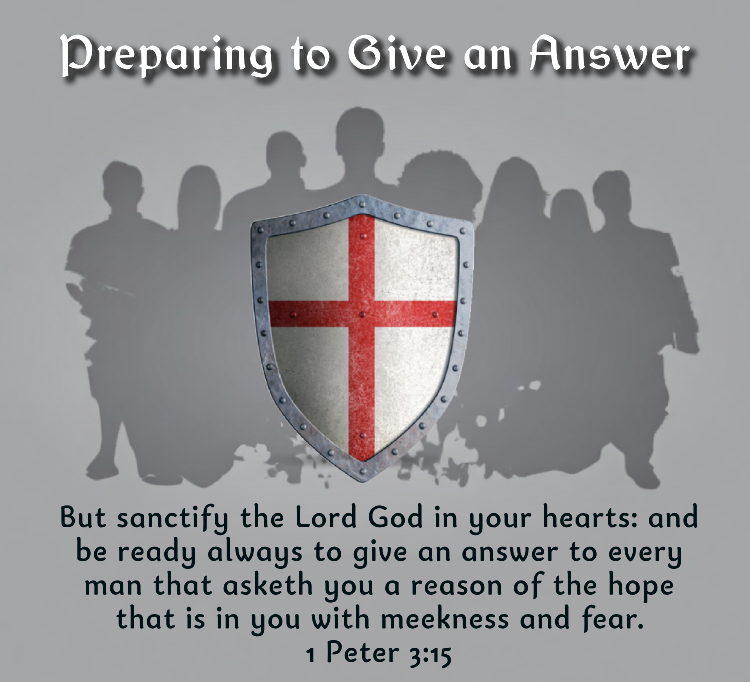
The Apostle Peter wrote to scattered Christians who were facing opposition for their faith. His words remain urgent for us today:
“But sanctify the Lord God in your hearts, and always be ready to give a defense to everyone who asks you a reason for the hope that is in you, with meekness and fear.” (1 Peter 3:15, NKJV)
Notice something crucial here: Peter does not say this responsibility belongs only to pastors, seminary professors, or professional apologists. He’s writing to ordinary believers — fishermen, tentmakers, slaves, merchants, mothers, and fathers. Every Christian is called to be ready.
The Greek word translated “defense” is apologia — the same word a lawyer would use when defending a case in court. It’s where we get our English word “apologetics,” the discipline of defending the Christian faith with reasoned arguments. This isn’t about being argumentative or winning debates. It’s about being prepared to give a thoughtful, biblical answer when someone genuinely asks about the hope you carry.
That opportunity might come at work. It might happen in the supermarket checkout line. For those of us at East Valley International Church who participate in street evangelism, it happens regularly on the streets of Gilbert. Are we ready?
The Heart Must Come First
But notice where Peter begins: “Sanctify the Lord God in your hearts.”
Before the defense comes the devotion. Before the argument comes the allegiance.
To “sanctify” the Lord in your heart means to set Him apart as supreme — to make an internal, voluntary commitment to honor, trust, and obey God regardless of circumstances. This isn’t merely outward religious performance. It’s an inward re-centering of your entire being around His sovereignty.
Peter’s language echoes Isaiah 8:13, where the prophet told trembling Israel: “The LORD of hosts, Him you shall hallow; let Him be your fear, and let Him be your dread.” When God alone occupies the throne of your heart, you’re liberated from the fear of what others might think, say, or do. You can speak with confidence because your security doesn’t rest in winning the argument — it rests in the One who has already won the victory.
This internal posture is the foundation for effective witness. We give our defense “with meekness and fear” — that is, with gentleness toward the person questioning us and reverent fear toward the God we represent. Not arrogance. Not condescension. There is no need to be right at all costs. But humble confidence rooted in Christ.
Ammunition for the Battle
Let me be direct: these studies on Mormonism are packed with the ammunition you need to fulfill Peter’s admonition.
When a Mormon missionary knocks on your door and asks if you’d like to know about the “restored gospel,” will you know how to respond? When a coworker mentions that Mormons are Christians too, will you be able to explain — with gentleness and respect — why that claim doesn’t hold up under biblical scrutiny? When a family member begins investigating the LDS church, will you have the theological grounding to point them back to the authentic Jesus of Scripture?
These aren’t hypothetical scenarios. They happen every day. And the person God may have positioned to answer is you.
An Invitation
So I invite you to engage with these Mormon articles not as mere historical curiosities, but as training materials that serve a dual purpose: equipping you for witness while edifying your own faith. The sound Christian theology articulated in response to Mormon error will enrich your understanding of biblical truth even as it prepares you to minister to Latter-day Saints. Read them with your Bible open. Let them drive you deeper into the doctrines of the faith once delivered to the saints. Allow them to strengthen your confidence in the sufficiency of Scripture, the exclusivity of Christ, and the completeness of His finished work.
And then — with the Lord sanctified in your heart, with meekness on your lips, and with a ready answer in your mind — go and give a reason for the hope that is in you.
For His glory and the advance of His kingdom,
Dennis