Photo: Google Gemini imagines Joseph Smith in a modern setting, “translating” a
copy of the King James version of the Bible on the office copy machine.
Questions of religious truth are ultimately matters of faith as well as evidence. But faith that is
unwilling to examine evidence is not strengthened faith but rather faith that fears examination.
Introduction
In the summer of 1830, just months after the publication of the Book of Mormon, Joseph Smith embarked on one of the most ambitious and controversial projects of his prophetic career: a comprehensive revision of the King James Bible. This undertaking, known variously as the “New Translation,” the “Inspired Version,” or most commonly today as the Joseph Smith Translation (JST), would occupy much of Smith’s attention for the next three years and continue to generate scholarly debate nearly two centuries after his death.
The Joseph Smith Translation represents a fascinating intersection of religious authority, biblical interpretation, and questions about textual transmission that have divided Latter-day Saints and traditional Christians since its inception. For the Church of Jesus Christ of Latter-day Saints and related movements within the Latter Day Saint tradition, the JST stands as evidence of Joseph Smith’s prophetic calling and his divine commission to restore “plain and precious things” allegedly lost from the biblical text. For critics—both secular scholars and Christian apologists—the JST raises fundamental questions about Smith’s claims to prophetic authority, his understanding of biblical languages, and the very nature of what constitutes legitimate biblical translation.
This article will carefully examine the controversies surrounding the Joseph Smith Translation through multiple lenses: the historical context that gave rise to the project, the theological claims undergirding Smith’s revision, the methodology he employed, and the ongoing debates about its legitimacy. Throughout, we will compare and contrast Joseph Smith’s claims with the principles of traditional Christian biblical scholarship, textual criticism, and apologetics that have characterized mainstream Christian approaches to Scripture over the past two centuries. Our aim is not polemical but scholarly—to present the evidence fairly and allow readers to draw their own informed conclusions.
Historical Context of the Joseph Smith Translation
The Religious Landscape of Early Nineteenth-Century America
This eighteenth-century woodcut shows George Whitefield preaching to a great crowd. Whitefield was an English minister who preached throughout the British colonies in the mid-1700s during the First Great Awakening.
To understand the Joseph Smith Translation, one must first appreciate the religious ferment of early nineteenth-century America. The period following the American Revolution witnessed an unprecedented explosion of religious experimentation, sectarian competition, and biblical debate. This Second Great Awakening, which swept through the young nation from roughly 1790 through the 1840s, represented a continuation and transformation of the revival spirit ignited decades earlier during the First Great Awakening (1730s-1740s), when preachers like George Whitefield electrified colonial audiences with passionate calls for personal conversion and direct religious experience. The Second Great Awakening intensified these themes, emphasizing personal scripture study, direct revelation, and individual encounters with the divine. Churches multiplied, denominations fractured and reformed, and the Bible became the subject of intense scrutiny and competing interpretations. This environment of religious enthusiasm, competing prophetic claims, and democratic access to Scripture created fertile ground for movements like Mormonism, which promised new revelation and restored truth in an era already saturated with revivalist fervor and biblical reinterpretation.
Joseph Smith himself emerged from this environment of religious seeking. As he recounted in his 1838 autobiographical narrative, the “unusual excitement on the subject of religion” in the Burned-over District of western New York led him to wonder “who of all these parties are right; or, are they all wrong together?” The fragmented nature of American Christianity—with its bewildering array of competing biblical interpretations—seemed to him to demand some resolution. If the Bible was truly God’s word, why did sincere believers arrive at such divergent conclusions about its meaning?
The Book of Mormon’s Claims About Biblical Corruption
The Book of Mormon is a volume of holy scripture, often considered a companion to the Bible, that chronicles God’s dealings with ancient inhabitants of the Americas. Translated by Joseph Smith from gold plates, it tells the story of two main civilizations—the Nephites and Lamanites—and features the personal ministry of Jesus Christ among them after his resurrection.
The theological foundation for the Joseph Smith Translation was laid well before Smith ever put pen to paper on the project. The Book of Mormon, which Smith published in March 1830, contained an extended vision purportedly received by the ancient prophet Nephi concerning the transmission of biblical texts. According to this vision, found in 1 Nephi 13, the Bible originally “proceeded forth from the mouth of a Jew” and “contained the fulness of the gospel of the Lord.” However, after passing through “the hands of the great and abominable church,” many “plain and precious things” were “taken away from the book, which is the book of the Lamb of God” (1 Nephi 13:24-28).
This claim of systematic biblical corruption served several theological purposes. It explained, from an LDS perspective, why the Christianity of Smith’s day had allegedly departed from original apostolic teaching. It provided justification for additional scripture—the Book of Mormon itself was presented as a remedy, restoring truths that had been lost or obscured. And it laid the groundwork for Smith’s subsequent role as a prophetic corrector of Scripture.
As the official LDS Church website acknowledges, the Book of Mormon text “indicated that ‘many plain and precious parts’ of the Bible had been lost,” and “in the summer of 1830, just a few short months after the Book of Mormon was published, Joseph Smith began a new translation of the Bible intended to restore some of those plain and precious parts.”
The Commencement of the Translation Project
The genesis of the JST can be traced to revelations Smith received in June 1830. According to LDS accounts, Smith received what he termed “the visions of Moses”—an extended revelation that now comprises the first chapter of the Book of Moses in the Pearl of Great Price. This visionary text, which claims to record events not found in the canonical book of Genesis, apparently catalyzed Smith’s broader biblical revision project.
The mechanics of the translation process are well-documented. In October 1829, while the Book of Mormon was being printed, Oliver Cowdery purchased from printer E. B. Grandin the King James Bible that would serve as Smith’s working text. Using this Bible as his base, Smith dictated revisions to various scribes, including Oliver Cowdery, John Whitmer, Sidney Rigdon, and even briefly his wife Emma. The earliest manuscripts, beginning with Genesis 1, were created in Harmony, Pennsylvania, about one month after the June 1830 revelations, with Cowdery and Whitmer acting as scribes.
Joseph Smith’s Bible Revision: Borrowing or Inspiration?
In the early 1830s, soon after the Book of Mormon’s publication, Joseph Smith embarked on a project that would become known as the Joseph Smith Translation (JST) of the Bible. This project aimed to revise and potentially correct the existing text. The original manuscript for this translation is currently held by the Reorganized Church of Jesus Christ of Latter-day Saints (RLDS Church).
The Church of Jesus Christ of Latter-day Saints (LDS Church) has not included the JST in its official canon of scripture. However, they do reference the translation in footnotes within their standard works. A recent study by Brigham Young University (BYU) revealed significant parallels between Smith’s JST and the popular Bible commentaries of Adam Clarke, published around the same time.
While accusations of plagiarism against Smith might be extreme, the BYU study highlights his clear reliance on Clarke’s work. The extent of these similarities suggests Clarke’s commentaries served as a major source for Smith’s revisions to the Bible.
A December 1830 revelation addressed to Sidney Rigdon, recently converted from the Campbellite movement, assigned him as Smith’s primary scribe: “Thou shalt write for him & the scriptures shall be given even as they are in mine own bosom to the salvation of mine own elect.” From this point forward, Rigdon became Smith’s chief collaborator on the translation project.
Historical note: Following Smith’s death, his wife Emma held onto the manuscripts of his Bible translation project. She aligned with the Reorganized Church of Jesus Christ of Latter-day Saints (RLDS), a breakaway group led by Smith’s son. This church, now known as the Community of Christ, retains the copyright to the “Joseph Smith Translation.”
Evidence of Biblical Corruption: Smith’s Claims
The Nature of the Corruption Alleged
Joseph Smith’s claims about biblical corruption evolved throughout his ministry, and careful examination reveals a more nuanced position than critics sometimes attribute to him. Smith never explicitly claimed that the entire Bible was corrupted or unreliable. Rather, his position acknowledged the Bible’s divine origin while maintaining that errors had accumulated through processes of transmission, translation, and—according to the Book of Mormon narrative—deliberate removal.
As Smith stated in an 1843 discourse, “I believe the Bible as it read when it came from the pen of the original writers. Ignorant translators, careless transcribers, or designing and corrupt priests have committed many errors.” This statement identifies three distinct mechanisms by which the biblical text could have become compromised: honest mistakes by translators lacking full understanding, careless copying errors, and intentional alterations by religious authorities with theological agendas.
The official LDS position, as expressed in the church’s Articles of Faith, captures this qualified affirmation: “We believe the Bible to be the word of God as far as it is translated correctly.” This formulation accepts biblical authority while reserving judgment on specific passages that may not accurately represent the original intent of the biblical writers.
Arguments Smith Presented to His Followers
Several lines of argument undergirded Smith’s claims about biblical corruption and resonated with his early followers:
Missing Books Referenced in Scripture.Smith pointed to biblical references to books that no longer exist in the canonical text. The Book of Jasher, mentioned in Joshua 10:13 and 2 Samuel 1:18, the lost letters of Paul referenced in 1 Corinthians 5:9 and Colossians 4:16, and numerous other texts mentioned but not preserved, all suggested to Smith that the biblical canon was incomplete. If these divinely inspired writings had been lost, what else might have disappeared? Denominational Confusion. The existence of multiple Christian denominations, each claiming biblical warrant for their distinctive teachings, functioned as evidence that something was amiss with biblical interpretation—if not the text itself. If the Bible clearly taught one consistent doctrine, Smith reasoned, why would sincere Christians arrive at mutually contradictory conclusions? The logical possibilities were that either the Bible was unclear, the Holy Spirit failed to guide readers to truth, or something had corrupted the transmission of Scripture. Prophecies of Apostasy and Restoration.Smith interpreted various biblical passages as predicting a general apostasy from true Christianity followed by a latter-day restoration. The prophecy in Amos 8:11-12 of a “famine… of hearing the words of the LORD,” the warnings in 2 Thessalonians 2 about a coming apostasy, and similar texts were read as anticipating the very corruption that the Book of Mormon diagnosed and that Smith’s translation project would address. The Book of Mormon as Testimony.The existence of the Book of Mormon itself served as evidence for Smith’s claims about the Bible. The Book of Mormon, according to Smith, preserved the gospel in its original purity as taught among the Nephites. Where it diverged from or expanded upon the King James Bible, this could be explained by the corruption of the biblical text. Significantly, the Book of Mormon often quoted biblical passages—particularly from Isaiah and the Sermon on the Mount—with variations that could be presented as evidence of what the “original” texts actually said.
Weaknesses in Smith’s Evidence
Critics have identified several significant problems with the evidence Smith marshaled for his claims of biblical corruption:
Circular Reasoning. The Book of Mormon itself becomes the primary evidence for biblical corruption, but the Book of Mormon’s authenticity depends in part on the claim that the Bible is corrupted. This creates a circular argument: the Bible is corrupted because the Book of Mormon says so, and the Book of Mormon is true because it restores what was lost from the corrupted Bible. Lack of Manuscript Evidence. Smith never pointed to actual manuscript evidence of biblical corruption. He did not identify specific ancient manuscripts that showed evidence of tampering, nor did he engage with the emerging science of textual criticism that was, even in his day, demonstrating the remarkable preservation of the biblical text across thousands of manuscripts. Overstated Claims. The claim that “many plain and precious things” were deliberately removed from the Bible by the “great and abominable church” lacks historical support. While there are indeed textual variants among biblical manuscripts, these are overwhelmingly minor and do not support the claim of systematic doctrinal alteration. As textual critic Daniel Wallace has noted, scholars can reconstruct the original New Testament text with 99.75% accuracy—a level of certainty unmatched by any other ancient document. Timing Problems. The Book of Mormon’s claim that the Bible was corrupted before it “went forth unto all the nations of the Gentiles” (1 Nephi 13:28-29) presents chronological difficulties. The New Testament was copied and distributed across the Roman Empire with remarkable speed, before any single institution could control its transmission. The idea that a “great and abominable church” could have systematically altered the text before its widespread dissemination does not align with what we know about early Christian manuscript transmission.
The Translation Process: Genuine Effort or Theological Editing?
How Smith Conducted the “Translation”
The Joseph Smith Translation (JST) is a revision of the King James Version (KJV) Bible produced by Joseph Smith between 1830 and 1844, aimed at restoring lost doctrines, clarifying passages, and enhancing understanding through inspiration. It is not a translation from ancient manuscripts but rather an inspired editing of the English text.
The term “translation” as applied to the Joseph Smith Translation requires careful examination, as it does not correspond to translation in any conventional sense. The official LDS Church website is candid about the process: “Joseph’s translation was not carried out in the traditional sense. He didn’t consult Greek and Hebrew texts or use lexicons to create a new English version. Rather, he used the King James Version of the Bible as his starting point and made additions and changes as he was directed by the Holy Ghost.”
This description reveals the fundamental nature of the JST: it was not a translation from original languages but a revision of an existing English translation. Smith worked from the 1769 Oxford edition of the King James Bible, reading through it systematically and dictating changes to his scribes. He did not engage with Hebrew or Greek manuscripts, did not consult scholarly commentaries (with one notable exception discussed below), and had no formal training in biblical languages during the years he conducted the bulk of his work.
The physical evidence of the translation process consists of two types of materials now held in the archives of the Community of Christ (formerly the Reorganized Church of Jesus Christ of Latter-day Saints): marked sections of the King James Bible itself, with words crossed out and symbols indicating where changes should be inserted, and manuscripts containing the expanded or revised passages.
Categories of Changes
Scholars who have analyzed the Joseph Smith Translation identify several distinct types of changes:
Grammatical and Stylistic Corrections.Many JST changes are minor adjustments to grammar or wording that do not affect doctrinal meaning. These include modernization of archaic King James language and clarification of ambiguous phrasing. Harmonization. The JST frequently harmonizes parallel passages in the Gospels, smoothing out differences between Matthew, Mark, Luke, and John. Where the canonical Gospels present slightly different versions of Jesus’s words or describe events with varying details, the JST tends to make them more uniform. Doctrinal Additions. Some JST passages add substantial new material that introduces or supports distinctively Mormon doctrines. The most dramatic examples appear in the early chapters of Genesis, which are extensively expanded to include material about the premortal existence, the nature of God, and the role of Satan. Deletions.Though less common, the JST occasionally removes material from the biblical text. Most notably, Smith indicated that the Song of Solomon was “not inspired writings” and excluded it from his revision. Clarifications.Many changes appear designed to clarify potentially confusing passages by specifying subjects, expanding abbreviations, or making implicit meanings explicit.
The Adam Clarke Controversy
Perhaps the most significant modern challenge to claims about the inspired nature of the Joseph Smith Translation emerged in 2017 when BYU professor Thomas Wayment and undergraduate researcher Haley Wilson-Lemmon published preliminary findings indicating that Smith had borrowed extensively from Adam Clarke’s famous Bible commentary, a widely-available Methodist resource first published between 1810 and 1826.
Their research, published in full in 2020 in the volume Producing Ancient Scripture, identified what they claimed were hundreds of parallels between the JST and Clarke’s commentary. According to their analysis, Smith or his associates (particularly Sidney Rigdon, who had Methodist connections) appeared to have consulted Clarke’s work and incorporated his textual suggestions into the JST as inspired changes.
The implications were significant. As the researchers wrote: “What is noteworthy in detailing the usage of this source is that Adam Clarke’s textual emendations come through Smith’s translation as inspired changes to the text. Moreover, the question of what Smith meant by the term translation should be broadened to include what now appears to have been an academic interest to update the text of the Bible.”
However, the claims of Wayment and Wilson-Lemmon have been contested by other scholars. Kent P. Jackson, a BYU professor who has extensively studied the JST, published a detailed rebuttal arguing that the claimed parallels were superficial, coincidental, or mischaracterized. Jackson maintained that “none of the examples they provide can be traced to Clarke’s commentary, and almost all of them can be explained easily by other means.”
The debate remains unresolved, with critics pointing to the parallels as evidence that Smith used human sources while presenting his work as divine revelation, and defenders arguing that the similarities are insignificant or that even if Smith consulted external sources, this does not necessarily undermine the inspired nature of his revisions.
What Kind of “Translation” Is This?
The terminology of “translation” applied to the JST requires theological rather than linguistic explanation. LDS scholars have offered several frameworks for understanding what Smith was doing:
Restoration of Original Text.In some cases, LDS scholars argue, Smith was restoring original wording that had been lost from the biblical text. The Book of Moses, comprising the first chapters of Genesis as revised by Smith, is often presented as recovering prophetic material that was originally part of the Hebrew scriptures but subsequently removed. Inspired Commentary. Some JST passages may function as prophetic commentary rather than restoration of lost text. Robert J. Matthews, a prominent LDS scholar of the JST, acknowledged that “the JST is not solely a restoration of the original Bible text” and that “some changes may constitute prophetic commentary on the text.” Harmonization with Revelation.Other changes may represent Smith harmonizing the biblical text with additional revelation he believed he was receiving. Where the Bible as transmitted seemed to conflict with doctrines revealed through the Book of Mormon or later revelations, Smith may have adjusted the biblical text accordingly. Alternative Perspectives.In some cases, LDS scholars suggest, the JST may offer an alternative prophetic perspective on a passage without claiming to represent the “original” text. As Elder Bruce R. McConkie noted regarding Romans 13, “both of them are true,”—suggesting that Smith’s revision and the canonical text could both be valid for different purposes.
This flexibility in interpretation, however, raises its own questions. If the JST is sometimes restoration, sometimes commentary, and sometimes an alternative perspective, how is the reader to know which category any given passage falls into? And if the boundaries are unclear, what does this say about the claims of inspired restoration that originally motivated the project?
The Phinney Bible is significant in the history of the Church of Jesus Christ of Latter-day Saints. In 1829, Joseph Smith and Oliver Cowdery bought “a quarto-size King James translation published in 1828 by the H. and E. Phinney company of Cooperstown, New York” (Jackson). This Bible was used in the Joseph Smith Translation of the Bible.
This Phinney Bible was printed in Cooperstown, New York, just four years before Joseph Smith bought his own copy. It is an example of an innovation in printing that came to America in 1812: stereotyping. Stereotypes were plates of type… made from plaster of paris molds that allowed printers to print certain works without having to reset the type every time or keep large volumes of loose type set standing in molds.
James White: Letters To A Mormon Elder
In “Letters to a Mormon Elder, Chapter 2,” Christian apologist James R. White engages in written correspondence with a fictional LDS missionary Elder Hahn, systematically addressing foundational differences between Mormon and traditional Christian theology. Chapter 2 focuses on one of the most significant theological divides: the reliability and authority of the Bible. White responds to the common Latter-day Saint claim that the Bible has been corrupted through centuries of transmission and translation, a premise that underpins the LDS Church’s assertion that additional scripture was necessary to restore lost truths. Through careful examination of manuscript evidence, translation methodology, and historical documentation, White defends the textual integrity of Scripture while challenging contradictory statements from early Mormon leaders about biblical reliability. His response aims to demonstrate that the Bible’s preservation through history is far more robust than Mormon teaching typically acknowledges, undermining a key justification for the Book of Mormon’s existence as a corrective text. The following is a summary of the chapter:
In Chapter 2 of Letters to a Mormon Elder, titled “But it IS Translated Correctly!”, James R. White addresses a foundational LDS objection to biblical reliability—the claim that the Bible has been corrupted through successive translations. Writing to the fictional Elder Hahn, White dismantles this common misconception by clarifying the crucial distinction between transmission (how manuscripts were copied and preserved) and translation (how texts are rendered into other languages).
White explains that most Latter-day Saints fundamentally misunderstand the translation process, imagining a sequential chain—Hebrew to Greek to Latin to French to German to English—like a children’s game of telephone. In reality, modern English Bibles translate directly from Hebrew and Greek manuscripts, involving only a single translational step. This direct access to original-language texts preserves textual integrity in ways the “telephone game” analogy fails to capture.
The chapter examines the remarkable manuscript evidence supporting biblical reliability, noting that over 5,000 Greek New Testament manuscripts exist, with 75% of the text showing no variation whatsoever. Of remaining variants, 95% are easily resolved through textual criticism, leaving less than 1.5% with any uncertainty—none affecting core doctrines. White argues that the manuscript tradition’s “tenacity” actually protects the text, as original readings remain preserved among variants, making systematic corruption impossible across thousands of manuscripts spread throughout the ancient world.
White exposes an internal inconsistency in LDS claims: Mormons routinely dismiss biblical passages contradicting their doctrine as “mistranslated” without providing linguistic evidence, while the Book of Mormon itself has undergone thousands of changes since 1830. This double standard undermines Mormon credibility when challenging biblical reliability, demonstrating that Latter-day Saint scriptures face far greater textual challenges than the Bible they critique.
Divine Authority and the Restoration Narrative
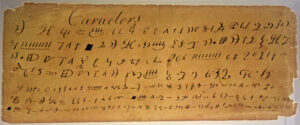
Sometimes called the ‘Caractors document,’ this slip of paper includes characters written by John Whitmer. The characters were purportedly copied from the Gold Plates, which were translated and published as the Book of Mormon. Photograph taken while the document was on display at the Church History Museum in Salt Lake City during the Sacred History: Treasures from the Restoration of the Gospel of Jesus Christ exhibition, held soon after the document was acquired by The Church of Jesus Christ of Latter-day Saints from the Community of Christ. There is no archaeological, linguistic, or other evidence of the use of Egyptian writing in the ancient Americas.
Smith’s Self-Understanding as Translator
Joseph Smith understood his translation work as a divine mandate. In a December 1831 journal entry, he referred to the project as “a branch of my calling” as a prophet. Revelations now canonized in the Doctrine and Covenants repeatedly directed him to continue the translation and characterized it as divinely appointed work.
The title “seer, translator, and prophet,” as applied to Smith in early revelations (see D&C 21:1), was understood to authorize precisely this kind of work. Just as Smith claimed to have translated the Book of Mormon “by the gift and power of God” without knowledge of the “reformed Egyptian” in which it was allegedly written, so he claimed divine guidance in revising the Bible without knowledge of Hebrew or Greek.
This self-understanding placed Smith in a unique position. Unlike conventional biblical scholars who appeal to manuscript evidence, linguistic expertise, and historical analysis, Smith appealed directly to divine revelation. The truth of his translation rested not on scholarly demonstration but on the same prophetic authority that undergirded all his other revelations.
The Restoration Framework
The Joseph Smith Translation must be understood within the broader LDS framework of “restoration.” According to this narrative, the original gospel taught by Jesus Christ and his apostles was lost shortly after the apostolic era through a “Great Apostasy.” This apostasy involved not only ecclesiastical corruption but also the loss or corruption of scripture itself. Joseph Smith was called as the prophet of the restoration, commissioned to bring back what had been lost.
Within this framework, the JST is not merely a translation project but a prophetic act of restoration. Smith was not simply correcting copyist errors or improving English style; he was recovering truths that had been deliberately suppressed or inadvertently lost. The JST thus becomes evidence for the restoration narrative: its existence demonstrates both that Scripture was corrupted (otherwise, why would restoration be necessary?) and that God has provided a remedy through his chosen prophet.
This restorationist framework gives the JST its theological significance within the LDS tradition. It is not simply a paraphrase or study Bible but a prophetic witness to the restoration of all things. To question the JST’s validity is, implicitly, to question the entire restoration narrative and Smith’s prophetic calling.
Problems with the Restoration Claims
Critics identify several difficulties with the restoration framework as it applies to the JST:
Lack of Ancient Manuscript Support.If the JST truly restores original text, one might expect at least occasional confirmation from ancient manuscripts. Yet when JST readings are compared with early Greek and Hebrew manuscripts—including manuscripts discovered after Smith’s time, such as the Dead Sea Scrolls—the JST readings are not confirmed. The manuscript tradition consistently supports the text that Smith was “correcting.” Internal Inconsistency. In some instances, Smith translated the same passage differently on different occasions, resulting in variant JST readings of identical texts. This inconsistency seems difficult to reconcile with the claim that Smith was restoring specific lost content. Theological Retrofitting.Many JST changes appear designed to align the biblical text with distinctive Mormon doctrines. Critics argue that Smith was not restoring ancient truth but projecting nineteenth-century theology back onto the text. The extensive additions about the premortal existence, for example, articulate a doctrine developed in Mormonism but not found in the broader Christian tradition or supported by biblical exegesis. The Incompleteness Problem.Smith never finished the translation and never published it during his lifetime. If this was such a vital prophetic task, why was it never completed? LDS apologists note that Smith continued working on the manuscripts until his death and might have made additional changes had he lived. But this explanation raises further questions about how an unfinished, unpublished work can be considered definitively inspired.
Traditional Christian Approaches to Biblical Scholarship
The Science of Textual Criticism
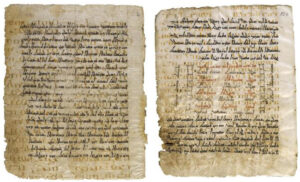
The Codex Climaci Rescriptus, a 7-8th century Greek uncial manuscript of the New Testament as well as a 6th century Christian Palestinian Aramaic uncial manuscript of the Old and New Testament, represents in its Christian Palestinian Aramaic version of the New Testament, “the closest surviving witness to the words of Jesus Christ. It preserves the Gospels in the nearest dialect of Aramaic to that which he spoke himself, and unlike all other translations, those here were composed with a living Aramaic tradition based in the Holy Land.”
To appreciate the differences between Smith’s approach and traditional Christian biblical scholarship, we must understand the discipline of textual criticism. Textual criticism is the scholarly discipline that examines ancient manuscripts to determine the original wording of texts. For the Bible, this means analyzing the thousands of surviving manuscripts in Hebrew, Aramaic, Greek, Latin, Syriac, and other languages to identify scribal errors and establish the most reliable reading.
The New Testament alone is attested by more than 5,800 Greek manuscripts, over 10,000 Latin manuscripts, and thousands more in other ancient languages. While these manuscripts contain hundreds of thousands of variant readings, the vast majority are trivial differences in spelling, word order, or other matters that do not affect meaning. Serious textual critics estimate that we can establish the original text of the New Testament with 99.5% or higher certainty.
The manuscript abundance stands in stark contrast to other ancient literature. Homer’s Iliad, the second-best attested ancient work, survives in approximately 1,900 manuscripts. Caesar’s Gallic Wars exists in only about ten manuscripts, the earliest of which dates 900 years after the original composition. By any standard of ancient textual transmission, the Bible is extraordinarily well-preserved.
The Dead Sea Scrolls and Old Testament Preservation
The discovery of the Dead Sea Scrolls beginning in 1947 provided remarkable confirmation of Old Testament textual stability. The scrolls include manuscripts of nearly every Old Testament book, some dating to the third century BC—roughly a thousand years earlier than the previously oldest known Hebrew manuscripts.
When scholars compared the Dead Sea Scrolls to the later Masoretic Text (the standard Hebrew text used in modern Bibles), they found remarkable agreement. The Isaiah scroll, for example, showed 95% identity with the Masoretic Text of Isaiah, with most differences being minor spelling variations. This discovery dealt a severe blow to theories of widespread Old Testament textual corruption.
Principles of Biblical Hermeneutics
Traditional Christian biblical scholarship also employs hermeneutics—the science of interpretation. Sound hermeneutical principles include:
Exegesis over Eisegesis.Exegesis means “leading out” the meaning from the text, allowing the text to speak for itself within its original context. Eisegesis means “leading into” the text—reading one’s own ideas into Scripture. Responsible interpretation prioritizes exegesis. Context Is King.The meaning of any passage must be determined by its immediate literary context, its place within the book, its relationship to the testament as a whole, and its historical-cultural setting. Scripture Interprets Scripture.Obscure passages should be interpreted in light of clearer passages, and individual texts should be read in harmony with the broader teaching of Scripture. Authorial Intent.The goal of interpretation is to understand what the original human author, under divine inspiration, intended to communicate to the original audience. Genre Awareness.Different biblical genres (historical narrative, poetry, prophecy, apocalyptic, epistle, etc.) require different interpretive approaches.
These principles stand in tension with the approach demonstrated in the Joseph Smith Translation, which often seems to impose later theological concepts onto earlier texts regardless of original context or authorial intent.
Apologetics and the Defense of Scripture
Christian apologetics—the rational defense of the faith—has long included defense of biblical reliability. This defense operates on multiple levels:
Textual Apologetics. Demonstrating that the biblical text has been reliably transmitted from the originals to the present, using manuscript evidence and textual criticism. Historical Apologetics. Showing that the Bible’s historical claims are confirmed by archaeology, external historical sources, and internal coherence. Theological Apologetics. Defending the Bible’s divine inspiration and inerrancy through examination of fulfilled prophecy, doctrinal consistency, and transformative power.
Conservative Christian scholarship has produced substantial works defending biblical reliability against skeptical challenges. Josh McDowell’s Evidence That Demands a Verdict (PDF download), F.F. Bruce’s The New Testament Documents: Are They Reliable?, and countless other works have marshaled evidence for the trustworthiness of the biblical text.
This apologetic tradition stands in direct tension with Joseph Smith’s claims of biblical corruption. If traditional Christian scholars are correct that the Bible has been remarkably preserved, then Smith’s foundational claim—that “plain and precious things” were removed from the text—is undermined.
James White, Director of Alpha and Omega Ministries, explains the historic process that led to the Bible we hold in our hands today.
Just Thinking about the Bible Washington DC Regional Conference 2022
Modern LDS Apologists: Defending Smith’s Methodology
Redefining “Translation”
Contemporary LDS apologists recognize that the Joseph Smith Translation does not meet conventional standards for biblical translation. Their defense typically involves reframing what Smith was attempting to do.
FAIR (Foundation for Apologetic Information and Research), a prominent LDS apologetic organization, explains: “The JST is not intended primarily or solely as restoration of text. Many mainline LDS scholars who have focused on the JST (such as Robert J. Matthews and Kent Jackson) are unanimous in this regard. The assumption that it is intended primarily or solely as a restoration of text is what leads to expectations that the JST and Book of Mormon should match up in every case.”
This redefinition allows for a more flexible understanding of the JST. Rather than claiming that every change restores original text, apologists can argue that the JST serves multiple purposes: sometimes restoring lost text, sometimes offering prophetic commentary, sometimes harmonizing difficult passages, and sometimes providing alternative inspired perspectives.
Emphasizing Prophetic Process over Product
Some LDS scholars have shifted focus from the content of the JST to its process. The intensive study of Scripture that the translation project required was itself spiritually formative for Smith. Many revelations in the Doctrine and Covenants came as a direct result of questions that arose during the translation process—including the famous vision of the three degrees of glory (D&C 76), which Smith received while translating John 5:29.
From this perspective, the JST’s primary value may lie not in the specific textual changes Smith made but in the revelatory process that accompanied his work. The translation project served as a vehicle for ongoing revelation, even if the textual product itself raises scholarly difficulties.
Yet this reframing raises its own theological problems. If God’s “inspiration” required Smith to stumble upon questions during a flawed translation process to trigger subsequent revelations, it suggests a curiously reactive and inefficient divine communication strategy—as if God Himself wasn’t quite sure how to get His message across and needed the translation project as a pedagogical workaround. Why would an omniscient God need Joseph Smith to work through a Bible “translation” (which produced no manuscript evidence and contradicts ancient texts) merely to prompt questions that could have been answered through direct revelation? This approach diminishes God’s sovereignty and clarity, portraying divine communication as tentative and dependent on human trial-and-error rather than the clear, authoritative revelation claimed throughout Scripture.
Acknowledging Complexity
More nuanced LDS treatments acknowledge the complex nature of the JST. Thomas Wayment, even while arguing for Clarke’s influence on the translation, suggested that the JST represents a mixture of revelation and scholarly effort: “Joseph was only engaging textual variants that were known in the 1830s and not those that have become part of the discussion of the biblical text since that time.” This observation suggests that Smith was aware of contemporary biblical debates and incorporated that awareness into his work.
This acknowledgment of complexity opens space for faithful LDS interpretation while conceding that the JST is not simply “pure revelation” in a naive sense. It represents Smith wrestling with the biblical text using the resources available to him—including, perhaps, human scholarly sources—while also claiming prophetic insight.
The Apologetic Challenge
Despite these reframings, LDS apologists face significant challenges in defending the JST:
The Original Claims. Joseph Smith and early LDS leaders made bold claims about the JST that are difficult to square with modern apologetic reinterpretations. If Smith believed he was restoring the original text, as many of his statements suggest, then conceding that much of the JST is “commentary” or “alternative perspective” represents a significant retreat. Lack of Canonization. The LDS Church has never canonized the JST as official scripture, with the exception of selections included in the Pearl of Great Price (the Book of Moses and Joseph Smith—Matthew). Only about 600 verses appear in LDS scriptures via footnotes and appendices. If the JST were truly a prophetic restoration of corrupted text, this partial incorporation is puzzling. Incompleteness.The JST was never finished. Smith continued editing the manuscripts until his death, but never prepared them for publication. The Reorganized Church (now Community of Christ) published the work in 1867, but Brigham Young expressed skepticism about the accuracy of that publication. This incomplete status makes definitive claims about the JST’s nature difficult. Textual Inconsistencies.The presence of variant JST readings for the same passages, and cases where JST readings contradict the Book of Mormon’s quotation of the same passage, present difficulties for any theory of inspired restoration.
The Comparison with Traditional Biblical Scholarship
Methodology
The contrast between Joseph Smith’s approach and traditional biblical scholarship is stark:
Aspect
Joseph Smith Translation
Traditional Scholarship
Source texts
English King James Version
Hebrew, Aramaic, and Greek manuscripts
Language expertise
None during the translation period
Years of training in original languages
Manuscript consultation
None
Extensive comparison of variants
Scholarly tools
Limited or none
Lexicons, grammars, commentaries
Method
Claimed direct revelation
Textual criticism, linguistic analysis
Verification
Appeal to prophetic authority
Peer review, manuscript evidence
This methodological gulf is significant. Traditional biblical translation involves rigorous scholarly training, careful comparison of manuscript traditions, attention to linguistic nuance, and ongoing peer review. Smith’s approach bypassed all of these safeguards in favor of claimed direct revelation.
The results of these different approaches also diverge:
Traditional textual criticism produces texts that can be traced through manuscript evidence and defended through scholarly argument. The methodology is transparent, the evidence is publicly available, and the conclusions are subject to revision as new evidence emerges.
The Joseph Smith Translation produces a text whose authority rests entirely on acceptance of Smith’s prophetic claims. There is no manuscript evidence to examine, no scholarly methodology to critique, and no way to verify the claims independently. One must either accept Smith’s prophetic authority or reject the translation entirely.
This difference is not merely academic. It goes to the heart of how religious communities understand and authenticate Scripture.
Implications
The implications of these contrasting approaches extend beyond the JST itself:
For Scripture’s Authority. Traditional Christians hold that Scripture’s authority rests on its divine inspiration, which is attested by its preservation, internal consistency, fulfilled prophecy, and spiritual power. The JST model suggests that Scripture’s authority requires ongoing prophetic correction—a fundamentally different understanding of what Scripture is and how it functions. For Prophetic Claims. If the JST model is correct, then prophetic authority can override textual evidence. A prophet can declare that the manuscript tradition is wrong without providing alternative manuscript evidence. This elevation of prophetic authority above textual evidence has profound implications for how claims to revelation should be evaluated. For Religious Epistemology. How do we know what is true in religion? The traditional Christian answer appeals to Scripture, interpreted through sound hermeneutics, confirmed by reason and experience. The JST model adds another category: prophetic revision of Scripture itself. This fundamentally changes the epistemological framework.
Specific Examples of JST Changes and Their Implications
The Sermon on the Mount (Matthew 5-7)
One of the most instructive ways to evaluate the Joseph Smith Translation is to examine specific passages in detail. The Sermon on the Mount provides an excellent case study because it also appears in the Book of Mormon (3 Nephi 12-14), allowing comparison between Smith’s two major scriptural productions.
In the King James Version, Matthew 5:22 reads: “But I say unto you, That whosoever is angry with his brother without a cause shall be in danger of the judgment.” The phrase “without a cause” (Greek: eike) is present in the Textus Receptus, the Greek text underlying the KJV translation, but is absent from the earliest Greek manuscripts.
Remarkably, the Joseph Smith Translation removes this phrase, making the verse read simply “whosoever is angry with his brother shall be in danger of the judgment.” This change aligns with what modern textual criticism has determined is likely the original reading—a noteworthy convergence.
However, the Book of Mormon version of this same verse (3 Nephi 12:22) also lacks “without a cause,” presenting the same reading as the JST. Critics note that Adam Clarke’s commentary, published before both the Book of Mormon and the JST, specifically discusses this textual variant and argues for omitting “without a cause.” Did Smith derive this reading from Clarke rather than from independent revelation? The question remains contested.
Genesis and the Book of Moses
The most extensive JST revisions appear in the early chapters of Genesis, which were substantially expanded to become the Book of Moses. These additions introduce numerous doctrinal concepts not found in the canonical Genesis, including:
A Prologue to Creation (Moses 1).The Book of Moses begins with a chapter that has no parallel in Genesis at all—a visionary experience of Moses in which God reveals his purposes and Satan’s opposition is dramatically portrayed. This material expands significantly on the brief Genesis narrative. Enoch’s Extensive Ministry (Moses 6-7).The biblical Enoch receives only a few verses (Genesis 5:21-24), but the JST/Book of Moses expands his story into two full chapters, including elaborate visions, preaching, and the establishment of the city of Zion. The Gospel Preached from Adam (Moses 5-6).The JST presents Adam and Eve as fully aware of Christ’s future atonement, with the gospel being preached from the very beginning. This reflects the LDS doctrine of the gospel’s eternal nature but differs markedly from scholarly understandings of how messianic expectations developed within ancient Israel.
These additions raise fundamental questions about the nature of the JST. If Smith was restoring original Mosaic text, why is there no trace of this material in any ancient manuscript tradition—Jewish, Christian, or otherwise? Why do the additions so perfectly align with distinctive Mormon doctrines developed in the 1830s?
LDS scholars have offered various responses. Some suggest that this material represents a genuinely ancient tradition that was excluded from the canonical Genesis but preserved through revelation. Others propose that Smith was offering prophetic expansion rather than textual restoration—a midrashic commentary on Genesis rather than a recovery of lost text.
Romans 13 and the Nature of Authority
The JST revision of Romans 13 provides another instructive example. In the KJV, Romans 13:1-7 discusses Christian obligations to civil government: “Let every soul be subject unto the higher powers. For there is no power but of God: the powers that be are ordained of God.”
The JST significantly revises this passage to apply it to church authority rather than civil authority. As revised, the passage speaks of “those who are placed in authority over you” in a religious rather than political context.
Elder Bruce R. McConkie addressed this change directly, suggesting that “both of them are true”—the original passage about civil authority and the revised passage about ecclesiastical authority could both be valid, inspired texts. This interpretation essentially transforms the JST from a correction of corruption into a supplementary revelation offering an additional perspective.
This approach has significant implications. If the JST sometimes offers alternative readings rather than corrections of corrupted text, the original claims about “restoring” what was “taken away” become harder to maintain. The JST becomes something more like an inspired commentary than a textual restoration—a significant theological shift from Smith’s original stated purpose.
Matthew 24 (Joseph Smith—Matthew)
Matthew 24, Jesus’s Olivet Discourse about the end times, receives extensive treatment in the JST. The revised version, canonized as Joseph Smith—Matthew in the Pearl of Great Price, rearranges the order of verses and adds clarifying material.
Significantly, the JST version divides the chapter’s prophecies more clearly between those fulfilled in the destruction of Jerusalem in 70 AD and those about Christ’s second coming. Many Christians would agree that this distinction helps understand the passage, though they would not necessarily accept the specific JST arrangement.
This revision illustrates another category of JST changes: editorial rearrangement for clarity. Such changes may indeed improve readability and interpretation without necessarily claiming to restore lost ancient text. But if so, does this constitute “translation” in any meaningful sense, or is it simply biblical editing?
The Eighth Article of Faith and Biblical Inerrancy
The LDS Position
The eighth Article of Faith states: “We believe the Bible to be the word of God as far as it is translated correctly; we also believe the Book of Mormon to be the word of God.” This formulation introduces a qualification for biblical authority that is not applied to the Book of Mormon, creating an asymmetry that has significant theological implications.
This qualified affirmation of biblical authority has allowed LDS leaders to maintain reverence for the Bible while reserving the right to disagree with specific passages. When biblical texts seem to conflict with LDS doctrine, the discrepancy can be attributed to translation error rather than requiring reinterpretation of the doctrine.
The official LDS website addresses biblical inerrancy directly: “Latter-day Saints believe the Bible is the word of God to the extent that it is translated correctly. They regard many passages as having been incorrectly translated in the process of producing the English Bible we have today. The church does not accept the doctrine of inerrancy of the original biblical manuscripts, as traditionally understood by many conservative Christians.”
The Traditional Christian Position on Biblical Inerrancy
Traditional Christians—particularly those within evangelical, Reformed, and conservative Catholic traditions—hold a significantly different view. The doctrine of biblical inerrancy, as articulated in statements like the Chicago Statement on Biblical Inerrancy (1978), maintains that “Scripture in its entirety is inerrant, being free from all falsehood, fraud, or deceit.”
This doctrine applies specifically to the original autographs—the first manuscripts written by the biblical authors. Inerrantists acknowledge that transmission errors have occurred but maintain that textual criticism enables reconstruction of the original text with extremely high accuracy.
The Westminster Confession of Faith (1646) articulates a related doctrine of divine preservation: “The Old Testament in Hebrew… and the New Testament in Greek… being immediately inspired by God, and, by His singular care and providence, kept pure in all ages, are therefore authentical.”
This doctrine of preservation directly contradicts the LDS narrative of widespread biblical corruption. If God has by “singular care and providence” kept Scripture “pure in all ages,” then the foundational claim of the Joseph Smith Translation—that “plain and precious things” were “taken away”—cannot be sustained.
The Weight of Manuscript Evidence
Between 1947 and 1956, archaeologists unearthed a collection of ancient Jewish texts in eleven caves located near the Dead Sea’s northwestern shore at Khirbet Qumran. These manuscripts, known as the Dead Sea Scrolls, date back approximately 2,000 years, spanning from the third century BCE through the first century CE. The primary language of composition was Hebrew, though some texts were written in Aramaic and Greek. While most scrolls survived only as fragmentary pieces with just a few preserved intact, researchers have successfully pieced together roughly 950 distinct manuscripts of varying lengths from these ancient remnants.
The debate between these positions is not merely theological but evidentiary. The manuscript evidence for the New Testament is unprecedented in ancient literature:
Number of manuscripts: More than 5,800 Greek manuscripts, plus over 19,000 manuscripts in other languages, including Latin, Syriac, Coptic, and Armenian.
Early attestation: Papyrus manuscripts from the second century (within 50-100 years of original composition), including P52, a fragment of John’s Gospel dated to approximately 125 AD.
Geographical distribution:Manuscripts from Egypt, Palestine, Syria, Asia Minor, North Africa, and Europe—independent textual families that can be cross-checked against one another.
Church father quotations:Over 36,000 quotations of the New Testament in the writings of the early church fathers—enough, it has been said, to reconstruct virtually the entire New Testament from patristic citations alone.
For the Old Testament, the Dead Sea Scrolls discovery revolutionized scholarly understanding of textual transmission. Manuscripts of Isaiah dating to 100 BC, when compared with the Masoretic Text compiled nearly 1,000 years later, showed 95% identity, with the differences being largely spelling variations that do not affect meaning.
This evidence creates a significant problem for the “plain and precious things” narrative. If wholesale corruption occurred before the Bible “went forth unto all the nations of the Gentiles,” where is the evidence? The manuscript tradition, while containing thousands of variants, shows no evidence of systematic doctrinal alteration. The variants that exist are predominantly trivial, and none affect any significant Christian doctrine.
The Apologetic Significance of the JST Debate
For LDS Apologetics
The Joseph Smith Translation occupies a complex position in LDS apologetics. On one hand, it is cited as evidence of Smith’s prophetic calling—his ability to receive revelation clarifying Scripture demonstrates his role as a prophet. On the other hand, the difficulties surrounding the JST (lack of completion, lack of canonization, questions about sources) make it a challenging topic to defend.
Modern LDS apologetics has generally moved toward more nuanced positions on the JST. Rather than defending every change as a restoration of ancient text, apologists increasingly emphasize:
• The JST was a learning process for Smith, generating revelations that are now canonized in the Doctrine and Covenants.
• The canonized portions (Book of Moses, Joseph Smith—Matthew) are considered as inspired scripture, while treating the rest of the JST as valuable but non-authoritative.
• The multiple purposes of the JST—restoration, commentary, harmonization, clarification—without requiring every change to fit into a single category.
• The value of the JST for personal study, even while acknowledging scholarly complexities.
This more modest approach protects core truth claims by not overcommitting to untenable positions, but it also represents a retreat from early claims about the JST’s nature and significance.
For Christian Counter-Apologetics
The word apologetics first appears in the New Testament in 1 Peter 3:15, where the Apostle Peter addressed early Christians in Asia Minor who were suffering persecution because of their faith in Christ. He writes: “But even if you should suffer for righteousness’ sake, you will be blessed. Have no fear of them nor be troubled, but in your hearts honor Christ the Lord as holy, always being prepared to make a defense (apologia) to anyone who asks you for a reason (logos) for the hope that is within you: yet do it with gentleness and respect.”(ESV).
For Christian apologists engaging with LDS claims, the Joseph Smith Translation provides a test case for evaluating prophetic claims. Several argumentative strategies have proven effective:
Comparing Methodology:The contrast between Smith’s approach (working from English, without knowledge of original languages, without manuscript consultation) and legitimate biblical scholarship highlights the unusual nature of his claims. This comparison does not definitively disprove Smith’s inspiration but raises questions about whether his method is consistent with how God has historically guided the transmission and translation of Scripture. Examining Specific Changes:Detailed analysis of individual JST passages often reveals that changes align more closely with nineteenth-century American theological concerns than with what ancient authors might have written. The extensive additions to Genesis, for example, reflect distinctively Mormon doctrines articulated in the 1830s. Appealing to Manuscript Evidence: The positive case for biblical preservation is strong. The abundance of early manuscripts, their substantial agreement, and the lack of evidence for systematic corruption all tell against the “plain and precious things” narrative. This evidence does not depend on accepting any particular Christian denomination’s claims—it is publicly available and subject to scholarly analysis. Highlighting Internal Problems: The Adam Clarke parallels, the variant JST readings of identical passages, the incompleteness of the project, and the lack of canonization all raise questions that deserve thoughtful answers. Apologetic responses exist for these issues, but the cumulative weight of difficulties is significant.
The Codex Sinaiticus, or “Sinai Bible”, is one of the four great uncial codices, ancient, handwritten copies of the Christian Bible in Greek 1,621 Years Ago. It is the oldest Bible in the world.
Joseph Smith, the founder of the Mormon religion, made a number of changes to the King James Bible that is known today as either the Inspired Version or Joseph Smith’s New Translation of the Bible. To call this version a “translation” gives a false impression. Technically, a “translation” means taking the words from one language (in the case of the Bible, Hebrew or Aramaic in the Old Testament or Koine Greek in the New Testament) and putting them into another language, such as English. Since there is no indication that Smith used biblical manuscripts or even had a fluent understanding of the three biblical languages, his version is not a “translation” that was put together like other biblical versions, including the New International Version or the New Living Translation.
About half of the Old Testament changes were made to the book Genesis while close to 80% of the New Testament changes were made to the four Gospels. Scattered changes were made throughout the rest of the Bible. One insertion made in Genesis chapter 50 added twelve new verses after verse 24a in the King James Version, including a conveniently placed prophecy about Smith! According to verse 33 in the Inspired Version, “. . . his name shall be called Joseph, and it shall be after the name of his father. . .” Needless to say, no Hebrew manuscript ever discovered supports this addition.
Smith claimed that he received a revelation on January 10, 1832 commanding him “to continue the work of translation until it be finished” (D&C 73:4b). A year and a half later, Joseph Smith said his translation was completed. On July 2, 1833, History of the Church 1:368 reported,
“We this day finished the translating of the Scriptures, for which we return gratitude to our Heavenly Father.”
The corrections made by Smith were lauded by Mormon apostle Bruce R. McConkie, who wrote:
“The Joseph Smith Translation, or Inspired Version, is a thousand times over the best Bible now existing on earth. It contains all that the King James Version does, plus pages of additions and corrections and an occasional deletion. It was made by the spirit of revelation, and the changes and additions are the equivalent of the revealed word in the Book of Mormon and the Doctrine and Covenants. For historical and other reasons, there has been among some members of the Church in times past some prejudice and misunderstanding of the place of the Joseph Smith Translation. I hope this has now all vanished away. Our new Church Bible footnotes many of the major changes made in the Inspired Version and has a seventeen-page section which sets forth excerpts that are too lengthy for inclusion in the footnotes. Reference to this section and to the footnotes themselves will give anyone who has spiritual insight a deep appreciation of this revelatory work of the Prophet Joseph Smith. It is one of the great evidences of his prophetic call” (Sermons and Writings of Bruce R. McConkie, p. 289).
If Joseph Smith truly finished his translation of the Bible and made corrections to a book that he claimed was true “only as far as it was translated correctly,” and if these changes are as good as McConkie says they are, then why doesn’t the LDS Church officially use the Inspired Version rather than the King James Bible?
In an authorized gospel manual published in the early 1970s, tenth president Joseph Fielding Smith explained the LDS leadership’s view on this issue:
“The reason why the Church of Jesus Christ of Latter-day Saints has not published the entire manuscript is not due to any lack of confidence in the integrity of Joseph Smith, or doubt as to the correctness of the numerous additions and changes which are not in the Authorized Version of the Bible. The members of the Church do accept fully all of these (changes) as having come by divine revelations of the Prophet Joseph Smith. The reason that is has not been published by the Church is due to the fact that this revision was not completed. It was the intention of Joseph Smith, while at Nauvoo, to take the scriptures up again and complete his labors, making numerous corrections which had not been made by him in the earlier revision. Due to persecution and mobbing this opportunity never came, so that the manuscript was left with only a partial revision” (Joseph Fielding Smith, Selections from Answers to Gospel Questions: A Course of Study for the Melchizedek Priesthood Quorum 1972-73, p. 312).
Smith’s reasoning is inadequate for several reasons:
1)If Smith did not finish the Bible as God supposedly told him to do so 1832 (D&C 73:4b),should Smith’s negligence to do what God commanded be considered a sin? After all, Smith lived for twelve more years after he was told to do this. Did he never have the chance to sit down and complete this reasonable task set forth by God?
2)If the translation wasn’t finished, then why did Smith say that he finished it in 1833?
3)If the Bible was only partially revised,does this mean the words that were revised or added by Smith are no better than what the King James Version has to offer?
Bruce Redd McConkie (July 29, 1915 – April 19, 1985) was a member of the Quorum of the Twelve Apostles of the LDS Church from 1972 until his death. One of the most controversial topics that he defended in his writings was the church’s policy of denying the priesthood to men of African descent until 1978.
Finally, why doesn’t the current LDS leadership—whom members believe possess “keys” and serve as God’s mouthpiece upon the earth—finish the work themselves? McConkie wrote that “up to the present time none of his successors have been directed by the Lord to carry the work forth to its final fruition” (Mormon Doctrine, 1966, p. 383). However, he promised, “There will be a not too distant day when all necessary changes shall be made in the Bible, and the Inspired Version — as then perfected — shall go forth to the world” (Mormon Doctrine, 1966, p. 384).
Just what did McConkie mean when he said there would be a “not too distant day” when the translation would be complete? This statement was written five decades ago!More than half of everyone who would have read McConkie’s words when his book was first published are now deceased.
Instead of hiding behind Article 8 and claiming that the Bible cannot be fully trusted because it has errors inserted by “corrupt”translators, we call upon the LDS Church leadership—if they truly are capable—to once and for all finish the Inspired Version and include this as an official part of their canon. This would eliminate the use of the “corrupt” King James Version. And if any of the changes could be supported with documented textual evidence, it would be greatly appreciated.
The JST and Questions of Prophetic Authority
The Epistemological Challenge
At root, the debate over the Joseph Smith Translation is a debate about how to evaluate prophetic claims. The LDS position holds that prophetic authority can correct textual evidence—if a prophet declares that the manuscripts are wrong, the prophet’s word takes precedence. The traditional Christian position holds that prophetic claims must be evaluated against established Scripture—claims that contradict the biblical record are thereby falsified.
This epistemological divide affects virtually every aspect of LDS-evangelical dialogue. The Bible, which both communities affirm (with qualifications), functions very differently in each system. For evangelicals, the Bible is the final authority against which all other claims—including prophetic claims—must be measured. For Latter-day Saints, living prophetic authority can supplement, clarify, and even correct the biblical text.
The Joseph Smith Translation embodies this difference. It represents the exercise of prophetic authority over Scripture—an authority that traditional Christians deny any post-apostolic figure possesses.
Historical Parallels and Precedents
The history of Christianity includes various attempts to revise or correct the biblical text, and examining how these attempts were received is instructive.
The Marcionite Canon: In the second century, Marcion produced a revised New Testament consisting only of a shortened Luke and ten Pauline epistles, with all material he considered “Jewish” removed. The church rejected Marcion’s approach as an illegitimate manipulation of apostolic text. Medieval Textual Variants:Throughout the medieval period, scribes occasionally introduced changes—sometimes deliberately, sometimes accidentally. The science of textual criticism developed precisely to identify and correct such changes, always seeking the original reading rather than accepting later modifications. The Textus Receptus Debate: The Greek text underlying the King James Version (the Textus Receptus) differs in some places from earlier manuscripts discovered later. Scholars debate the significance of these differences, but the goal of textual criticism remains the recovery of the original text, not the production of new “inspired” readings.
In each case, the church’s instinct has been to preserve and recover the original apostolic text rather than to accept later modifications, even when those modifications were proposed by sincere believers. The Joseph Smith Translation runs counter to this instinct, proposing additions and changes to the established text based on claimed prophetic authority.
Testing the Prophetic Claim
If the Joseph Smith Translation represents genuine prophetic restoration, certain expectations follow:
• We might expect the restored material to cohere with what we know of ancient Near Eastern and Greco-Roman contexts.
• We might expect occasional confirmation from manuscript discoveries (like the Dead Sea Scrolls or the Nag Hammadi library).
• We might expect internal consistency—the restored material should form a coherent whole.
• We might expect the completion and canonization of such an important prophetic work.
In practice, the evidence is mixed at best. The restored material often reflects nineteenth-century concerns rather than ancient contexts. No manuscript discoveries have confirmed JST readings. The work was never completed or formally canonized. And variants within the JST itself raise questions about consistency.
These observations do not definitively disprove the JST’s inspired character—prophetic works need not meet scholarly expectations. But they do suggest that the claim requires significant faith commitment, as the external evidence provides little independent support.
The Passion Week Chronology: A Case Study in JST Problems
The Traditional Gospel Accounts
One of the more detailed critiques of the Joseph Smith Translation concerns its treatment of the Passion Week chronology. The canonical Gospels present Jesus’s final week before his crucifixion with a carefully constructed timeline. Events proceed from the triumphal entry on Palm Sunday through the cleansing of the temple, various teaching moments, the Last Supper, Gethsemane, the trials before the Sanhedrin and Pilate, and finally the crucifixion on Friday.
The JST makes several changes to this chronology that, according to critics, create internal contradictions and demonstrate a misunderstanding of the Gospel accounts rather than a restoration of the original text.
Specific Chronological Problems
In Matthew 26:2, the KJV reads: “Ye know that after two days is the feast of the passover, and the Son of man is betrayed to be crucified.” The JST revises this to: “Ye know that after two days is the passover, and the Son of man is betrayed to be crucified.”
This change removes the phrase “the feast of,” which might seem trivial but has implications for understanding the timeline. Critics argue that Smith’s changes to the Passion narrative suggest unfamiliarity with Jewish festival terminology and the precise chronology of events.
More significantly, the JST makes changes to the accounts of the Last Supper that affect the relationship between Jesus’s final meal and the Passover seder. The canonical Gospels (especially the Synoptics) present the Last Supper as a Passover meal, while John’s chronology places the crucifixion at the time when the Passover lambs were being slaughtered. Scholars have long debated how to reconcile these accounts.
The JST changes do not resolve this well-known difficulty but instead introduce additional complications. Critics argue that a genuine prophetic restoration would clarify ancient ambiguities rather than create new ones.
The Significance of Evaluating the JST
This case study illustrates a broader pattern: When examined closely, JST changes often seem to reflect limited understanding of the original context rather than superior prophetic insight.A genuine restoration of ancient text would presumably show sophisticated awareness of Jewish customs, Greek idiom, and historical context. Instead, the JST frequently shows the kind of confusion one might expect from a reader working in English translation without access to the original languages or historical scholarship.
The Relationship Between the JST and Other Smith “Translations”
The Book of Mormon
The Joseph Smith Translation exists in relationship with Smith’s other claimed translations, particularly the Book of Mormon and the Book of Abraham. Examining these works together reveals patterns relevant to evaluating the JST.
The Book of Mormon, like the JST, contains extensive quotations from the King James Bible—particularly from Isaiah and the Sermon on the Mount. In many cases, the Book of Mormon quotes passages exactly as they appear in the KJV, including passages now known to reflect translational choices rather than original Hebrew or Greek.
For example, the Book of Mormon reproduces the KJV’s rendering of Isaiah, including passages from chapters 40-55 (the so-called “Deutero-Isaiah”) that most scholars date to the Babylonian exile—centuries after Lehi’s departure from Jerusalem. If the brass plates contained an earlier version of Isaiah, why do the Book of Mormon quotes match the 1611 English translation so precisely?
This pattern of KJV dependence connects the Book of Mormon to the JST. Both works seem shaped by the English Bible available to Smith rather than by independent access to ancient sources.
The Book of Abraham
The Book of Abraham is a religious text of the Latter Day Saint movement, first published in 1842 by Joseph Smith. Smith said the book was a translation from several Egyptian scrolls discovered in the early 19th century during an archeological expedition by Antonio Lebolo, and purchased by members of the Church of Jesus Christ of Latter-day Saints (LDS Church) from a traveling mummy exhibition on July 3, 1835. According to Smith, the book was “a translation of some ancient records… purporting to be the writings of Abraham, while he was in Egypt, called the Book of Abraham, written by his own hand, upon papyrus.”
The Book of Abraham, which Smith claimed to translate from Egyptian papyri purchased in 1835, provides perhaps the clearest test case for evaluating Smith’s translation claims. Unlike the Book of Mormon plates and the Bible’s original manuscripts, the papyri from which the Book of Abraham was “translated” have been partially recovered.
In 1966, fragments of the Joseph Smith Papyri were discovered in the Metropolitan Museum of Art and returned to the LDS Church. Scholarly analysis determined that the recovered papyri are Egyptian funerary texts (specifically the Book of Breathings, a text related to the Book of the Dead) dating to the first century BC. They do not contain the text of Abraham’s autobiography as Smith claimed.
LDS apologists have offered various responses: that the translation came from a different portion of the papyri now lost, that Smith received the text by revelation inspired by but not directly derived from the papyri, or that our understanding of “translation” must be broadened. But the fact remains that Smith’s translation does not match what the physical evidence indicates the papyri actually say.
This outcome bears directly on the JST. If Smith’s “translation” of Egyptian papyri demonstrably does not match the source texts, what confidence can we have in his “translation” of the Bible? The JST cannot be checked against original manuscripts in the same way, since no manuscripts exist of the supposedly original text Smith claimed to restore. But the Book of Abraham case suggests caution about accepting Smith’s translation claims at face value.
Patterns Across Translation Projects
Several patterns emerge from examining Smith’s translation projects together:
Dependence on English Sources:Whether working with the Bible, creating the Book of Mormon, or producing the Book of Abraham, Smith worked in English and produced English texts. In each case, critics have identified apparent borrowing from contemporary English-language sources (the KJV for the Book of Mormon and JST; contemporary theological works for all three). Claims of Ancient Text Without Ancient Verification: Smith’s translations claim to recover ancient material, but this material cannot be verified through independent ancient sources. Where verification becomes possible (as with the Book of Abraham papyri), the results do not support Smith’s claims. Theological Alignment with Nineteenth-Century Concerns: The content of Smith’s translations aligns remarkably well with theological questions and concerns of early nineteenth-century America—debates about the nature of God, the origin of evil, the organization of the church, and the fate of the soul.
These patterns do not definitively prove the inauthenticity of Smith’s translations. Defenders can offer alternative explanations for each observation. But the cumulative effect raises significant questions about whether these works represent what they claim to be.
Pastoral Considerations: Engaging with LDS Friends and Neighbors
Approaching the Topic with Grace
For evangelical Christians who have Latter-day Saint friends, neighbors, or family members, the JST represents both an opportunity and a challenge. It provides a concrete topic for substantive theological discussion, but it also touches on deeply held convictions about prophetic authority and scriptural reliability.
Effective engagement requires several qualities:
Genuine Respect:Latter-day Saints take their scriptures seriously and find spiritual value in the JST. Dismissive or mocking approaches will not persuade and will damage relationships. Accurate Representation: Christians should represent LDS positions accurately, acknowledging nuances and avoiding caricature. The LDS view of the JST is more sophisticated than “Joseph Smith rewrote the Bible to suit his theology.” Epistemic Humility: While making a case against the JST’s claims, Christians should acknowledge the limits of their own knowledge and the genuine questions that remain about biblical transmission. Focus on Christ:Ultimately, the debate over the JST is a debate about how we know Christ and receive his salvation. Keeping this focus prevents the conversation from becoming merely academic.
Points of Genuine Agreement
Evangelicals and Latter-day Saints share important common ground that can serve as a foundation for dialogue:
The Bible Is Inspired:Both traditions affirm that the Bible is God’s Word, but they differ on qualifications and interpretations. Scripture Matters:Both traditions take Scripture seriously as authoritative for faith and practice. Historical Claims Are Testable:Both traditions acknowledge that religious claims touching on history can be evaluated using historical methods. Truth Matters: Both traditions believe that truth exists and that it matters whether religious claims are true.
These shared convictions provide a framework for respectful disagreement and productive conversation.
The Core Gospel Question
Beyond the debates over textual transmission and prophetic authority lies the fundamental question: How are human beings made right with God? The JST touches on this question by introducing material about priesthood, ordinances, and exaltation that differs significantly from evangelical understandings.
For evangelicals, justification comes through faith alone in Christ alone, not through priestly mediation or temple ordinances. The Bible, properly interpreted, teaches this good news clearly and consistently. The JST’s additions and modifications, from this perspective, obscure rather than clarify the gospel.
This concern—not academic arguments about manuscripts—should ultimately drive evangelical engagement with the JST. The question is not merely “What did the original text say?” but “How does the text point us to Christ and his saving work?”
Conclusion: The Legacy of the Joseph Smith Translation
An Unresolved Controversy
Nearly two centuries after Joseph Smith began his “new translation of the Bible,” the Joseph Smith Translation remains a source of ongoing controversy. For faithful Latter-day Saints, the JST stands as evidence of Smith’s prophetic calling and provides valuable insights into biblical passages. The Book of Moses, in particular, has become a treasured part of LDS scripture, offering distinctive perspectives on the creation, the fall, and early patriarchal history.
For critics, the JST exemplifies problems with Smith’s claims to prophetic authority. The lack of manuscript evidence, the apparent borrowing from contemporary sources, the methodological contrast with legitimate biblical scholarship, and the theological retrofitting evident in many passages all raise serious questions about whether the JST represents divine restoration or human invention.
Key Questions for Consideration
As readers evaluate the evidence, several key questions merit reflection:
What does “translation” mean?Is it appropriate to call the JST a “translation” when it involves no translation from original languages? If the term is appropriate, what are the implications for understanding other works Smith claimed to “translate,” including the Book of Mormon and the Book of Abraham? What is the standard of evidence?Traditional biblical scholarship subjects its claims to rigorous evidentiary standards. Should claims to prophetic translation be held to similar standards? If not, how should such claims be evaluated? What explains the textual evidence?The manuscript evidence demonstrates remarkable biblical preservation. How should this evidence be weighed against the Book of Mormon’s claims of biblical corruption? What role should ancient languages play?Traditional translation requires expertise in original languages. Can an inspired translation bypass this requirement? What are the implications either way? How should we interpret Smith’s other translation projects? The Book of Abraham, for example, is now known to derive from Egyptian funerary documents that do not match Smith’s claimed translation. Does this inform how we should evaluate the JST?
A Call for Honest Inquiry
This essay has attempted to present the evidence regarding the Joseph Smith Translation as fairly and comprehensively as possible. Readers are encouraged to continue their own research, consulting both LDS and non-LDS sources, examining primary documents where available, and engaging with the strongest arguments on all sides.
Questions of religious truth are ultimately matters of faith as well as evidence. But faith that is unwilling to examine evidence is not strengthened faith but rather faith that fears examination.Whether one concludes that the Joseph Smith Translation represents divine restoration or human creativity, the conclusion should be reached by facing honest intellectual engagement with the full range of evidence available.
The Bible itself invites such examination. As the apostle Paul wrote to the Thessalonians, “Test everything; hold fast what is good” (1 Thessalonians 5:21, ESV). In that spirit, may all who seek truth find it.
The Ongoing Importance of the Debate
The questions raised by the Joseph Smith Translation remain relevant nearly two centuries after Smith began his work. They touch on fundamental issues that concern anyone who takes Scripture seriously:
What is the nature of inspiration? Does God inspire prophets in ways that transcend human limitations and available sources, or does inspiration work through and with human knowledge and tools? How do we evaluate prophetic claims? What criteria should we use to assess claims of special revelation? Must such claims align with prior Scripture, or can new revelation supersede previous revelation? What is the Bible’s proper role? Is the Bible the final authority for faith and practice, or is it one authority among several, subject to prophetic correction and supplementation? How do we pursue religious truth? Is truth primarily received through submission to prophetic authority, or is it also pursued through critical examination of evidence?
While these questions may seem complex, there are indeed straightforward answers for those willing to honestly examine the evidence. The manuscript record overwhelmingly demonstrates the Bible’s textual reliability across thousands of ancient copies. The JST’s complete lack of manuscript support, its dependence on the King James Version (including its translation errors), and its contradictions with ancient biblical texts provide clear evidence against Smith’s prophetic claims. Logic and reason point to a consistent principle: genuine divine revelation doesn’t contradict established Scripture or fabricate textual “corrections” unsupported by any historical manuscript evidence. For LDS members willing to engage with biblical scholarship, manuscript evidence, and the historical record—using the same standards of truth and verification applied to any other historical or religious claim—the path forward becomes remarkably clear. The Joseph Smith Translation, far from being a mysterious puzzle, offers a test case where evidence, reason, and biblical truth converge to reveal answers that faithful examination can confidently affirm.
A Final Word
The author of this essay writes from an evangelical Christian perspective, convinced that the biblical text has been substantially preserved and that the Joseph Smith Translation does not represent a genuine restoration of lost ancient material. This perspective has been evident throughout the article, though an attempt has been made to represent LDS positions fairly.
But the goal of this article is not merely to win an argument. It is to equip readers—whether LDS, evangelical, or neither—with the information and analytical tools needed to think carefully about these important questions.
To Latter-day Saint readers:May you find in these pages a respectful engagement with your tradition and an invitation to examine the evidence with an open mind. Where this article has misrepresented your beliefs, corrections are welcome. To evangelical readers:May you be better equipped to engage thoughtfully with Latter-day Saint friends and neighbors, understanding both the appeal of the restoration narrative and the scholarly difficulties it faces. To all readers:May the pursuit of truth lead us closer to the God who is himself the Truth, the Way, and the Life.
Sources and Further Reading
Primary Sources
Joseph Smith Papers, Revelations and Translations series (josephsmithpapers.org)
The Joseph Smith Translation manuscripts, Community of Christ Archives
Joseph Smith’s New Translation of the Bible, ed. Scott H. Faulring, Kent P. Jackson, and Robert J. Matthews (Religious Studies Center, BYU, 2004)
LDS Perspectives
Church of Jesus Christ of Latter-day Saints, “Joseph Smith Translation of the Bible” (churchofjesuschrist.org)
Scripture Central, “Why Did Joseph Smith Produce a New Translation of the Bible?” (scripturecentral.org)
FAIR Latter-day Saints, “The Joseph Smith Translation of the Bible” (fairlatterdaysaints.org)
Kent P. Jackson, “Some Notes on Joseph Smith and Adam Clarke,” Interpreter (2020)
Critical Perspectives
LDS Discussions, “Joseph Smith Translation Problems” (ldsdiscussions.com)
Thomas A. Wayment and Haley Wilson-Lemmon, “A Recovered Resource: The Use of Adam Clarke’s Bible Commentary in Joseph Smith’s Bible Translation,” in Producing Ancient Scripture (University of Utah Press, 2020)
Traditional Biblical Scholarship
Daniel B. Wallace, “The Reliability of the New Testament Manuscripts”
F.F. Bruce, The New Testament Documents: Are They Reliable?
Josh and Sean McDowell, Evidence That Demands a Verdict\
This essay was prepared for educational purposes and represents a scholarly examination of the Joseph Smith Translation from multiple perspectives. Readers are encouraged to consult primary sources and reach their own informed conclusions.

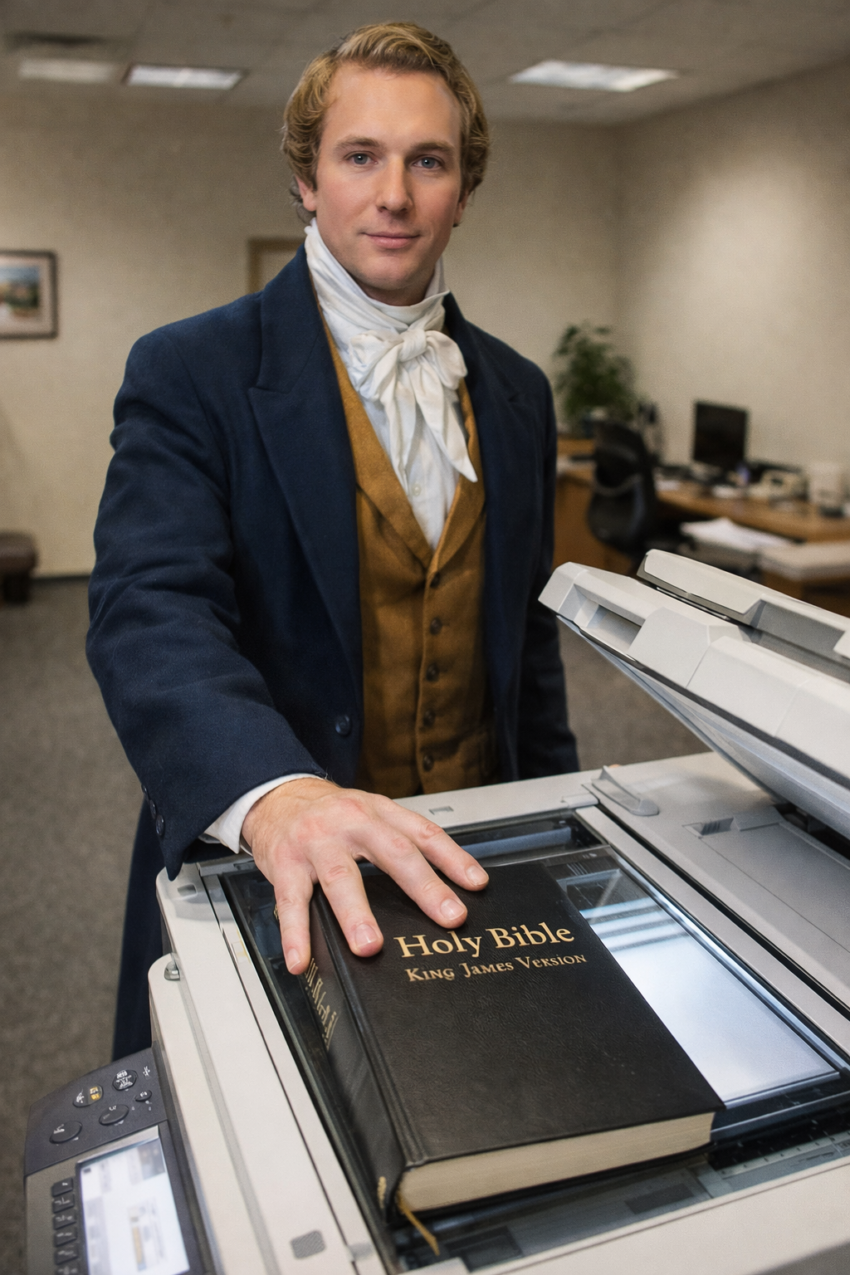
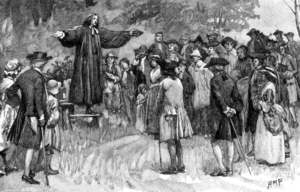
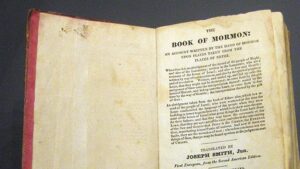
 Joseph Smith’s Bible Revision: Borrowing or Inspiration?
 Several lines of argument undergirded Smith’s claims about biblical corruption and resonated with his early followers: