Photo: Behold the ultimate heavenly realm. With its gleaming white spires,
peaceful waters, and crowds ascending in white gowns.
This is Google Gemini’s Nano Banana Pro, imagining what
The “Celestial Kingdom” might look like.
THREE KINGDOMS, ONE QUESTION:
What Does the Bible Teach About Heaven?
A Scholarly Analysis of Latter-day Saint Afterlife Doctrine
Introduction: A Vision in a Farmhouse Bedroom
February 16, 1832. The Ohio winter was bitter outside the John Johnson farmhouse in Hiram Township — a prosperous home built in 1828 in the colonial style that the Johnson family had constructed on what had grown, by that year, into a 260-acre working farm of fields, pasturage, and dairy operations, according to the Church of Jesus Christ of Latter-day Saints’ own historical record of the site. The house had become, in the preceding months, an unlikely headquarters for Smith’s fledgling Church of Christ. Inside, two men — Joseph Smith and his close associate Sidney Rigdon — bent over an open Bible, engaged in what Smith called his “inspired translation“ of the New Testament. The project had begun nearly a year earlier, in March 1831, when Smith claimed a direct revelation instructing him to set aside his work on the Old Testament and turn his attention to the New. By February 1832 he and Rigdon were working through a second revision of the text, and it was in the course of that revision — specifically while working through John 5:29 — that the afternoon took an unexpected turn. Approximately twelve other men were present in the room, though what was about to unfold would be visible only to the two men at the center of it.
By the account Smith later published, as the two men were meditating on that verse, “the Lord touched the eyes of our understandings and they were opened” (D&C 76:19). What followed, Smith claimed, was one of the most far-reaching revelations in the history of his movement: a vision of the afterlife so expansive, so inclusive, and so radically unlike anything traditional Christianity had ever taught, that it divided his young church almost immediately.
Philo Dibble, one of those present, later recorded the scene in an account published in the Juvenile Instructor in May 1892 — sixty years after the event, a gap worth bearing in mind when assessing its verbal precision, though no competing account contradicts it. He recalled that while the men in the room sensed the power and weight of what was occurring, only Smith and Rigdon actually saw the vision. Rigdon was visibly undone by the experience — “limp and pale, apparently as limber as a rag.” Smith, characteristically, was composed. He reportedly looked at his overwhelmed colleague with a slight smile and remarked: “Sidney is not used to it as I am.”
The division the vision produced was real and swift. Many early members had come to Smith’s movement carrying the theological assumptions of their Protestant backgrounds — assumptions that included a binary afterlife of heaven and hell. The three-kingdom vision did not merely refine that framework; it dismantled it entirely. Even Brigham Young — who would later become the church’s second president — candidly acknowledged the difficulty the vision presented. In remarks published in the Journal of Discourses, Young described his initial struggle directly: “My traditions were such, that when the Vision came first to me, it was so directly contrary and opposed to my former education, I said, wait a little; I did not reject it, but I could not understand it.” He went further, adding that had his prior religious education been entirely correct, his understanding “would be diametrically opposed to the doctrine revealed in the Vision.” If the man who would one day lead the church needed time and sustained prayer to absorb it, the struggle of ordinary members to reconcile the vision with everything they had previously believed is not difficult to imagine.
The revelation — now canonized as Doctrine and Covenants, Section 76 — described not one heaven but three: a celestial kingdom of God-like glory, a terrestrial kingdom of moonlit dignity, and a telestial kingdom of starry, if lesser, splendor.Beyond even these lay “outer darkness,” reserved for the most wicked of all. The boundaries, requirements, and very logic of these three kingdoms of glory have shaped Latter-day Saint theology, evangelism, family life, and spiritual anxiety ever since.
This essay examines those three kingdoms from the perspective of traditional, biblical Christianity. It is not written to mock or demean the sincere faith of Latter-day Saint believers, many of whom are our neighbors, friends, and family members here in Arizona and across the nation. Rather, it is written out of deep respect for truth — including the difficult but necessary task of subjecting major theological claims to the rigorous scrutiny of Scripture, history, and honest scholarship. What we find, when we pull back the curtain, is a doctrine that is historically fascinating, theologically creative, and — when measured against the plain teaching of the Bible — scripturally untenable.
Members of The Church of Jesus Christ of Latter-day Saints believe that all people dwelt with God before this life and that every individual has the opportunity to dwell with God after this life in a state of eternal joy. Latter-day Saints believe that our existence is analogous to a three-part play that consists of a premortal existence; a mortal life on earth of learning, testing and growth; and a postmortal existence as resurrected beings.
Latter-day Saint teachings state that where we go after this life depends primarily upon the degree to which we accept and follow Jesus Christ, as well as on the desires of our hearts and how we translate those desires into works. In addition, our destination after this life depends on whether we participate in the essential rites (such as baptism) that aid us in the process of repentance, progression and sanctification.
Latter-day Saint understanding of scripture provides a view of the afterlife that expands upon the common notions of heaven and hell. In his epistle to the Corinthians, the Apostle Paul describes the condition of postmortal bodies with a comparison to the sun, the moon and the stars. Latter-day Saint revelation given to Joseph Smith builds upon this pattern. Latter-day Saint scripture describes the three corresponding states of postmortal existence as the celestial kingdom, the terrestrial kingdom and the telestial kingdom. Though all three are understood to be degrees of glory, Latter-day Saint believe the highest state — the celestial kingdom — to be where God is (or, as those of other faiths understand it, heaven).
As all human beings inherit different circumstances, Latter-day Saints believe that a just and merciful God will account for our varying degrees of knowledge and access to truth. With this in mind, Latter-day Saint scripture teaches that all will eventually “enjoy that which they are willing to receive,” and to those that so desire, “all that [the] Father hath shall be given unto” them (Doctrine and Covenants 88:32; 84:38). In other words, a person’s reward in the afterlife will be determined by what they really desire in this life.
We will trace the intellectual and social roots of the three-kingdom doctrine, examine its internal logic and contradictions, survey what the Bible genuinely teaches about heaven, and conclude with a pastoral invitation to our LDS friends and neighbors to consider the simpler, more glorious, and more biblically grounded hope that the New Testament proclaims.
Part One: The Architecture of the LDS Afterlife — Three Kingdoms Described
The Official LDS Teaching
The Church of Jesus Christ of Latter-day Saints teaches a sophisticated and comprehensive cosmology of the afterlife. According to official LDS doctrine, following death, all people pass into a “spirit world,” a holding area where they await resurrection and final judgment. At the Final Judgment, nearly all people — except a tiny number of “sons of perdition” — will be assigned to one of three kingdoms of glory. The LDS Church’s Gospel Topics manual summarizes the doctrine in this way:
“The glory we will receive in the resurrection will depend on the depth of our conversion, expressed by our obedience to the Lord’s commandments. The three kingdoms of glory are described in the Doctrine and Covenants, section 76.”
The highest of the three kingdoms is the celestial kingdom, described in D&C 76:50–70, 92–96, and elsewhere. According to LDS teaching, this kingdom is inhabited by those who “received the testimony of Jesus and believed on his name and were baptized” (D&C 76:51), received all the required ordinances of the LDS gospel, and kept their covenants faithfully. Mormonism Research Ministry summarizes the official position succinctly:
“To reach this kingdom, people must keep their covenants and receive the saving ordinances of the Gospel. It’s the kingdom reserved for children who died before reaching an age of accountability and for those who died without ever having knowledge of the LDS gospel.”
Those in the celestial kingdom dwell in the presence of both God the Father and Jesus Christ, described as radiating the glory of the sun. LDS theology reserves this kingdom alone for eternal family togetherness — a promise that functions as the emotional centerpiece of LDS evangelism and perhaps its most effective recruitment tool. The appeal is visceral and human: your family, forever.
Yet the doctrine fractures under its own internal logic. The celestial kingdom is subdivided into three tiers, and only those in the highest degree achieve what LDS theology terms “exaltation” — a status reserved exclusively for those who have been married and sealed in an LDS temple, received all saving ordinances including the endowment, and remained fully faithful. Exaltation is not merely salvation; it is apotheosis. The word apotheosis originates from Greek, combining apo- (from/away) and theos (god), meaning “to deify” or “to make a god,” stemming from the verb apotheoûn. It literally refers to elevating a person to divine status, common in ancient cultures for heroes or rulers, and evolved in English to also mean the ultimate example or highest point of something. These individuals become gods, generate their own spirit offspring, and preside over their own worlds and kingdoms. This is the breathtaking vision Joseph Smith articulated in the King Follett Discourse of 1844, and it remains canonical LDS doctrine today.
The conundrum, however, is severe — and LDS theology has yet to offer a coherent answer to it. If exaltation means graduating into independent godhood over a separate creation, then the eternal family unit — the very thing LDS evangelism promises — is necessarily dismantled in the process. Children who achieve exaltation leave to govern their own worlds. Parents who achieve exaltation do the same. The “eternal family” does not expand forever together; it disperses forever outward into isolated divine jurisdictions.
The problem cuts even deeper when applied to Heavenly Father Himself. LDS theology teaches that God the Father was once a man who progressed to godhood by the same process now offered to faithful Latter-day Saints — meaning He, too, passed through the same system under His Heavenly Father. If the pattern holds universally, then Heavenly Father’s own exalted children — including, presumably, Jesus Christ in the pre-existence — are destined to populate separate creations entirely independent of His. What, then, is left of His family?The doctrine of eternal progression does not produce an eternal family. It produces an eternal departure — an infinite regress of gods spinning off into cosmic isolation, each presiding over a kingdom that will itself eventually empty. The most emotionally compelling promise in LDS theology collapses precisely because of the doctrine designed to fulfill it.
What makes this especially troubling is the effect this theological complexity has on the ordinary, sincere LDS member simply trying to live faithfully. Most active Latter-day Saints are not systematic theologians — they are husbands, wives, parents, and children doing their genuine best to honor their covenants, attend the temple, and earn a place in the celestial kingdom. They have been drawn in by the warmth of the promise: be faithful, and your family is yours forever. Few are ever presented with the full architecture of what “forever” actually entails under LDS doctrine. The layered subdivisions of the celestial kingdom, the conditions of exaltation, the implications of eternal progression — these are not prominently featured in Sunday School lessons or missionary discussions. When sincere members eventually encounter these deeper doctrinal realities, whether through personal study or outside scrutiny, the result is frequently not deeper devotion but profound disillusionment. The system they believed was built on the bedrock of family and belonging turns out to rest on a foundation far more complicated, far more conditional, and ultimately far less certain than they were ever led to believe.
The Terrestrial Kingdom
The middle kingdom — the terrestrial kingdom — occupies a theologically awkward position in LDS afterlife doctrine. Described in Doctrine and Covenants 76:71–80 and 97, it is a kingdom of genuine glory, yet one defined largely by what its inhabitants almost achieved. It is, in many respects, the kingdom of the nearly faithful, the honorably insufficient, and the tragically uninformed.
According to official LDS teaching, the terrestrial kingdom receives several distinct categories of souls. First, those who rejected the fullness of the LDS gospel during their mortal lives but later accepted it in the spirit world — a post-mortem opportunity for conversion that LDS theology permits, but which apparently carries a diminished eternal reward (D&C 76:73–74). Second, those who died without knowledge of the law — individuals who never had a meaningful opportunity to receive the LDS gospel through no fault of their own (D&C 76:72). Third, and most pastorally significant, those described simply as “not valiant in the testimony of Jesus” (D&C 76:79). This category is striking in its breadth and its vagueness. It requires no outright apostasy, no flagrant sin, no dramatic falling away — merely a failure to be sufficiently valiant. Nominal belief, lukewarm commitment, or incomplete covenant faithfulness appears to be enough to foreclose celestial glory entirely. Joseph Smith further described many terrestrial inhabitants as “honorable men of the earth, who were blinded by the craftiness of men” (D&C 76:75) — decent, upright people whose only disqualifying fault was that they were misled or unconvinced.
The glory of the terrestrial kingdom is compared to that of the moon — real and visible, but derivative, reflective, and fundamentally inferior to the sun. Dwellers there will enjoy the presence of the Son — Jesus Christ — but not the fullness of the Father’s presence. This distinction is theologically loaded. In LDS soteriology, access to the Father is not a peripheral privilege but the very summit of eternal reward. To dwell with the Son but be excluded from the Father’s presence is to be permanently situated one rung below the highest relational intimacy the cosmos offers.
Perhaps most consequential for the average LDS believer, however, is what the terrestrial kingdom lacks entirely: families. No eternal family unit exists there. No sealings are honored. No covenants of marriage carry forward. This is not a minor administrative detail — it strikes at the emotional core of what LDS theology promises its faithful. And its pastoral weight is immense. Consider the LDS parent watching an adult child drift from activity, skip temple attendance, or abandon the covenant path altogether. Under LDS doctrine, that child is not simply at risk of a lesser reward — they are at risk of permanent family separation in the eternities. The terrestrial kingdom, for all its genuine glory, is a kingdom of broken households and severed sealings. The moon may shine, but it shines alone.
This doctrinal reality functions as a powerful — and largely unacknowledged — psychological lever within LDS family dynamics and institutional retention culture.The implicit threat of eternal family separation does not need to be stated explicitly to exert enormous pressure; it is woven into the fabric of LDS life, embedded in temple recommend interviews, sacrament meeting talks, and the quiet anxiety of every faithful parent with a wayward child. Sociologists of religion have long noted that high-demand religious communities often retain members not through theological persuasion alone but through the emotional cost of leaving — and in Mormonism, that cost is framed in the starkest possible eternal terms. To leave, or even to merely disengage, is not simply to forfeit personal reward; it is to sever one’s family in the eternities. This creates a retention mechanism of extraordinary psychological force, one that operates most powerfully on those who love most deeply. Well-meaning LDS members — particularly parents and spouses — can find themselves caught in a kind of doctrinal hostage dynamic, where their own peace is held captive to the spiritual performance of every family member they cherish. That this pressure is framed in the language of love and eternal hope does not diminish its coercive weight. In many cases, it amplifies it.
The Telestial Kingdom
The lowest of the three kingdoms is the telestial kingdom, described in Doctrine and Covenants 76:81–90 and 98–112. The very name is telling. The word “telestial” appears nowhere in pre-Joseph Smith literature — it is, by all scholarly accounts, a neologism introduced to the world by Smith himself. Its etymology remains unresolved: scholars have proposed speculative roots in the Greek tele (“far away”), the Greek telos (“end” or “completion”), and even the Latin tellus (“earth”) — but no pre-Smith usage of the word, or any cognate form of it, has ever been found in any language or established theological tradition. Whatever its ultimate derivation, the word did not exist before 1832, and that fact alone raises a pointed question: if the three-kingdom afterlife structure is a restoration of ancient, suppressed truth, why does its lowest tier require a word that had to be invented to describe it?
The inhabitants of the telestial kingdom are a broad and varied population. D&C 76:82 describes them as those who “received not the gospel of Christ, neither the testimony of Jesus” — a category expansive enough to include the majority of humanity across recorded history. But the section goes further, specifically enumerating liars, sorcerers, adulterers, and whoremongers among its residents (D&C 76:103). This is not merely a kingdom of the uninformed or the spiritually indifferent; it explicitly houses the morally corrupt. And yet — remarkably, and in a way that startled even many early Latter-day Saints when the vision was first published — even these individuals are resurrected into a kingdom of genuine, substantial glory. They are not annihilated. They are not consigned to eternal conscious torment. They are, in the end, rewarded.
This is one of the most theologically radical features of the entire LDS afterlife system, and it deserves to be recognized as such. Traditional Christian theology, drawing on Matthew 25, Revelation 20, and the broader witness of Scripture, has consistently maintained a binary eternal destiny: the redeemed enter God’s presence, and the unrepentant face eternal separation from Him. LDS doctrine replaces this with a tiered meritocracy in which even the wicked ultimately receive glory — a position that fundamentally reframes the stakes of moral accountability and the nature of divine justice. Critics of LDS theology have argued, with some force, that a system in which virtually everyone wins — at varying levels — effectively evacuates the gospel of its urgency and the cross of its singular necessity.
Residents of the telestial kingdom will receive the ministry of the Holy Ghost but will not enjoy the personal presence of either the Father or the Son — a permanent relational exile from the two most central persons in LDS theology. Interestingly, telestial inhabitants will differ from one another in glory, echoing Paul’s observation that “one star differeth from another star in glory” (1 Cor. 15:41, KJV) — a passage LDS commentators have appropriated to suggest gradations of reward even within the lowest kingdom. The AskGramps LDS commentary site describes the telestial kingdom as “the glory of the earth in its present state,” suggesting a comfortable, even Edenic quality to life there. If accurate, this raises yet another uncomfortable implication: the telestial kingdom, by this description, is essentially indistinguishable from the present mortal world at its best — raising the reasonable question of what, precisely, serves as a meaningful deterrent to a life of unrepentant sin within this theological framework.
What is perhaps most revealing about the telestial kingdom is not what it contains, but what it exposes about the overall architecture of LDS soteriology. A system in which liars, adulterers, and sorcerers inherit a comfortable, star-like glory is a system in which the concept of eternal consequence has been substantially softened — if not effectively neutralized for all but the Sons of Perdition, a category so extreme as to be nearly theoretical. For the ordinary person weighing the claims of LDS theology, this raises a sobering question: if the floor of eternity is already this hospitable, what exactly is the gospel saving us from?
“The telestial kingdom is the glory of the earth in its present state.”
The Sub-Degrees Within the Celestial Kingdom: A Doctrine of Uncertain Origin
One of the most theologically complex and historically contested features of LDS afterlife doctrine is the claim that the celestial kingdom itself is divided into three sub-degrees. This teaching is usually traced to D&C 131:1–4, which states: “In the celestial glory there are three heavens or degrees.” However, a careful historical analysis reveals that this interpretation is far from settled within LDS scholarship — and may, in fact, represent a doctrinal innovation introduced long after Joseph Smith.
Shannon Flynn, a lifelong student of Mormon history and a member of the Mormon History Association, conducted an extensive survey of LDS literature and published his findings on the Mormon blog By Common Consent. His research deserves careful attention:
“1922 is the first time I can find any such teaching, in print form, of a three sub-degree division of the Celestial Kingdom… I have been able to find nothing in print for the next 46 years about there being three divisions or sub-degrees within the Celestial Kingdom. The first time that the words belonging to Section 131 were ever published for the general church membership was in 1856 in the Deseret News; they did not get added to the Doctrine and Covenants until 1876.”
Flynn argues compellingly that the original intent of the D&C 131 passage was entirely about the eternal nature of the sealing covenant and the necessity of temple marriage for entrance into the celestial kingdom — not a description of three graduated tiers within that kingdom. The three-tier interpretation, he contends, is “one of the most significant pieces of false doctrine that pervades the LDS church today.”
What makes this controversy important for our analysis is that the sub-degree doctrine functions as the theological instrument by which temple-worthy Latter-day Saints are distinguished from all others, even from those who have otherwise lived faithfully. If even faithful LDS members who lack temple sealings are relegated to the second or third sub-degree of the celestial kingdom — unable to progress to godhood or enjoy full family relationships — then the urgency of temple work becomes all-consuming. This is a doctrine with enormous pastoral and evangelistic weight within the LDS system, and its disputed historical origins are troubling.
Prerequisites for Entering the Three Kingdoms of Glory in Mormonism:
Celestial Kingdom — Highest Degree: • Faith in Jesus Christ and acceptance of His gospel • Repentance • Baptism by immersion and confirmation into The Church of Jesus Christ of Latter-day Saints • Receiving the Gift of the Holy Ghost • Keeping the commandments of God and enduring to the end in righteousness • Receiving all temple ordinances, including the endowment and temple sealing (marriage) • Remaining fully faithful to all temple covenants
Celestial Kingdom — Lower Degrees:
• Baptism and covenant faithfulness are required, but the precise conditions distinguishing the lower two degrees from each other are largely undefined in LDS scripture and remain a matter of doctrinal uncertainty. Temple sealing is not required for these degrees.
Terrestrial Kingdom:
Honorable individuals who:
• Accepted the gospel in the spirit world after rejecting it in mortality (D&C 76:73–74)
• Died without knowledge of the gospel through no fault of their own (D&C 76:72)
• Were “not valiant in the testimony of Jesus” — nominal or lukewarm believers (D&C 76:79)
• Were described as “honorable men of the earth, who were blinded by the craftiness of men” (D&C 76:75)
Telestial Kingdom:
Those who:
• Rejected the gospel of Jesus Christ and the testimony of Jesus (D&C 76:82)
• Lived wickedly — specifically including liars, sorcerers, adulterers, and whoremongers (D&C 76:103)
• Suffer the wrath of God in hell during the Millennium before being resurrected in the Last Resurrection (D&C 76:84, 106)
Outside of the LDS Church, What Is the Destination of Everyone Else?
This is one of the most pastorally and evangelistically significant questions that can be raised about LDS afterlife theology, and the answer is both detailed and revealing. Here is a comprehensive breakdown:
Where Non-LDS Believers End Up
Under official LDS doctrine, the eternal destination of members of other religious traditions is not arbitrary — it follows a precise logic determined by their relationship to the LDS gospel, both in this life and in the spirit world.
Traditional Christians
This is the most nuanced category, and LDS doctrine subdivides it carefully:
• Devout, sincere Christians who lived honorably but never received or accepted the LDS gospel in mortality are most likely assigned to the terrestrial kingdom — described as “honorable people who were blinded by the craftiness of men” (D&C 76:75). They will enjoy the presence of Christ. Still, not the fullness of the Father, and their families will not be together eternally.
• Christians who accept the LDS gospel in the spirit world — through posthumous missionary work and vicarious temple ordinances performed on their behalf by living LDS members — may qualify for thecelestial kingdom, potentially including its highest degree.
• Nominal or lukewarm Christians — those who called themselves Christian but were “not valiant in the testimony of Jesus” — also land in the terrestrial kingdom (D&C 76:79).
• Christians who hear the LDS gospel presented to them clearly, reject it, and remain unrepentant face assignment to the telestial kingdom.
The implicit verdict on two thousand years of non-LDS Christianity is therefore sobering: however sincere, however devout, however sacrificial — if a Christian lived and died outside the LDS covenant system and does not accept it posthumously, the best outcome available to them is the terrestrial kingdom. They will see Christ. They will not see the Father. Their families will not be together. And they will never become gods.
Muslims
Muslims present a complex case under LDS logic:
• Muslims who lived honorably, never heard the LDS gospel, and died without it would most likely qualify for the terrestrial kingdom as “honorable people blinded by the craftiness of men” — or potentially the celestial kingdom under D&C 137:7, which states that “all who have died without a knowledge of this gospel, who would have received it if they had been permitted to tarry, shall be heirs of the celestial kingdom.”
• Muslims who heard the LDS gospel and rejected it in mortality would likely face the telestial kingdom.
• The crucial variable, as with all non-LDS believers, is posthumous acceptance of the gospel in the spirit world and the performance of vicarious temple ordinances on their behalf.
Jews, Hindus, Buddhists, and Other Major Traditions
The same framework applies:
• Those who lived honorably without access to the LDS gospel — the “died without knowledge of the law” category (D&C 76:72) — are the most likely candidates for terrestrial glory or potentially celestial glory under the D&C 137:7 provision.
• Those who lived wickedly regardless of religious affiliation — liars, adulterers, murderers — face the telestial kingdom (D&C 76:103).
• All remain subject to posthumous gospel presentation and vicarious ordinance work.
The Implied Verdict — and Its Implications
What emerges from this framework, applied consistently, is a theological position of extraordinary exclusivity dressed in the language of universal generosity. The LDS system appears inclusive — virtually everyone receives some degree of glory — but the fine print is severe.Every major religious tradition in human history, without exception, falls short of the celestial kingdom’s highest degree by default. Every sincere Muslim, every devout Hindu, every faithful evangelical Christian, every observant Jew who ever lived is, under LDS doctrine, consigned at best to a kingdom where families are separated, the Father’s presence is withheld, and godhood is permanently foreclosed — unless they accept the LDS gospel posthumously and have the requisite ordinances performed for them by living LDS members.
The system also creates a remarkable theological dependency: the eternal destiny of billions of non-LDS souls is, in effect, held in the hands of living Latter-day Saints performing temple work. No other religious tradition on earth makes so sweeping a claim over the posthumous fate of the entirety of human history — or assigns its own membership so consequential and so self-congratulatory a role in determining it.
It is worth pausing to recognize this for what it is. When Joseph Smith reported that God the Father appeared to him as a fourteen-year-old boy and declared that all existing Christian creeds were “an abomination in his sight” and that all their professors were “corrupt” — that the entirety of Christian civilization, from Augustine to Aquinas to Luther to Wesley, had gotten it catastrophically wrong — he was making a claim of staggering institutional self-importance. The three-kingdom afterlife framework, examined in this light, is the soteriological architecture that this claim requires. It needed a system grand enough, elaborate enough, and exclusive enough to justify the assertion that every other tradition had failed, that every other church had apostatized, and that God had been forced to start over — in upstate New York, in 1820, through a farm boy with no formal theological training.
What the three-kingdom system ultimately reveals, beneath its genuine theological creativity and its emotionally compelling promises, is the hallmark of LDS theology from its very inception: a religious delusion of grandeur so total, so systematically developed, and so consequentially applied that it quietly renders the whole of human religious history — two millennia of Christian martyrdom, Islamic scholarship, Hindu devotion, Jewish faithfulness — as little more than a prolonged prologue to the restoration Joseph Smith claimed to inaugurate.
Part Two: The Historical Roots of the Three-Kingdom Doctrine
Alexander Campbell and the Disciples of Christ
Alexander Campbellwas one of the founders of the denomination known today as the Disciples of Christ. A gifted speaker and prolific writer, Campbell gained a widespread reputation as a dedicated reformer and a rigorous religious thinker.
One of the more illuminating and underappreciated chapters in the intellectual history of early Mormonism concerns the relationship between Joseph Smith’s emerging theology and the ideas of Alexander Campbell (1788–1866), founder of the Restoration Movement that produced the Disciples of Christ (later the Christian Church/Church of Christ). Campbell was no peripheral figure. Born in County Antrim, Ireland, and educated at the University of Glasgow, he emigrated to America in 1809 and quickly became one of the most formidable religious minds of the nineteenth century — a gifted debater, a prolific writer, and a relentless critic of what he saw as the corruptions of institutional Christianity. His driving conviction was that the creeds, councils, and hierarchies of organized Christendom had obscured the simple, original faith of the New Testament church, and that a return to Scripture alone — the “ancient order of things,” as he called it — could restore primitive Christianity to its apostolic purity. Campbell’s movement attracted tens of thousands of followers across the American frontier during precisely the same years that Joseph Smith was formulating his own restorationist claims.
Understanding the relationship between these two movements requires understanding the historical context of the early LDS church in Kirtland, Ohio — a geography that was not incidental but determinative. Kirtland sat squarely within the orbit of Campbellite influence, and it was there that the trajectories of these two restorationist visions would collide with consequences neither man fully anticipated.
In the fall of 1830, LDS missionaries passed through Kirtland and achieved extraordinary success among the congregations of Sidney Rigdon — himself a figure of considerable importance. Rigdon (1793–1876) had begun his ministerial career as a Baptist preacher before becoming one of the more prominent voices within Alexander Campbell’s emerging Restoration Movement. By the spring of 1830, however, he had already broken with Campbell — withdrawing his Mentor congregation from the Mahoning Baptist Association over Campbell’s refusal to experiment with communal property, which Rigdon believed was the authentic practice of the Jerusalem church, and over what Rigdon saw as Campbell’s insufficient openness to the ongoing manifestations of spiritual gifts. When the LDS missionaries arrived in Kirtland that autumn, Rigdon was unaffiliated with any religious body — theologically restless, spiritually expectant, and by multiple accounts already anticipating some great imminent revelation. He was primed to receive them. He converted almost immediately, bringing with him hundreds of his congregants and, crucially, the intellectual furniture of years spent inside the Campbellite world.His subsequent influence on Joseph Smith and the developing theology of early Mormonism was, as we shall see, far greater than LDS institutional history has typically been willing to acknowledge.
As Wikipedia’s article on the Degrees of Glory records:
“Many of these members, including Rigdon, had formerly been members of the Disciples of Christ led by Alexander Campbell… Many early Kirtland converts retained Disciple of Christ doctrines and practices.”
What makes this context explosive for our analysis is that Alexander Campbell himself had published — in his periodical The Millennial Harbinger, just years before Smith’s “Vision” of the three kingdoms — a remarkable theological framework that maps with striking fidelity onto what Smith and Rigdon would produce in D&C 76. In that published account, Campbell described three divine kingdoms: “the Kingdom of Law, the Kingdom of Favor, and the Kingdom of Glory.” The first was entered through birth, the second through baptism, and the third through good works. Campbell declared that one differed from the next “as the sun excelled a star” — a solar metaphor that would reappear with remarkable precision in the very language of D&C 76. It must be noted that Campbell’s framework was not purely an afterlife taxonomy — his Kingdoms of Law and Favor were experienced during mortal life, with only the Kingdom of Glory reserved for the hereafter. But the structural parallel remains difficult to dismiss: Sidney Rigdon, who sat in the room on February 16, 1832 and co-received the very vision that produced Smith’s three-kingdom afterlife, had spent years immersed in Campbell’s theological world and would have known this framework with the intimacy of a former disciple. When the vision emerged from that Hiram farmhouse, it did not arrive in an intellectual vacuum. It arrived trailing the fingerprints of ideas that were already in the room.
The parallels with Smith’s later revelation are striking, and historians have increasingly concluded that they cannot be explained as mere coincidence. The Wikipedia article on Degrees of Glory states plainly:
“Alexander Campbell published in 1828 a vision he had received of ‘three kingdoms’ where he wrote, ‘While musing upon the three kingdoms, I fancied myself in the kingdom of glory after the final judgment.'”
Sidney Rigdon, who was the most influential early convert from the Campbellite movement and who became Smith’s closest theological collaborator, was deeply steeped in Campbell’s ideas. It was Rigdon who sat beside Smith when “the Vision” was received in 1832. The collaboration between the two men was, by multiple scholarly accounts, genuinely generative — not a simple case of prophet dictating to scribe. As Richard S. Van Wagoner has observed, “Mormonism in its purest distillation is the fused product of Joseph Smith’s and Sidney Rigdon’s revolutionary thinking condensed into the prophet’s revelations.” Tellingly, Smith’s own autobiographical introduction to D&C 76 acknowledges that, prior to the vision, he and Rigdon had already concluded through their Bible translation work that “Heaven, as intended for the Saints’ eternal home, must include more kingdoms than one.” A BYU commentary on this passage has noted that this conclusion was “the result of later reflection and not necessarily clear to him when this revelation was received” — a carefully worded concession that, read plainly, suggests the theological conclusion preceded, rather than emerged from, the visionary experience itself.
This is a pattern that Robert M. Bowman Jr. of the Institute for Religious Research identifies in his detailed analysis of D&C 76:
“First he says that it was apparent to them (Joseph Smith and Oliver Cowdery) that much important information had been lost from the Bible and that it seemed ‘self-evident’ to them that Heaven must include more than one kingdom. Only then do they receive a ‘vision’ confirming what they had already concluded was obvious. In this instance the vision seems to have been the child of the thought.”
To be clear, noting these historical antecedents does not by itself prove that Smith borrowed from Campbell. Ideas can converge independently, and both men were reading the same Bible. However, the timeline (Campbell’s publication in 1828, the conversion of hundreds of Campbellites in 1830, the intense collaboration between Smith and the ex-Campbellite Rigdon, and the “revelation” in 1832) raises serious historical questions that LDS apologists have never fully addressed.
Emanuel Swedenborg and the Question of Intellectual Borrowing
Emanuel Swedenborg (1688–1772), Stockholm-born scientist and visionary, abandoned a distinguished career in natural philosophy after claiming angelic encounters and a vision of Christ in 1745. The elaborate, tiered afterlife he subsequently described — decades before Joseph Smith’s birth — raises questions that LDS historians have never fully answered.
Another significant intellectual precursor to Joseph Smith’s three-kingdom doctrine deserves examination: the elaborate theological system of Emanuel Swedenborg (1688–1772), the Swedish scientist-turned-mystic whose voluminous writings described a detailed vision of the afterlife organized into multiple heavens and hells.
Swedenborg’s most influential work, Heaven and Hell (published 1758), described three distinct heavens: the celestial heaven (highest), the spiritual heaven (middle), and the natural heaven (lowest), each populated by angels of differing degrees of love and wisdom. Swedenborg organized these three heavens under two overarching kingdoms — the Celestial Kingdom and the Spiritual Kingdom — language that will strike any student of LDS theology as immediately familiar. More striking still, Swedenborg explicitly likened the illumination of each heaven to the sun, moon, and stars respectively — the precise solar imagery that would reappear, decades later, in the language of D&C 76. Corresponding levels of hell existed below the heavens, arranged with similar graduated precision. The connection between Swedenborg’s framework and Smith’s three-kingdom vision was significant enough that FAIR Latter-day Saints — the primary LDS apologetics organization — has published a formal response to the question of whether Smith derived his degrees of glory directly from Swedenborg, confirming that this is a recognized and serious scholarly question, not a peripheral claim.
Swedenborg’s writings were enormously influential in nineteenth-century American religious culture. As one scholar has observed, Ralph Waldo Emerson declared that the middle of the nineteenth century effectively “belonged” to Swedenborg — and this was no exaggeration. His ideas penetrated Transcendentalism, the emerging Spiritualist movement, various new religious communities, and the broader culture of theological experimentation that characterized the Second Great Awakening era in which Joseph Smith operated.
The Wikipedia article on Mormon cosmology notes the broader context of Smith’s cosmological vision, observing that it “draws from Biblical cosmology, but has many unique elements.” What is less frequently discussed is the extent to which Smith’s cosmos parallels Swedenborg’s in general structure: multiple graduated heavens, a divine realm at the apex, intermediate regions, and a separated realm for the utterly lost. Both systems also share the idea that each heaven is qualitatively suited to the spiritual capacity of its inhabitants — a doctrine of what might be called “ontological sorting” by spiritual fitness.
Was Emanuel Swedenborg the source of Joseph Smith’s conception of a three-tiered heaven? Questions like this almost never lend themselves to a clear-cut yes or no; yet some recent observers have firmly pushed in just such a definitive direction in their evaluation of parallels in the writings of the eighteenth-century Swedish visionary and the Prophet Joseph Smith. In contrast to those strong assertions, this paper will argue for caution and tentativeness because the differences between the two revolutionary thinkers are as telling as the possible ties. Though certain similarities are intriguing, they do not necessarily require a direct connection between Swedenborg’s writings and Joseph Smith’s revelation.Instead, it might be more reasonable to suggest that both men drew from a common well, the Bible.
If you care to read the other 10,150 words of the BYU Religious Studies Center’s screed, please indulge yourself. Alas, the quote above will seem a sufficient summary.
Whether Smith read Swedenborg directly is debated. Swedenborg’s works were available in America, and Kirtland’s religious environment was intellectually eclectic. What we can say with confidence is that the concept of a tiered afterlife was in wide circulation in early nineteenth-century America — in Swedenborg, in Campbell, in various Universalist writings, and in the general ferment of frontier revivalism. The “Vision” of 1832 did not emerge from a theological vacuum.
The Social and Political Climate of 1830s America
This eighteenth-century woodcut shows George Whitefield preaching to a great crowd. Whitefield was an English minister who preached throughout the British colonies in the mid-1700s during the First Great Awakening.
The broader social and intellectual context of the 1830s is essential to understanding why a doctrine of three heavenly kingdoms emerged precisely when it did. America had already been reshaped once by a surge of popular revivalism — the First Great Awakening of the 1730s and 1740s had cracked the authority of established Calvinist orthodoxy and planted the seeds of a more democratized, experiential Christianity across the colonies. By the 1830s, those seeds had produced a second and far more expansive harvest. The Second Great Awakening was not merely a religious revival; it was a wholesale cultural renegotiation of humanity’s relationship to God, sin, and eternity. Theological experimentation was not the exception — it was the atmosphere. Traditional Calvinist doctrines of predestination and eternal damnation, already weakened by a century of popular pressure, were now coming under fierce and sustained attack from pulpits, pamphlets, and camp meetings alike. Universalism — the teaching that all souls would ultimately be saved — was spreading rapidly, particularly across New England and along the expanding frontier, offering ordinary Americans a God whose mercy was as boundless as the continent they were settling.
The doctrine of three kingdoms of glory, as initially received, functioned as a kind of middle ground between traditional Protestant damnation theology and outright Universalism. Almost everyone would be saved — but not all to the same degree. As Wikipedia notes, Christian universalism was “a prominent and polarizing religious belief in the 1830s,” and an antagonistic newspaper wrote sarcastically that with “the Vision,” Smith had tried to “disgrace Universalism by professing… the salvation of all men.”
It is also significant that the new doctrine immediately proved divisive within the early LDS church itself. As Brigham Young later recalled:
“It was a great trial to many, and some apostatized because God was not going to send to everlasting punishment heathens and infants, but had a place of salvation, in due time, for all, and would bless the honest and virtuous and truthful, whether they ever belonged to any church or not. It was a new doctrine to this generation, and many stumbled at it.”
This early resistance within the LDS community demonstrates that the three-kingdom doctrine was genuinely novel — not a recovery of ancient Christianity, as LDS apologists sometimes claim, but a fresh theological synthesis that even faithful early Latter-day Saints found difficult to accept.
Part Three: Joseph Smith’s Misreading of 1 Corinthians 15
The KJV Translation Problem
Perhaps the most incisive critique of the three-kingdom doctrine’s biblical foundation comes from James R. White, director of Alpha and Omega Ministries. In a landmark article, White demonstrates that Smith’s use of 1 Corinthians 15 to establish three degrees of heavenly glory rests on a fundamental misreading of Paul’s argument — a misreading facilitated by an inconsistency in the King James Version of the Bible.
The relevant passage is 1 Corinthians 15:40–42, which in the KJV reads: “There are also celestial bodies, and bodies terrestrial: but the glory of the celestial is one, and the glory of the terrestrial is another. There is one glory of the sun, and another glory of the moon, and another glory of the stars: for one star differeth from another star in glory. So also is the resurrection of the dead.”
White explains the problem with Smith’s interpretation:
“Smith quickly incorporated his new ‘revelation’ into his theology… In creating his doctrine of multiple heavens, Smith used the most popular English translation available to him, the King James Version, and focused on 1 Corinthians 15, particularly verse 40. Here Smith found two levels of heaven, but became confused when he then read Paul speaking of three glories, that of the sun, moon, and stars.”
The critical issue, as White explains, is that the KJV translates two different Greek words — epouranios (belonging to the heavens above) and epigeios (belonging to the earth) — as “celestial” and “terrestrial” respectively. These two words, in context, simply mean “heavenly”and “earthly.” Paul is not describing two different compartments of heaven; he is contrasting the earthly, physical body with the heavenly, resurrection body.The sun, moon, and stars imagery that follows is not a map of three heavenly kingdoms — it is an illustration of the fact that even within the category of “heavenly bodies,” there are varying degrees of brilliance, just as the resurrection body will surpass the mortal body in glory.
Within months of the Book of Mormon’s publication in 1830, Joseph Smith launched a comprehensive revision of the Bible — framing it as a prophetically commissioned restoration of lost and corrupted truths. Working with scribe Sidney Rigdon, Smith rewove, expanded, and rewrote passages based not on manuscript evidence or scholarly method, but solely on his own claimed revelatory authority — a direct challenge to Protestant America’s reverence for the King James Bible as the final, inerrant Word of God.
As White summarizes: “Paul’s point is that there is a heavenly glory, and an earthly glory (just as there is a glory of the sun, and a glory of the moon and stars). Paul is not saying that sun, moon, and stars represent three different levels of heaven.” The word “telestial,” used by Smith for his third kingdom, is simply a neologism — invented by Smith by combining the prefix “te” from “terrestrial” with the ending of “celestial,” a hybrid word that appears nowhere in any ancient text, biblical or otherwise.
Smith was, in James R. White’s analysis, “tripped up by a translational inconsistency in the King James Version.” A working knowledge of New Testament Greek — which Joseph Smith conspicuously lacked — would have prevented this entire theological construction. But this was not an isolated failure of biblical literacy. It was part of a recurring pattern.
Consider the famous “Elias” problem. In the KJV, the name “Elias” appears throughout the New Testament as a figure distinct from “Elijah” of the Old Testament — a distinction that exists only in translation, not in the original Greek. The Greek form Elias (Ἠλίας) is simply the Greek rendering of the Hebrew Eliyahu — Elijah.There is one person, not two. Modern translations such as the New Revised Standard Version render both names consistently as “Elijah,” eliminating any ambiguity. Yet Joseph Smith, reading the KJV, built an elaborate theological distinction around these two names — assigning “Elias” a unique role as a forerunner or “restorer” entirely separate from Elijah — and codified this construction in Doctrine and Covenants sections 27, 110, and elsewhere, where Elias and Elijah appear as separate heavenly messengers conferring separate priesthood keys at the Kirtland Temple.
LDS apologists have mounted a creative defense of this construction, arguing that Smith used “Elias” not as a proper name but as a title or type — a forerunner role — and that this usage was shared by some of his contemporaries. They further identify the “Elias” of D&C 110:12 as the angel Gabriel, whom Smith elsewhere identified with Noah. These explanations, however, multiply identities and layers of interpretation that the text itself does not invite, and the Times and Seasons — an LDS-sympathetic publication — has conceded that “perhaps the most straightforward explanation is that Joseph Smith simply misunderstood the New Testament and believed that Elias was a separate person from Elijah.” The Dialogue Journal is more direct: “there can be little doubt that Joseph Smith saw Elijah and Elias as distinct entities.” A working knowledge of New Testament Greek — which Joseph Smith conspicuously lacked — would have foreclosed the confusion entirely.
A similar problem appears with one of Smith’s foundational claims about the word “church.” Smith argued that whenever the New Testament uses the word “church,” it means a formally organized institution — one with official leaders, specific authority, and a defined membership. This idea sits at the very heart of the LDS argument that Christ’s original church eventually collapsed and had to be rebuilt from scratch by Joseph Smith.
But here is the problem. The actual Greek word used throughout the New Testament is ekklesia (ἐκκλησία). Think of it like this: if someone today said “the whole neighborhood gathered in the park,” you would not assume they meant a formal organization with bylaws, officers, and membership cards. You would understand it as a simple gathering of people who showed up together. That is essentially what ekklesia means — “an assembly,” or more literally, “a group of people who have been called together.” Nothing about the word itself implies a headquarters, a hierarchy, or a licensing system. It is a warm, relational, community word.
To the ordinary Greek-speaking reader in the first century, ekklesia would have sounded like that neighborhood gathering — not like a corporation requiring official authorization to operate. Smith’s reading of the word — as an institution requiring priesthood authority and formal restoration — says far less about what the New Testament actually teaches than it does about the religious world Smith grew up in, where organized denominations with formal structures were simply the assumed norm. He read the word through the lens of nineteenth-century Protestant church culture, filtered once again through the King James Bible — and built a significant piece of LDS theology on that misreading.
Then there is Smith’s interpretation of baptisma huper tōn nekrōn (βάπτισμα ὑπὲρ τῶν νεκρῶν) — “baptism for the dead” in 1 Corinthians 15:29 — as a doctrinal prescription for proxy temple ordinances. Most New Testament scholars, regardless of theological persuasion, treat this verse as one of the most exegetically contested in the entire Pauline corpus. Paul mentions the practice in passing, without endorsing it, in the context of defending the bodily resurrection, not instituting a sacramental system. To build an entire temple ordinance program on a single obscure verse, read without reference to its Greek syntax, its rhetorical context, or the range of scholarly interpretation, is precisely the kind of exegetical overreach that results when a confident theological system-builder works without the tools of the trade.
This pattern — reading the KJV surface, missing the Greek substructure, and constructing doctrine on the gap between them — recurs throughout the Smithian corpus. It does not mean Smith was unintelligent. He was, by most accounts, a man of remarkable charisma, narrative imagination, and organizational energy. But charisma is not the same as exegetical precision. The three-kingdom doctrine stands as perhaps the most consequential example of what happens when theological ambition outpaces linguistic preparation — when the map drawn from a translation is mistaken for the territory of the original text.
The True Meaning of “Third Heaven” in 2 Corinthians 12:2
LDS apologists have also appealed to 2 Corinthians 12:2, where Paul writes of being “caught up to the third heaven,” as biblical evidence for three distinct kingdoms. LDS Apostle LeGrand Richards argued in his influential missionary handbook that this verse proves the existence of three separate eternal destinations. Eric Johnson of Mormonism Research Ministry responds to this argument directly:
“While Paul certainly referred to a ‘third heaven’ in 2 Corinthians 12:2, there is no reason to believe he was referring to one of three distinct eternal destinations of mankind. To properly interpret Scripture, the context of a passage must be grasped, including what the listeners of Paul’s day would have understood it to mean. It is likely they would have interpreted Paul’s three heavens as the atmospheric heaven, the celestial heaven, and the believer’s heaven.”
This three-heaven cosmology — atmosphere, stellar space, and the dwelling place of God — was common in first-century Jewish thought and is reflected in the structure of other Jewish texts. The Testament of Levi, for example, describes a similar three-heaven schema, but the point is not the sorting of human souls into separate eternal destinations; it is the description of the cosmos that separates earth from the divine throne. This is precisely what Paul means in 2 Corinthians 12: he was taken up through the layers of the cosmos into the very presence of God. New Testament commentator Philip E. Hughes, cited by Johnson, confirms this interpretation.
Furthermore, John 14:2, which LDS teaching cites as Smith’s inspiration — “In my Father’s house are many mansions” — is more accurately translated (as in the NIV and ESV) as “In my Father’s house are many rooms.” Commentator Merrill C. Tenney explains that the Greek word mone (plural: monai) refers to dwelling places or resting places within a single house, not separate kingdoms at varying distances from God. In context, Jesus is promising his disciples that there is abundant room for all of them in his Father’s presence — not describing a tiered afterlife system.
Part Four: LDS Apologetics Examined — A Mountain of Creative Religious Fantasy?
The FAIR Apologetic Strategy
The Foundation for Apologetic Information and Research (FAIR), the LDS Church’s leading apologetic organization, has argued with considerable creativity that the three-kingdom doctrine is not a Smithian innovation but a recovery of ancient Christian teaching. The FAIR website claims:
“Seeing the post-mortal heavens as having multiple degrees was a common early Christian belief, lost over time.”
This is an argument worth taking seriously. FAIR cites various early Christian writers, particularly Origen, Clement of Alexandria, and John Chrysostom, who spoke of differences in heavenly reward. The Scripture Central article on early Christian teaching similarly appeals to Origen’s writings and Hugh Nibley’s analysis of ancient texts, arguing that a tiered view of heaven was widespread in early Christianity and ancient Judaism.
“Hugh Nibley was perhaps the first Latter-day Saint scholar to seriously demonstrate how ancient texts pointed to this tiered view of heaven. For example, he observed how Christian texts such as the Pistis Sophia describe how the multiple heavens are ‘beyond the veil.'”
This is a genuinely interesting observation — and it demands a careful response, not dismissal. It is true that early Christian writings, particularly those influenced by Neoplatonism and Gnostic cosmology, sometimes spoke of layered heavens. Origen did describe a kind of graduated spiritual progression. Paul does speak of the “third heaven.” But several crucial distinctions must be made.
Distinctions the Apologists Neglect to Make
First, early Christian references to “multiple heavens” typically describe the structure of the cosmos between earth and God, not a scheme for sorting resurrected human souls into three different eternal kingdoms based on their level of covenant compliance.The second-century description of “three heavens” in, say, the Apocalypse of Paul or the Ascension of Isaiah is cosmological rather than soteriological in nature.
Second, no early Christian writer proposes anything resembling the specific LDS framework: a celestial kingdom for the most faithful, a terrestrial kingdom for honorable unbelievers, and a telestial kingdom for wicked sinners who are nonetheless given a glory “surpassing all understanding.” Origen’s “graduated rewards” are rewards within heaven, not separate kingdoms, let alone separate physical realms on different planets (as some LDS cosmology suggests).
Third, the appeal to early Christian diversity is a double-edged sword.If early Christian diversity of opinion on heavenly structure is evidence that Smith’s vision was a restoration of ancient truth, then we must ask: which ancient Christian writer proposed that the highest heaven requires temple marriage sealed by the authority of a Melchizedek priesthood holder? Which ancient writer suggested that the lowest heaven would be ruled over by the Holy Ghost alone, cut off from both the Father and the Son? None. The specific, elaborate machinery of Smith’s three kingdoms is genuinely novel.
But the argument cuts even deeper than that. LDS theology rests on the claim that the three-kingdom afterlife was once known, then actively suppressed — that it belonged to the original deposit of Christian faith and was systematically removed from the record. Consider what that claim actually requires us to believe. The early church was not a small, quiet, easily managed institution. It was a sprawling, contentious, multilingual movement spread across dozens of cities, generating enormous quantities of letters, sermons, treatises, commentaries, and liturgical texts. Its theological disputes — over the nature of Christ, the status of Scripture, the requirements for salvation — were ferociously public and exhaustively documented. If a doctrine as vivid, as emotionally compelling, and as structurally elaborate as Smith’s three-kingdom afterlife had genuinely circulated in the early church, it would have left fingerprints everywhere. Somebody would have preached it. Somebody would have disputed it. Somebody would have written it down.
For this doctrine to have vanished so completely — leaving not a single unambiguous trace in the vast surviving literature of the first three Christian centuries — would require a conspiracy of suppression so sweeping, so perfectly coordinated across multiple languages, continents, and competing factions, that it strains credibility far beyond the breaking point. The more parsimonious explanation, and the one that fits the evidence without requiring us to posit a miraculous act of institutional censorship, is considerably simpler: it was not suppressed. It was invented.
Robert Bowman Jr. identifies this problem precisely:
“Joseph Smith acknowledges that his doctrine of the three kingdoms is not found in the Bible as it has come down to us through the centuries… The heavy use of biblical statements and phrases throughout the text certainly gives the impression that the doctrine Joseph Smith presents is biblical. However, when Joseph’s doctrine is compared to the biblical passages in context, we find that his doctrine is very much contrary to biblical theology.”
Beyond the debate between LDS apologists and evangelical critics, there are fascinating and unresolved disagreements within LDS theological commentary itself. We have already noted the dispute over whether the celestial kingdom is actually divided into three sub-degrees. But there are others.
How, for example, is one to understand the relationship between the three kingdoms? Are they in different geographic locations — on different planets, as some popular LDS commentary suggests? The AskGramps website states with remarkable specificity that “the celestial kingdom has the physical environment of a star, shining by its own light” and that its inhabitants “will live amid eternal burnings.” The terrestrial kingdom, meanwhile, has “the peaceful environment of the earth as it was in the time of the Garden of Eden.” These cosmological specifics are not found in D&C 76 itself and represent popular LDS commentary that has taken on the character of doctrine in many members’ minds.
There is also tension between the LDS teaching that the telestial kingdom will be “incomprehensibly glorious” (a common reassurance offered to members concerned about family members who appear unlikely to qualify for higher kingdoms) and the more sober recognition, pressed by critics from within the LDS tradition itself, that the telestial kingdom means eternal separation from both God and one’s celestial family — not a small thing. Brigham Young was famously blunt about the difficulty of achieving celestial glory:
“There are very few of the children of Father Adam and Mother Eve, who will be prepared to go into the Celestial Kingdom. Those who prepare themselves here, below, through obedience to the Gospel, receiving through their faithfulness the keys of the Priesthood, and sanctifying themselves through the truth, they are preparing themselves to become the sons of God. But there are few of all the human family that will ever attain to this highest state of glory.”
Young’s statement stands in stark contrast to the cheerful reassurances offered in contemporary LDS youth publications. The “For the Strength of Youth” magazine of July 2021, in an article titled “You Can Make It!”, assures young LDS members:
“Because of His Atonement, inheriting the celestial kingdom is not only possible, it’s likely.”
— Eric B. Murdock, “You Can Make It!” For the Strength of Youth, July 2021
Brigham Young’s “very few” versus today’s “not only possible, it’s likely”— this is not a minor pastoral difference of emphasis. It reflects a fundamental theological instability within LDS afterlife teaching that no amount of apologetic sophistication can entirely resolve.
If You Weren’t Confused Before, Now You Will Be
In LDS theology, hell is not a single destination but a term used in at least two — and arguably four — distinct senses. Its primary meaning is spirit prison: a temporary post-mortem state in which those who died without receiving the LDS gospel, or who rejected it in mortality, reside after death. Spirit prison is not a place of hopeless punishment. It is, in LDS teaching, a place of continued opportunity — where the gospel is preached to the dead, and where vicarious temple work performed by living members on behalf of deceased ancestors can open the door to progression. For the vast majority of humanity, in LDS theology, hell is a temporary inconvenience rather than a permanent destiny.
A permanent hell does exist, however — called “outer darkness” — reserved for two distinct populations: Satan and the demonic spirits who rebelled in the pre-mortal War in Heaven and were denied physical bodies, and the sons of perdition — mortals who received an absolute, Holy Ghost-confirmed knowledge of God and Christ, and then willfully and utterly defied and denied them. This standard is so extreme that LDS leaders have historically described it as nearly impossible for ordinary people to meet. Outer darkness is a place of genuine, eternal suffering, described in D&C 76 as the only destination from which there is no redemption and no resurrection into any kingdom of glory.
The contrast with traditional Christian theology is stark and significant. Where orthodox Christianity has historically maintained that unrepentant rejection of the gospel leads to eternal separation from God — a destiny available to any person who simply refuses to believe — LDS theology effectively raises the bar for permanent damnation to near-impossible heights, while routing the overwhelming majority of humanity, however sinful, into kingdoms of genuine and substantial glory.
And yes, we’re going to be mixing illustration metaphors at this point with the introduction of “Let’s Make A Deal.” Don’t worry … you’ll see the point.
Door #1:Latter-day revelations speak of hell in at least two ways. First, it is another name for spirit prison, a temporary place in the postmortal world for those who died without a knowledge of the truth or those who were disobedient in mortality. Second, it is the permanent location of Satan and his followers and the sons of perdition, who are not redeemed by the Atonement of Jesus Christ.
Spirit prison is a temporary state in which spirits will be taught the gospel and have the opportunity to repent and accept ordinances of salvation that are performed for them in temples. Those who accept the gospel may dwell in paradise until the Resurrection. After they are resurrected and judged, they will receive the degree of glory of which they are worthy. Those who choose not to repent but who are not sons of perdition will remain in spirit prison until the end of the Millennium, when they will be freed from hell and punishment and be resurrected to a telestial glory.
Sons of perdition are those who receive “no forgiveness in this world nor in the world to come — having denied the Holy Spirit after having received it, and having denied the Only Begotten Son of the Father, having crucified him unto themselves and put him to an open shame.” Such individuals will not inherit a place in any kingdom of glory; for them the conditions of hell remain.
Let the record show there is no mention of Despair, Suffering, Pain, Anguish, Torment, Fire, Weeping, Wailing, Gnashing of Teeth, or Misery of any kind.
The intellectuals from Brigham Young University enter the chat…
The Religious Studies Center (RSC) at Brigham Young University (BYU) “…is dedicated to fostering research and understanding of the LDS Church’s culture, history, scripture, and doctrine. While recognizing that church leaders hold the ultimate authority on doctrinal matters, the RSC’s mission is to enrich the understanding of the LDS faith by providing historical, cultural, and linguistic context, as well as exploring diverse perspectives within the religious tradition. This approach allows for scholarly inquiry while maintaining respect for the established authority of church leaders on matters of doctrine.”
A closer look at the doctrine of hell advanced by BYU reveals a slightly more dismal description than communicated in the official Church version.
Door #2: The Book of Mormon teaches that hell is real. It is guilt and pain and anguish and torment, an inexpressible horror, which is like an unquenchable fire. It is despair. It is weeping and wailing and gnashing of teeth. Sadly, for some that condition is forever. For most, however, hell is a temporary condition. By virtue of Christ’s atonement mankind can be freed from hell by yielding their hearts to God and coming unto Christ. Eventually, all except the devil and his angels and those who have dwelt in mortality and become sons of perdition will be redeemed from hell.
The Book of Mormon speaks of only two groups who inhabit the post-mortal spirit world: the righteous, who exist in a state of happiness called paradise; and the wicked, who are consigned to outer darkness—the wicked being those who have been captivated by the devil and who will be resurrected to an endless hell. The Book of Mormon does not speak of levels in paradise or in the post-resurrection kingdom of God, but it does say that each will be resurrected and returned to the presence of God to be judged “according to his works.” If individuals are to be judged according to their works, of necessity there will be levels of rewards, because their works are so varied.
Well, Monte … I think I’m definitely gonna go with Door #1.
FAIR doesn’t offer much more in the way of relief.
Recraft.aicaptures a fantasy picture of the Mormon concept of hell.
Latter-day scriptures describe at least three senses of hell:
1.That condition of misery which may attend a person in mortality due to disobedience to divine law; 2. The miserable, but temporary, state of disobedient spirits in the spirit world awaiting the resurrection; 3. the permanent habitation of the sons of perdition, who suffer the second spiritual death and remain in hell even after the resurrection.
Persons experiencing the first type of hell can be rescued from suffering through repentance and obedience to the laws and ordinances of the gospel of Jesus Christ because of the Atonement of Jesus Christ.
A second type, a temporary hell of the postmortal spirit world, is also spoken of as a spirit prison. Here, in preparation for the Resurrection, unrepentant spirits are cleansed through suffering that would have been obviated by the Atonement of Christ had they repented during mortality (D&C 19:15-20; Alma 40:13-14).
A third meaning of“hell” (second spiritual death) refers to the realm of the devil and his angels, including those known as sons of perdition (2 Peter 2:4; D&C 29:38; D&C 88:113; Revelation 20:14). It is a place for those who cannot be cleansed by the Atonement because they committed the unforgivable and unpardonable sin (1 Nephi 15:35; D&C 76:30-49). Only this hell continues to operate after the Resurrection and Judgment.
And now for the really, really bad news…
Half of today’s LDS Saints are in serious jeopardy. That would mean approximately 8 or 9 million of the current count will probably not make the super-duper level of “exaltation,” as projected by Joseph Fielding Smith Jr. the tenth president of the Church of Jesus Christ of Latter-day Saints and great-nephew of Church founder Joseph Smith.
The grandest destination is the celestial kingdom where “exaltation,” or “eternal life,” takes place. A “lifetime” of good works is required: “Those in this kingdom will dwell forever in the presence of God the Father and His Son Jesus Christ. This should be your goal: to inherit celestial glory and to help others receive that great blessing as well. Such a goal is not achieved in one attempt; it is the result of a lifetime of righteousness and constancy of purpose.” Joseph Fielding Smith agreed, saying, “To enter the celestial and obtain exaltation it is necessary that the whole law be kept.” Though most Mormons hope for this kingdom, Smith added that “NOT HALF THE LATTERDAY SAINTS TO BE SAVED. There will not be such an overwhelming number of the Latter-day Saints who will get there.…if we save one-half of the Latter-day Saints, that is, with an exaltation in the celestial kingdom of God, we will be doing well … there are laws and ordinances that we must keep; if we do not observe the law we cannot enter.” (emphases in original).
Don’t Panic. Remain calm. You’ve got this.
Part Five: The Near-Impossible Task — What Does It Take to Enter the Celestial Kingdom?
The Requirements of Exaltation
The LDS doctrine of exaltation — the highest degree within the celestial kingdom — is among the most demanding soteriological systems ever devised within the Christian tradition. To achieve exaltation, a Latter-day Saint must, according to official teaching, complete the entire sequence of saving ordinances: baptism by proper LDS priesthood authority; confirmation and reception of the Gift of the Holy Ghost; for men, ordination to the Melchizedek priesthood; for both men and women, the temple endowment — including the washing and anointing ceremony and the reception of the garment; celestial marriage, sealed by a Melchizedek priesthood holder in an LDS temple; and the sealing of children to parents within the family unit. Beyond these ordinances, one must live faithfully according to all gospel covenants for the duration of mortal life, enduring to the end in full obedience.
The non-negotiable character of this system was stated with characteristic bluntness by President Spencer W. Kimball: “No one who rejects the covenant of celestial marriage can reach exaltation in the eternal kingdom of God… No one! It matters not how righteous they may have been, how intelligent or how well trained they are.” As the Wikipedia article on Exaltation in Mormonism states plainly, “Performance of the saving ordinances does not guarantee exaltation. Rather, individuals must do their best to be faithful to the covenants that the ordinances represent.” In other words, the ordinances are the floor, not the ceiling. Completing them opens the door; a lifetime of faithful covenant-keeping is required to walk through it.
Which raises a question that LDS theology has never answered with any pastoral satisfaction: how does one know when enough is enough? The Book of Mormon’s most famous soteriological statement — 2 Nephi 25:23, “it is by grace that we are saved, after all we can do” — has been the source of enormous anxiety within LDS devotional culture precisely because “all we can do” is a standard with no defined upper limit. No bishop can certify it. No temple recommend interview can measure it. No number of sacrament meetings attended, tithing slips submitted, or home teaching visits completed can confirm it. The honest Latter-day Saint, taking the system seriously, is left with a horizon that perpetually recedes — always faithful enough to continue, never quite certain of being faithful enough to arrive.
The structural parallel to certain commercial enterprises is uncomfortable but instructive. The Amway organization has faced decades of criticism — and significant legal scrutiny — for promoting a model in which the promise of financial freedom and full-time residual income is held out as achievable to anyone willing to work hard enough and remain committed to the system. The catch, as critics and former participants have documented extensively, is that the goalposts are never fixed. There is always another level to reach, another qualification to meet, another downline to build. The vast majority of participants never achieve the promised result — not because they lacked sincerity or effort, but because the system itself is structured in a way that ensures the summit remains perpetually out of reach for most while remaining theoretically available to all. The motivational language is relentlessly positive; the actuarial reality is quietly devastating. LDS exaltation theology operates with a remarkably similar architecture. The celestial kingdom — and the godhood it promises — is held out as available to every faithful member. The requirements are clearly stated. The effort demanded is genuine and lifelong. And yet the system provides no mechanism by which a sincere participant can ever know, with confidence, that they have finally done enough. It is a framework built not on the assurance of grace but on the anxiety of perpetual performance — and for the conscientious believer, the difference is not abstract. It is the difference between peace and a lifetime of quietly unresolved spiritual dread.
LDS President Thomas S. Monson described exaltation in terms of a grade report:
“It is the celestial glory which we seek. It is in the presence of God we desire to dwell. It is a forever family in which we want membership. Such blessings are earned. A high report card of mortality qualifies us to graduate with honors.”
“Such blessings are earned.” “A high report card of mortality.” This is fundamentally a system of meritocracy; it is softened by appeals to grace and the Atonement. Joseph Fielding Smith, the tenth president of the LDS Church, stated with equal clarity that outside of the celestial kingdom “there is no family organization,” and that families can only be together eternally in that kingdom, and only for “those who are willing to abide in every covenant and every obligation which we are called upon to receive while we sojourn here in this mortal life.”
The Pastoral Weight of Impossibility
The psychological and pastoral weight of this system on ordinary Latter-day Saints is not difficult to imagine. For a devout LDS mother watching her son drift from church activity, the stakes of his “report card” are not merely spiritual comfort — they are the eternal dissolution of the family. For a couple who married civilly before their temple recommend was secured, the anxiety about whether their family relationship “counts” is real and ongoing. For a convert to the LDS faith who has received baptism but has not yet been through the temple, the full promise of celestial glory remains just out of reach.
It is in this context that a curious genre of LDS writing has emerged: the reassurance article. The 2021 “For the Strength of Youth” article is one example. Another is found in Public Square Magazine, an LDS online journal, where writer Gale Boyd encourages readers that “The Celestial Kingdom is something worth striving for, and it’s within our reach.”
“The Celestial Kingdom is something worth striving for… Those who say that the celestial kingdom is too far away and that you can stop trying aren’t preaching the true Gospel of Jesus Christ. They’re peddling something else altogether.”
The very need for such encouragement is itself revealing. If the celestial kingdom were straightforwardly attainable through normal Christian living, one would not need a genre of motivational literature assuring people that it is, in fact, “likely.” The genre exists because the doctrine itself is inherently anxiety-producing.
What Is the Point of the Lower Kingdoms?
This brings us to one of the more philosophically interesting questions the three-kingdom doctrine raises: if the telestial kingdom (the lowest) is genuinely incomprehensibly glorious — if it surpasses all mortal capacity to imagine beauty, peace, and joy — what is the existential purpose of the higher kingdoms? What is lost by going to the telestial kingdom, practically speaking?
The official LDS answer is threefold. First, the telestial resident is separated from the direct presence of both the Father and the Son — they receive only the ministry of the Holy Ghost. Second, families are not together in the telestial kingdom. Third,there is no progression between kingdoms — one cannot “work one’s way up” from the telestial to the terrestrial after the final judgment.
This last point — no progression between kingdoms — is both theologically significant and pastorally difficult. It means that whatever kingdom one is assigned to at the Final Judgment is permanent and eternal. The incomprehensible glories of the telestial kingdom, then, cannot be a consolation for a faithful LDS parent whose child ends up there, because the family will be forever divided. The “comfort” of the telestial kingdom is a comfort only if one has no celestial family to miss.
Eric Johnson of Mormonism Research Ministry captures the painful irony:
“I explained that the two [missionaries] would end up in the terrestrial or telestial kingdoms, places where families are not allowed to be together. The oldest missionary said, ‘Wait a minute, that’s not true. Families will be together in all kingdoms.’ If that is the case, then what is the point of trying to be a good Mormon?”
Johnson’s point is sharp: if families can be together regardless of kingdom assignment, the entire motivational structure of LDS covenant life collapses. If they cannot — and official LDS teaching clearly says they cannot, in the lower kingdoms — then the promise of the lower kingdoms’ glory rings hollow for any Latter-day Saint who loves their less-observant family members.
Part Six: What the Bible Actually Teaches About Heaven
The Greek Vocabulary of Heaven: Ouranos, Paradeisos, and the New Jerusalem
Matthew 7:21–23 is one of the most sobering passages in the New Testament. Jesus states in no uncertain terms that merely referring to Him as Lord is not enough. Neither are acts of supposed righteousness. Entrance to the kingdom of heaven is limited to those who truly, fully do the will of His Father in heaven (2 Corinthians 13:5). That starts with sincere faith in Christ (John 6:28–29) and extends to humility in how we live our lives (John 14:15).
A careful, linguistically-grounded survey of New Testament teaching about heaven reveals a picture that is both simpler and more glorious than the LDS three-kingdom system — and radically different in its logic, its demands, and its ultimate promise.
The primary Greek word translated “heaven” in the New Testament is ouranos (οὐρανός), which appears 273 times in the New Testament and refers to the sky, the stellar realm, or the dwelling place of God, depending on context. In its soteriological use — meaning the eternal dwelling of the redeemed — ouranos is consistently singular and undivided. Jesus speaks of “the kingdom of heaven” (he basileia ton ouranon, Matthew 4:17) as a single, unified realm, not a subdivided hierarchy. Paul speaks of being “caught up to the third heaven” (2 Cor. 12:2, eis ton triton ouranon), using the cosmological schema of his day to describe being in God’s immediate presence, not describing one tier in a three-tier destination system.
The word paradeisos (παράδεισος), translated “paradise,” appears three times in the New Testament: in Luke 23:43, where Jesus tells the dying thief “Today you will be with me in paradise”; in 2 Corinthians 12:4, where Paul identifies the “third heaven” with “paradise”; and in Revelation 2:7, where it refers to the eternal state. Crucially, Jesus’s promise to the thief on the cross requires no baptism, no temple ordinance, no endowment, and no temple marriage. The thief meets the sole condition that Jesus states explicitly: he confesses Jesus as Lord and asks to be remembered. “Today” — not after a period in spirit prison, not contingent on posthumous proxy ordinances — “you will be with me in paradise.”
This single exchange at Calvary constitutes one of the most powerful implicit critiques of the LDS ordinance-based system. If temple marriage, priesthood ordination, and endowment are required for celestial glory, what becomes of the thief? If he goes only to paradise — the spirit world — to await later instruction, then Jesus’s “today” is misleading. If he goes directly to be with Christ, then the elaborate machinery of LDS saving ordinances is bypassed entirely by faith alone.
The New Testament Pattern: Two Destinies
The consistent pattern of New Testament eschatology is not three destinations but two. Bradley Campbell of Mormonism Research Ministry articulates the point well:
“The Bible only ever describes these two possible outcomes for judgement. There is never a reference to different levels of heaven that we can earn based on what kind of law we kept.”
The evidence for this two-destiny pattern is pervasive. In Matthew 25:31–46, the famous parable of the sheep and goats, Jesus describes a Final Judgment with precisely two outcomes: “eternal life” for the righteous, and “eternal punishment” for the unrighteous. There is no third category. No terrestrial kingdom for the honorable but unconverted. No telestial consolation prize for the wicked who “received not the gospel.” There are sheep, and there are goats. There is no third animal.
In John 3:36, Jesus states: “Whoever believes in the Son has eternal life, but whoever rejects the Son will not see life, for God’s wrath remains on him.” Two categories: those who believe and have life; those who reject and face wrath. In Revelation 20:11–15, the “great white throne judgment” has precisely two books: the book of life and the books recording deeds. Those whose names are in the book of life enter the eternal state with God; those whose names are not found are cast into the lake of fire. Revelation 21:27 describes the New Jerusalem as a place where “nothing impure will ever enter it, nor will anyone who does what is shameful or deceitful, but only those whose names are written in the Lamb’s book of life.” The distinction is binary: written in the Lamb’s book, or not.
Hebrews 9:27 offers what may be the starkest refutation of the concept of a spirit world where post-mortem gospel acceptance becomes possible: “It is appointed for men to die once, and after that comes judgment.” The Greek word for “appointed” here is apokeimai (ἀπόκειμαι), meaning something that has been laid aside, fixed, or stored up as certain. The time for decision is this life. Death is followed immediately by judgment, not by a spirit prison where LDS missionaries can preach to the unbelieving dead.
Rewards in Heaven: Varied but Not Divided
“Our reward is in heaven“ is a central Christian belief (Matthew 5:11-12) promising that enduring persecution, living faithfully, and serving God results in eternal, spiritual treasures rather than temporary earthly gains. This concept highlights that true reward is found in God’s presence, offering joy, peace, and validation after life’s trials.
It should be acknowledged that the New Testament does speak of varying rewards for the redeemed. Paul writes in 1 Corinthians 3:11–15 that believers build on the foundation of Christ with works of varying quality — some gold and silver, others wood and straw — and at the judgment these works will be tested by fire. Those whose works survive receive reward; those whose works are burned “will suffer loss, though he himself will be saved, but only as through fire.” This passage does suggest gradations of reward within the single category of “saved.”
Similarly, Jesus speaks in the parables of the minas and talents of some servants being placed in authority over greater or lesser cities according to their faithfulness. And Paul in 2 Corinthians 5:10 writes that “we must all appear before the judgment seat of Christ, so that each one may receive what is due for what he has done in the body, whether good or evil.”
But here is the crucial distinction: these passages describe varying rewards and accounting within the single category of those who are in Christ, not the sorting of humanity into three separate eternal kingdoms. The New Testament nowhere suggests that some believers will be separated from God because they were less faithful, or that unbelievers can earn a lesser but still glorious eternal existence. The binary of “in Christ” and “not in Christ” is the organizing principle of all New Testament eschatology.
Part Seven: Outer Darkness — The Uncomfortable Doctrine
What LDS Teaching Says About Outer Darkness
While the three kingdoms of glory receive the lion’s share of attention in LDS afterlife theology, the doctrine of “outer darkness” deserves careful examination. In LDS teaching, outer darkness is not simply the Christian doctrine of hell — it is a far more restricted and specific category reserved for a very small number of individuals. Mormonism Research Ministry provides the official description:
“Those who once had a sure testimony of Jesus but later rejected that testimony will be sent to ‘outer darkness’ (D&C 76:35). These people, sometimes called sons of perdition, will dwell there along with a third of our spirit siblings who rebelled against God in the preexistence — Satan and all the demons (D&C 76:36). There is no forgiveness for these people (D&C 76:34).”
The LDS teaching about who qualifies for outer darkness is both specific and, in a certain way, strangely comforting to ordinary LDS members — because it is so restrictive. To be a son of perdition, one must have had what Joseph Smith called a “perfect knowledge” of the truth of the LDS gospel — essentially, one must have seen God face to face and experienced the full reality of the celestial kingdom before consciously and willfully rejecting it. In practice, LDS teachers have generally assured their congregations that virtually no living person qualifies for outer darkness, since such a level of spiritual experience and subsequent apostasy is extraordinarily rare.
This creates an interesting theological dynamic: the one destiny in LDS afterlife teaching that most closely resembles the Christian doctrine of hell is so restrictively defined that it functions as a theological afterthought rather than an existential urgency. The ordinary Latter-day Saint has little reason to fear outer darkness for themselves; they need only fear assignment to a lower kingdom of glory. And since even the lowest kingdom of glory is incomprehensibly beautiful, the weight of eternal consequence in LDS theology falls primarily on the loss of family relationships and the loss of God’s direct presence — real losses, certainly, but not the terrifying, unbounded consequence of the biblical “eternal fire prepared for the devil and his angels” (Matthew 25:41).
The Biblical Doctrine of Hell and Its Implications
The New Testament teaching about hell (Greek: Gehenna, γέεννα) is consistent, urgent, and unreassuring. Jesus speaks about Gehenna more than any other New Testament figure, using the term eleven times. In Matthew 5:22, he warns of the danger of being “liable to the fire of Gehenna” (eis ten geennan tou pyros). In Matthew 10:28, he commands: “Do not fear those who kill the body but cannot kill the soul. Rather fear him who can destroy both soul and body in Gehenna.” In Mark 9:47–48, he describes Gehenna as a place “where the worm does not die and the fire is not quenched” — language drawn from Isaiah 66:24.
The Revelation of John describes the final state of the lost as “the lake of fire and sulfur” where “they will be tormented day and night forever and ever” (Rev. 20:10). In Revelation 21:8, the inhabitants of this lake include “the cowardly, the faithless, the detestable, as for murderers, the sexually immoral, sorcerers, idolaters, and all liars.” Note that several of these categories — including liars and the sexually immoral — are the same categories that in LDS theology are assigned to the telestial kingdom, a kingdom described not as a lake of fire but as a realm of genuine glory.
The New Testament’s hell is not a comfortable fallback; it is the ultimate expression of God’s justice against unrepentant sin. And crucially, in the New Testament’s framework, it is the destiny not of a vanishingly small number of former high priests who rejected their divine visions, but of all who die outside of faith in Jesus Christ. This is the urgency that drives the Great Commission. If the telestial kingdom were the real destination for the world’s unbelievers, the emotional and logical foundation of Christian evangelism would be dramatically different.
Part Eight: Why No One in Mormonism Should Be Overly Concerned (According to LDS Teaching) — And Why That’s a Problem
The Comfort of a Tiered System
There is a certain pastoral genius in the three-kingdom system, and it should be acknowledged honestly. In a religious culture where the demands of full covenant compliance are enormously high — where full celestial qualification requires decades of temple attendance, tithing, Word of Wisdom observance, callings, missions, and unwavering doctrinal fidelity — the existence of comfortable lower kingdoms provides a genuine psychological safety valve.
A young Latter-day Saint man who has struggled with the Word of Wisdom or with sexual sin can be reassured that he need not despair of all eternity — at worst, the telestial kingdom awaits, and it is genuinely glorious. A non-member parent can be told, truthfully, within the LDS framework, that they will likely end up in a beautiful terrestrial kingdom that surpasses anything human imagination can construct. The LDS afterlife is, in this sense, a universe of second chances and comfortable consolations.
This is precisely the tension that contemporary LDS social media influencers have pressed — sometimes to the visible consternation of more orthodox members. A 2023 Public Square Magazine article titled “Pursuing Celestial Aspirations: A Latter-day Saint Guide” documents the emergence of a recognizable new phenomenon: LDS voices on social media openly counseling tired, spiritually exhausted members to lower their eternal sights — to settle, in effect, for terrestrial-level observance. The article describes messages directed especially at LDS women, carrying a tone that, as the authors concede, “resonates with a tired, unsure heart”: “Make your own choices.” “Do what’s best for you.” “God doesn’t want you to worry about details.” “The gospel of Jesus Christ is a menu of religious options — just take what works for you.” These are not the words of apostates or outsiders. They are the words of insiders — covenant members — who have quietly concluded that the celestial kingdom is simply too demanding, and that the terrestrial kingdom is good enough.
These voices are not entirely wrong within their own theological framework, and that is precisely what makes the problem so difficult to dismiss. If the telestial kingdom already surpasses mortal imagination — a comfortable, Edenic existence of genuine glory — then the gap between celestial and terrestrial living represents a difference in degree that no mortal mind can meaningfully compute. The Public Square Magazine authors push back, insisting that “the Celestial Kingdom isn’t just for prophets and babies — it’s for anyone who wants it enough”. But the very fact that this reassurance needs to be offered at all is itself revealing. When a significant portion of your membership has concluded that the highest kingdom is structurally out of reach, and that a lesser glory is an acceptable consolation, the theological architecture has failed — not merely as a motivational system, but as a coherent account of what the gospel demands and what it promises.
The Hidden Costs of Comfort
Yet this comfort comes at a very high cost, and it is worth naming that cost directly. The reassurance that “everyone ends up somewhere wonderful” effectively undermines the urgency of conversion and covenant keeping. If the non-LDS spouse ends up in the terrestrial kingdom — which is described in beautiful and pacific terms — the existential pressure to convert that spouse diminishes. If the inactive member ends up in the telestial kingdom, which is still “beyond comprehension” in its glory, the pastoral urgency of the home teacher’s visit is blunted.
Moreover — and this is perhaps the most important pastoral observation this essay can make — the comfort of the lower kingdoms directly contradicts what LDS scriptures and prophets have consistently taught about family separation. Henry B. Eyring of the First Presidency stated unequivocally:
“Of all the gifts our loving Heavenly Father has provided to His children, the greatest is eternal life… That gift is to live in the presence of God the Father and His Beloved Son forever in families. Only in the highest of the kingdoms of God, the celestial, will the loving bonds of family life continue.”
“Only in the highest of the kingdoms of God, the celestial.” Not the terrestrial. Not the telestial. The celestial. This means that if a husband is celestial and his wife is terrestrial — a scenario entirely possible in the LDS framework, where individual worthiness is required — they will be separated for eternity. The glory of the terrestrial kingdom is real, but it cannot include the family relationships that LDS theology has placed at the very center of its vision of eternal joy.
The comfort of a beautiful lower kingdom is cold comfort for an LDS parent who believes they will never see their inactive child again. And that, pastorally and theologically, is one of the cruelest features of the three-kingdom system: it simultaneously offers universal consolation (everyone gets a kingdom!) and universal terror (the wrong kingdom means eternal family separation). No amount of theological fine-tuning has ever fully resolved this tension.
Part Nine: The Fundamental Departure — A Biblical Assessment
What Joseph Smith Actually Did to the Bible
Robert Bowman Jr.’s analysis of D&C 76 makes four observations that deserve to serve as the organizing framework for our biblical assessment:
First, Joseph Smith acknowledged that his doctrine of the three kingdoms is not found in the Bible. Second,he explained the absence by claiming that the relevant material had been deliberately removed from or lost from the Bible before it was compiled. Third, this means that centuries of Christian exegesis based on the Bible as received are not merely incomplete — they are distorted. Fourth,and consequently, the introduction of the three-kingdom doctrine is not a recovery of lost truth but a new teaching that directly conflicts with the Bible as Christians have always known it.
This is not a peripheral matter. At stake is the nature and reliability of Scripture itself. The LDS claim that the Bible is unreliable as a complete guide to salvation — formalized in the eighth LDS Article of Faith, which states the belief in the Bible “as far as it is translated correctly” — is the theological foundation that allows the entire Smithian edifice to be constructed. Once the authority of the received biblical canon is compromised, any new “revelation” can be introduced as a “restoration” of what was lost.
But this logic is precisely what the New Testament itself warns against. Galatians 1:8–9 is explicit: “But even if we or an angel from heaven should preach to you a gospel contrary to the one we preached to you, let him be accursed. As we have said before, so now I say again: If anyone is preaching to you a gospel contrary to the one you received, let him be accursed.” The Greek word for “accursed” here is anathema (ἀνάθεμα) — the strongest possible expression of divine condemnation. Paul does not say “let him be corrected” or “let him be examined.” He says, let him be anathema. The apostolic gospel is complete and sealed; any addition to it carries not divine blessing but divine curse.
The Exaltation Doctrine: Theosis or Polytheism?
At the apex of the three-kingdom system stands the doctrine of exaltation — the teaching that those who attain the highest degree of the celestial kingdom will themselves become gods, creating worlds and spirit children in an eternal process of divine procreation. Lorenzo Snow’s couplet encapsulates it: “As man now is, God once was: As God now is, man may be.”
This doctrine, while it has some surface resonance with early Christian discussion of theosis (deification), represents a fundamentally different concept. The Christian doctrine of theosis, as found in Athanasius, Gregory of Nazianzus, and the Eastern Orthodox tradition, teaches that believers “participate in the divine nature” (2 Peter 1:4) — they share in God’s life, love, and glory — but they do not become ontologically separate gods creating their own worlds. The distinction between Creator and creature remains eternally fixed. Christians are adopted children, joint heirs with Christ — but they are never co-creators of new universes with their own spirit children.
The LDS doctrine of exaltation, by contrast, envisions the replication of the divine: exalted humans become gods precisely as God the Father is God — procreating spirit children, creating worlds, governing universes. This is not theosis; it is polytheism— the multiplication of deities without end. The God of the Bible is the one and only God: “I am the LORD, and there is no other, besides me there is no God” (Isaiah 45:5). “Before me no god was formed, nor shall there be any after me” (Isaiah 43:10). These declarations are absolute and unconditional. They are not compatible with a theology that posits the eventual multiplication of gods from among the human family.
The Cross as Sufficient — A Definitive Alternative
The deepest problem with the LDS three-kingdom system is not historical, not linguistic, and not even primarily logical — it is soteriological. It replaces the sufficiency of the cross with the sufficiency of one’s religious performance. The apostle Paul, writing to the Galatians — a community that had been seduced by a similarly “enhanced” version of the gospel that required circumcision and covenant compliance in addition to faith — thundered: “I have been crucified with Christ. It is no longer I who live, but Christ who lives in me. And the life I now live in the flesh I live by faith in the Son of God, who loved me and gave himself for me. I do not nullify the grace of God, for if righteousness were through the law, then Christ died for no purpose” (Galatians 2:20–21).
“If righteousness were through the law, then Christ died for no purpose.” In the LDS system, celestial exaltation requires far more than faith; it requires baptism by proper authority, endowment, celestial marriage, priesthood ordination (for men), and lifelong covenant faithfulness. Christ’s atonement provides general resurrection and forgiveness of sin, but the full reward of celestial glory is contingent on one’s compliance with LDS ordinances and covenants. This is precisely the structure Paul is demolishing in Galatians: the idea that Christ’s work is necessary but not sufficient, and that religious performance must complete what grace begins.
By contrast, the New Testament gospel is uncompromisingly clear: “For by grace you have been saved through faith. And this is not your own doing; it is the gift of God, not a result of works, so that no one may boast” (Ephesians 2:8–9). The Greek word for “saved” here is sesosmenoi (σεσῳσμένοι) — a perfect passive participle, indicating a completed, once-for-all action whose effects persist. You have been saved, and remain saved, by grace through faith. Not by temple endowment. Not by celestial marriage. Not by decades of covenant faithfulness that might still fall short on the Day of Judgment. By grace. Through faith.
Conclusion: A Pastoral Plea to Our Latter-day Saint Friends
Matthew 11:28 is an invitation from Jesus to find spiritual, emotional, and physical relief from the burdens of life and legalistic religion. It promises rest for the soul by trading heavy life struggles for Jesus’ gentle, “light” burden.
We have traveled considerable theological and historical ground in this essay. We have seen that the three-kingdom doctrine of Latter-day Saint theology, though presented as a restored ancient truth, emerged from a specific and historically traceable context in 1830s Ohio, possibly shaped by the ideas of Alexander Campbell, the broader religious culture of the Second Great Awakening, and perhaps the cosmological speculations of Emanuel Swedenborg. We have demonstrated that its primary biblical texts — 1 Corinthians 15 and 2 Corinthians 12:2 — do not, when read in their original Greek and interpreted within their first-century Jewish and Pauline context, support the construction of three separate eternal kingdoms. We have shown that the internal logic of the three-kingdom system is marked by unresolved tensions: between Brigham Young’s “very few” and today’s “it’s likely”; between the glory of lower kingdoms and the agony of eternal family separation; between the comfort of universal salvation and the terror of losing one’s celestial family forever.
We have also seen that the biblical teaching on heaven is not the complex, tiered, ordinance-gated system of LDS theology but a simpler, more glorious, and more personally accessible promise: that all who are in Christ — who have believed in him, confessed him, and trusted in his finished work — will dwell with God in eternal joy, in a New Heaven and New Earth where “death shall be no more, neither shall there be mourning, nor crying, nor pain anymore” (Revelation 21:4). This is a promise not conditional on temple worthiness, priesthood ordination, or the perfect performance of sacred ordinances. It is a promise secured entirely by the blood of Jesus Christ, applied to the believing heart by the Holy Spirit through faith.
To our dear Latter-day Saint friends — neighbors, coworkers, family members — we offer these closing thoughts with genuine love and respect.
We understand that the LDS gospel has given structure, community, purpose, and profound moral seriousness to your lives. We honor that. We do not doubt your sincerity, your courage, or your genuine desire to please God. But we invite you to consider whether the answer to theological inadequacy is the complex system of Joseph Smith, or the simpler, more ancient, more biblically grounded answer of the New Testament itself — that “God so loved the world that he gave his only Son, that whoever believes in him should not perish but have eternal life” (John 3:16).
“Whoever.” Not “whoever achieves celestial compliance.” Not “whoever receives all saving ordinances.”Whoever. This is the promise that requires no temple, no priesthood, no endowment. It requires only this: that you confess with your mouth that Jesus is Lord and believe in your heart that God raised him from the dead (Romans 10:9). On that simple, glorious, completely sufficient foundation, the church of Jesus Christ has stood for two thousand years — before Joseph Smith, before Alexander Campbell, before Emanuel Swedenborg. And it will stand long after every human theological innovation has been tested and found wanting.
The Bible’s heaven is not divided into kingdoms of varying accessibility. It is one home, prepared by one Savior, for one people united in one faith. It is — to use a Greek word that resonates with every believer who has ever longed for eternity — the place where “we will be with the Lord forever” (1 Thessalonians 4:17). Pantotenousmenesometha, says the apostle: “And so we will always be with the Lord.”
Always. Not in a telestial kingdom separated from your family. Not in a terrestrial kingdom deprived of God’s direct presence. But with the Lord. Always. That is the Bible’s heaven — and it is enough.
This work represents a collaboration between the author’s own theological research, primary source documentation, and the emerging capabilities of artificial intelligence research tools. AI assistance was employed throughout the investigative process — not as a ghostwriter or a substitute for scholarship, but as a rigorous research partner: surfacing sources, cross-referencing claims, identifying scholarly consensus, and flagging potential errors before they could reach the page.
Every factual claim in this work has been subjected to active verification against primary sources, peer-reviewed scholarship, official LDS documentation, and established historical records. Where discrepancies were found — and they were found — corrections were made. Every effort has also been extended to present the material fairly, without polemic intent or personal opinion — allowing the documented historical and theological record to speak for itself.
That said, no work of this scope is immune to error, and the author has no interest in perpetuating inaccuracies in the service of an argument. If you identify a factual error, a misattributed source, or a misrepresented doctrine, you are warmly and genuinely invited to say so. Corrections offered in good faith will be received in the same spirit and incorporated into future editions without hesitation.
Truth has nothing to fear from scrutiny — and neither does this work.




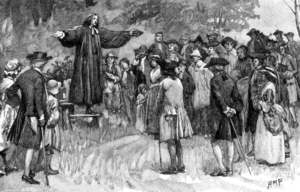


Door #1: Latter-day revelations speak of hell in at least two ways. First, it is another name for spirit prison, a temporary place in the postmortal world for those who died without a knowledge of the truth or those who were disobedient in mortality. Second, it is the permanent location of Satan and his followers and the sons of perdition, who are not redeemed by the Atonement of Jesus Christ.

Door #2: The Book of Mormon teaches that hell is real. It is guilt and pain and anguish and torment, an inexpressible horror, which is like an unquenchable fire. It is despair. It is weeping and wailing and gnashing of teeth. Sadly, for some that condition is forever. For most, however, hell is a temporary condition. By virtue of Christ’s atonement mankind can be freed from hell by yielding their hearts to God and coming unto Christ. Eventually, all except the devil and his angels and those who have dwelt in mortality and become sons of perdition will be redeemed from hell.


