
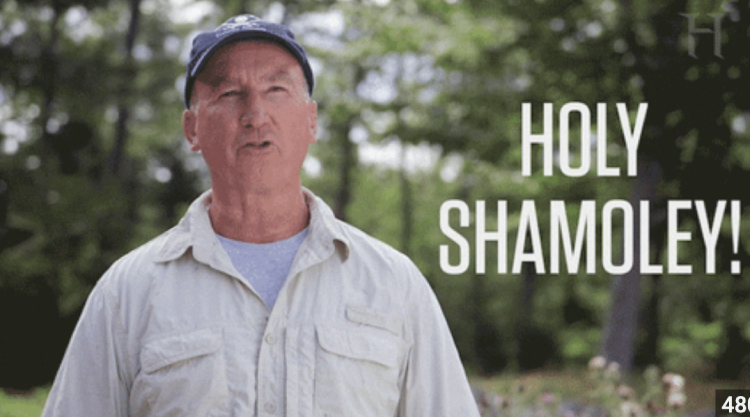
When Gary Drayton sweeps his metal detector across Oak Island’s contested soil, millions of viewers hear History Channel announcers breathlessly introduce him as the “metal detecting expert.” With his Lincolnshire accent, cheerful catchphrases, and seemingly uncanny ability to locate artifacts on cue, Drayton has become the charismatic face of treasure hunting on American television. But what exactly qualifies this affable Englishman as an “expert” worthy of such billing on one of cable’s most-watched documentary series?
The answer, it turns out, is far more complex than the show’s producers would have you believe—and raises uncomfortable questions about credentialism, showmanship, and the increasingly blurred line between genuine expertise and manufactured television personalities.
The Making of a “Ninja”
Gary Drayton’s origin story has the romantic simplicity that television producers crave. Born May 30, 1961, in Grimsby, Lincolnshire—once the world’s largest fishing port—young Gary spent his formative years “mudlarking” along English riverbanks. This Victorian-era practice involved trudging through tidal mud searching for historical discards: clay pipes, bottles, pottery shards. According to multiple biographical sources, Drayton attended Sir John Franklin School in Spilsby but never pursued higher education. His LinkedIn profile lists his formal education as ending with secondary school, with no university attendance, no archaeological training, and no professional certifications in historical preservation or artifact identification (https://www.linkedin.com/in/gary-drayton-92699353/).
Where most archaeologists spend years earning degrees and certifications, Drayton describes his credentials as coming from the “School of hardcore beach and water hunting”—a self-styled education that essentially translates to: he taught himself through trial and error.
From Bottles to Beaches
In 1989, Drayton relocated to South Florida, where the trajectory of his unconventional career truly began. Armed with what he describes as an “old army metal detector,” he took to the beaches where Spanish treasure ships had wrecked centuries earlier. His first significant find—a Spanish silver Piece of Eight—came on his inaugural outing. Months later, he discovered a 22.5-karat gold ring set with Colombian emeralds from the 1715 Spanish Fleet, eventually valued at approximately $500,000.
This discovery became Drayton’s calling card, the “bobby dazzler” that would launch a thousand television appearances. He began photographing his finds and posting them to social media, catching the attention of metal detector manufacturers and treasure magazines. Eventually, Hollywood came calling. Before Oak Island, Drayton appeared on shows including Discovery Channel’s “Expedition Unknown” and “Curse of Civil War Gold,” steadily building his television resume.
The “Expert” Designation
But here’s where investigative scrutiny becomes necessary: What makes Gary Drayton an “expert” beyond his obvious success at finding things?
In academic and professional archaeology, expertise comes with formal education, peer-reviewed research, and professional certifications. Archaeologists typically hold master’s degrees or PhDs, undergo fieldwork training, and must demonstrate competency in artifact preservation, historical context, dating methodologies, and scientific documentation. They work within ethical frameworks established by organisations like the Archaeological Institute of America and must obtain permits for excavation work.
Drayton possesses none of these credentials. He has no formal training in archaeology, history, or material culture studies. His knowledge base comes entirely from personal experience—what he’s learned by doing, reading, and presumably, making mistakes along the way. On the specialised metal detecting forum TreasureNet, one user observed that Drayton’s “knowledge in not only detecting but also in the items he has recovered is… ‘overrated’… But you cannot blame him for playing the cards he has been dealt.”
The Self-Made Success Story
To be fair, Drayton’s lack of formal credentials doesn’t negate his practical accomplishments. He has authored multiple instructional books on treasure hunting, including “Metal Detecting for Spanish Treasure,” “Hardcore Beach Hunting,” and “How to Read the Beach and Water.” He offers private metal detecting lessons in Florida, reportedly earning substantial income from students eager to learn his techniques. His estimated net worth sits between $2 million and $3 million, built through television appearances, book sales, merchandise, and, of course, the monetary value of his finds (https://www.history.co.uk/shows/the-curse-of-oak-island/four-fascinating-facts-about-curse-of-oak-island-s-gary-drayton).
The late Bob Weller, a respected 1715 Spanish Fleet salvager, famously complimented Drayton for possessing the crucial “three P’s”: patience, persistence, and perseverance. This represents perhaps the closest thing to a professional endorsement Drayton has received from someone with established credentials in the field.
Television’s Version of Expertise
The reality television industry has always maintained a complicated relationship with credentialism. Producers understand that audiences crave authoritative voices, but they also know that “expert” designations boost a show’s perceived legitimacy and educational value. Whether someone is formally qualified becomes secondary to whether they can deliver compelling television.
Drayton undeniably delivers. His enthusiasm proves infectious, his “Holy Shamoly!” exclamations have become catchphrases, and his ability to identify objects on camera—whether accurately or not—keeps the narrative moving forward. For History Channel’s purposes, Drayton’s track record of finds, combined with his camera-ready personality, apparently suffices as “expertise.”
But this raises ethical questions about how cable networks present information to viewers. When the History Channel stamps someone with the “expert” label, audiences reasonably assume some form of professional vetting has occurred. The network benefits from Drayton’s perceived authority—it lends credibility to the show’s increasingly speculative treasure theories—while sidestepping the question of whether self-taught experience alone constitutes genuine expertise in identifying historical artifacts.
The Bottom Line
Gary Drayton represents a quintessentially American success story: the self-made man who turned passion into profession without formal gatekeepers. His practical knowledge, accumulated through decades of fieldwork, shouldn’t be dismissed simply because it lacks institutional validation. Many of history’s greatest discoveries came from amateurs driven by curiosity rather than credentials.
Yet calling him an “expert” without qualification misleads audiences about the nature of his knowledge. Drayton is more accurately described as an exceptionally successful treasure hunter—a specialist in metal detecting technique with extensive practical experience, particularly with Spanish colonial artifacts from Florida waters. That’s impressive enough without the manufactured gravitas of academic expertise he never claimed to possess.
The designation says more about television’s hunger for authority figures than about Drayton’s actual qualifications. He’s made a career from genuine talent and undeniable enthusiasm. Whether that constitutes “expertise” in any meaningful sense remains a question that the History Channel would prefer viewers not to ask too closely.
For more on Gary Drayton’s background and finds, visit his official website at garydrayton.com or follow his continuing adventures on “The Curse of Oak Island” on the History Channel.