Place two of America’s most controversial religious movements side by side under the cold light of honest scrutiny, and what emerges is not merely comparison — it is a mirror. The parallels between Scientology and Mormonism are nothing short of startling.Both organizations guard their most unconventional teachings behind carefully constructed layers of secrecy, revealing sacred knowledge only after members have made substantial commitments — whether financial, spiritual, or both. Both have faced intense, sustained, and well-documented scrutiny from former members who describe feeling manipulated, psychologically controlled, and deliberately kept in the dark about practices that, had they known them at the outset, might have changed everything about their decision to join.
This last point carries particular weight when examining Mormonism, because the majority of its membership never actually made a free and informed decision to join at all. Most Latter-day Saints are what sociologists call “Cradle Mormons” — born into the faith, raised within its culture, socialized by its community, and shaped by its narratives long before they possessed the critical thinking tools to evaluate any of it objectively. They did not choose Mormonism so much as inherit it, absorbing its truth claims the same way a child absorbs a native language — naturally, unconsciously, and without any competing framework for comparison. By the time questions arise, decades of emotional investment, family loyalty, and social identity are already deeply intertwined with belief, making genuine, objective examination feel not just difficult, but dangerous.
From tiered knowledge systems and aggressive financial demands to the systematic silencing of critics and the veneration of charismatic founders, these two movements share a troubling blueprint. While mainstream Christianity faces its share of criticism, the sheer volume of ex-member testimonies, investigative documentaries, and whistleblower accounts targeting Scientology and Mormonism raises urgent questions that deserve honest examination. This article explores the uncanny similarities that reveal why thousands of former adherents from both groups have sounded the alarm—and why their warnings should not be dismissed.
Graded Knowledge
Beyond the tabloid headlines, the “dark truth” regarding the Church of Scientology is extensively documented through decades of lawsuits, affidavits, government investigations, and testimonials from high-ranking former members.
In Scientology, the structure of belief revelation is notoriously tiered, where core tenets and esoteric knowledge are disclosed only after members have committed substantial financial resources. The Church of Scientology employs what’s known as the “Bridge to Total Freedom,” a series of progressively expensive courses and auditing sessions that purportedly lead to spiritual enlightenment. However, the most controversial and secretive teachings, such as those involving Xenu, the Galactic Confederacy, and Thetans, are reserved for the highest levels of membership, known as Operating Thetan levels, which can cost hundreds of thousands of dollars to reach. This system not only maintains secrecy but also fosters a sense of exclusivity and commitment among those who have paid to advance.
In this video, Chris Shelton — a former Scientologist and outspoken critic of the organization — breaks down the specific steps of the upper half of Scientology’s Bridge to Total Freedom. Originally developed by L. Ron Hubbard in the mid-1960s, the Bridge represents the sequential path every Scientologist is expected to follow on their supposed journey toward spiritual immortality. Shelton’s firsthand experience as an insider gives him a unique and credible vantage point from which to examine these teachings. His analysis reveals not only what Scientology promises its most devoted members, but also the steep financial and personal costs required to reach the upper levels of this highly controlled spiritual hierarchy.
Baptism among the Mormons. 19th-century engraving. Unknown Artist. Via Getty Images. Out of copyright, Rights Managed.
Similarly, Mormonism — officially known as The Church of Jesus Christ of Latter-day Saints — practices a distinctive form of religious secrecy surrounding its temple rituals. While the Church’s basic doctrines and Sunday worship services are open to the public, certain sacred rites and ceremonies performed inside LDS temples are deliberately kept confidential. Faithful members consider these ceremonies so sacred that to reveal or discuss them openly would be to defile and profane their holy character. This is not mere institutional policy — it is a deeply held spiritual conviction that the temple represents the most consecrated space on earth, and that its ordinances must be zealously guarded from casual or irreverent exposure.
The restricted ceremonies include the Endowment, a multi-part ritual involving symbolic washing and anointing, the receiving of special temple garments worn beneath everyday clothing, and the making of solemn covenants with God. Also performed in temples are celestial marriage sealings — eternal marriage ceremonies believed to bind spouses and families together beyond death — and proxy ordinances performed on behalf of deceased ancestors, a practice unique to LDS theology.
Only members who have passed a series of formal worthiness interviews — conducted by both a local bishop and a stake president — are granted a temple recommend, the physical card that grants access to these rites. These interviews evaluate adherence to Church standards, including full tithe payment, sexual morality, and loyalty to Church leadership. Even then, the ceremonies themselves are typically explained only in vague, general terms beforehand, leaving many first-time temple attendees unprepared for what they will experience inside. Critics have argued that this carefully maintained secrecy creates an environment in which members cannot make fully informed decisions about participation. This concern becomes all the more acute given the Church’s eternal significance it attaches to these ordinances.
This approach to secrecy in both religions can be seen as manipulative because it withholds critical information from potential converts until after they have made significant commitments, either financially or through baptism and lifestyle changes. In Scientology, the financial commitment can be immense, leading individuals to invest in a path they might not fully understand or agree with if all information were available upfront. In Mormonism, the secrecy around temple rituals means that converts might not fully comprehend the spiritual and cultural implications of their conversion until they are deeply integrated into church life. This can lead to a sense of betrayal or confusion if the practices do not align with their expectations or personal beliefs once they are finally revealed. Such practices raise ethical questions about informed consent and the right of individuals to make fully informed decisions regarding their spiritual lives.
Financial Pressure
The Church of Scientology operates under a unique “pay-to-progress”system, where members must pay substantial fees to advance through its spiritual hierarchy. The structure of Scientology is designed around the “Bridge to Total Freedom,” a series of levels that purportedly lead to higher states of spiritual awareness and personal freedom. Each step on this bridge, from basic auditing sessions to advanced Operating Thetan (OT) levels, comes with a price tag that can accumulate into tens or even hundreds of thousands of dollars over time. For instance, the cost of the OT levels, which are considered the pinnacle of Scientology’s spiritual teachings, can be extremely high, with OT VIII alone reportedly costing upwards of $10,000. This financial commitment is not just a barrier to spiritual growth but also a significant economic burden on members, especially those who seek the “truths” at the highest echelons of the church’s doctrine. The financial aspect is often criticized as a means of control, where the promise of deeper understanding or personal betterment is dangled in front of members, contingent on their ability to fund their spiritual journey.
Scientology adheres to the Gnostic belief that we are spiritual beings trapped in the physical universe of matter, energy, space, and time (called the MEST universe in Scientology). Thetan is the Scientology word for spirit. An “operating” thetan is believed to be “cause” over matter, energy, space and time, and can “operate” and affect the MEST universe without needing a body. The actual “OT Levels” have been published on line, and can be found with an internet search. They are fanciful and obscure, and read like science fiction. Scientologists believe that they will attain paranormal abilities when they reach “OT,” although such abilities have never been demonstrated or proven. The OT Levels up to 8 have been released, and Scientology promotes that there are 15 OT levels in all, although former insiders say that levels above 8 do not exist.
In contrast, The Church of Jesus Christ of Latter-day Saints (LDS Church) does not have a direct pay-to-progress system for accessing core religious teachings or rituals. However, the principle of tithing, which mandates that members give 10% of their income to the church, can place considerable financial pressure on adherents. This practice is not just about financial sacrifice; it’s a requirement for temple worthiness.
In the doctrine of The Church of Jesus Christ of Latter-day Saints, paying a full tithing (10% of annual increase) is considered a, if not the, fundamental commandment required to hold a temple recommend. A temple recommend is essential for entering the temple, where ordinances deemed necessary for exaltation in the highest degree of the celestial kingdom are performed.
Tithing in the Church of Jesus Christ of Latter-day Saints is not merely encouraged. It is, in practice, required — though the mechanism by which that requirement operates deserves careful examination.
To obtain a temple recommend, a member must meet with their bishop for a private interview. Among the standard questions is one regarding tithing: specifically, whether the member considers themselves a full-tithe payer. LDS leadership has been careful, at the institutional level, to define a “full tithe” as ten percent of one’s “increase” — a term deliberately left open to individual interpretation. General Authorities have occasionally acknowledged that members may prayerfully determine what “increase” means in their own circumstances. In that narrow sense, the Church does not formally mandate a mathematically precise ten percent of gross income from every member in every situation.
But that institutional nuance rarely survives the bishop’s office. In practice, the temple recommend interview creates a binary outcome — recommend granted or recommend withheld — and the implied assumption underlying the tithing question is a full ten percent. Few bishops probe the theological subtleties of increase with their congregants. Few members leave that interview believing that nine percent, or a tithe calculated on net rather than gross income, will satisfy the requirement. The ambient teaching — reinforced across decades of General Conference addresses, Sunday School curriculum, and youth instruction — is clear: ten percent, paid consistently, is what faithfulness looks like. The doctrinal flexibility exists on paper. The social and ecclesiastical pressure points in only one direction.
The stakes of that pressure are not trivial. In LDS theology, the temple endowment and the sealing ordinance are not optional enhancements to salvation — they are prerequisites for exaltation in the Celestial Kingdom, the highest of three degrees of glory in the LDS afterlife. The other two — the Terrestrial and Telestial Kingdoms — represent lesser degrees of eternal reward, reserved for those who were honorable but not fully faithful, or who rejected the gospel altogether. Only the Celestial Kingdom offers what LDS theology calls exaltation: eternal progression, the presence of God the Father, and the continuation of the family unit throughout eternity. It is not merely the preferred destination. Within the believing Latter-day Saints’ framework, it is the only destination that fulfills the entire purpose of mortal life, and access to it runs directly through the temple recommend that a full tithe makes possible.
A member who cannot obtain a temple recommend is not merely inconvenienced; they are, by the internal logic of LDS doctrine, excluded from the highest eternal reward their faith offers.
Money may be the root of all evil, but, for Mormons, it also provides a pathway to the highest heaven.
That’s because to gain access to the sacred spaces and saving rituals of a Mormon temple, LDS believers must donate 10 percent of their income to the church.
No payment? No entrance.
“You can earn [a place in the presence of our Father in Heaven],” LDS apostle Marion G. Romney once said, “by observing faithfully day by day, and year by year, the law of tithing and the other requirements of the gospel of Jesus Christ.”
The Utah-based faith earns billions from commercial ventures every year beyond what it collects in member contributions, says Michael Quinn, whose latest book, “The Mormon Hierarchy: Wealth and Corporate Power,” explores the world of Mormon money. “But if you cut out tithing, the reserves would be depleted within a relatively short time.”
Dissident Voices
The sheer volume of cautionary tales and critical accounts from former members of both Mormonism — officially known as The Church of Jesus Christ of Latter-day Saints — and Scientology serves as a significant red flag regarding the inner workings and ethical practices of these organizations. These warnings are not the isolated grievances of a disgruntled few. They represent a broad, consistent, and well-documented pattern of testimony from individuals who lived inside these institutions for years, and in many cases, for decades. Their accounts consistently focus on psychological manipulation, authoritarian control, financial exploitation, and hidden or controversial practices that prospective members are never told about upfront. When thousands of independent voices — spanning different countries, cultures, and generations — tell remarkably similar stories of coercion and disillusionment, intellectual honesty demands that those accounts be taken seriously. They are vital to consider when evaluating the true nature, culture, and human impact of these organizations.
Mormonism
Ex-Mormons frequently share experiences of feeling profoundly misled — even betrayed — by an institution they trusted with their deepest spiritual convictions, their finances, and in many cases, their entire sense of identity. For countless former members, the unraveling begins not with a crisis of faith, but with a crisis of information. Historical facts that the Church quietly omitted or carefully sanitized begin to surface: the disturbing complexities of Joseph Smith’s personal life, including his secret polygamous marriages to teenage girls and other men’s wives; the Church’s deeply troubling 19th and 20th century racial policies that barred Black members from the priesthood and temple until 1978; and the gap between the idealized founding narrative taught in Sunday School and the far more troubling historical record documented by credible historians.
The pressure to conform runs deep and is rarely subtle. Members are expected to observe a strict code of personal conduct known as the Word of Wisdom — abstaining from alcohol, coffee, tea, and tobacco — while also adhering to exacting standards of dress, language, media consumption, and social association. But the pressure extends far beyond lifestyle rules. Members are quietly discouraged from questioning Church leadership, studying unauthorized historical sources, or voicing doubts openly, with the unspoken understanding that persistent questioning signals a spiritual deficiency rather than an honest intellectual pursuit. Doubt, in LDS culture, is not a doorway to deeper faith — it is a warning sign to be confessed and corrected. For those who cannot silence their questions, the social consequences can be devastating: strained marriages, fractured family relationships, and the slow suffocation of an identity built entirely within the walls of a community that demands absolute loyalty in return for belonging.
The emotional wounds cut even deeper for LGBTQ members and women navigating the Church’s rigid positions on sexuality and gender roles. For LGBTQ Latter-day Saints, the experience of simply existing within the Church’s doctrinal framework carries a documented psychological toll. A peer-reviewed study found that 75.2% of LGBTQ LDS participants experienced guilt and shame directly linked to their religious beliefs about their own identity. Peer-reviewed research further confirms that the conflict between sexual identity and LDS doctrine is a measurable risk factor for depression and suicidality among young members. In past decades, BYU students who privately sought help from Church leaders regarding their sexuality were, in some cases, referred to electroconvulsive conversion therapy — an experience survivors describe as both physically painful and deeply humiliating. And when the Church issued its 2015 policy labeling members in same-sex marriages as apostates and barring their children from baptism, the LDS LGBTQ community experienced what the president of Affirmation described as widespread psychological trauma, with a documented spike in youth suicides that drew national media attention.
No examination of Mormon defectors can be complete without beginning with Jerald and Sandra Tanner, the husband-and-wife team who essentially created the field of critical Mormon studies as a sustained scholarly enterprise spanning multiple decades of dedicated research.
Women in the Church face a parallel — if quieter — form of institutional marginalization. Mormon women cannot hold the priesthood, cannot exercise financial authority without male supervision, cannot establish budgets for their own organizations without a bishop’s approval, and were not even consulted before the Church’s foundational “Proclamation on the Family” was issued in their name. The Church vigorously opposed the Equal Rights Amendment in the 1970s and excommunicated outspoken feminist advocate Sonia Johnson for daring to challenge its patriarchal power structure.
And for those who finally walk away, the stories are rarely simple — as documented in our essay, “The Most Prominent Latter-day Saint Defectors: Who? Why? Where?“ — where the journeys of twenty of the most prominent individuals who left the LDS Church reveal a recurring pattern of disillusionment, doubt, and courageous departure. The temple ceremonies, once revered as the most sacred experiences of their lives, can transform into haunting symbols of manipulation — rituals they were never honestly prepared for, never given the full theological context to evaluate, and never truly free to refuse without risking the loss of family relationships, community standing, and their eternal standing before God.
Scientology
Similarly, former Scientologists have produced a staggering volume of testimony about the manipulative and often predatory tactics employed within the organization. The notorious “Fair Game” policy — codified in writing by L. Ron Hubbard himself — formally authorized the targeting of critics and defectors with harassment, character assassination, surveillance, and legal warfare. Under Fair Game, those declared “Suppressive Persons” by the Church are considered, in Hubbard’s own words, to have “no rights of any kind” and may be “tricked, sued, lied to, or destroyed” without discipline from the organization. Courts have confirmed the policy’s existence and ongoing use, with attorneys documenting systematic harassment campaigns against former members as recently as 2024.
The auditing process — marketed to recruits as a transformative path to personal enlightenment — carries a far darker dimension that only becomes apparent from the inside. Auditing sessions require members to disclose their most intimate secrets, fears, and past transgressions, all of which are meticulously recorded and kept on permanent file by the Church. Former members consistently report that this personal information is weaponized against those who later attempt to leave or speak out — functioning not as a confessional, but as an institutional blackmail archive.
The Sea Organization — Scientology’s elite clergy — represents perhaps the most disturbing dimension of the organization’s labor practices. Members of the Sea Org are required to sign a symbolic billion-year contract and routinely work in excess of 100 hours per week for compensation that has been documented at as little as pennies per hour. Lawsuits filed in California and elsewhere have accused the Church of human trafficking and forced labor, with plaintiffs describing conditions beginning as young as age ten. Members who attempt to leave are frequently presented with a “Freeloader Bill” — invoices for training and auditing received during their service, totaling in some documented cases over $180,000, a financial trap deliberately designed to make departure feel economically impossible.
The financial demands of ascending Scientology’s “Bridge to Total Freedom“ are equally staggering. The full cost of progressing through all auditing levels and courses has been estimated at $300,000 to $500,000 or more, with members routinely pressured by Church registrars to take out loans, liquidate retirement savings, and max out credit cards to fund their spiritual advancement. The promise of revelation at the upper levels of the Bridge — including the closely guarded secrets of OT III, Hubbard’s cosmological narrative about the galactic overlord Xenu — is dangled just far enough ahead to keep members financially committed, spiritually dependent, and psychologically invested in a journey that the Church ensures they can never quite complete.
Mike Rinder, a former upper-level Scientologist, discusses how Scientology is rife with doctrine that not only conflicts with societal and cultural norms but flies in the face of common sense. Rinder spent nearly five decades inside the Church of Scientology, rising to serve as a member of its highest governing body, the Sea Organization, and as the church’s global spokesperson — making him one of the most authoritative voices to ever speak out against the institution he once defended. Sadly, Rinder passed away on December 5, 2024, leaving behind a legacy as one of Scientology’s most courageous and consequential critics, whose candid testimony helped untold numbers of people understand the manipulative systems at the heart of the organization.
It’s all on You, Dude
Ex-Scientologist Mike Rinder, who was completely rejected by his entire family after leaving the Church of Scientology, knows firsthand the cost of walking away from a high-control group. He discusses cognitive dissonance in his blog: “Anybody who’s ever been affiliated with a religion has experienced cognitive dissonance in spades. Cult members face this phenomenon on a daily basis.”
LRH carefully crafted Scientology so that when members ran into therapy technique and church policy that didn’t make sense—cognitive dissonance—they would blame themselves for any discord they felt. Feelings of doubt, dissension, or disharmony were the result of something they did, some misunderstood word they bypassed, some crime they committed, were withholding, and didn’t want revealed.
LRH knew his tech was flawed and that most of his theories flew in the face of conventional science. And therefore, he kept having to formulate and adjust tech and policy to counter members’ cognitive dissonance. When that didn’t work, he eventually became a crazy recluse—which is another prime example with which Scientologists are forced to contend. If the man was such a powerful thetan—the biggest spiritual being on the planet—why did he go into hiding and eventually die a sick and broken man? How do church members reconcile that? The answer: Just like those cult members who had to bend their minds around a world not destroyed by flood, Scientologists are taught to believe that LRH had to “drop his body” in order to handle the rest of the universe.
Cognitive dissonance makes it extremely difficult to talk reasonably with members of a cult, as they’ve been trained to justify what they’ve been taught with one, crazy, harebrained excuse after another. Everything from prohibiting blood transfusions, to females not showing their faces in public, to believing that millions of years ago, at the behest of an evil galactic overlord, our spiritual selves were frozen and shipped to Earth in spaceships looking like old DC-8s—and oh yeah…dropped into volcanoes.
Additional comparisons
Claims of Exclusivity and Unique Statuses
Both Scientology and Mormonism make a breathtaking claim — that they alone possess the divine keys to ultimate spiritual or philosophical truth, eternal progression, and a salvation unavailable anywhere else on earth. This carefully cultivated aura of exclusivity is no accident. It is a foundational architectural feature of both systems, designed to distinguish the initiated from the uninitiated, the worthy from the unworthy, the enlightened from the spiritually blind.
The promise of secret knowledge and elevated status is, in both traditions, among the most powerful psychological tools in the institutional arsenal. For those on the inside — those who have paid the price of admission through conformity, compliance, and financial sacrifice — it forges an intense sense of belonging, a conviction that they are among the chosen few who have glimpsed what the rest of humanity cannot see. That bond can feel intoxicating. It can also become a prison.
For those who fall short — who cannot afford the next level, who fail the worthiness interview, who begin to ask the wrong questions — the message is equally powerful and far more devastating: you are not enough. The same exclusivity that unites the inner circle quietly marginalizes, shames, and alienates those on its edges. Families are fractured. Friendships dissolve along invisible lines of spiritual rank. And individuals who dare to walk away often find themselves cut off not only from their community, but from their entire sense of identity and purpose.
This dynamic demands a reckoning. When spiritual exclusivity becomes a mechanism of control — when the promise of divine knowledge is leveraged to retain members through fear, shame, and social isolation rather than genuine transformation — the ethical foundations of that system deserve unflinching scrutiny.
Mormonism
According to Joseph Smith’s 1838 account of the First Vision, he was told by Jesus Christ that all existing Christian churches were wrong and their creeds were “an abomination in his sight”. The professors were described as corrupt, teaching commandments of men while denying the power of godliness. This necessitated a “restoration of all things.” The phrase “restoration of all things” is not explicitly stated in the 1838 First Vision account itself — it is a theological conclusion drawn from the broader Latter-day Saint restoration narrative.
Mormonism makes a claim so audacious that it staggers the imagination: that every Christian church on the face of the earth fell into total apostasy shortly after the death of the original apostles, that the true Gospel of Jesus Christ was lost to mankind for nearly two thousand years, and that God Himself chose an obscure, nineteen-year-old farm boy in upstate New York to single-handedly restore it. That young man was Joseph Smith — and according to LDS theology, his divine commission was not merely to reform a corrupted church or revive a dormant faith. It was to rebuild the Kingdom of God from the ground up, brick by brick, revelation by revelation, as the sole authorized representative of the Almighty on earth.
This claim of exclusive divine authority is not a peripheral feature of LDS theology. It is its beating heart. The Church of Jesus Christ of Latter-day Saints does not present itself as one valid Christian tradition among many. It presents itself as the only true church — the singular institution bearing the restored priesthood authority, the only organization through which saving ordinances can be performed and recognized by God. Every other denomination, however sincere, however ancient, however theologically rich, is regarded as operating without divine authorization.
But the theological ambition of Mormonism reaches far beyond even this extraordinary claim. At the summit of LDS doctrine stands a teaching so radical that it remains largely concealed from investigators and new converts until they are deeply embedded in the faith: the doctrine of exaltation, or eternal progression. Faithful Latter-day Saints who honor their covenants, endure to the end, and attain the Celestial Kingdom’s highest degree do not merely enter heaven — they become gods. They inherit their own worlds. They create spirit children. They preside over eternal kingdoms as divine beings, following a path blazed by the very God they worship — who was once, according to the famous Sermon in the Grove delivered by Joseph Smith in 1844, a mortal man Himself.
Undergirding all of this is the Church’s insistence that its living prophet — currently the President of the Church — receives direct, binding revelation from God in real time, distinguishing LDS leadership from every other Christian denomination on earth. The prophet speaks. Heaven listens. And the faithful are expected to follow without hesitation, trusting that the man at the podium in General Conference carries the full weight of divine authority behind every word.
It is a theological architecture of breathtaking scope — and one that demands the most rigorous and unflinching scrutiny.
Scientology
Scientology does not present itself as a religion in any conventional sense — and that distinction is entirely by design. Instead, it boldly positions itself as a spiritual technology: a precise, systematic, and purportedly scientific pathway to total spiritual freedom, built not on the shifting sands of faith or belief, but on what its founder, L. Ron Hubbard, claimed were immutable, empirically verifiable laws of the human mind and spirit. Where Christianity asks you to believe, Scientology promises to prove. Where other traditions offer hope, Scientology offers a procedure. It is, in Hubbard’s own framing, nothing less than the first truly workable science of the human soul — and it will cost you everything to find out if he was right.
Scientology’s “spiritual technology” Dianetics (1950s) was transformed into a formal, trademarked religious system, utilizing engineering terms like “Standard Operating Procedure” (SOP) to describe auditing and training. It transitioned from a mental therapy to a spiritual practice aimed at addressing the soul (theta), with the E-meter serving as a key technological tool to measure emotional states. This “Standard Tech” is now managed by the Religious Technology Center to ensure precise application and orthodoxy.
At the center of Scientology’s cosmology sits a revelation so breathtaking, so world-historically transformative, that one can only marvel at the stunning incompetence of every philosopher, theologian, scientist, and spiritual teacher who ever lived for failing to stumble upon it first. Socrates missed it. Aristotle missed it. Augustine, Aquinas, Kant, Hegel, Einstein — all of them, apparently, just not quite smart enough. It took a pulp science fiction writer from Tilden, Nebraska, to finally crack the code of human existence that had eluded the combined intellectual firepower of civilization for several thousand years.
Ever wonder what a soul looks like after trillions of years? We fired up Google Gemini’s Nano Banana image model to visualize cosmic intelligences spanning countless lifetimes, and the results are absolutely out of this world! Unlocking the universe’s oldest secrets, one pixel at a time.
The revelation? Every human being is, at their core, an immortal spiritual being called a thetan — an entity of virtually limitless power and perception that has become tragically imprisoned within the prison of its own forgotten history. Presumably, the greatest minds in human history were simply too busy developing mathematics, medicine, democracy, and the theory of relativity to notice that they were actually ancient cosmic intelligences operating inside meat-based vehicles. One shudders to think what Plato might have accomplished had he only had access to an e-meter.
Thetans, according to Hubbard, are not merely old souls carrying the wounds of this lifetime. They are cosmic intelligences who have lived trillions of years across countless lifetimes — including, critically, lifetimes within extraterrestrial civilizations whose catastrophic traumas are still lodged, invisibly and devastatingly, within the unconscious mind. That this staggering truth escaped the attention of every neuroscientist, psychologist, and spiritual master in recorded history is, we are apparently expected to accept, simply one of those things.
These accumulated traumas — called engrams — are the source of every human limitation, every irrational fear, every chronic failure, every disease of the body and dysfunction of the mind. They are the chains. And Scientology, it claims, holds the only key.
That key is auditing — a metered, one-on-one counseling process in which a trained auditor guides the subject through the systematic identification and erasure of engrams using a device called an E-meter, which measures subtle changes in the body’s electrical resistance. Session by session, level by level, the faithful Scientologist ascends The Bridge to Total Freedom — a carefully mapped hierarchy of spiritual grades that promises progressively extraordinary rewards: relief from anxiety, then clarity of mind, then the recovery of past-life memories, and finally, at the summit of the Bridge, the awesome and terrifying threshold of Operating Thetan.
The OT levels — particularly the notorious OT III — are among the most closely guarded secrets in contemporary religion. Reaching them requires years of auditing, absolute institutional loyalty, and expenditures that frequently exceed hundreds of thousands of dollars. What awaits at OT III is Hubbard’s account of Xenu, a galactic overlord who, 75 million years ago, allegedly transported billions of beings to Earth, destroyed them with hydrogen bombs, and implanted their disembodied souls — called body thetans — into the survivors, where they remain attached to human beings to this day, silently compounding their misery. At the upper OT levels, members are promised the recovery of abilities that defy the laws of physics: the capacity to control matter, energy, space, and time through thought alone — to operate, at last, as the godlike beings Hubbard insisted they always were.
It is a narrative of breathtaking ambition. It is also a narrative strategically designed so that its most extraordinary — and most scrutinized — claims are revealed only after years of financial investment, psychological conditioning, and social isolation from anyone who might call those claims into question.
Criticisms of Scientology and the LDS Church
Focus of Criticism
The criticisms leveled against both Scientology and the LDS Church are neither fringe complaints nor the invention of hostile outsiders. They are substantive, well-documented, and shared by thousands of former members, independent historians, investigative journalists, and credentialed scholars who have examined these organizations with serious scholarly rigor.
Scientology faces perhaps the most severe institutional indictment of any organization operating under the legal protection of religious status in the modern era. Critics — including former high-ranking officials who spent decades at the organization’s inner core — paint a portrait of a system architected from the ground up around financial extraction and psychological dependency. The tiered belief structure of the Bridge to Total Freedom is not merely a spiritual ladder; it is a revenue engine, deliberately designed so that the most tantalizing promises of enlightenment are always one enormously expensive step beyond the member’s current reach. The accusations of mind control are not metaphorical. Former members describe a sophisticated apparatus of thought-stopping techniques, sleep deprivation, social isolation, and information control that systematically dismantles a member’s capacity for independent critical thinking. And for those who finally summon the courage to walk away, the organization’s response has been documented repeatedly in court records and investigative journalism: surveillance, harassment, the weaponization of auditing disclosures, and the destruction of personal and professional reputations with ruthless institutional efficiency.
The LDS Church operates with considerably more cultural respectability— and in many respects deserves it. Its members are, by and large, among the most generous, community-minded, and morally earnest people in American religious life. But respectability does not immunize an institution from scrutiny, and the criticisms directed at the Church are serious and historically grounded. The Book of Mormon’s claimed historical narrative — ancient Israelites sailing to the Americas and building civilizations that left no trace in the archaeological or genetic record — has been examined exhaustively by secular and believing scholars alike, with no corroborating physical evidence discovered despite nearly two centuries of searching. The Church’s historical concealment of its temple ceremonies raises profound questions about informed consent, particularly when those ceremonies contain elements — including, until 2019, a ritual throat-slitting gesture symbolizing the penalty for revealing sacred oaths — that members are never warned about before their first temple visit. And the Church’s 19th-century practice of polygamy, including the documented marriages of Joseph Smith to women as young as fourteen and to wives already married to living husbands, remains an open historical wound that institutional cordiality cannot close.
Both organizations demand an uncomfortable but necessary question from anyone willing to look honestly: When the gap between what an institution proclaims and what it practices becomes wide enough, at what point does faith become complicity?
Orders of Magnitude
The scale of criticism leveled against both Scientology and the LDS Church is not merely substantial — it is overwhelming, relentless, and impossible to dismiss as the product of bias or bad faith. What has emerged over decades is nothing short of a vast, converging chorus of dissent: thousands of books, investigative documentaries, academic studies, court filings, government inquiries, and the raw, unfiltered testimonies of former members who walked away from everything they had ever known to tell the truth about what they experienced inside.
Leah Remini: Scientology and the Aftermath was an Emmy-winning A&E docuseries (2016–2019) where actress Leah Remini and former high-ranking member Mike Rinder exposed alleged abuse and the policy of “disconnection” within the Church of Scientology. The show ran for 3 seasons, winning two Primetime Emmys for Outstanding Informational Series.
For Scientology, the indictment is sweeping. Pulitzer Prize-winning journalist Lawrence Wright’s Going Clear — later adapted into an HBO documentary that shook the entertainment world — methodically dismantled the organization’s claims and exposed the machinery of control beneath them. Janet Reitman’s Inside Scientology offered a decade of investigative reporting distilled into a damning institutional portrait. The Emmy Award-winning television series Leah Remini: Scientology and the Aftermath gave voice to survivor after survivor, episode after episode, season after season — each account more harrowing than the last. These are not fringe voices whispering from the margins. These are documented, corroborated, legally tested accounts that have withstood enormous institutional pressure to be silenced.
For the LDS Church, the critical literature is equally vast. From Fawn Brodie’s landmark 1945 biography No Man Knows My History to the modern investigative journalism of The Salt Lake Tribune — a Pulitzer Prize-winning newspaper that has dedicated decades to holding the institution accountable — the documented concerns about LDS truth claims, financial opacity, and institutional control span generations and disciplines. Websites such as MormonThink and the CES Letter have reached millions of current and former members with carefully sourced historical and doctrinal challenges that the Church has never meaningfully answered.
When criticism reaches this magnitude — when it spans continents, generations, courtrooms, newsrooms, and the personal histories of hundreds of thousands of ordinary men and women — it ceases to be criticism at all. It becomes a reckoning.
In contrast to Orthodox Christianity
Criticism of Christianity wasn’t always met with polemic diatribes and apologetic dissertations. The massacre and broader Albigensian Crusade (1209–1229) were directly initiated by Pope Innocent III to eliminate the Cathars (Albigensians) in southern France, who were viewed as heretics due to their, in the eyes of Rome, fundamental criticism and rejection of Catholic doctrine, sacraments, and hierarchy. Via Wikipedia. Public Domain.
Traditional orthodox Christianity, by contrast, occupies a fundamentally different position in the landscape of religious criticism. Critique of Christianity is ancient, diverse, and genuinely wide-ranging — originating from atheists, agnostics, secular philosophers, adherents of competing world religions, and even from reform movements within Christianity itself. It encompasses sweeping questions about the historical reliability of Scripture, the philosophical coherence of a triune God, the problem of evil and suffering, and the complicated legacy of the institutional Church across two millennia of history. These are serious questions, and honest Christianity has never been afraid to engage them.
But there is a crucial distinction that must not be overlooked. The criticism directed at Christianity, however voluminous, is largely theological and philosophical in nature. It debates ideas — the resurrection, the canon, the atonement, the existence of God. It does not, in the main, center on allegations of systematic psychological manipulation, financial exploitation, coercive exit penalties, government investigations, or the deliberate concealment of institutional practices from members who have given their lives to the faith.
The criticism aimed at Scientology and the LDS Church, by contrast, is concentrated, structural, and deeply personal. It is not primarily a debate about metaphysics. It is a documented indictment of organizational behavior — of what these institutions do to people, not merely what they believe about God. That distinction matters profoundly. Christianity has faced two thousand years of intellectual challenge and emerged with its core claims still standing. The question for Scientology and Mormonism is not whether their theology can survive scrutiny — it is whether their institutions can survive accountability.
Here’s why the difference exists
It’s important to note that both the LDS Church and Scientology have their defenses against these criticisms, and many of the claims are contested. Numerous books, documentaries, and testimonies from former members of both organizations have brought scrutiny to their secretive practices, financial demands, and allegations of control over members’ lives. For Scientology, high-profile defectors like Leah Remini have brought attention to what they describe as coercive practices, including disconnection from family members critical of the church and aggressive legal tactics against dissenters. Similarly, the LDS Church has faced criticism over its historical revisionism, the treatment of women and minorities within the church, and past policies like the exclusion of Black members from the priesthood until 1978.
10 Things common to both Scientology and Mormonism
Much of the foundational research informing this comparison draws upon the extensive documentation compiled by MormonThink, an independent website maintained by active and former Latter-day Saints committed to presenting an honest, balanced examination of LDS Church history and doctrine. While MormonThink’s original analysis provided the research framework and evidentiary foundation for this discussion, the descriptions, observations, and commentary presented in the following ten points have been independently researched, freshly written, and expanded with additional context and theological perspective. The goal is not merely to catalog surface-level similarities between Scientology and Mormonism, but to examine what those parallels reveal about the deeper structural and psychological dynamics at work within both organizations — and what they mean for the men and women navigating life inside them.
1 – Keeping secrets about the religion from its members
One of the most striking structural parallels between Scientology and Mormonism is the deliberate, staged concealment of each organization’s most controversial beliefs and practices from those on the outside — and even from members who have devoted years of their lives to the institution.
Scientology is uniquely transparent about its opacity. Prospective members and casual investigators are presented with a carefully curated public face — self-improvement courses, personality tests, and the accessible language of L. Ron Hubbard’s Dianetics — while the organization’s most theologically extraordinary claims remain locked behind years of costly advancement. Only members who have spent tens or hundreds of thousands of dollars ascending the Bridge to Total Freedom are gradually initiated into the deeper cosmological narrative, including the infamous OT III materials revealing Hubbard’s account of the galactic overlord Xenu and the origins of human suffering. Those who stumble upon these teachings prematurely are not celebrated for their curiosity — they are warned that unauthorized exposure to upper-level material can cause serious psychological harm. The secrecy is not incidental. It is the architecture.
Mormonism operates through a remarkably similar structure of graduated disclosure. Investigators attending missionary discussions and even lifelong Sunday-attending members are never informed about the full content of LDS temple ceremonies — the initiatory washings and anointings, the ceremonial robes, the secret names, or the elaborate system of signs, tokens, and passwords believed to be necessary for entrance into the celestial kingdom after death. The deep Masonic roots of the endowment ceremony — including elements such as the Five Points of Fellowship, a ritual posture borrowed directly from Freemasonry that was quietly removed from the ceremony in 1990 — are never disclosed to ordinary members, let alone to prospective converts. Joseph Smith was initiated into Freemasonry in March 1842, and within weeks had introduced the first version of the temple endowment, a chronological proximity that independent historians have found impossible to dismiss as a coincidence.
In both cases, the institutional logic is identical: reveal just enough to attract and retain, while reserving the most unusual — and most scrutinized — teachings for those already too financially, socially, and emotionally invested to walk away easily. It is a model that relies not on the strength of its secrets, but on the vulnerability of those from whom they are kept.
2 – You’ll be lost without us
One of the most telling indicators of an institution’s true spiritual health is not what it promises its members — it is what happens to those members when they finally leave.
The documentary record on former Scientologists is unambiguous. From Leah Remini: Scientology and the Aftermath to Going Clear to countless independently produced interviews and testimonials, a consistent pattern emerges: men and women who spent years — sometimes decades — inside Scientology describe the moment of departure not as spiritual devastation, but as liberation. They speak of breathing freely for the first time. Of laughing without guilt. Of rebuilding relationships that the organization had systematically dismantled. Of rediscovering a sense of self that had been slowly erased through auditing, conformity demands, and institutional surveillance. The happiness they describe is not the fragile, performance-based contentment of those still striving to reach the next level of the Bridge — it is the deep, hard-won relief of people who have escaped something that was consuming them.
The testimony of former Latter-day Saints tells a remarkably similar story. A visit to post-Mormon communities — on platforms such as Reddit’s r/exmormon, which boasts hundreds of thousands of members, or through the wealth of personal narratives collected at websites like ExMormon.org and TheMormonCurtain.com — reveals an overwhelming consensus among those who have left: life after the LDS Church, while often painful in transition, is experienced by the vast majority as profoundly more authentic, more joyful, and more free.
This is not a minor footnote. When the people who know an institution most intimately — who lived inside it, sacrificed for it, and built their entire identities around it — consistently report that their lives dramatically improved the moment they walked away, that collective witness constitutes a moral verdict that no institutional press release or apologetic rebuttal can credibly answer. Institutions that truly serve human flourishing do not typically produce refugees. They produce graduates.
3 – Excessive financial conditions for Church membership
In Scientology, spiritual advancement is explicitly and unapologetically transactional. Members must progress through more than thirty sequential levels — a journey the Church calls the Bridge to Total Freedom — each requiring paid auditing sessions in which a trained practitioner guides the member through a process of psychological examination using a device called an E-meter. These sessions are not cheap. The cumulative cost of ascending the full Bridge has been estimated at anywhere from $300,000 to over $500,000, and members are routinely pressured by Church registrars to exhaust personal savings, liquidate retirement funds, and take on significant debt in pursuit of the next spiritual milestone. The higher levels — the Operating Thetan levels — are kept deliberately secret from those who have not yet paid their way to them, dangling the promise of extraordinary spiritual revelation just far enough ahead to keep members financially committed and psychologically dependent.
Mormonism operates through a different mechanism, but the underlying dynamic — spiritual access contingent upon financial compliance — is strikingly similar, and its consequences reach far beyond the individual believer. As documented extensively in a previous essay in this series, The LDS Church: Heavenly Father’s Wealthiest Subsidiary, the humble thirty-five-cent tithe of a struggling widow in rural Mexico is not flowing into a modest congregational budget. It is flowing into the financial engine of one of the wealthiest religious institutions on the face of the earth — an organization sitting atop an estimated $293 billion in total assets, with an investment portfolio that grows faster than it can be spent. Tithing is not merely a spiritual discipline in the LDS Church. It is the foundational revenue mechanism of a global financial empire.
And yet the theological pressure to pay it remains absolute. Members are required to pay ten percent of their annual income as a condition of receiving a temple recommend — the physical card that unlocks access to Mormonism’s most sacred spaces and most essential ordinances. While LDS apologists correctly note that one can technically remain a Church member without paying tithing, the practical consequences of non-compliance are severe, far-reaching, and in LDS theology, eternal. Without a current temple recommend, a member cannot enter any LDS temple — and the stakes of that exclusion are not merely social. Temple ordinances, including the Endowment and celestial marriage sealing, are considered essential to achieving the highest degree of glory in the Celestial Kingdom. Non-tithe-payers cannot attend the temple wedding of their own child, the sealing of a grandchild, or participate in proxy ordinances for deceased ancestors. In a faith where family relationships are believed to extend into eternity itself, exclusion from these ceremonies carries a weight that is not merely painful — it is existential. For a member already struggling to keep the lights on, the choice is not simply between giving and not giving. It is between financial survival and spiritual belonging — and the institution collecting that ten percent has, by its own financial leadership’s admission, more money than it will ever need.
4 – Believers often defend the religion with the comment that “it’s a good organization,” whether or not it is true
When confronted with documented allegations of abuse, financial exploitation, and institutional control, many Scientologists retreat to a familiar and well-rehearsed defense: that Scientology is, at its core, a force for good in the world. This narrative is not spontaneous — it is carefully cultivated and relentlessly promoted by the Church itself, which directs members to point to humanitarian initiatives such as the “The Way to Happiness” guidebook, drug rehabilitation programs like Narconon, and literacy campaigns as evidence of the organization’s benevolent character. For believers still inside the system, these programs are genuine sources of pride. They represent tangible proof that their commitment, their sacrifice, and their financial investment are producing something meaningful in the world.
What this defense consistently fails to address, however, is the profound gap between the organization’s public-facing humanitarian image and the lived experiences of those who have passed through its inner machinery. Pointing to a pamphlet about happiness does not answer allegations of forced labor in the Sea Organization. Citing a literacy program does not explain the Fair Game policy, the auditing files used as leverage against departing members, or the billion-dollar financial demands placed on ordinary believers chasing a spiritual destination that perpetually recedes before them. Institutions are not absolved of institutional sins by their charitable programs — a truth that applies with equal force to any organization that wraps exploitation in the language of enlightenment.
Among Latter-day Saints, the defense takes a different but equally powerful form.Many faithful members are genuinely, deeply uncomfortable engaging the more controversial dimensions of their Church’s history, finances, or institutional behavior — not out of dishonesty, but out of something far more human: the desire to protect something precious. When pressed, they tend to redirect the conversation toward personal testimony — heartfelt, emotionally resonant accounts of lives transformed, families strengthened, and souls anchored by faith. They speak of the warmth of ward community, the comfort of eternal family doctrine, and the peace that comes from a structured, purposeful life oriented around a transcendent calling.
These testimonies are real, and they deserve to be received with genuine respect and compassion. The human experience of belonging, meaning, and spiritual peace is not a small thing — it is, for many people, the very foundation upon which an entire life is built.Millions of Latter-day Saints have found exactly that within their faith community, and they are not alone. Catholics and Evangelicals, Muslims and Buddhists, Orthodox Jews and Pentecostals — believers across every tradition and on every continent speak with equal sincerity and equal emotional conviction about the transformative power of their faith. The tears are real. The sense of divine presence is real. The comfort drawn from community, ritual, and transcendent purpose is real and deeply human. No honest critic of any religious institution should ever lose sight of that.
But emotional fulfillment — however profound, however universally attested across the full spectrum of human religious experience — cannot serve as a shield against documented institutional concerns. The sincerity of a believer’s experience has never been, in any tradition, a reliable indicator of the integrity of the institution that shaped it. History is littered with devout men and women who were genuinely transformed by communities whose leadership was simultaneously engaged in practices that demanded accountability. A person can be authentically blessed by a faith community while that community’s governing structures engage in financial opacity, psychological coercion, or the exploitation of the vulnerable. Personal peace and institutional accountability are not in competition with one another. They never have been. To demand both simultaneously is not an act of hostility toward believers — it is an act of profound respect for the truth they themselves claim to hold sacred.
The LDS Church teaches members from childhood to rely upon feeling the spirit to confirm truth, promoting a personal connection to God which stems from its uniquely powerful priesthood-conferred Gift of The Spirit. Church leaders and missionaries often instruct members and investigators of the religion that once they confirm through prayer that the Book of Mormon is “true,” they can then know that Joseph Smith was a true prophet of God, which naturally means the LDS Church is Christ’s one true church. The Church relies heavily upon patriarchal authority as the means by which humanity learns God’s truths. Its exclusively male leadership structure is endowed with spiritual gifts, keys, powerful discernment and authority.
Upon learning factual LDS history and doctrines, many members begin to question if feelings and emotion are valid mechanisms of confirming truth. The modern Church insists that it is impossible to receive a valid personal revelation that is contrary to that of the leadership, let alone a prompting that may lead one to step away from the “one true church.” Questions of faith are to be handled privately with local priesthood leaders, as publicly questioning the Brethren has led many to church discipline or even excommunication.
5 – Read only faith-promoting materials produced by us
Both Scientology and the LDS Church have long maintained a calculated posture of information control, actively discouraging their members from engaging with any material that originates outside officially sanctioned channels. This is not a peripheral policy — it is a foundational strategy of institutional self-preservation, and in both organizations it runs remarkably deep.
In the LDS Church, members are consistently steered toward faith-promoting resources produced and approved by Church headquarters. Sunday School curricula, official Church publications, and pastoral guidance from local leaders all reinforce the message that spiritual safety lies in staying within approved informational boundaries. The Church has issued explicit guidance warning members to be highly selective about online research, cautioning that the Internet is rife with “anti-Mormon” material designed to deceive and destroy faith. Doubt, within this framework, is recast not as a legitimate intellectual response to evidence, but as a spiritual vulnerability to be guarded against — a subtle but powerful form of epistemological control that conditions members to distrust their own critical faculties before they even begin to question.
Scientology takes this dynamic to a far more aggressive extreme. The organization formally classifies negative or critical information as “entheta“ — a pseudo-technical term from Hubbard’s invented vocabulary meaning, in plain language, anything that might cause doubt about Scientology. Critically, as former senior Church official Mike Rinder has noted, “entheta” is not defined as something untrue — it is simply something you don’t want to hear. Truth is irrelevant. The emotional and psychological impact on the member is the only criterion that matters.
Members who are discovered consuming entheta — whether a critical website, a news article, or a conversation with a skeptical friend — face immediate intervention, mandatory “handling” sessions, and potential ethics investigations. Specific websites critical of Scientology have been formally listed as suppressive content, and members are instructed to disengage immediately upon encountering them. Internet usage itself has been a subject of formal Church guidance, with members warned that unsupervised online exploration poses a direct threat to their spiritual progress on the Bridge.
Critics across both traditions have identified this systematic information restriction for what it is: the hallmark architecture of a closed, high-control group. When an institution must shield its members from outside perspectives in order to retain their loyalty, the implied admission is devastating — that the institution’s claims cannot survive open, honest scrutiny.
6 – Common use of Internet filters to block unapproved websites
Both Scientology and the LDS Church have taken deliberate, documented steps to control the information their members can access — and in the digital age, that control has extended directly into the architecture of their internet infrastructure.
Scientology is well known for filtering its organizational wifi networks to block websites critical of the Church, ensuring that members connecting through Church facilities encounter only information the institution has pre-approved. The message is unambiguous: the internet is a dangerous place, and the Church will decide what its members are permitted to read.
The LDS Church employs a strikingly similar strategy. MormonThink.com — one of the most thoroughly documented and carefully sourced websites examining LDS Church history and doctrine — is actively blocked on the wifi networks of LDS meetinghouses and chapels across the United States. Members who attempt to access the site from within their own ward building will find it quietly, invisibly unavailable. The Church does not announce this filtering. It simply ensures that certain questions cannot be asked on its property.
Perhaps most telling is the treatment of missionaries — the young men and women who dedicate eighteen months to two years of their lives to full-time service for the Church. The iPads issued to missionaries are equipped with content filters that restrict access exclusively to Church-approved websites and applications. These are adults, many of them legally old enough to vote and serve in the military, being handed a curated window onto a carefully managed version of reality.
Church leadership frames these restrictions in the language of spiritual protection — a safeguarding of testimonies against faith-undermining material. Critics, however, identify something far more troubling: an institutional architecture deliberately engineered to prevent members from encountering documented history, credible scholarship, or the testimonies of former members who left and lived to tell the story. When an organization must actively suppress access to information to retain its members’ loyalty, it raises a question that no amount of spiritual framing can deflect — what is it so afraid they might find out?
7 – Detractors of the faith are labeled as liars and “Anti”
When the HBO documentary Going Clear: Scientology and the Prison of Belief premiered at the Sundance Film Festival in 2015, the Church of Scientology did not wait quietly for the storm to pass. It launched one of the most aggressive institutional counterattacks in the history of American religious public relations. Teams of Church representatives personally contacted film critics, editors, and entertainment journalists before the film’s broadcast premiere, flooding newsrooms with lengthy written rebuttals and demanding that reviews reflect the Church’s objections. Official spokespeople denounced director Alex Gibney as a propagandist, characterizing the documentary not as journalism but as a calculated hit piece assembled from the grievances of embittered defectors. Every former member who appeared on screen was publicly branded a liar, a criminal, or a spiritually compromised individual with personal vendettas to settle. The strategy was transparent but deliberate: if the messenger could be destroyed, the message might be neutralized. It largely failed. Going Clear drew nearly 1.7 million viewers on its premiere night — one of the largest audiences in HBO documentary history — and went on to win three Emmy Awards. The Church’s furious response, rather than dampening public curiosity, arguably amplified it.
The institutional reflex within the LDS Church operates through a different mechanism, but serves an identical purpose. For decades, the Church and its members have deployed the label “anti-Mormon“ as a catch-all category for any criticism, historical documentation, or theological challenge that reflects unfavorably on the institution. The term is strategically elastic. It can be applied to a bitter personal enemy, a secular historian, a former bishop, or a peer-reviewed academic journal — the label carries no meaningful distinction between sources, only a blanket dismissal of their legitimacy. More significantly, it carries a theological charge that goes beyond mere disagreement. In LDS culture, “anti-Mormon” material is frequently characterized not simply as inaccurate, but as spiritually dangerous — the work of dark influences designed to undermine faith and lead souls astray.
The practical consequences of this framing are profound. Members who encounter troubling historical facts — about polygamy, about the Book of Abraham papyri, about the multiple conflicting accounts of Joseph Smith’s First Vision — are conditioned to treat that discomfort not as an invitation to investigate, but as a spiritual warning sign to retreat. Curiosity becomes suspect. Independent research becomes an act of potential apostasy. The effect is a closed epistemological loop in which the only sources deemed trustworthy are those approved by the very institution under scrutiny.
Critics and former members alike have identified this dynamic as one of the most psychologically coercive features of LDS institutional culture — not because it involves overt force, but because it relocates the burden of proof entirely. The question is no longer whether the Church’s claims can withstand examination. The question becomes whether the member is spiritually strong enough to resist the temptation to look.
8 – The founders and top leaders are hero-worshipped
One of the most striking parallels between Scientology and Mormonism is the manner in which both organizations have elevated their founders to a status that transcends ordinary religious veneration — crossing the threshold from respect into something that more closely resembles hero worship, and in some expressions, virtual deification.
Within Scientology, L. Ron Hubbard is not merely remembered as the organization’s founder — he is enshrined as a figure of unparalleled genius whose every word carries the weight of absolute spiritual authority. His writings, recorded lectures, and policy letters are treated not as historical documents subject to interpretation or revision, but as the final, definitive word on every matter of theology, science, and human behavior. Special events mark his birthday each year with elaborate institutional celebrations. Buildings and facilities bear his name. His photograph occupies a place of honor in Scientology centers worldwide. Most tellingly, his works are never updated, corrected, or questioned — they are preserved and enforced with the zealotry of scripture. To critique Hubbard is not merely to disagree with a historical figure. Within the culture of Scientology, it is to attack the very foundation of reality itself — an act that invites immediate and severe institutional consequences.
Mormonism mirrors this dynamic with its own distinctive theology of prophetic authority. Joseph Smith, the Church’s founding prophet, occupies a position in LDS theology that has no precise parallel in orthodox Christianity. Members are taught that Smith’s prophetic calling was unique and indispensable — that the restoration of the Gospel through him was the pivotal event in human history since the resurrection of Jesus Christ. Brigham Young, Smith’s successor and the Church’s second president, taught explicitly in the Journal of Discourses that entry into the highest degree of heaven — the Celestial Kingdom — is contingent upon receiving the personal consent of Joseph Smith himself. This extraordinary claim places Smith not merely as a historical messenger but as an eternal gatekeeper to divine exaltation.
In the Doctrine and Covenants we learn that “Joseph Smith, the Prophet and Seer of the Lord, has done more, save Jesus only, for the salvation of men in this world, than any other man that ever lived in it.”
Joseph Smith quote of the day.
“I have more to boast of,” he’s reported to have said, “than ever any man had. I am the only man that has ever been able to keep a whole church together since the days of Adam. … Neither Paul, John, Peter nor Jesus ever did it. I boast that no man ever did such work as I. The followers of Jesus ran away from him; but the Latter-day Saints never ran away from me yet” (“History of the Church,” 6:408-409).
Some critics like to use a quotation attributed to Joseph Smith as a weapon against him.
The comment seems arrogant, lacking the humility appropriate to a prophet or even an ordinary member of The Church of Jesus Christ of Latter-day Saints.
But at least four points should be remembered when evaluating it. Much of what follows is taken from a personal message I wrote that became the basis of a FairMormon wiki post on the subject.
First, the context: Joseph was applying a passage from the apostle Paul (2 Corinthians 11-12) to his own perilous situation. The idea of “boasting” wasn’t Joseph’s; it was Paul’s. The critics typically forget that.
Second, Joseph seems actually to be praising his followers’ faithfulness, not himself.
Third, Joseph didn’t write the quotation; it was reconstructed after his death. Thus, it almost certainly doesn’t represent his precise words. Even “History of the Church” (often called the “Documentary History”) says that it rests upon a “synopsis” by Thomas Bullock.
Fourth, Joseph’s authenticated personal statements plainly reveal him to have been a humble and sincere man, struggling to do the will of God as he understood it — and this particular statement should be placed in the context of his overall life and behavior.
Daniel Peterson’s defense of Joseph Smith’s infamous boast is a masterclass in apologetic sleight of hand. The argument rests on four pillars — context, intent, authorship, and character — and each one, examined honestly, collapses under its own weight.
The claim that Joseph was merely echoing Paul’s rhetorical device of “boasting” in 2 Corinthians might carry weight if the content of the boast were remotely comparable. Paul boasted of his weaknesses and sufferings for Christ (2 Corinthians 11:30). Joseph Smith, by contrast, boasted that he had accomplished what Jesus himself had not — keeping his followers together where Christ had failed. These are not parallel arguments. They are not even in the same theological universe.
The authorship defense — that the statement was reconstructed after Joseph’s death by admiring disciples and therefore cannot be held against him — is a convenient argument that LDS apologists would never extend to critics. If posthumous reconstruction renders damaging statements unreliable, it renders favorable ones equally so. The apologist cannot have it both ways.
Most tellingly, Peterson cites Joseph’s private expressions of humility as evidence of his true character — while dismissing the public statement as an inaccurate reconstruction. But sincere humility does not require a defense team. The Jesus whom Joseph claimed to surpass said simply, “Learn from me, for I am gentle and humble in heart” (Matthew 11:29). He did not boast that his disciples never ran from him. He wept when they did.
The statement stands. The defense does not.
This theology of unquestioned authority extends directly into present-day institutional practice. Members of the LDS Church are expected to sustain their living Prophet and the Quorum of the Twelve Apostles without public dissent. Those who openly challenge or contradict prophetic teachings risk formal Church discipline, up to and including excommunication — a consequence that carries devastating social and relational implications in a community where nearly every friendship, family relationship, and social bond runs through the institution. The 1993 excommunications of the so-called “September Six” — a group of prominent LDS scholars and feminists disciplined for their intellectual and theological challenges — served as a vivid public reminder of where the boundaries of acceptable discourse lie.
In both organizations, the effect is the same: the founder’s legacy becomes an untouchable orthodoxy, and the living leadership inherits the protective shield of that veneration. Dissent is not debated — it is punished.
9 – Severing the Bonds of Family: A Shared and Devastating Pattern
Few institutional practices reveal the true character of an organization more starkly than what it does to families who dare to disagree. Both Scientology and the LDS Church have developed sophisticated — and deeply destructive — mechanisms for fracturing the most fundamental human relationships when loyalty to the institution is perceived to be at risk.
In Scientology, the weapon of choice is a policy known as disconnection. When a member is deemed insufficiently loyal, openly critical, or simply unwilling to continue funding their spiritual advancement, they risk being labeled a “Suppressive Person” — a designation that effectively strips them of their humanity in the eyes of fellow members. Once that label is applied, practicing Scientologists are required to sever all contact with the designated individual, regardless of the relationship involved. Spouses stop speaking to spouses. Parents stop acknowledging children. Siblings who once shared a lifetime of memories are reduced, overnight, to strangers. No communication. No interaction. No acknowledgment that the relationship ever existed. The policy is not presented as punishment — it is framed as spiritual self-protection, a necessary quarantine against the contaminating influence of those who have turned against the truth. But the human wreckage it leaves behind tells a different story entirely, one documented in courtrooms, therapists’ offices, and the grief-stricken testimonies of thousands of families torn apart by institutional decree.
The LDS Church operates through a different mechanism, but the outcome is hauntingly similar. There is no formal written policy of disconnection in Mormonism — but there does not need to be.The social and theological architecture of LDS culture accomplishes the same result organically. When a member leaves the Church — particularly when they leave openly, citing historical or doctrinal concerns — the response from believing family members and friends is frequently one of withdrawal, suspicion, and quiet shunning. Former members who have contributed to platforms such as MormonThink.com have publicly documented how their intellectual honesty cost them their marriages, their relationships with their children, and their standing within communities they had belonged to for their entire lives.
The theological pressure driving this behavior is real and deeply embedded. Active members are taught, explicitly and implicitly, that association with doubters poses a spiritual danger — that faith is fragile enough to be undermined by honest conversation. And so the ex-member is kept at arm’s length, not out of personal animosity, but out of a genuine fear that proximity to doubt might unravel the believer’s own carefully constructed certainty. The result, regardless of intent, is the same devastating isolation. In both Scientology and Mormonism, the institution’s survival is prioritized above the sanctity of the family — and it is ordinary men, women, and children who bear the cost.
10 – Both groups have been labeled as a cult and the members as brainwashed
The term “cult” has been applied to both Scientology and Mormonism by outside observers for decades — and increasingly, by those who once belonged to these organizations themselves. The distinction matters enormously. When the label comes from critics who have never set foot inside these institutions, it can be dismissed as ignorance or prejudice. When it comes from former insiders who gave years — or entire lifetimes — to these organizations, it carries an entirely different and far more sobering weight.
In the case of Scientology, the testimony is unambiguous and impossible to ignore. Former members featured in Alex Gibney’s landmark HBO documentary Going Clear — based on Lawrence Wright’s Pulitzer Prize-winning research — did not merely critique the organization. They looked directly into the camera and described themselves as having been brainwashed. These were not marginal or disgruntled figures. They were senior officials, celebrity members, and deeply committed believers who had invested decades of their lives and hundreds of thousands of dollars into the organization before finally breaking free. Their unanimous characterization of Scientology as a cult reflects what is arguably the prevailing view of the broader world — a view shared by mental health professionals, cult intervention specialists, and government bodies in multiple countries that have investigated or restricted Scientology’s activities.
Perhaps most damningly, Ronald DeWolf — L. Ron Hubbard’s own grandson — has publicly described Scientology as a “dangerous cult,” a characterization that strikes at the very heart of the organization’s claims to divine legitimacy. When the founder’s own family lineage repudiates the institution in the strongest possible terms, the burden of proof shifts decisively onto those who would defend it.
For Mormonism, the “cult” designation is more contested and more nuanced. Many scholars of religion apply a sociological rather than pejorative definition — noting that the LDS Church exhibits characteristics common to high-demand religious groups, including authoritarian leadership structures, thought-stopping mechanisms, us-versus-them framing, and the use of social pressure to enforce conformity. Whether one uses the word “cult” or prefers clinical terms such as “high-control religion,” the underlying behavioral patterns that prompt the question deserve serious and honest examination.
Although a few Christian preachers have referred to Mormonism as a cult, some knowledgeable former members say it has cult-like behavior but fall short of using the term cult, as it conjures up images of Hare Krishnas and Moonies. Some former members of the LDS Church unequivocally believe Mormonism is a cult and consider themselves “brainwashed.” This is not the case with mainstream Christian churches, like the Lutherans, for example.
A summary
It only takes a quick Google search to see the excessive number of websites, discussion boards, videos, and social media from former members of both Scientology and Mormonism warning people not to join these religions because something is wrong with them. There are not hundreds of websites dedicated to warning people about churches like the Methodist Church, the Episcopalian Church, or the Baptist Church. There are no “Recovery FromPresbyterians“ websites (that I know of).
An illuminating historical parallel exists between the founding and consolidation phases of both movements. L. Ron Hubbard relates to Joseph Smith as David Miscavige relates to Brigham Young — each pair representing the visionary founder followed by the iron-fisted consolidator who transformed a fledgling religious movement into a disciplined, centralized, and often ruthless institutional machine. The Scientology of today, under Miscavige’s authoritarian grip, bears striking resemblance not to the modern, polished LDS Church of the 21st century, but to the early Utah period of Mormonism — raw, coercive, and operating with the unaccountable ferocity of an institution still fighting for its survival. If history is any guide, a fair institutional comparison between the LDS Church and Scientology may require another century of maturation before Scientology sheds enough of its sharp edges to occupy a similar cultural position. Whether it survives long enough to do so remains an open question.
Within LDS culture, there is a dismissive saying frequently deployed against those who leave the faith: “People can leave the Church, but they can’t leave the Church alone.”The implication is that former members who continue to speak about their experiences are driven by bitterness, obsession, or dishonesty — that their voices are suspect precisely because they chose to walk away. It is a rhetorically clever device, and it is profoundly misleading.
The reality is very nearly the opposite. Former members — particularly those who left after years of careful study of LDS Church history — are typically among the most thoroughly informed people one could consult on the subject. Their departure was not impulsive. It was, in most cases, the painful conclusion of an exhaustive investigation that active members are culturally discouraged from undertaking. They have read the primary sources, examined the historical documents, and wrestled with the contradictions that the official Church curriculum carefully avoids. Their perspective deserves not dismissal, but serious engagement — and almost certainly more intellectual weight than the rehearsed testimony of a nineteen-year-old missionary who has never been exposed to the significant and well-documented problems embedded in Mormon history. Silencing the most informed voices in a conversation is not a sign of institutional confidence. It is a sign of institutional fragility.
Scientology and Mormonism in the news
In 2012, Damian Thompson, a columnist for the Daily Telegraph, shared his thoughts on the similarities between Scientology and Mormonism.
We can take it for granted that Tom Cruise – whose divorce proceedings are already such a catastrophe for Scientology – will never talk in public about Xenu. The existence of this intergalactic emperor, who flourished c 75,000,000 BC, was top secret until the Church’s enemies took to the internet. Advice to journalists: if you ask Cruise about Xenu, the doors of Hollywood (where the Church wields immense influence) will slam in your face.
On the other hand, it’s safe to ask any Scientologist about Kolob. This is the star, or possibly planet, that is closest to the throne of God. Astronomers haven’t found it – yet – but it served as the inspiration for the planet Kobol in Battlestar Galactica.
Why is it safe to ask Cruise about Kolob? Because it’s Mormon, not Scientologist: it appears in The Book of Abraham, “translated” from Egyptian papyri by Joseph Smith, the founder of Mormonism. I use inverted commas because Smith couldn’t read Egyptian. The papyri were funerary texts.
The person you mustn’t ask about Kolob is Mitt Romney. The teaching isn’t a secret, but Latter-day Saints aren’t keen to discuss it. These days they stress their similarity with Christianity, and there’s no Kolob in the Gospels.
Yet there are striking similarities between the sects founded by Joseph Smith and L Ron Hubbard. These brilliant mavericks used popular culture to produce cosmologies that they marketed aggressively, though reserving some esoteric details for senior initiates.
Smith invented a journey by ancient Hebrews to America – a typical fantasy of that era – and dabbled in the occult. Hubbard mined the seam of mid-20th-century American science fiction, and also devised a brain-cleansing technique called Dianetics that was supposed to produce perfect recall. It failed hilariously.
Critics accused Smith and Hubbard of telling porkies. The former’s interpretation of the Egyptian papyri, which he encountered in a travelling mummy exhibition, is plain embarrassing. As for Hubbard, his war service was a work of the imagination to rival the science fiction he wrote before he discovered religion and its tax-exempt status. Both organisations are extremely interested in money, and very good at acquiring it.
Comparative Sexual Themes
The two prophets were heartily interested in the opposite sex: Smith acquired as many as 40 wives, while Hubbard encouraged teenage girl “officers” to wear hot pants.
In a 2014 article at NPR, Sam Sanders wrote that the Mormon Church had admitted that its founder, Joseph Smith, had up to 40 wives:
Joseph’s polygamy was not widely known till the the last few months of his life. He denied it repeatedly until then. He also preached against polygamy, though he practiced it.
In an essay posted without fanfare to its website in late October, the Church of Jesus Christ of Latter-day Saints said for the first time that Joseph Smith, founder of the Mormon church, had as many as 40 wives. Some of those women were also married to friends of his. And one was only 14 when she became Smith’s wife.
The essay points out several details about Smith’s marriages. It says that an angel appeared to Smith “three times between 1834 and 1842 and commanded him to proceed with plural marriage.” The third time that angel appeared, the essay says, it threatened to destroy Joseph unless he obeyed. Smith’s wives were believed to be between the ages of 20 and 40 at the time they were “sealed” or married to him. But the youngest wife sealed to Smith was only 14 years old when she married him. This young bride was also the daughter of two of Smith’s close friends.
Jana Reiss, who blogs for Religious News Service and co-authored the book Mormonism for Dummies, told NPR that the church’s new statements on polygamy took up to two years to complete and are the “culmination of a very long bureaucratic process to get this researched, written and approved.”
Reiss says that approach can be harmful to some Mormons. “If you don’t find out about those controversial things at church … instead you find out about it in a late-night Google search when you’re at home alone, scratching your head, thinking why in the world did no one ever tell me this, then everything else is called into question as well.”
The introduction of plural marriage into Mormon doctrine represents one of the most controversial and consequential developments in American religious history. While faithful Latter-day Saint (LDS) narratives have traditionally portrayed this practice as a divine commandment revealed to Joseph Smith through angelic visitation, a careful examination of the historical record, primary sources, and theological framework reveals a markedly different picture—one in which personal desire, opportunistic theology, and the consolidation of ecclesiastical authority played determining roles in the establishment and perpetuation of this practice.
This analysis begins from a premise that many believing members find difficult to accept: the introduction of plural marriage in Mormon doctrine came initially from an inability to control Joseph Smith’s sexual appetites, with the same pattern applying to subsequent leaders of the LDS movement. This assertion is not made lightly or without substantial historical documentation. Rather, it emerges from a synthesis of contemporary accounts, the prophet’s own recorded statements and actions, documentary evidence of his relationships, and—most significantly—the conspicuous absence of the primary theological justification for the practice: offspring from these unions.
He surrounded himself with teen-age followers, whom he indoctrinated, treated like servants and cherished as though they were his own children.
He called them the “Commodore’s messengers.”
” ‘Messenger!’ ” he would boom in the morning. “And we’d pull him out of bed,” one recalled.
The youngsters, whose parents belonged to Hubbard’s Church of Scientology, would lay out his clothes, run his shower and help him dress. He taught them how to sprinkle powder in his socks and gently slip them on so as not to pull the hairs on his legs.
They made sure the temperature in his room never varied from 72 degrees. They boiled water at night to keep the humidity just right. They would hand him a cigarette and follow in his footsteps with an ashtray.
Messengers’ uniforms were white shorts, tie tops, and platform shoes with knee-high socks.
After being singled out by the IRS for evading taxes in about 1970, Hubbard decided to escape on the open waters aboard a vessel known as the Apollo. During this time, he adopted the titles of “Commodore” and had children of Sea Org members, organized as the Commodore’s Messenger Organization (CMO) referred to as “Messengers,” attend to his needs, such as lighting his cigarettes, fetching his beverages, documenting his words, preparing his baths, and catering to his every desire. According to various reports, a significant number of these messengers were young women who were described as attractive and dressed in revealing attire, including hot pants and halter tops. This created a disturbing dynamic where underage individuals were objectified and exploited in a sexualized manner while serving Hubbard’s needs. These girls were not just messengers, though; they were Hubbard’s enforcers and essentially his snitches. They were fiercely loyal to him and did whatever he said.
How did Scientology leader L. Ron Hubbard’s Messengers begin? Janis Gillham Grady gives first-hand stories about the early days of the Messengers (she was one of the original 4 girls), starting at age 12 and working directly with Hubbard 6 hours a day, 7 days a week, for many years. This is Part 1 of a series that includes never-before-seen photos from the early days of the Sea Organization, L. Ron Hubbard, and his messengers- beginning in 1968 through the early 70s.
Ex-Mormon, Ex-Scientologist Get Together
In this video, John Dehlin sits down with ex-Scientologist, author, and popular YouTuber Chris Shelton for a wide-ranging and deeply revealing conversation that many viewers may find both surprising and unsettling. Chris spent over two decades inside Scientology — including years in the elite Sea Organization — before finally breaking free and becoming one of the most articulate and informed critics of the organization. He knows the inner machinery of Scientology not as an outside observer, but as someone who lived it, breathed it, and eventually dared to walk away from it.
This episode explores a brief but eye-opening history of Scientology, with particular focus on the startling parallels between Scientology founder L. Ron Hubbard and Latter-day Saint church founder Joseph Smith. The similarities are not superficial. Both men were charismatic, controversial, and larger-than-life personalities who claimed unique divine or cosmic authority. Both demonstrated a pattern of financial exploitation, sexual impropriety, and a remarkably convenient ability to receive new “revelations” whenever circumstances demanded. Both constructed elaborate theological systems designed to inspire devotion, discourage doubt, and insulate their organizations from outside scrutiny.
What makes this conversation especially valuable is Chris’s insider perspective. He is not speaking in abstractions — he is describing the lived psychological experience of being inside a high-control religious organization, which makes his observations about Mormonism not merely academic, but viscerally recognizable to anyone who has ever sat in a pew, attended a testimony meeting, or paid a tithing settlement. If you have ever wondered why intelligent, educated, and otherwise rational people remain loyal to institutions that strain credulity, this conversation may be the most important one you watch.
The following is a summary of the discussion:
Scientology & Mormonism with Chris Shelton, Pt. 2 — Episode 1190
This episode continues a comparative conversation between the John Dehlin and Chris Shelton, a former Scientologist turned critic, drawing striking parallels between the founding of Scientology and Mormonism.
Dianetics and the Appeal of Self-Help
The discussion opens by contextualizing L. Ron Hubbard’s Dianetics within the broader landscape of 1950s mental health, when psychiatry was still largely experimental. Shelton argues that Hubbard’s pseudoscience was no more speculative than Freudian or behavioral methods of the era. Both hosts agree that people’s desperate desire to feel worthy, relieve anxiety, and find meaning makes them vulnerable to charismatic systems — whether religion, Dianetics, or alternative healing — and that this psychological hunger drives the growth of new religious movements.
Hubbard’s Rise and Early Fraud
After Dianetics became a bestseller in May 1950, Hubbard quickly pivoted from author to lecturer, charging fees and improvising doctrine as he traveled the country. A pivotal public embarrassment came when a woman presented as the first “Clear” — someone with perfect recall — could not even remember the color of Hubbard’s tie moments after seeing it. The failure exposed the gap between Hubbard’s promises and reality, but with no internet and no easy fact-checking, he escaped widespread accountability.
Mythology, Fabrication, and Parallel to Joseph Smith
The hosts highlight how Hubbard constructed a false backstory — claiming he had healed himself of combat blindness and lameness at a naval hospital — to legitimize Dianetics. This pattern of embellishment and growing mythology is drawn directly into comparison with Joseph Smith, whose foundational stories also expanded and changed over time. Both men made bolder claims as time progressed, and both had early co-founders who ultimately turned against them.
Financial Collapse and the Phoenix Principle
By the end of 1950, Dianetics foundations had collapsed financially due to Hubbard’s mismanagement, personal scandals (including kidnapping his daughter and domestic abuse), and public attacks from scientists in Time and Life magazines. This mirrors the Kirtland period of early Mormonism, when Joseph Smith faced financial ruin, mass defections, and accusations of fraud. Remarkably, both leaders managed to rise from total collapse and rebuild — what the hosts call a “phoenix from the ashes” pattern common to charismatic founders.
The E-Meter and the Birth of Theta
In 1951–52, Hubbard adopted a galvanic skin response device — essentially one third of a lie detector — rebranded as the “electro-psychometer” or e-meter. He claimed it measured electrical charge from mental image pictures stored in the mind. Using this device during auditing sessions, subjects began “discovering” engrams from past lives, which introduced a spiritual dimension into what had been framed as a science. This shift from pseudo-scientific self-help into a metaphysical framework — introducing the concept of “theta” (a life force) — laid the groundwork for Scientology’s eventual emergence as a religion.
Ongoing Parallels as a Structural Framework
Throughout the episode, the hosts treat these comparisons not as coincidence but as a recognizable playbook of cult formation: charismatic founder, fabricated biography, early excitement followed by scandal, financial implosion, key defections, and eventual doctrinal reinvention. The conversation frames both Hubbard and Joseph Smith as textbook examples of how new religious movements are born and sustained through psychological need and institutional momentum.
Same Architecture, Different Wallpaper
History has a long memory, and it does not always flatter the institutions that would prefer it stay silent.
The Latter-day Saints have, undeniably, traveled an extraordinary distance from their turbulent 19th-century origins. Polygamy is officially gone. The theocratic political ambitions of the Brigham Young era have been quietly retired. The most overtly controversial doctrines have been softened, reframed, or buried in footnotes. By the standards of modern American religious life, the LDS Church presents a wholesome, family-centered, community-minded face to the world — and for millions of its members, that face reflects a genuinely lived reality.
But institutions cannot fully outrun their DNA. The authoritarian impulse that drove early Mormon leadership — the demand for absolute loyalty, the suppression of dissent, the financial opacity, the carefully maintained boundary between what leaders know and what members are permitted to know — did not disappear when the Church modernized its public image. It adapted. It became more sophisticated, more legally careful, and more culturally palatable. But the architecture beneath the updated façade remains remarkably familiar to anyone who has studied the history honestly.
In their own 19th-century moment, the early Latter-day Saints were regarded by much of the American public with precisely the same mixture of alarm, fascination, and disbelief that Scientology provokes today. They were the dangerous new movement. The secretive “cult.” The organization that demanded everything from its members and answered to no one. The comparison is not merely rhetorical — it is historical.
The LDS Church cleaned up its act. But the evasiveness endures — in sealed financial records, in carefully worded non-answers from institutional spokesmen, in the persistent gap between what leadership knows and what the widow faithfully tithing her thirty-five cents is ever told. And the public, whatever its conscious opinion of organized religion, is remarkably good at sensing that gap intuitively.
Scientology may yet follow the same long arc toward institutional respectability. Or it may not survive the scrutiny of the information age long enough to find out. Either way, the lesson embedded in both of these movements is the same one the Hebrew prophets announced centuries before either organization existed: that no institution, however sacred its claims, is exempt from the demands of truth, transparency, and justice for the least of those within its care.
Amos 5:21-24 is perhaps the most thunderous prophetic indictment of religious institutionalism in all of Scripture. God declares through Amos: “I hate, I despise your religious festivals; your assemblies are a stench to me… Away with the noise of your songs! I will not listen to the music of your harps. But let justice roll on like a river, righteousness like a never-failing stream.” The message is unmistakable — elaborate religious ceremony means nothing to God when justice for the vulnerable is withheld.
Isaiah 10:1-2 speaks directly to institutional systems designed to exploit the powerless: “Woe to those who make unjust laws, to those who issue oppressive decrees, to deprive the poor of their rights and withhold justice from the oppressed of my people, making widows their prey and robbing the fatherless.”
The struggling widow in rural Mexico is still waiting for an answer.


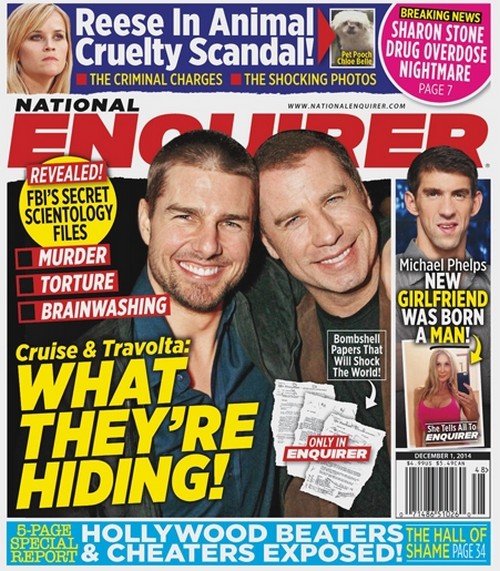
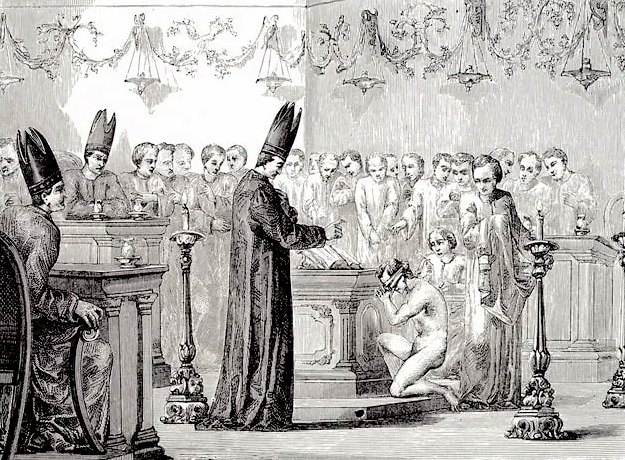


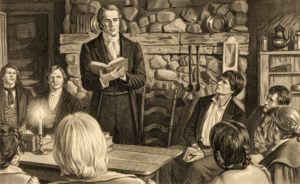






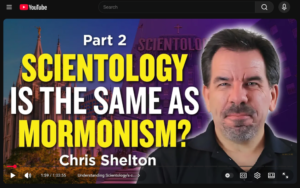 In this video, John Dehlin sits down with ex-Scientologist, author, and popular YouTuber Chris Shelton for a wide-ranging and deeply revealing conversation that many viewers may find both surprising and unsettling. Chris spent over two decades inside Scientology — including years in the elite Sea Organization — before finally breaking free and becoming one of the most articulate and informed critics of the organization. He knows the inner machinery of Scientology not as an outside observer, but as someone who lived it, breathed it, and eventually dared to walk away from it.