Image. The Scientology free personality test, often advertised on sidewalk signs, is a 200-question assessment called the Oxford Capacity Analysis (OCA). It acts as a recruitment tool, inviting passersby to assess their personality traits and receive a free analysis at a local Church of Scientology. The results of the “test,” whether complimentary or negative, are essentially speculative and function mainly as a lead-in to promote Scientology self-improvement courses. Although the test has never been demonstrated to measure anything valid, the Church of Scientology still presents it as the “most accurate and reliable personality test” available.
A Fierce, Unsettling Examination of Cult Power, Human Vulnerability, & Belief
Despite predictions of its demise, religion remains a vital force in contemporary society, and the academic study of religion is experiencing renewed interest. For decades, prominent social scientists anticipated that science, education, and modern economies would inevitably lead to the decline of religion. However, this prediction has not been borne out.
In their research, Stark and Bainbridge sought to understand why religion has persisted. Drawing on a wide range of data, including surveys, censuses, historical analyses, and fieldwork, they examine the diverse landscape of modern religion, from established denominations to fringe cults. Their findings are presented within a theoretical framework that views religion as a social phenomenon, addressing both universal human needs and the specific desires of those who lack economic and social advantages. By analyzing the various forms religion takes in the present day, Stark and Bainbridge offer insights into its endurance in a secular age and its potential trajectory in the future.
A significant portion of the book delves into a general theory of religion developed by the authors. One chapter, titled “To be perfectly clear,” examines Scientology through the lens of this theory.
Pluralistic ignorance refers to a situation in which virtually every member of a group privately disagrees with what are considered to be the prevailing attitudes and beliefs of the group as a whole.
A key concept introduced by Stark and Bainbridge, derived from their research on UFO groups, is “Pluralistic Ignorance.” This concept sheds light on why Scientologists continue to participate despite not experiencing the promised benefits.
Scientology enforces strict rules against discussing its doctrines and practices, known as “Verbal Tech.” This prevents Scientologists from sharing their experiences and comparing notes. Additionally, every advancement within Scientology is accompanied by a public “success story.”
Stark and Bainbridge suggest that individual Scientologists who haven’t personally experienced the promised benefits hear these “success stories” and assume they are the only ones who haven’t achieved success. This leads them to persevere, hoping they will eventually experience the benefits themselves.
In reality, the authors propose, none of the participants are experiencing the promised benefits, but they all believe that everyone else is.
Abstract:Advances a theory to explain the apparent success of Scientology in raising its members to a superhuman level of functioning known as “clear”. It is argued that empirical evidence does not support this claim and that the state of “clear” “is not a state of personal development at all, but a social status conferring honor within the cult’s status system and demanding certain kinds of behavior from the person labeled `clear’.” Hubbard’s social mechanisms used to establish and defend the status of “clear” are discussed. Scientology caters to those people who suffer from chronic unhappiness or inability to perform at the level set for themselves. It does not solve the underlying problems; it merely “cures the complaints by ending the person’s freedom to complain.”
.
A clear can be tested for any and all psychoses, neuroses, compulsions and repressions and can be examined for any autogenetic (self-generated) diseases referred to as psychosomatic ills. These tests confirm the clear to be entirely without such ills or aberrations. — L. Ron Hubbard, Dianetics: Modern Science of Mental Health
Much of this post is excerpted from The Future of Religion: Secularization, Revival, and Cult Formation, by Rodney Stark and William Sims Bainbridge, University of California Press, 1985. Chapter 12, pp. 263283, supplemented with a section of chapter 21, pp. 483484 (Scientology in Europe) and portions of chapters 1 and 2 (Theory). You may order the Kindle versionof this book from www.amazon.com.
An early version of this chapter was given at the 1979 annual meeting of the Association for the Society of Religion and published as William Sims Bainbridge and Rodney Stark, “Scientology: To Be Perfectly Clear,” Sociological Analysis, 1980, 41:2, pp. 128136.
Rodney William Stark (July 8, 1934 – July 21, 2022) was an American sociologist of religion who was a longtime professor of sociology and of comparative religion at the University of Washington. At the time of his death he was the Distinguished Professor of the Social Sciences at Baylor University, co-director of the university’s Institute for Studies of Religion, and founding editor of the Interdisciplinary Journal of Research on Religion.
William Sims Bainbridge (born October 12, 1940) is an American sociologist who currently resides in Virginia. He is co-director of Cyber-Human Systems at the National Science Foundation (NSF).[1] He is the first Senior Fellow to be appointed by the Institute for Ethics and Emerging Technologies. Bainbridge is most well known for his work on the sociology of religion. Beginning in the 2010s he has published work studying the sociology of video gaming.
Scientology’s own nuanced definitions of the lofty religious enterprise…
Scientology: Scio (Latin) “knowing, in the fullest sense of the word,” logos (Greek) “study of.” Thus Scientology means “knowing how to know.”
Scientology is a twenty-first-century religion. It comprises a vast body of knowledge extending from certain fundamental truths, and prime among those truths: Man is a spiritual being endowed with abilities well beyond those which he normally envisions. He is not only able to solve his own problems, accomplish his goals and gain lasting happiness, but he can achieve new states of awareness he may never have dreamed possible.
Developed by L. Ron Hubbard, Scientology is a religion that offers a precise path leading to a complete and certain understanding of one’s true spiritual nature and one’s relationship to self, family, groups, Mankind, all life forms, the material universe, the spiritual universe and the Supreme Being.
Though it draws on the wisdom of some 50,000 years, Scientology is a new religion, one that has isolated fundamental laws of life and, for the first time, developed a workable technology that can be applied to help people achieve a happier and more spiritual existence in the here and now.
That Scientology’s development and rapid promulgation was made possible, in part, by advances in the physical sciences through the first half of the twentieth century is significant. For it bridges Eastern philosophy with Western thought. In that way, Scientology constitutes Man’s first real application of scientific methodology to spiritual questions.
Scientology is something one does, not something one believes in.
THE RELIGION: Scientology
Is truth to be obtained from secret religious texts that read like a bad sci-fi movie without a second thought?
An AI-generated and colorized version of Xenu, the figure in the beliefs and teachings of the controversial religious movement/cult known as the Church of Scientology. He is believed to have been an alien warlord who ruled over the “Galactic Confederacy” 75 million years before the Church’s foundation, although many followers of Scientology deny the existence of such a figure or claim the story is misrepresented.
At the heart of L. Ron Hubbard’s “new religion” called Scientology lies a narrative that reads like a grand space opera.
75 million years ago, an alien overlord named Xenu ruled 76 planets, including Earth (then called Teegeeack). Facing overpopulation, he devised a sinister plan.
Xenu captured billions of people under the guise of tax inspections, paralyzed them, and transported them to Earth in spacecraft disguised as DC8s. He then stacked the bodies around volcanoes and detonated them with hydrogen bombs.
But the souls, or “thetans,” survived. Xenu trapped them with electronic beams and subjected them to brainwashing films in vast cinemas. These films implanted false ideas about God, the devil, and Christ, causing the thetans to cluster together and inhabit human bodies.
Xenu was eventually overthrown and imprisoned on a distant planet, but his influence persists. According to Scientology, these clusters of thetans, known as “body thetans,” continue to plague humanity. The path to freedom, they claim, involves removing these body thetans through expensive Scientology procedures.
It’s easy to see that reaching the level of Scientology which reveals the “Space Opera” tale of the Galactic Lord Xenu involves much more than money … there is also a considerable “investment” of one’s time and emotional energy. During this time a cognitive dissonance is developed that serves as a defense mechanism for people who may be threatened by information that threatens their beliefs. Upon reaching OT III, you are basically “all in.”
“There is no more ethical group on this planet than ourselves.”
“Arthritis vanishes, myopia gets better, heart illness decreases, asthma disappears, stomachs function properly and the whole catalog of illnesses goes away and stays away.”
“I have high hopes of smashing my name into history so violently that it will take a legendary form even if all books are destroyed.”
“Scientology is the most vital movement on Earth today.”
“Nothing in Scientology is true for you unless you have observed it and it is true according to your observation.”
“This is the correct procedure: Spot who is attacking us. Start investigating them promptly for felonies or worse using our own professionals, not outside agencies. Double curve our reply by saying we welcome an investigation of them. Start feeding lurid, blood sex crime actual evidence on the attackers to the press. Don’t ever tamely submit to an investigation of us. Make it rough, rough on attackers all the way.”
Magic is risky merchandise. Sometimes it will seem to work. At other times, it will clearly fail. The more specific and serious the aims of magic, the more often it will be seen to fail. For example, magic meant to improve our spirits will succeed more often than magic meant to cause a passionate response in a specific object of our affections. Magic intended to bring rain soon will more often seem to succeed than magic meant to bring rain tomorrow. Yet even unspecific magic can fail. Personal misfortunes can follow a ritual meant to cheer us up, and it might not rain again for a year.
Religion as such is not vulnerable to empirical disconfirmation, and that, for this reason, religions tend to discard the practice of magic. For similar reasons, magical client cults often are prompted to evolve into fully developed religions. This is of special interest for a number of reasons. First, Scientology is not just another obscure cult movement, but an international organization of considerable magnitude. Second, Scientology has been the training ground for a host of other cult founders and has served as an inspiration for many new cult movements (Bainbridge, 1984). Third, its history has been extremely well documented,not only by journalists, scholars, and even government commissions and courts, but in exquisite detail through its own prolix publications. Finally, Scientology is of exceptional interest because it has not yet been able to escape its primary basis in extremely specific and serious magical claims.
There is a heroic attempt of Scientology to preserve its high tension magic, indeed, to convince clients it has delivered on its impossible promises, and the extreme lengths to which it went to protect its magic from disconfirmation. But this struggle is doomed to failure.
It will be noted that a significant event took place one year following the publication of The Future of Religion. In 1986, Scientology faced a significant turning point with the death of its founder, L. Ron Hubbard. His passing posed a challenge for the group, which heavily revolved around his persona. A relatively unknown 25-year-old, David Miscavige, emerged as the new leader.
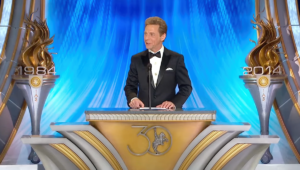
Miscavige had been a member since childhood and a favorite of Hubbard’s, but he had operated largely behind the scenes. When he announced Hubbard’s death at the Hollywood Palladium, many in the audience were unfamiliar with him.
Interestingly, it was around this time that Mimi Rogers introduced Tom Cruise to Scientology. They married soon after, and Cruise would later become a prominent advocate for the organization, forming a close relationship with Miscavige.
Scientology’s status as a recognized religion in the US has a complex history. The IRS revoked its recognition for years, leading to a billion-dollar tax bill. Scientology then pressured the IRS through numerous lawsuits, ultimately regaining its religious status in 2003.
This “victory” was celebrated in a grand “the war is over” event, where Miscavige boasted about the legal battles. This solidified their religious image and largely resolved the tax issue.
Today, Scientology raises millions in tax-free “donations,” often used for real estate and renovations of existing properties, which are then presented as “new churches” to members. As a tax-exempt organization, they avoid property taxes on these properties worldwide.
In its early history, Scientology adopted a dual presentation to the public. Prospective adherents were informed that its assertions were grounded in science and would yield immediate and significant benefits, while the movement simultaneously sought the legal and cultural protections afforded to religion. Sustaining both positions proved difficult, as becomes evident in the extraordinary measures employed to defend Scientology’s claims.
Chris Shelton, Ex-Scientologist and Sea Org member of 27 years
Ex-Scientologist and former Sea Org member, Chris Shelton: “Scientology is not something to be curious about. It is something to run away from as fast as you can.”
Unfortunately for Scientologists, there is no actual evidence in the scientific sense for the claims made by Scientology, mostly because the claims that are made in ads such as these are 100% subjective. They refer to one’s state of mind or “inner peace” and that sort of thing which are not measurable or reducible to scientific study. This is very much done on purpose and the reason for that is because when Hubbard was first touting Dianetics as the “modern science of mental health” he was making some very absurd and unsubstantiated claims: that Dianetics would cure cancer, leukemia, arthritis and poor eyesight, for example. He claimed that a Dianetic “Clear” would have full 3D eidetic recall of his entire life, that he would be able to compute answers to questions at a speed comparable to a computer, etc. I’m not making this up – it’s all in Dianetics: The Modern Science of Mental Health, chapter on “The Clear”. He continued making these kinds of claims when he started Scientology. However, over the years the yardstick changed and these medical claims had to be put to rest because not only were they not being achieved but it’s actually fraudulent to be saying you can do stuff like this when you can’t. There are plenty of Scientologists who have achieved its highest levels who have all kinds of health issues and who die of cancer, suffer from emphysema and arthritis, require glasses until the day they die, etc.
My point is that the “states of being” that Scientology provides are all purely subjective and can be individually re-defined by anyone who mean just about anything they want it to mean. A Dianetic Clear, for example, is now defined as “a being who no longer has his own reactive mind”. How would you know? How could you prove such a state? Or the level of OT III is supposed to provide “Freedom from Overwhelm”. What does that even mean? Overwhelm from what? When? How? Totally subjective states.
Scientology faces significant challenges in shielding its core practices from scientific scrutiny, though many adherents and the organization itself reject this perspective. Public records show that defending these elements against criticism has proven difficult for the group. Notably, the Church has pursued legal action against numerous authors and publishers to block the release of exposés and critical works. Among the popular books involved were Scientology, The Now Religion by George Malko, and The Scandal of Scientology by Paulette Cooper (PDF).
In the annals of religious persecution, few cases are as chilling and outrageous as Tom Cruise’s Scientology religion and its relentless campaign to literally destroy the life of journalist Paulette Cooper.
Certainly, Scientology has good reason to resent the attacks made upon it by the secular institutions of society over the years, which are, typically, aggressive rejections of the cult’s claims. One of the more dramatic moments in this continuing struggle came in 1963 when agents of the U.S. Food and Drug Administration raided the Founding Church of Scientology in Washington, D.C., confiscating “EMeter” electronic equipment allegedly used in improper attempts to cure diseases, an action finally reversed by the U.S. Court of Appeals six years later. For a time, both the Australian and British governments seemed bent on banning Scientology, and disputes with the American government have continued unabated, marked by such extreme indicators of tension with the socio-cultural environment as another government raid in 1977, this time on the Los Angeles branch.
L. Ron Hubbard “invented” the Cult of Scientology.
As for universally accepted characteristics of a “cult,” we can call on a variety of sources … both religious and secular. Among the variety of credible observers, there are common themes.
What is a cult? A cult is a group with a particular and often dangerously fanatical ideology that has certain characteristics. The term ‘cult’ comes from the Latin cultus, meaning ‘worship. This is reasonable: a cult must have a leader who is either worshipped or greatly revered by the cult’s followers. A specific cult definition can be hard to pin down because in order to be a cult, a group must have a number of attributes. People often disagree about what makes a cult, meaning that the definition is fluid. This is true, especially in the context of new religious movements: some of these movements have been called cults, while some people have argued against this for a variety of reasons. It is easier, generally, to get to grips with the characteristics of cults than to create a single, all-encompassing definition.
A charismatic leader: Cults always follow a charismatic leader, living or dead, whose teachings are considered of the highest importance. This leader may be considered a genius, or may be considered a religious figure like a messiah or prophet.
Ideological purity: Members are strongly discouraged from questioning the cult’s doctrine and any doubts are met with shame or punishment.
Hare Krishna had Bhaktivedanta Swami, the Manson Family had Charles Manson, and the People’s Temple had Jim Jones. Theologically, the three leaders are worlds apart. One of the core components of any cult is a charismatic leader who draws followers in with vague promises of salvation, healing, and enlightenment and managing to amass dozens and even hundreds of followers, some of whom blindly carry out strange or even heinous acts including suicide.
Conformity and control: Cult leaders often exercise an extreme degree of control over members’ lives, including dictating what they can wear and eat and what kinds of relationships they can have. Conformity is also enforced by group members who police one another.
Mind-altering practices: Sleep deprivation, chanting, meditation, and drugs are often used to break down individuals’ defenses and make them more susceptible to cult ideology. Isolation and love-bombing: It is common for people in cults to be encouraged to cut contact with outsiders, including close family members. Within the cult, new members are often subjected to love-bombing, a practice where new initiates are showered with love and praise to bring them deeper into the cult and foster a sense of belonging.
• Us-vs-Them mentality: Cult members are often encouraged to see the cult as superior to life on the outside and to feel that those outside the cult lack understanding or insight. • Apocalyptic thinking: Preparation for a supposed apocalypse or cataclysmic event is a major characteristic of many cults, especially cult religions. • Time and energy: Followers are expected to dedicate huge amounts of time and energy (and often money) to the cult to the exclusion of their own lives, interests, jobs, and families. One thing to keep in mind when looking through the traits of a cult is that a cult and a religious movement are not the same thing. Most religious movements do not isolate their practitioners from family, engage in love-bombing, encourage illegal and dangerous behaviors, or attempt to strongly control their members. Some cults position themselves as religious groups, but the distinction is important. • How Do Cults Start?
It can be challenging to understand how cults start and how individuals join cults, especially when the ideology of a cult often looks nonsensical for those on the outside. Cults are started by charismatic individuals who are skilled at getting people to listen to them. They may have unusual ideas about reality, or they may even invent an ideology to promote.
Andy Naselli, professor of systematic theology and New Testament for Bethlehem College and Seminary in Minneapolis: SOCIOLOGICAL CHARACTERISTICS OF CULTS
Authoritarian Leadership Authoritarianism involves the acceptance of an authority figure who exercises excessive control on cult members. As prophet or founder, this leader’s word is considered ultimate and final.
Exclusivism: Cults often believe that they alone have the truth. The cult views itself as the single means of salvation on earth; to leave the group is to endanger one’s soul. Isolationism: Some cults require members to renounce and break off associations with parents and siblings. Opposition to Independent Thinking: Some cultic groups discourage members from thinking independently. The “thinking,” as it were, has already been done for them by the cult leadership; the proper response is merely to submit. Fear of Being “Disfellowshiped: ”It is not uncommon in cults that people are urged to remain faithful to avoid being “disfellowshiped,” or disbarred, from the group. Threats of Satanic Attack: Finally, some cults use fear and intimidation to keep members in line. Members may be told that something awful will happen to them should they choose to leave the group.
Scientology’s Adherence to Sociological Characteristics of Cults:
Authoritarian Leadership: L. Ron Hubbard, the founder of Scientology, is revered as the ultimate source of wisdom and authority within the organization. His writings and teachings are considered infallible, and any deviation from them is seen as a betrayal of the faith. This creates an environment where critical thinking and questioning of Hubbard’s authority are discouraged.
“The Thriving Cult of Greed and Power”, an article highly critical of Scientology, was written by investigative journalist Richard Behar and first published in the May 6, 1991, edition of Time magazine as a ten-page cover story. Time magazine makes the full text of the article available on its website.
Exclusivism:Scientology presents itself as the only path to true spiritual enlightenment and salvation. Its doctrine emphasizes the uniqueness and superiority of its teachings, often denigrating other religions and belief systems. Leaving Scientology is portrayed as a grave mistake that could lead to spiritual ruin.
Isolationism:While not all Scientologists completely cut ties with family and friends outside the church, the organization encourages members to prioritize their involvement in Scientology activities and courses. This can lead to a gradual distancing from loved ones who do not share the same beliefs, creating a sense of isolation and dependence on the Scientology community.
Opposition to Independent Thinking:Scientology places a strong emphasis on following prescribed procedures and techniques for spiritual progress. Independent thinking and questioning of doctrine are often discouraged, as they are seen as potential obstacles to achieving the desired state of “clear.” This can stifle critical thinking and foster an environment of unquestioning obedience.
Fear of Being “Disfellowshiped”:Scientology has a practice known as “disconnection,” where members are encouraged or pressured to cut ties with individuals deemed “suppressive persons“ (SPs). SPs can be anyone who criticizes or opposes Scientology, including family members and friends. The fear of disconnection can be a powerful tool for controlling members and ensuring their compliance with the organization’s rules and teachings.
Scientology exhibits several characteristics commonly associated with cults, including authoritarian leadership, exclusivism, isolationism, opposition to independent thinking, and fear of disconnection. These factors contribute to an environment where members may feel pressured to conform, suppress critical thinking, and prioritize their allegiance to the organization above all else.
Freelance journalist Cari Shane, in her article, “The Psychology Behind Cults,” does not mention Scientology. In fact, an Internet search reveals she has written the word only once throughout her 25-year career, yet her synopsis could be a keynote introduction to a speech on Scientology.
Ex-Scientologist Mike Rinder (1955 ~ 2025) discussed cognitive dissonance in his blog: “Anybody who’s ever been affiliated with a religion has experienced cognitive dissonance in spades. Cult members face this phenomenon on a daily basis.”
While each cult may be different, experts say that the methods to pull members in and keep them there resemble a similar playbook of psychological principles.
One element is cognitive dissonance. The theory introduced in the late 1950s suggests that when people are confronted with facts that contradict their beliefs, values and ideas, they will feel psychological discomfort, likely followed by the need to resolve that contradiction and reduce their uneasiness. In a cult setting, the cognitive dissonance often “keeps you trapped as each compromise makes it more painful to admit you’ve been deceived,” Lalich explains in her TED-Ed video. “It uses both formal and informal systems of influence and control to keep members obedient with little tolerance for internal disagreement or external scrutiny.”
This obedience factor is another key element. It plays off of a human’s natural inclination to follow orders and do what others around them are doing. In cult settings, critical thinking is often frowned upon, while absolute faith is rewarded. Guilt, shame and fear are also constantly wielded to slowly strip away an individual’s identity.
While many religions began as cults, Lalich explains that some integrated into the fabric of the larger society as they grew. In addition, while religions may offer guidelines and support for members to live better lives, a cult separates its members from others and seeks to directly control financial assets and living arrangements.
The last point above is perfectly illustrated by Scientology’s Sea Organization…
Scientology’s Sea Organization (Sea Org) employs several methods to separate its members from external influences and exert control over their finances and living arrangements:
Billion-Year Contract:Sea Org members sign a billion-year contract, symbolizing a lifetime commitment to the organization. This contract legally binds them to the Church and its mission, discouraging them from leaving or questioning their involvement.
The Sea Organization, or Sea Org, is Scientology’s elite clergy, formed in 1967 to support L. Ron Hubbard’s research and oversees global operations. Its members sign billion-year contracts (no typo – 1,000,000,000 years) and commit to serve across lifetimes and live in communal settings with a military-style structure. Not all Scientologists are in the Sea Org, but it represents the most dedicated members.
Isolation:Sea Org members live in communal housing, work long hours, and have limited contact with the outside world. This isolation creates a closed environment where the Church’s ideology and practices are reinforced, and alternative viewpoints are minimized.
Financial Control:Sea Org members receive minimal compensation for their work, often consisting of a small stipend and basic necessities. The Church controls their finances, limiting their autonomy and ability to live independently outside the organization.
Disconnection:Sea Org members are expected to disconnect from family or friends who criticize or oppose Scientology. This practice further isolates members and reinforces their dependence on the Church for social and emotional support.
Confiscation of Personal Belongings: In some cases, Sea Org members are required to surrender personal belongings, such as cell phones, laptops, or other items that could connect them to the outside world. This further limits their access to information and communication channels that could challenge the Church’s narrative.
Restricted Communication:Communication with the outside world is often monitored and restricted for Sea Org members. This includes limitations on phone calls, internet access, and personal interactions, ensuring the Church maintains control over the information it receives and shares.
Indoctrination and Training:Sea Org members undergo extensive training and indoctrination, reinforcing Scientology’s beliefs and practices. This continuous exposure to the Church’s ideology further solidifies their commitment and loyalty to the organization.
By employing these tactics, the Sea Organization creates a highly controlled environment where members are isolated from external influences, financially dependent on the Church, and subjected to a constant stream of Scientology teachings and practices. This reinforces their allegiance to the organization and discourages critical thinking or dissent.
When a group becomes degenerate gradually over a period of years, members can find that by the time they realize something is very wrong, they are already emotionally and materially invested in ways that make it very difficult, and sometimes impossible, to leave.
High-Control Groups have no official forum or channel for critical enquiry or for formally raising concerns, complaints and grievances.
The group dogmas are not backed up by evidence or information cross-referenced from multiple reliable sources.
Outsiders who question or criticise the group are viewed as persecutors and are given labels like “anti,” “apostate,” or “suppressive person.” Doubting members are encouraged to focus solely on the doctrine of the cult and isolate themselves from outside influences.
Cults and their leaders have long fascinated the public, researchers, and clinicians because they often suppress dissent, discourage critical thought, and isolate members from outside ties. In return for belonging and security, followers are frequently asked to surrender individuality, accept rigid rules, and embrace an us-versus-them worldview.
Members who get sick or suffer other misfortunes are accused of not having enough faith/beliefor commitment to the group dogma, leaders or cause, or of not praying hard enough or performing other rituals/duties correctly.
Cults begin with a charismatic leader who claims some special or supreme knowledge, messages and/or insight from a supernatural, other-worldly source. They may call themselves a prophet, an enlightened teacher, a messenger, a messiah, or even claim to be divine.
The group produces its own propaganda; literature and media, which puts the group and its leader in a glowing light. The group produces or makes use of fake news and inaccurate/fake historical accounts which appear to support its dogma. It has no credible evidence to back up its claims.
You are penalized for leaving. You stand to lose money you invested or other privileges, or you are socially penalised with members saying they can no longer be your friend if you leave. Members who leave are given derogatory names such as “apostate” or “traitor” or “infidel.” They are called foolish, sinful, ‘lost to sin’, worldly, misled or even evil. They are seen to have come under bad influences, are no longer trusted and personal contact is avoided. Former followers are always wrong in leaving. The group perpetuates a false narrative that former members were deceived, proud, immoral, or lazy.
If former members speak out, they are dismissed as bitter, angry, dishonest or evil.
You are shunned by membersyou were once very close to, including close family and friends.
Members develop uncharacteristically stilted mannerisms and seemingly programmed conversation, and there is cloning among the group (or of the leader) in personal behaviour. There is a dramatic loss of spontaneity, individuality and sense of humour in those who have become members.
If there are secret teachings or ceremonies you did not discover until after you joined, you are probably in a cult. Cults use secret rituals as rites of passage that solidify a member’s loyalty to the group. Initiation into these rites usually only comes after a member has undergone certain tests or made adequate financial contributions.
There is zealous commitment to the leader, whether he or she is living or dead, which goes far beyond mere admiration or fondness. Members revere the leader with absolute devotion. His or her thoughts, opinions, and belief system are considered to be the absolute truth. If anything comes to light about the leader, which is not wholly praiseworthy, they will perform any amount of mental gymnastics, using any argument however convoluted and implausible to justify the behaviour and claim is wasn’t as it seemed.
The group has a preoccupation with money. No matter how much money the group brings in, it is never considered enough by the leader. Cult leaders will make increasingly more desperate demands for members to contribute money, perhaps promising that they will eventually get their money back or even get it back with interest when they will not. Cult leaders tend to live opulently while their followers are required to make financial sacrifices.
The group’s dogma and mission is considered so important and so urgent that even the strict morality or rules of how members should behave can sometimes be bent.
NOTE: When Scientology goes to court, it likes to play rough — very rough.
Food and Drug Administration agents who raided the headquarters of an organization known as the Founding Church of Scientology six years ago confiscated neither food nor drugs. Instead, they carted off books, pamphlets, and a collection of electronic gadgets called E-meters. In court, the Government said that the literature had made misleading statements about the machines’ curative powers and had thus violated the fed eral law against improper labeling. A federal jury agreed. Last week, however, the U.S. Court of Appeals in Washington, D.C., reversed that decision.
Until the Government can refute the claim that Scientology is a religion, said the court, the E-meters and their accompanying leaflets are protected from seizure by the right of freedom of worship—which puts them beyond the reach of the FDA.
Although Scientology has often managed to overturn unfavorable rulings on appeal—frequently by invoking its recognition as a religious entity—it has also faced numerous legal challenges from disillusioned participants. In 1979, an Oregon jury awarded Julie Titchbourne more than $2 million after determining that Scientology had deceived her with assurances about improving her life. Before the trial, the state supreme court had clarified that the organization could not claim religious protection for representations that were not inherently religious, and the jury was instructed accordingly.
Jubilant Church of Scientology members called a judge’s rejection of a $39 million fraud award a victory for freedom of religion, but the attorney for the ex-member who brought suit vowed to continue the fight.
Multnomah County Circuit Judge Donald Londer voided a $39 million fraud verdict against the church Tuesday, declaring a mistrial in the suit by former member Julie Christofferson Titchbourne, 27, who was not in the courtroom.
In a ruling frequently critical of his own conduct during the 11-week trial, Londer said the case had gone astray from the fraud accusations leveled by Titchbourne and had become an attack on the Church of Scientology itself.
The judge also said Titchbourne’s lawyer, Garry McMurry, violated the judge’s instructions by telling jurors in his closing arguments that Scientology is not a religion. Londer said the Oregon Court of Appeals previously ruled that Scientology is a religion.
The judge also took McMurry to task for comparing Scientology to totalitarian communism and referring to church founder L. Ron Hubbard as a ‘warped sociopath.’
Many of Scientology’s doctrines claim specific, measurable outcomes that could theoretically be examined through testing, but they are offered without evidence that can be independently verified. Consequently, Scientology operates less like a traditional religion—which tends to offer general, long-term spiritual rewards—and more like a system of magical compensators that promise direct fixes for particular issues. When examining these dynamics, courts in Oregon essentially regarded central Scientology beliefs as magical in nature rather than religious, suggesting that such claims could be subject to empirical scrutiny and legal challenge. The following discussion builds on this perspective, focusing in particular on the main benefit that the organization initially promised to provide.
“Go Clear For the First Time in Your Life”
Scientology presents its members with an elevated psychological condition known as “Clear.”Promotional material has long described this state in highly ambitious terms. One advertisement, for example, promised that participants who “Go Clear” would, for the first time, become “truly” themselves and would attain a stable state marked by improved memory, higher intelligence, greater self-control, stronger vitality, and enhanced creativity. For adherents, reaching Clear has historically functioned as a central objective, not only within Scientology itself but also in Hubbard’s earlier Dianetics system. Although critics have questioned whether the movement can actually deliver on such claims, Scientology publications have continued to report substantial numbers of individuals who allegedly achieved this status. One such report, published in Clear News, claimed that 16,849 people had reached Clear by mid-1979.
An AI-generated image imagines an inquisitive seeker reviewing Scientology’s promised state of “Clear,” which has long been marketed as the ultimate breakthrough in self-improvement—complete with claims of better memory, higher intelligence, stronger willpower, and a more “authentic” self.
The concept of Clear did not emerge fully formed. Hubbard first introduced the idea in 1950 through his foundational text, Dianetics: The Modern Science of Mental Health, which sold hundreds of thousands of copies and launched a nationwide self-help phenomenon before Scientology was formally established as a religion. In Dianetics, the mind was divided into two components: the “analytical mind,” responsible for rational thought and conscious experience, and the “reactive mind,” described as a hidden repository of painful memories and traumatic impressions that Hubbard called “engrams.” These engrams, according to Hubbard, operated below conscious awareness and were responsible for irrational behavior, psychosomatic illness, and diminished mental performance. The goal of Dianetic auditing — a structured conversational process in which a trained practitioner guides a subject through recalled experiences — was to systematically locate and neutralize these engrams until the reactive mind was effectively erased. The person who had accomplished this was designated a Clear: someone now operating without the distortions and impediments that burdened ordinary human consciousness.
When Hubbard reorganized his movement into the Church of Scientology during the early 1950s, the concept of Clear was carried forward and embedded within an increasingly elaborate theological and psychological framework. The auditing process was formalized into a graduated series of steps known as the “Bridge to Total Freedom,”a hierarchical progression of courses, counseling sessions, and evaluations through which members advanced toward Clear and, beyond it, toward even higher states of spiritual attainment designated as Operating Thetan levels. Each stage of the Bridge required the purchase of additional materials, courses, and auditing hours, making the journey toward Clear a significant financial undertaking. Independent researchers and former members have estimated that the total cost of reaching Clear can range from tens of thousands to well over one hundred thousand dollars, depending on the individual’s path and the organization’s pricing at the time.
The promise embedded in the Clear designation drew on broader currents in mid-twentieth-century American culture, particularly the postwar appetite for self-optimization, psychological insight, and scientifically grounded self-improvement. Hubbard’s rhetoric was carefully constructed to appeal to those who felt constrained by unconscious limitations they could not identify or overcome through conventional means. The language of engrams, the analytical mind, and reactive programming carried the surface texture of clinical psychology while remaining entirely outside the mainstream scientific literature. Professional psychological and psychiatric organizations responded with sustained skepticism. The American Psychological Association declined to endorse Dianetics, and the American Medical Association characterized its claims as unsubstantiated. These institutional rejections did little to slow the movement’s early growth, and Hubbard positioned such criticism as evidence of organized opposition to a genuinely liberating discovery.
The question of what Clear actually delivers in practice has remained contested throughout Scientology’s history. Hubbard himself claimed to have produced the world’s first Clear, a woman named Sonya Bianca, who was presented to a public audience in Los Angeles in August 1950. The demonstration did not proceed as planned: audience members found that Bianca could not recall basic scientific formulas and appeared to struggle with questions she might reasonably have been expected to answer. Hubbard’s supporters attributed the difficulties to the conditions of the event rather than any failure of the auditing process, but the episode introduced an early note of skepticism that would persist in journalistic and academic commentary for decades. Former members who have spoken publicly about their experiences reaching Clear have described reactions ranging from genuine feelings of well-being and mental clarity to confusion and disappointment when the promised transformation failed to materialize in measurable ways. Critics, including former senior Scientology officials, have argued that the experience of Clear is largely a product of the intensive psychological conditioning embedded in the auditing process itself, rather than evidence of an objectively verifiable mental state.
Despite these controversies, the Church of Scientology has maintained that Clear represents a real and documentable achievement, pointing to member testimonials and internal records as evidence. The report in Clear News placing the number of Clears at 16,849 by mid-1979 reflected the organization’s broader practice of publishing cumulative tallies as a demonstration of institutional momentum and credibility. Whether such figures accurately represent individuals who underwent and completed the full auditing process, as opposed to those who simply enrolled in or partially completed relevant courses, has never been independently verified. The Church does not permit outside audits of its membership records, and its claims about the scope and success of its programs remain, by their nature, self-reported and unconfirmed.
WHAT IS THE STATE OF CLEAR?
Clear is the name of a state achieved through auditing and describes a being who no longer has his own reactive mind, the hidden source of irrational behavior, unreasonable fears, upsets and insecurities. Without a reactive mind, individuals regain their basic personality, self-determinism and, in essence, become much, much more themselves.
The full glory of the state of Clear has no comparable description in any writings existing in our culture. It is a goal Man has dreamed of achieving for more than 2500 years, yet the state of Clear is far above anything anyone even conceived of previously. Indeed, that one could become something far higher and better than a human being, personally and in a single lifetime, is a brand-new concept.
The state of Clear does exist today and is attainable by all. Thousands upon thousands of Scientologists all over the world are Clear and more achieve this state with every passing day.
Perhaps Scientology’s claims are true, and these legions really have attained a supernormal level of mental functioning and emotional health. But there are good reasons for doubting the testimonials of even 16,849 Scientologists.First, other techniques based on tested principles of behavioral science cannot produce a state like clear. Second, controlled, scientific studies verifying the characteristics claimed for clears have not flooded the standard journals. Third, although Scientologists have created a vigorous religious movement, they have not taken charge of major secular institutions as true supermen and superwomen could. Fourth, reports by independent observers (including one of us) who have interacted with clears do not convey the impression that clears are markedly superior people. Of course, alternate explanations exist for each of these four points, but they render plausible the view that the claims for clear are false and raise the question of how thousands of individuals could be seriously mistaken about their own abilities.
Clear is not a state of personal development at all, but a social status conferring honor within the cult’s status system and demanding certain kinds of behavior from the person labeled clear. Such externally demonstrable qualities as good memory and high IQ may have nothing to do with it. Although one theory of clear is designed to explain acceptance of this status within Scientology, it might be adapted to explain a variety of similar statuses of alleged personal perfection, such as Satori in Zen.
L. Ron Hubbard’s Dianetics first appeared as an article titled “Dianetics: The Evolution of a Science” in the May 1950 issue of Astounding Science Fiction (Volume 45, Issue 3). Edited by John W. Campbell, this issue introduced the foundational concepts of the “reactive mind” just before the book Dianetics: The Modern Science of Mental Health was released on May 9, 1950. The photo is from this author’s personal collection. A copy is currently available at AbeBooks.com for $100.
In May 1950, within the pulpy pages of Astounding Science Fiction, L. Ron Hubbard unleashed a manifesto that would recast the human soul as a malfunctioning machine. Borrowing the cold language of the burgeoning computer age, he posited a radical heresy: the human mind was merely a supercomputer choked by “bad code”—the jagged, corrupting data of past trauma. He promised a systematic purging of this psychic filth, a process he christened Dianetics. The goal was nothing less than a total factory reset of the human psyche, an ascent to a god-like state of efficiency he called Clear.
The rewards for reaching this state were not merely spiritual—they were evolutionary. Hubbard didn’t just promise peace of mind; he promised an end to the human condition as we know it. To be Clear was to be purged of every psychosis, every neurosis, and every “psychosomatic” agony that haunts the flesh.
According to Hubbard’s gospel, the Clear would walk the earth as a titan among shadows:
The Mind of a Sage:IQ scores would skyrocket into the stratosphere, and problems that would baffle an ordinary mind for hours would be solved by a Clear in a heartbeat. The Body of an Athlete:They would radiate an unnatural, tireless energy, shielded from the common cold and the mundane frailties of the average man. The Perception of a God:The “internal chatter” of the neurotic mind would fall silent, replaced by a crystalline perception and a perfect, photographic recall of every moment ever lived.
In Hubbard’s world, the gulf between the “Clear” and the “Aberrated”was not a mere difference of degree; it was a vast, unbridgeable chasm. To him, the average person was a stuttering, broken relic—as far removed from the glory of a Clear as a patient in a locked ward is from a genius in his prime. He wasn’t just offering a therapy; he was announcing the birth of a new species.
In 1950, Hubbard thought that clears might be produced in short order; yet the movement now says that the first member did not go clear until early 1966 (Hubbard, 1968b:111). Apparently, it took this long for Hubbard to develop the social mechanisms to establish and defend clear status.
For most of its history, Scientology has been synonymous with L. Ron Hubbard. For a few years in the late 1960s, though, a slim, fair-haired South African named John McMaster held an exalted position as the “World’s First Real Clear”(designated thus by Hubbard) and the first and only “Pope of Scientology.” His charisma and spirituality made him a highly effective spokesman for Scientology and attracted thousands to his talks at Saint Hill Manor in England and other locations around the world. Celebrity Scientologists like William Burroughs flocked to receive auditing from him. Bent Corydon, who attended McMaster’s talks, felt that they were “evidence to me that he had attained and experienced something paranormal, existential, or whatever words people use in a vain attempt to convey whatever is considered a true ‘religious experience.’ John’s glow of affection, and his other spiritual qualities, seemed evidence of the achievability of the most cherished dreams of Scientologists. The fact that he was Hubbard’s representative and ‘the world’s first real Clear’ gave credence to Hubbard’s many written claims. John’s talks and ‘presence’ reminded each listener of their own brushes with this ‘reality of our true godlike nature.’”
Over the years, Hubbard established a wide range of rules, procedures, and teachings, which can be grouped into four core interdependent strategies:
• Forbidding the independent attainment or verification of the Clear state.
• Creating a graded series of spiritual levels below Clear.
• Isolating the preclear during a critical phase of their ascent.
• Creating a graded series of levels above Clear.
A common thread across these strategies is the system of costs and rewards within Scientology: failing to reach Clear carries severe penalties, while the increasingly attractive benefits of advancing through the ranks are available only within the Scientology organization.
Prohibition of Independent Evaluation
Hubbard’s early writings on Dianetics encouraged readers to test the method themselves, either by becoming auditors (practitioners) through the guidance provided in his first book or by participating in the organized Dianetics movement. These texts gave the distinct impression that clears had already been achieved and that a competent auditor could replicate Hubbard’s results. Dr. J. A. Winter, who collaborated with Hubbardin setting up the movement, says Hubbard claimed “that a clear had been obtained in as few as twenty hours of therapy.”But Winter himself never saw a single convincing clear during his association with Hubbard. “I have not reached that state myself, nor have I been able to produce that state in any of my patients. I have seen some individuals who are supposed to have been ‘clear,’ but their behavior does not conform to the definition of the state. Moreover, an individual supposed to have been ‘clear’ has undergone a relapse into conduct which suggests an incipient psychosis”(Winter, 1951:34; cf. Wallis, 1976:85).
Joseph Augustus Winter, an American medical doctor and “psychosomatacist”, had previously served on the board of directors and as the medical director of L. Ron Hubbard’s Hubbard Dianetic Research Foundation (HDRF). He also wrote the 1950 original introduction to Hubbard’s Dianetics: The Modern Science of Mental Health. Winter resigned from the HDRF in October 1950, stating “there was a difference between the ideals inherent within the dianetics hypothesis and the actions of the Foundation”. He also felt that Dianetic techniques were potentially dangerous if performed without medical training and disapproved of the lack of scientific evidence supporting Hubbard’s claims. Prior to their falling out, Winter had stated that the Dianetic technique of auditing had cured his six-year-old son of fears of ghosts and the dark.
Martin Gardner reports that, in 1950, Hubbard presented a young woman to a Los Angeles public meeting, saying she was a clear with a perfect memory. “In the demonstration which followed, however, she failed to remember a single formula in physics (the subject in which she was majoring), or the color of Hubbard’s tie when his back was turned. At this point, a large part of the audience got up and left” (Gardner, 1957:270).
As the highlight of the evening approached, there was a palpable sense of excitement and anticipation in the packed hall. A hush descended on the audience when at last Hubbard stepped up to the microphone to introduce the ‘world’s first clear’. She was, he said, a young woman by the name of Sonya Bianca, a physics major and pianist from Boston.Among her many newly acquired attributes, he claimed she had ‘full and perfect recall of every moment of her life’, which she would be happy to demonstrate. He turned slowly to the wings on one side of the stage and said: ‘Will you come out now please, Sonya?’
The audience erupted once more in applause as a thin, obviously nervous, girl stepped out of the wings and into a spotlight which followed her to centre stage, where she was embraced by Hubbard. In a tremulous voice she told the meeting that Dianetics had cleared up her sinus trouble and cured her ‘strange and embarrassing’ allergy to paint. ‘For days after I came in contact with paint I had a painful itching in my eyebrows,’ she stammered. ‘Now both conditions have cleared up and I feel like a million dollars.’ She answered a few routine questions from Hubbard, who then made the mistake of inviting questions from the audience: they had clearly been expecting rather more spectacular revelations.
‘What did you have for breakfast on October 3 1942?’somebody yelled. Miss Bianca understandably looked somewhat startled, blinked in the lights and shook her head. ‘What’s on page 122 of Dianetics, The Modern Science of Mental Health?’ someone else asked. Miss Bianca opened her mouth but no words came out. Similar questions came thick and fast, amid much derisive laughter. Many in the audience took pity on the wretched girl and tried to put easier questions, but she was so terrified that she could not even remember simple formulae in physics, her own subject.
As people began getting up and walking out of the auditorium, one man noticed that Hubbard had momentarily turned his back on the girl and shouted, ‘OK, what colour necktie is Mr Hubbard wearing?’ The world’s first ‘clear’ screwed up her face in a frantic effort to remember, stared into the hostile blackness of the auditorium, then hung her head in misery. It was an awful moment.
Hubbard, sweat glistening in beads on his forehead, stepped forward and brought the demonstration swiftly to an end.Quickwitted as always, he proffered an explanation for Miss Bianca’s impressive lapses of memory. The problem, Dianetically speaking, was that when he called her forward, asking her to come out ‘now’, the ‘now’ had frozen her in ‘present time’ and blocked her total recall. It was not particularly convincing, but it was the best he could do in the circumstances.
Forrie Ackerman, who was at the Shrine that night to see his client perform, summed up the feelings of many people who were there: ‘I was somewhat disappointed not to see a vibrant woman in command of herself and situation. She certainly was not my idea of a “clear.” ’
——–
Hubbard was apparently so embarrassed by the debacle, it would be another 16 years before he claimed that he had finally produced the world’s first true Clear in the form of John McMaster, a fascinating figure in his own right.
But what happened to Sonya? After her night at the Shrine, she seemed to vanish.
The second Dianetics book (Hubbard, 1951) continued to claim that the great benefits of treatment could be measured objectively and listed several diseases it could cure. These strong claims may have attracted sufferers seeking real solutions for specific problems, but they left the entire Dianetics movement open to being discredited in public. The safer course was to prevent outside evaluation, especially of clears, insulating individual followers from knowledgeable independent assaults on their hopes.
Not only was failure a threat, but so was the alleged success of rivals.Sociologist Roy Wallis (1976:84) reports:
“A severe challenge to Hubbard’s standing in the movement came when independent auditors began to proclaim that they had produced `clears.’ Such auditors were eagerly sought for guidance, training and auditing, and rapidly moved into positions of leadership in the Dianetics community.” Dianetics had been presented as a science, a public process of discovery, open to all who would experiment with the new techniques. This meant not only that some, like Winter, would be disappointed at the empirical results, but also that more sanguine auditors could claim to equal or surpass Hubbard’s achievements. This, presumably, was one of the main reasons Hubbard recast his science as a religion, establishing the authority of a prophet with the incorporation of the Founding Church of Scientology in 1955 (Hubbard, 1959; Malko, 1970; Wallis, 1976).
Currently, only senior Scientology ministers can declare someone “Clear,” and the church bars external observers from evaluating those who attain it. Individuals at this level are advised against showing any extraordinary powers, including to junior members, while those in the clearing program may only speak about it with their direct supervisors.
Recognition Practices: New Clears mark their achievement through a celebratory ritual, receiving a personalized international Clear number etched on a silver bracelet, an elegant permanent certificate, and prominent mention in church media. This elevates their standing above numerous preclears, irrespective of verifiable gains in personal capabilities.
Jack Horner was a good example of early Scientology. He ran ACCs, in 1956 Scientology published his book Summary of Scientology, he was active in England, USA and South Africa, he left Scientology 1965, formed a “splinter” group and gave a series of lectures to the group many of which represent original Scientology.
In Scientology, the term “Clear” operates more as a positional status within the group’s internal structure than as an objectively measurable state. While it confers prestige and influence among members, it also acts as a form of psychological compensation. Within the movement’s framework, this standing is insulated from any external evaluation or dissent.
A Hierarchy of Lower Statuses
The years from 1950 to 1966 may have been frustrating for persons who had long followed Hubbard in the quest for clear, but, during this period, the movement developed a complex structure of other statuses to distribute among members.One kind of status was professional, which designated various levels of skill and training in performing the therapy. By 1954, these went as high as a doctor of Scientology, or D.Scn. degree (Hubbard, 1968a:12). Since then, the number of levels of auditor has steadily increased, each empowered to perform therapy on preclears and clears of different statuses. Of course, these auditors have a stake in maintaining conviction in their own successes. Their training is time-consuming and expensive. The honor they receive is partly dependent on their clients’ satisfaction.
Another kind of status invented was that of release. When Hubbard had to confront the fact that his first clears were not very clear, he redefined their status as Dianetics release, a condition of superior improvement, but not yet clear.Hubbard developed literally hundreds of mental exercises and therapy routines, each supposed to deal with a problem of the human mind identified by the ever-growing ideology of the cult. As the years passed, levels of release proliferated until, in 1970, there were five basic release statuses, listed here from the lowest (grade 0) to highest (grade IV): communications release, problems release, relief release, freedom release, and ability release (a sixth release grade is awarded in the midst of the clearing process). Below these levels is the mass of newcomers, active in various introductory classes, the main effect of which is to create social bonds linking the neophytes and incorporating them in the social structure of preclears, who stand in the release hierarchy.
Many of the lower-level therapeutic procedures seem well designed to train the preclear in compliance with the role demands of clear. Perhaps the most important attribute acquired is a confident acceptance of impossible ideas with a consequent willingness to make statements that outsiders would find incredible. At the very beginning, in the so-called Alice Games of the Communication Course, preclears are made to recite wild sentences from Alice in Wonderland as if they were their own confident statements about reality. Later, in Dianetics and Scientology auditing, they will come to “recall” traumatic experiences in the womb, as their mother tried to abort them, and to relive the adventures of previous incarnations centuries ago (Hubbard, 1950b, 1958). On the one hand, preclears are trained to express their emotions through the radical ideology of the cult, and, on the other, numerous exercises reward them for inhibiting spontaneous expressions of feeling. In one of the most basic, TR0, they must sit immobile and unresponsive for up to two hours, regardless of what stimuli are bombarding them.
After investing a year or more in the initial Scientology auditing grades, a preclear typically has sunk substantial time, finances, and emotional effort into the practice. Dropping out upon reaching Grade IV Release—when the state of Clear appears within reach—would squander that heavy commitment, which demands only a modest extra push to preserve. Even if these interim release states emerged partly to placate eager participants awaiting L. Ron Hubbard’s full Clear breakthrough, they now anchor Scientologists more firmly to the intense Clear quest, fueling their mental momentum toward it.
Preclears will have received their release grades and other preliminary treatment and training at their local Church of Scientology or at the mission branch of a church. But when it comes time to go clear, they must travel to one of the advanced organizations or to Flag Land Base. Since the late 1960s, there have been three “advanced orgs” in the United States (Los Angeles), Britain (East Grinstead, Sussex), and Denmark (Copenhagen). In 1976, an extensive Flag Land Base was established near Tampa, Florida, offering a full range of advanced processing, including many courses and levels not available even at advanced orgs.
Preclears must pilgrimage to these four centers from as far away as churches in Australia and South Africa. Each center is organizationally and physically separate, even from its local Scientology church. At the org or at Flag, preclears are removed from the social supports for their old status in the cult, isolated from the audience for which they will later play the clear role, and subjected to an unfamiliar situation among strangers, fraught with psychological challenges.
To this point, preclears have always been relatively passive recipients of auditors’ treatments, but now they must complete a solo auditor’s course and take responsibility for raising themselves up to clear. Several of the earlier processes involved the use of a simple lie detector, the E-Meter.The preclear would sit on one side of a desk or table, clutching tincan electrodes, one in each hand, while the auditor would sit on the other side, asking penetrating questions and giving commands while privately watching the dial that gave an approximate reading on the preclear’s emotional responses. As part of our empirical research on Scientology and related cults, we obtained an EMeter, received training in its use, and experimented extensively with it. In addition to giving a “scientific” flavor to the therapy sessions, the EMeter really does guide the auditor to some extent and increases his or her authority with the preclear.
The Scientology Equivalent of The Magic Eight Ball.
Scientology, like the tombs of the pharaohs of old, is an enigmatic and labyrinthine layer cake of intrigue from which only the most lithe and sinewy escape. Stories about the inner workings of the church manage to leak out from time to time, and somehow the added details only raise more questions. Billion-year contracts and sweatshop wages and celebrity endorsements of the route to true enlightenment only leave the outside observer more curious than when they started reading the Gordian knot of articles on the subject, asking again and again, as if trying to fill an endless void with one guttural syllable, “Huh?”
With so much to unpack, it might be wise to start in the same place that many soon-to-be Scientologists do: with an E-Meter.
Emeter model available on ebay. If this one disappears, just follow this link for more.
THE E-METER, SCIENTOLOGY, AND YOU!
The E-Meter, or Electropsychometer, is a lot of things to a lot of people. According to the official Scientology website, it’s a “religious artifact” used to measure “psyche, the human soul, spirit, or mind.” According to Carnegie Mellon University, it’s basically an off-brand lie detector. Originally created by a chiropractor named Volney Mathison and used in the early days of Scientology, the OG design fell out of favor with the Church when Mathison decided against handing over the patent to his creation. A few years later, one of L. Ron Hubbard’s followers made some adjustments to the first version, had it patented under Hubbard’s name, and the E-Meter readings became an essential part of the “auditing” process.
During an auditing session, a person (referred to as a “preclear” by the Church) makes physical contact with a pair of electrodes and talks through different images and emotions from their past. In theory, the E-Meter measures the spiritual response that a person undergoes while thinking these thoughts. In scientific, objective practice, it gives a reading of the electrical conductivity of a person’s skin.
If this seems harsh, it might be worth mentioning that the FDA had some harsh words about the Church’s early claims regarding the E-Meter’s capabilities, which ended with a court order that all E-Meters be labeled with a warning stating that, among other things, it was “not medically or scientifically capable of improving the health or bodily functions of anyone.”
After months or even years of passively receiving authoritative auditing, in preparation to go clear, the preclears must learn to play both roles simultaneously, holding the two cans (separated) in one hand while operating the EMeter with the other. All alone, they will process themselves up the last few steps to clear. Thus, at the last moment, Scientology transfers responsibility for achieving clear status to the preclears. If anything goes wrong, the fault is theirs. Isolated from fellow preclears, they are prevented from launching a serious challenge to the validity of the process.
There remains the possibility that the person will seek help, either before or after being labeled clear. Help is available, but at extra cost. Unlike other religions, Scientology charges precise amounts for its services. In mid-1979, the Los Angeles org was charging $3,692.87 for the solo audit course, $1,777.84 for the grade VI release that followed it, and $2,844.54 for the clearing course. Solo assists, if done separately from the solo audit course, cost $923.22 for those individuals who sought this help. Among the most expensive special aids, New Era Dianetics, offered to clears, was sold at about $250 an hour. How many hours an individual needs depends on how long it takes him or her to decide to play the assigned role and stop asking for help. The org offers package deals, and, in mid-1979, 50 hours of New Era Dianetics suitable for clears was available for a straight price of $12,603.61. Over the years, Hubbard devised many “case remedies” and other special processes. The alternatives to acceptance of the clear role can be expensive.
The E-Meter is essential to the practice of Scientology and is an indispensable feature in the auditing process. It’s mind-boggling to think that without this off-brand “lie detector,” as it is often called, there would be no Scientology.If you want to kick that “boggle” up a notch, consider that the device was actually “borrowed,” to be polite, by the church’s founder L. Ron Hubbard … depending on which elusive version of the story you want to follow. There are a variety of interesting sources available if you’d like to go down that rabbit hole … here, here, here, here, here, and here. (Note: Hubbard obtained a U.S. patent on the “Scientology” version of the device in 1966 … for what it’s worth).
INTRODUCTION:We take a wide systems approach in this series by reviewing the scientific history; academic and clinical sources; intellectual property issues; financial motives; the collapse of Dianetics; esoteric motifs; potential for psychological manipulation; and L. Ron Hubbard’s other varied needs which led him to adopt Volney Mathison’s e-meter and integrate it into Scientology. The story of how the e-meter became a central part of Scientology is more complex than realized. We build upon the work of other writers and add in our own original research and conclusions.
FROM PART 2:Prior to launching his book Dianetics: The Modern Science of Mental Health on May 9, 1950, L. Ron Hubbard refined his auditing techniques by experimenting on many people over a period of several years. As mentioned previously, Hubbard’s original Dianetics methodology was based upon his fusion of hypnotism, Freudian psychotherapy, and Sargant’s systematic trauma reduction. While there were other influences, Hubbard’s early writing credits Freud and others, employs hypnosis, and Sargant’s work can easily be inferred.There was never any psychogalvanometer present in Hubbard’s original system of Dianetics.
Maybe we should just let Mr. Mathison speak for himself … January 17, 1963
Click for larger view.
US Food and Drug Administration
1521 West Pico Blvd.
Los Angeles, California
Dear Sirs:
…
Some years past, we supplied Hubbard with a small model electrophychometer; but canceled the distributorship because of what I considered to be possible harmful and destructive interpretations of the instrumental registrations of the psychogalvanic reflex when used in Hubbard’s classes and by his students. Hubbard subsequently began producing the spurious imitation of the patented electropsychometer which he called the “electrometer.”
I intend to take precautions to make sure that no Mathison electropsychometers are obtained by anyone for the purpose of promulgating or continuing the concepts and methods of Hubbard or his Scientology concern.
Very truly yours, MATHISON ELECTROPSYCHOMETERS
Like the ancients who penned the holy Qumran scrolls, the cave-dwelling Scientology scribes, whose only mission in life is to eternally preserve the esoteric recordings and scribblings of L. Ron Hubbard would find new evidence that refutes every detail of Mathison and his fellow detractors …but that’s not my problem.
As for the “How” of the E-Meter’s functioning, let’s leave that to the expert…
Ex-Scientologist, Mike Rinder, shares some observations from an electronics expert, Bruce Ploetz, who was also a member of Scientology (25 years) in his blog post from July 3, 2017, “What About the E-Meter?”
… many have also averred, just as strongly, that Hubbard was onto something. That they experienced life changing successes using Hubbard’s techniques, especially the simpler early stages. And especially, they shout, what about the E-Meter? Doesn’t the objective use of a measurement tool remove the misty speculations and replace them with tested factual results? Can’t you “see a thought” or measure actual “mental masses”?
I am familiar with the argument because only a decade ago I would have made a similar statement.
As an electronics technician who started my career in the 70’s, working my way up to engineer, I have some experience in electronics. And as a Scientologist who used the meter for hundreds of hours as an auditor, I have some idea what it is like to use one. And as Director of Research and Design for E-Meters in the Sea Org for three years, and contributor to several E-Meter related patents including the Drills Simulator, I can say that I have studied how it works.
The E-Meter shows emotional arousal using physiological phenomena associated with brain activity. It does not show anything useful about the mind or spirit, considered separately from the body. If you are afraid of ghosts, and see one, the meter would show that something had happened that affected you emotionally. It would not prove or disprove that there are ghosts! It can’t.
You could argue that the meter is still useful in therapy. Similar instruments are used for bio-feedback and research.
But you cannot argue that it gave L Ron Hubbard any useful special knowledge that would justify his claims to have found an empirical path to higher spiritual states. His claims to have discovered past lives and recovered lost knowledge using the E-Meter are similarly bogus.
From invented “memories”, Hubbard constructed supposedly lost knowledge in ever cascading fountains. Somehow he never “remembered” anything useful, like the location of the lost mines of Solomon or how to travel faster than light. But he disseminated speculations about everything from how to wash windows to baby formula to how to cure radiation sickness. It is almost like a religion invented by a hack science fiction and fantasy writer.
Sprinkled in with the false assertions he also used true information. Almost all of the facts he states as his own are derived from other authors without credit. And the information is usually distorted or given false significance.
Hubbard built a mighty empire of fantastic assertionsand claimed that he saw it all in a needle that waves about. Then he called it Sciency or Science-o-logical or something. To this day there are those who claim that Hubbard’s revelations do not require belief, that they are scientifically derived.
But they are not science. They are Scientology.
More than a Metaphor: “It will cost you an arm and a leg”
One of our readers was in a local org recently, and happily for us she was handed a pamphlet that included a price list. Thinking quickly, when the staff wasn’t looking she snapped a couple of photos of it and then sent them to us.
Thank you, tipster! Now, it’s always good to get an updated Scientology price list to see what folks are paying to move up the Bridge to Total Freedom. But we want you to keep something very much in mind. This pamphlet shows prices specific to what’s called a “Class V” org, the kind of thing you’ll find in your garden-variety large American city. So the prices are lower than the ones we’ve seen for courses and auditing levels at Scientology’s “spiritual mecca,” the Flag Land Base in Clearwater, Florida where all Scientologists have to go for the really high-end stuff.
Auditing, for example, is sold in 12.5-hour blocks called “intensives,” and the auditing intensives at this local org are priced at $2,500. Auditing at Flag can run between $6,800 and $12,000 per intensive, depending on the auditing level you’re doing.
More from, The Future of Religion:
Of course, when the new clears return home, they are likely to defend their valuable status in the group by making a public show of being clear. They may give inflated testimonials, whether formal statements of how wonderful they feel or more subtle hints about their newfound confidence and ability. Given the social isolation of the clearing process, the new clear probably operates in a condition that social scientists call pluralistic ignorance: each person thinks that his or her experience is unique, but in fact it is identical to that of many others. In this case, clears may feel that their state is not as good as that of their fellows, but be reluctant to admit it. They may privately wonder how they can become as successful a clear as their fellows, misled by their inflated testimonials and ignorant of the fact that each of them has similar private reservations (cf. Schanck, 1932).
Field research in other cults suggests that pluralistic ignorance is a widespread mechanism by which faith is maintained, or at least insulated from overt expressions of doubt. For example, Stark spent a considerable period in the early 1960s with the flying saucer cults that flourished at that time, observing “contactees” who claimed to have had direct personal contact with creatures from outer space and even to have taken interplanetary trips with them. A great number of separate clues strongly encouraged the conclusion that most contactees were aware that they were making it all up. Some of them, among the most successful, were not bothered by this knowledge because they were con artists of long standing who were merely exploiting the latest sting. But the majority of contactees appeared to believe the claims of the other contactees and to think they were the only ones who were shamming
There is also evidence that some quite successful contemporary cult leaders are conscious frauds, aware that they have no psychic or mystical powers, but still think some other people are genuine psychics and mystics. Thus, we have the odd spectacle of cult leaders who have thoroughly convinced a group of adherents that they alone possess access to the divine mysteries, yet who continue to seek their own religious answers by dabbling incognito in other cult movements, unbeknownst to their followers.
In these examples, pluralistic ignorance was sustained without the benefit of an organization designed to promote and preserve such misperceptions. In Scientology, such a design is highly developed and perfected. Individuals confer the title of clear upon themselves. If they privately think they are not as clear as they hoped to be, they are at fault. But to admit their shortcomings will only cost them their coveted status in the group and a great deal of money for the additional therapy needed to become more adequate.Indeed, one could usefully think of Scientology as an elaborate and most effective behavior modification program in which potent reinforcement schedules are employed to cause individuals to learn how to act like clears and to keep their doubts and problems to themselves (cf. Bandura, 1969). Scientology may or may not help anyone solve psychological problems. But it most certainly makes it extremely expensive for people to admit their therapy has been less than a resounding success. It is a therapy in which patients are rapidly taught to keep silent about their dissatisfactions and to perceive satisfaction in the silence of other members.
It is vital for the movement that clears not communicate dissatisfaction to preclears. One aid to this is that the clears are finished with the basic processing offered by their local church and will come around the place only for group meetings at which they are one of a parade of celebrities, socially rewarded for playing the clear role well. If they are members of the church staff, they will have regular contact with preclears, but thorough training and constant reinforcement will guide them to play a convincing clear. Of course, expressions of dissatisfaction may begin to leak to Scientology friends and relatives. Hubbard developed a final strategy to sustain the clear’s optimism: minimizing the significance of the clear state and creating several levels of status above clear.
A Hierarchy of Higher Statuses
Although the first Dianetics book remains required reading for all Scientologists, its descriptions of clear are no longer definitive. The Scientology Abridged Dictionary (Hubbard, 1965) defines the word as follows: “CLEAR: (noun) A thetan who can be at cause knowingly and at will over mental matter, energy, space and time as regards the First Dynamic (survival for self). The state of Clear is above the Release Grades (all of which are requisite to Clearing) and is attained by completion of the Clearing Course at an Advanced Organization.”
The second sentence is quite intelligible and summarizes information we have already given about how the status of clear fits into the Scientology hierarchy. The first sentence is utterly unintelligible to persons untrained in cult doctrine and therefore does not represent a claim that is disconfirmable by outsiders. The word thetan might be translated as “soul of a human being,”and to be “at cause … over mental matter, energy, space and time” means “good mental and emotional health.”
Over time, public claims about Scientology’s Clear state have shifted. The most exaggerated early assertions—such as Clears possessing exceptional intelligence or being immune to common illnesses like colds—have largely disappeared from official discourse. In practical terms, the definition of Clear has become increasingly ambiguous, and its real-world relevance has decreased correspondingly. Even well-informed and dedicated members may struggle to pinpoint any clearly demonstrable characteristics that set a Clear apart, beyond heightened self-confidence and stronger allegiance to the Church.
Consequently, individuals who have recently achieved Clear status may hesitate to question whether the experience lives up to the original promises. Nevertheless, many appear to sense that a more significant transformation was implied. That unfulfilled promise, along with the prospect of further spiritual progress, is now transferred onto the extended series of higher Operating Thetan (OT) levels.
Within Scientology’s doctrinal framework, the so-called “first dynamic,” which Clears are understood to have overcome, represents just one of eight dynamics. These dynamics are described as distinct areas of human motivation and survival: the first involves individual self-preservation, the second pertains to sex and family continuity, and the higher dynamics extend outward to include increasingly broad forms of existence, culminating in the mental and physical universe.
Progressing to OT auditing requires returning to an advanced Scientology facility. For many participants, the pattern involves alternating between everyday life and local fundraising, punctuated by periodic trips to complete one or two levels at a time. According to a February 1980 price list from the Church of Scientology of Los Angeles, a basic processing package covering OT I through OT VIII cost $15,760.03, not including specialized services.
This arrangement perpetuates a pattern established earlier in Scientology: exchanging financial sacrifice for elevated spiritual status. For many adherents, this becomes the primary way to stay involved after reaching Clear. Since Scientology does not emphasize worship in a conventional religious sense, and since a non-professional Clear would have little reason to regularly attend church facilities aside from courses or events, maintaining Clear status largely depends on ongoing payment for further auditing.
Advancement through the upper levels appears to have been gradual and restricted. By mid-1979, reportedly only just over 1,000 people at the Los Angeles organization had reached OT VII—most of whom were likely full-time staff or auditors whose lives were dedicated to the movement. Under these circumstances, the value of the highest OT levels has faced limited internal questioning, and the possibility of even further levels has remained open.
Two elements help preserve the attractiveness of these advanced stages: their secrecy and the small number of individuals who attain them. If large numbers were to reach the top and conclude that OTs do not exhibit the extraordinary abilities once promised, confidence in the system might seriously erode. For now, however, the OT hierarchy continues to bolster the perceived value of Clear and earlier achievements by deferring the full realization of original promises to some future, higher stage.
From Magic to Religion
Clear is not a state of being, but a status in a hierarchical social structure. It demands that its incumbents play the role of a superior person and surrounds them with strategic mechanisms that prevent departure from prescribed behavior. Many people come to Scientology with specific complaints about chronic unhappiness or inability to perform at the level they demand of themselves. We suspect that Scientology cures the complaints by ending the person’s freedom to complain, not by solving the underlying problem.
Of course, for some people suffering low self-esteem or anomie, the status of clear may be an efficacious compensator for the problem, even though it is only a status and does not transform the person’s basic nature. Our analysis is meant to explain the successful creation and maintenance of clear status without assuming that anyone necessarily benefits objectively from Scientology. If clear were a true reward rather than a compensator, it would not be so closely guarded from evaluation.
In 1978, L. Ron Hubbard revised the definition of “Clear” once more, deliberately downplaying its significance and thereby making the status less exposed to criticism or disappointment.
Scientology has always been in flux. This constant shifting of its doctrines and methods reveals how fragile and unstable its version of reality truly is. As the organization grows bigger, becomes more established, and grows more visible to the public, it becomes increasingly challenging to persuade members that they have truly attained something extraordinary or unattainable.
Labeling 1978 as “the year of lightning-fast tech” (where “tech” refers to auditing techniques), Hubbard declared in a 1979 publication (p. 6): “We are making Clears these days in many cases so fast that Clearing Course bracelet numbers are jumping up by the thousands per month. We are also finding that some old Dianetic pcs [preclears] had gone clear and the auditors didn’t even notice.”
“He [Hubbard] told me he was obsessed by ‘an insatiable lust for power and money.’ He said it very emphatically. He thought it wasn’t possible to get enough. He didn’t say it as if it was a fault, just his frustration that he couldn’t get enough.” From a 1986 interview. David Mayo was Hubbard’s personal auditor during the late 1970s, after Hubbard’s secret emotional and physical collapse of 1978 and 1979. He was also the senior Case Supervisor International and Class XII. He broke free in 1983, but took years to fully recover.In late 1978, the state of “dianetic clear” was announced. Within a few months two other “states of clear” were introduced: the state of “natural clear” and the state of “past life clear.”This change had two immediate consequences:1. The number of people attesting (correctly or falsely) to having attained the “state of clear” increased enormously. 2. During and after that period, there was a considerable amount of upset and confusion about the “state of clear.” There were those who considered that a dianetic clear was not a “real clear” and that the only “real clear” was one who (like them) had done the Clearing Course. Some felt that they had gone clear in their last lifetime. Some felt that dianetic clear explained why they had never been able to run dianetic auditing successfully. A large number of auditors, C/Ses, and others felt that there were a lot of people falsely attesting to the state of clear and either…a. Felt unethical about letting the person attest, or b. Tried to handle it and ended up involuntarily invalidating the pc. No matter how this was “handled.” it has persisted as a problem. So we can at least assume that there are aspects of it that haven’t been taken into account and handled. Let us examine more closely what happened in late 1978 and early 1979. LRH was being audited and concluded that one of the things wrong with his case was that he had been audited on dianetic auditing after he had attained the “state of clear” (which he at first thought had occured in objective processing). He then issued a bulletin forbidding the running of dianetic auditing on clears and made various other technical and administrative changes. He cancelled the state of “keyed out clear” by stating that it was the same state as “clear.” He changed the definition of “clear” (and subsequently changed it several more times). He ordered that the folders of pcs (and the pcs themselves) who might have gone clear in orgs and missions be routed to Advanced Orgs. This action resulted in an emptying out of the orgs and missions and a flood of people arriving at the AOs. Throughout this period, the definition of clear and/or dianetic clear kept changing – in the direction of dilution. Thus people came to expect less and less from the “state of clear,” while the number of new clears (and thus new arrivals at AOs and Gross Income) steadily increased. None of the new definitions of “clear,” and none of the new techniques for handling clears or programming them for further actions, really solved any of the problems caused by the advent of dianetic clear. It is of interest that the definition of “clear” had already been changed several times between its first definition in DMSMH (The book, Dianetics: Modern Science of Mental Health, 1950, by L. Ron Hubbard) and the time the idea of “clear” was put forth. In DMSMH, a clear was said to be 4.0 on the tone scale, with no aberrations (held down sevens), no psychoses, neuroses, nor psychosomatic illnesses. The clear was said to have eidetic recall and highly enhanced perceptions and creativity. Although this chappie didn’t have any OT powers, he was definitely quite a phenomenon! It is also significant that the attributes of a clear, as described in DMSMH, were never actually attained, although in reading DMSMH, one might be led to believe that they were. When people started attesting to clear, the definition was watered down to the vague generality “at cause over mental MEST as regards the first dynamic”. This definition can mean many different things to many different people. Anyone is at least somewhat causative over his own mind. So anyone can find an interpretation of this definition of “clear” that he can attest to. The states of “MEST Clear,” “Theta Clear,” “Cleared Theta Clear,” “Clearing Course Clear,” “Clear-OT,” and, finally, “Dianetic Clear,” and “Word Clear” were equally absolutistic when first stated, but when people started attesting to them, the definition of each, or the criterion for allowing a pc to attest to each, was similarly watered down. This sequence has been repeated over and over throughout the history of scientology.
As a result, Scientology came to offer two distinct routes for achieving the state of Clear. The second route was developed to accommodate followers who could not meet the stricter criteria originally required for Clear and the advanced release levels.
Over time, the original importance of Clear—as well as that of the various intermediate steps—seems to have faded. These stages were folded into a broader, escalating hierarchy of levels that eventually led up to the higher Operating Thetan (OT) stages.
Even though Clear may have lost some of its centrality in recent years, the main argument of this chapter remains applicable. In fact, the point now applies more generally, revealing how all elevated status claims within the organization are upheld and justified.
This diminishing emphasis on Clear further supports the chapter’s core argument: that assertions of genuine supernatural ability or extraordinary reality are extremely hard—perhaps impossible—to sustain within a stable, long-term institution.
It has been suggested that clear would continue to lose significance as the cult evolved, and new evidence continues to support that prediction. Scientology publications issued in 1982 indicate that New Era Dianetics has become the standard route to clear. Release grades V and VI, and the solo audit course, are required only if the person “did not go clear on NED.” Apparently, clear has become sufficiently deflated that the solo audit strategy is now necessary only in especially difficult cases. The progressive deflation of clear has implied a continuing proliferation of OT levels, and, by 1982, there were 11 of these higher statuses. Eventually, clear may be submerged completely as but one of the steps in Scientology’s stairway to heaven. Or perhaps it will become a step of special ritual significance, similar to adult baptism or confirmation rituals experienced by Protestants who had been practicing members of their church for some time previously.
In 1950, Dianetics offered just two statuses: preclear and clear. By 1954, the reorganized Scientology movement offered six statuses to members: general member, Scientology group leader, Hubbard certified auditor, bachelor of Scientology, doctor of Scientology, and the still unattained status of clear. About 1965, according to the first “Classification, Gradation and Awareness Chart,” there were eight classification grades, labeled “0” to “VII.” Grade IV was simply “release,” later to become a series of release grades; Grade VI was “clear,” and VII was “OT” or “operating thetan.” In 1970, after clear had been achieved, there were 41 distinct, named statuses, not to mention graduation certificates for various special courses.
“From Clear to Eternity“ refers to a 1982 Scientology brochure and recorded briefing, specifically known as “Ron’s Journal 35” (RJ35), in which L. Ron Hubbard outlined the upper levels of the Scientology spiritual “Bridge to Total Freedom.” It featured 64 levels plus another 30 nameless steps. It’s basically designed so there’s always a higher mountain to climb. “Clear“ used to be the ultimate finish line, but then they moved the goalposts to OT VIII—with OT IX, X, and XI still waiting in the wings. It’s the ultimate carrot on a stick to keep people motivated and moving forward.
The Office Side – “Hats” and Red Tape: On top of the spiritual stuff, they’ve got a massive, complicated bureaucracy. They call their job roles “hats,” and it gets pretty intense. • The Boston Example:1970, the Boston branch had an org chart with 27 departments and nine divisions. • The Math:There were 46 specific roles to fill, but only 13 employees on staff. Everyone was wearing a lot of different “hats” just to keep up with the paperwork.
Rank vs. Status: Interestingly, having a high “spiritual rank” didn’t automatically make you the boss. In that same Boston office, there were 30 people who had reached “Clear” status, but only four of them actually worked there. Even at the top, two of the five big executive spots were held by people who hadn’t hit “Clear” yet.
Ultimately, as long as Scientology remains controversial and outside the mainstream, its grand titles, inflated ranks, and elaborate hierarchies function mostly as tools of internal reinforcement rather than markers of any real public authority. From the beginning, Hubbard built a system that relied on secrecy, controlled access, and the perpetual promise of a higher state just beyond reach. But once removed from the insulated world of the organization, all that ceremonial rank evaporates; what remains is a closed structure of status symbols that has no meaningful standing in the broader world.
The Precarious Defense of Magic
Although this analysis is designed to fit a single, special phenomenon, maintenance of clear status in Scientology, it really explains something of more general interest: how people can sustain their faith in magic despite the day-to-day experience of its failure.The Scientology processes to create clear are indeed examples of modern magic: mental and symbolic exercises undertaken to accomplish the impossible. The four strategies of Scientology show that faith in magic can be sustained:
✅ By separating the performance of the magic from the world of ordinary experience;
✅ By committing participants to magical success through requiring great investment and membership in a cohesive, influential social group;
✅ By maneuvering each participant into accepting personal responsibility for the success of the magic;
✅ By providing supplementary hopes for ultimate future success to compensate participants for any private dissatisfaction they may continue to feel.
Together, these factors protect Scientology’s claims and insulate its magic against disconfirmation. However, the system is not wholly effective, nor is it, in principle, beyond empirical disconfirmation. That it is not wholly effective can be seen in the constant tinkering with the system that seems designed to add stronger inducements to members to continue their quest for supernormal powers. Even so, the system remains subject to potential disconfirmation because it primarily deals in magic, not religion. The difference is critical.
Magic offers to provide specific results that are subject to empirical verification. Although Scientology has fairly effectively prevented neutral tests of the results it claims, it does promise to provide members with tangible benefits that they, at least, are positioned to assess. Indeed, so long as the original claims about clear status were maintained, no clears could be created (and were not), for the fact is that, even within the persuasive structure of the cult, it was not possible to convince people that they had supernormal powers of such potency and specificity when they did not. Only by deferring these results to the new OT levels was it possible to create clears. But this is only a postponement. Thousands of Scientologists still hope to gain the magical powers promised to them.
In contrast, religion offers its results in an inherently unverifiable context. Christianity, for example, does not promise eternal life in this world, but only after physical death and in another, nonempirical realm. Nor does Hinduism promise that a better life will come to the holy during their present incarnation, but only that they will be reborn in a more exalted status. Such promises are beyond all possible empirical evaluation. Christianity is not haunted by people who have gone on to heaven but who still come around to Sunday services and who might suggest that heaven is highly overrated. But this is precisely Scientology’s current situation.
Over the past three decades, Scientology has deliberately cultivated a public image as a religion while simultaneously maintaining an internal self-presentation as a precise, scientific system of mental and spiritual technology. In its formative period, occasional symbolic gestures—such as auditors wearing crosses or publications drawing explicit parallels between Hubbard’s writings and biblical texts—suggested an alignment with Christian traditions. In more recent years, however, the organization has increasingly oriented itself toward Eastern philosophical and religious frameworks.
This shift is evident in several institutional practices: the E-Meter is now officially designated a “religious artifact,” payments for auditing and training are reframed as “donations,” and major centers like Flag Land Base are presented as religious retreats. Sunday services are conducted at Flag and other locations, and some local churches have actively pursued affiliation with interfaith councils in their communities.
Recent changes in leadership at both the international and local levels appear to have accelerated this move toward a more overt religious posture and a reduced level of public confrontation with mainstream society. Nevertheless, such oscillations are not unprecedented; the organization has previously alternated between emphasizing its religious character and highlighting its technological or self-improvement aspects, only to reverse course later. Consequently, it would be analytically premature to conclude that Scientology is on an irreversible path toward shedding its more extraordinary claims in favor of assimilation into the ranks of conventional religious institutions.
Like other new religious movements, Scientology’s trajectory is influenced by the strategic choices of key leaders, contingent historical events, and larger sociocultural dynamics. While sociological theory can illuminate recurring patterns—such as the inherent tension between maintaining ambitious transformative claims and achieving organizational stability—it cannot offer precise predictions for any particular group. Scientology exemplifies both the vulnerability of high-stakes status claims (such as the state of “Clear”) within a routinized institutional setting and the persistent pressure to recast its identity in recognizably religious terms. At the same time, opposing internal forces persist, suggesting that the movement’s future direction may hinge on ongoing power struggles within its leadership and between competing factions.
David Miscavige and the modern face of Scientology
David Miscavige is one of the most consequential religious leaders in modern American history, not because he founded Scientology, but because he inherited it and then reshaped it into a far more centralized and image-conscious institution than the one left behind by L. Ron Hubbard. To understand Miscavige’s role, it helps to step back and look at the movement’s larger historical arc: from Hubbard’s mid-century mix of self-help, speculative cosmology, and organizational ambition, to the later church that increasingly presented itself as a global religion while preserving a dense internal hierarchy and a highly controlled public face.
David Miscavige: Scientology’s top man, and maybe the religion’s version of Joel Osteen if charisma, image management, and a massive stage were the whole sermon, with the real message hidden behind the lighting.
Scientology emerged in the early 1950s, when Hubbard transformed the ideas in Dianetics into a broader movement that promised spiritual advancement through auditing, a graded path of training, and the eventual attainment of higher states of awareness. From the beginning, the movement existed in tension with the outside world. It marketed itself with the language of transformation and self-improvement, but it also claimed access to deeper truths about the mind, the soul, and human destiny. That dual posture created an enduring problem: Scientology wanted the prestige of religion, the authority of science, and the freedom of a private system that could define its own terms. Over time, those competing ambitions became a defining feature of the organization’s public identity.
Hubbard’s role in creating that system cannot be overstated. He was not merely a theorist but a prolific organizer, writer, and self-promoter who built an elaborate framework of courses, levels, offices, and internal ranks. The movement’s structure depended on the idea that advancement came in stages, that authority was linked to specialized knowledge, and that only those inside the system could fully appreciate its claims. That approach made Scientology highly adaptable, but it also made it vulnerable to the same criticism it still receives today: that much of its authority rests on internal validation rather than outside verification.
By the time Miscavige rose to prominence, Scientology had already gone through periods of expansion, conflict, and legal scrutiny. Hubbard spent his later years increasingly removed from public view, and the movement entered a transitional phase in which succession, control, and institutional continuity became urgent questions. Miscavige emerged from that environment and quickly became the church’s dominant executive figure. He did not inherit a stable denomination so much as a volatile and still-evolving system that needed a firm hand if it was going to survive. In that sense, his rise was both organizational and political: he became the person who could hold the center together.
That role matters because Scientology under Miscavige became far more tightly managed than the movement had been under Hubbard’s more personal, often improvisational leadership. Hubbard had built a religion around a single charismatic founder; Miscavige had to govern the aftermath of that charisma. He did so by consolidating authority, professionalizing the church’s public messaging, and emphasizing the preservation of Hubbard’s legacy as an institutional priority. The result was a Scientology that became less like a loose ideological movement and more like a disciplined corporate-religious structure, one in which leadership, branding, and doctrine were closely intertwined.
The church’s official publications portray Miscavige as the leader who ensured continuity and renewal. In that account, he is the executor of Hubbard’s intentions, the guardian of “standard technology,” and the man responsible for worldwide expansion and modernization. Scientology’s own public materials emphasize his role in restoring buildings, promoting “Ideal Orgs,” and presenting the religion as active, international, and forward-looking. Those efforts are not incidental. They are part of a deliberate strategy to make Scientology look permanent, respectable, and institutionally robust.
Born in 1960, David Miscavige has been a Scientologist for most of his life and is still remembered as the 12-year-old prodigy who served as the youngest professional auditor at Saint Hill’s famed Hubbard Guidance Center in England.
He is further remembered for the fact that barely a year after entering the Scientology religious order, the Sea Organization, at the age of 16, he was among a handful of people selected to work directly with L. Ron Hubbard. After personal instruction from Mr. Hubbard, the 17-year-old David Miscavige served as his Director of Photography for the first Scientology training films.
Later, at Mr. Hubbard’s request, Mr. Miscavige served as the senior executive supervising ecclesiastical missions to Scientology Churches around the world. By the age of 18, David Miscavige had become the individual L. Ron Hubbard called upon to carry out the most important assignments. No Church executive in history ever received more direct communication from L. Ron Hubbard than Mr. Miscavige.
In 1983, L. Ron Hubbard described a heroic Church executive who cleaned the ranks of rogue staff attempting to seize control of Scientology while Mr. Hubbard was engaged in intensive research and absent from the Church. As Mr. Hubbard himself phrased it:
“So forgive me for not managing the Church when it almost fell into hostile hands. It all came out all right. Why? Because real Scientologists made sure it did. My faith was justified.”
That real Scientologist L. Ron Hubbard spoke of was David Miscavige.
In light of what had nearly transpired, L. Ron Hubbard requested a corporate reorganization of the Church designed to ensure the Church would not fall into hostile hands and the religion could move on into perpetuity—always remaining true to its Source teachings. To that end, L. Ron Hubbard saw to the formation of Religious Technology Center to hold the Scientology and Dianetics trademarks and to preserve, maintain and protect the Scientology religion. He appointed Mr. Miscavige a Trustee of that Church Organization.
To oversee his personal affairs for the remainder of his life, L. Ron Hubbard also appointed David Miscavige as chairman of the Organization charged with handling those matters.
Following L. Ron Hubbard’s passing in 1986, it was Mr. Miscavige who steered Scientology through those difficult days; for as history demonstrates, the true test of any religion is to survive the passing of its Founder. Indeed, it was Mr. Miscavige who secured that survival by obtaining full religious recognition in the United States and ushering Scientology onto the global stage.
Since then, Mr. Miscavige has steadfastly carried forth L. Ron Hubbard’s legacy, until Scientology now stands as the only major religion to emerge in this modern age. To be sure, what Mr. Miscavige has done is no more or less than the fulfillment of L. Ron Hubbard’s vision—a vision he knew would be faithfully carried out with Mr. Miscavige at the helm.
Yet the historical record around Miscavige is inseparable from controversy. Former members, journalists, and critics have described a climate of fear, strict loyalty enforcement, and intense internal pressure. Even when the church publicly presents Miscavige in ceremonial or inspirational terms, the broader conversation about his leadership often returns to questions of control, secrecy, and the handling of dissent. In that respect, Miscavige is not simply a religious figure but the embodiment of the modern Scientology paradox: a movement that seeks public legitimacy while remaining deeply protective of its internal world.
The leader of the controversial Church of Scientology routinely physically attacked members of his management team, according to former executives, a Florida newspaper has reported.
Defectors from the controversial organisation who spoke to the St Petersburg Times told the paper that David Miscavige was “constantly denigrating and beating on people”. Mike Rinder, the church’s spokesman for decades, said he was attacked by Miscavige some 50 times.
“It was random and whimsical,” he told the St Petersburg Times. “It could be the look on your face. Or not answering a question quickly. But it always was a punishment.”
Rinder and Marty Rathburn were the two highest-ranking executives to leave the church. Rathburn said he saw Rinder “get beat up at least a dozen times just in those last four years … some of them were pretty gruesome”.
Tom De Vocht, who oversaw the church’s spiritual headquarters in Clearwater, Florida, estimated that from 2003 to 2005, he saw Miscavige strike staffers as many as 100 times.
“If it wasn’t the answer he wanted to hear, he’d lose it,” De Vocht told the paper. “If it was contrary to how he thought, he’d lose it. If he found it to be smart aleck, or it was a better answer than he had, he would lose it.”
Amy Scobee, who helped create the group’s celebrity network, said she saw many attacks, including an incident when Miscavige choked Rinder until his face turned purple.
Rathburn, Rinder and De Vocht admitted in the St Petersburg Times that they hit others. Rathburn claimed a number of the attacks he carried out were on Miscavige’s orders, while De Vocht said he “punched a couple of guys” out of a “survival instinct. If I don’t attack I’m going to be attacked,” he said.
The defectors also alleged that there was a system of “ecclesiastical justice” that included publicly confessing sins and crimes to a group of peers, and being ordered to jump into a pool fully clothed.
This tension is visible in the way Scientology speaks about itself. Like many new religious movements, it has spent decades trying to define its place in the larger society. It wants recognition without scrutiny, acceptance without surrendering its unique claims. Under Miscavige, that balancing act has become even more pronounced. The church emphasizes its charitable programs, its spiritual mission, and its global reach, while critics point to its litigation history, its secrecy, and the formidable barriers that separate insiders from outsiders. Miscavige’s significance lies partly in how effectively he has maintained that duality. Scientology remains visible, but not transparent; public, but not open; expansive, but internally guarded.
Historically, that approach resembles a pattern seen in other controversial religious groups. New movements often begin on the margins, where they rely on high-intensity commitment, strong leadership, and clear boundaries between insiders and outsiders. Over time, they may seek respectability, broader social acceptance, and a more conventional religious identity. But if the original system was built around exceptional claims and strong internal control, those features do not simply disappear. Instead, they are reinterpreted, softened, or repackaged. Scientology under Miscavige has followed that trajectory in many ways. It has leaned harder into religion as a public identity, even while retaining the elaborate internal ladder of auditing, advancement, and status that defines the experience of committed members.
That is why Miscavige matters as more than a headline figure. He is the leader who has overseen Scientology’s transition from a founder-dominated startup religion into a mature, highly managed institution. He has presided over the movement’s attempts to claim permanence, legitimacy, and cultural relevance. At the same time, he has remained a deeply polarizing figure whose name is often associated not only with expansion but with the very controversies that continue to shadow the church.
The broader historical significance of Miscavige’s leadership is that it reveals how a religious movement can survive by adapting its outer form without fully abandoning its inner logic. Scientology still speaks the language of spiritual transformation. It still presents itself as a religion with universal relevance. But beneath that public presentation remains the same graded system of advancement, authority, and exclusivity that has always defined it. Miscavige did not create that structure, but he has spent decades maintaining it, refining it, and presenting it to the world in a way that suggests continuity, confidence, and control.
In that sense, his leadership is best understood not as an interruption in Scientology’s history, but as the mechanism through which that history has been preserved. Hubbard built the machine; Miscavige learned how to keep it running.
Celebrity Connections
David Miscavige has long been linked to a circle of Hollywood figures who have passed through Scientology’s Celebrity Centre in Los Angeles, where the church has cultivated relationships with entertainers as part of its wider public image strategy. Of those connections, his most visible and enduring appears to be with Tom Cruise, whose status as one of the church’s most famous members has made him central to Scientology’s celebrity outreach for years.
Miscavige’s connection to Cruise became especially prominent in 2006, when he served as best man at Cruise’s wedding to Katie Holmes. The ceremony was widely noted not only for the two men’s close association, but also for the unusually high-profile guest list it attracted. Among those reported to be in attendance were Jennifer Lopez, Marc Anthony, Jim Carrey, Will Smith, Jada Pinkett Smith, Kirstie Alley, and Victoria Beckham.
The guest list illustrated something larger than a celebrity wedding. It reflected the way Scientology has often used famous names to project influence, legitimacy, and cultural reach. In that setting, Miscavige was not merely a church administrator in the background; he functioned as a central figure in the organization’s public-facing social world, where celebrity ties have often carried as much symbolic weight as formal doctrine.
Brisker (far left) now 77, was once a member of the church’s upper echelons and for 30 years was, by his own admission, Chief Architect of Scientology’s Propaganda and a trusted right-hand man to Miscavige, 63. They are pictured together in 1991.
David Miscavige, leader of the Church of Scientology, is a reclusive man with a penchant for designer clothes, a hunger for gifts, fast cars, and superbikes and a fondness for thumping music.
And, according to one of his closest lieutenants, he ‘exiled’ his wife Shelly seemingly without a second thought because he was ‘done with her.’
This is the picture of the enigmatic man painted by Mitch Brisker, 74, former Senior Director and Creative Executive of Scientology’s Golden Era Studios.
For 30 years Brisker was, by his own admission, Chief Architect of Scientology’s Propaganda and a trusted right-hand man to its leader, Miscavige, 63.
Once a member of the church’s upper echelons, he left the church just over a year ago after clashing with Miscavige and losing faith in what it stood for.
According to Brisker: ‘There is not a greater control freak ever born in the existence of the human race.
‘Everything that happens in Scientology, right down to the soap they’re going to use on their luxury cruise liner is submitted to him for approval.
According to Brisker: ‘The whole church is a crime scene with victims scattered all over the place.
‘I think to say that the church and Miscavige is facing its biggest, most urgent crisis in living memory is an understatement. Considering all the pressure he’s under right now I think there’s a very uncertain outcome.’
Abandonment of the most precarious magic and evolution into a purely religious organization may be more in the interests of local Scientology churches than in the interests of Flag Land Base and the advanced orgs. Local leaders increase their own importance to the extent that they can build congregations content to hold the status of laity and enthusiastic about accepting the ministrations and rituals offered at the local church. But the advanced orgs and Flag need a constant flow of ambitious clients willing to leave the local org and invest great sums and much time in processing to climb the ladder of higher statuses. And it is the magical claims that provide a basis for that extensive hierarchy of processes.
Furthermore, the current magic is extremely labor-intensive, and a switch to the pattern of more conventional religion would put many staff members out of work (and out of status) unless there were an explosion in recruitment of new members, a trick Scientology seems unable to turn at the moment.Scientology is labor-intensive because so many of the most important processing routines require an auditor to work for several hours a week with a single preclear, as is also the case for Psychoanalysis. When there were 13 staff members in Boston and an additional 4 at the Cambridge branch of the org, the total number of active Scientologists in the area was hardly 200. Thus, there were on the order of 10 lay members for each person who might be called clergy. At the same time, there were about 440 church members to each paid religious worker in the United States as a whole. Thus, Scientology was overclergied to a factor of about 44.
A religion might assign its staff extensive recruiting work to justify a high ratio of clergy to laity, but Scientology already does this and can hardly expand its recruiting efforts to fill slack time released by the abandonment of magical practices. Lower echelon staff members are now kept busy in such tasks as writing hundreds of letters to inactive members or immersed in labor-intensive recruiting campaigns. For example, one week the Cambridge branch of the Boston org sent letters to a thousand schoolteachers in the area, and during another week it attempted to contact the 400 persons who had signed its guest book. From January through May 1970, this tiny branch distributed approximately 590,000 tickets on the streets, inviting people to attend the introductory lecture that recruited to the inexpensive HTHPI communication course, which itself was the main recruiting ground for Dianetics auditing. This is long, hard work. Yet, over these five months, only 62 people signed up for the course, most of them only to drop out soon after.
If the cult evolved fully into a real religion and abandoned most of its magical work, there would be fewer organizational statuses to go around, even in the local orgs. As earlier chapters have told us, such conflict between the interests of different constituencies can lead to schism. Thus, if Scientology were to move in the direction of a real religion and lower its tension significantly, some leaders might try to lead unemployed auditors from the local orgs in a sect movement, thereby reestablishing an emphasis on the old magical traditions.
To reduce tension significantly, Scientology need not abandon all magic, only what is most difficult to sustain in the face of likely empirical disconfirmation. Many intangible benefits promised by auditing are difficult to evaluate systematically. Both privately to their friends and publicly in formal testimonials, Scientologists habitually report moments of ecstasy achieved in the treatments, often coupled with a highly personal sense of new insights. Who but the persons experiencing these grand moments can judge their authenticity?
One way Scientology might become easier to sell, some observers argue, would be to lower the bar on its most ambitious claims. Instead of emphasizing dramatic, measurable personal transformation, it could lean more heavily into a softer self-help or therapeutic message. In practical terms, that would mean promising less, and therefore asking potential members to believe less upfront.
That kind of shift would not be unusual. A lot of therapy and self-improvement systems seem to work, at least in part, because of broader psychological factors rather than the method alone. People often seek help when they are already under stress, and many times their circumstances improve naturally over time. Normal recovery, changing life conditions, and simple chance can all make it look as if the program itself caused the change. That pattern has helped sustain confidence in all kinds of systems, from older spiritual healing traditions to modern psychotherapy. Even when results are uneven, the occasional success can be enough to keep people invested.
Scientology already gives its members room to interpret experiences this way. Someone in auditing or on a course may genuinely feel better, more confident, or more hopeful, and that personal improvement can easily be taken as proof that the system is working. Once that happens, it becomes much easier for the person to keep going and keep paying.
The church also has doctrinal ideas that could support a move in this direction. Its belief in multiple lifetimes, for example, makes it possible to push major spiritual claims further into the future. Things that were once described in concrete terms — such as becoming unusually intelligent or resistant to illness — could be recast as goals that are only fully realized across future lives. In other words, the promise would shift from immediate, visible results to a longer spiritual journey.
If dramatic results do not appear, the explanation is already built into the system: full development may happen later, perhaps in another lifetime or on another world. That kind of framework moves the conversation away from testable claims and toward faith, patience, and long-term expectation. And for a movement that has long faced skepticism over bold, earthly promises, that kind of adjustment could make a great deal of strategic sense.
Calling All Volunteers … Scientology’s Volunteer Ministers
The Church of Scientology promotes its Volunteer Ministers program as a globally active humanitarian force, deploying trained members to disaster zones worldwide. This investigative post examines whether that reputation reflects genuine relief activity or an elaborate public relations construction sustained largely through purchased media channels.
A review of the Volunteer Ministers’ official website revealed that the most recent disaster relief entry was dated October 2022 — leaving an unexplained gap of over eighteen months at the time of writing. More telling than the stale content, however, is the question of where Volunteer Ministers news actually appears. A Google News search for “Scientology disaster relief” yields results almost exclusively from commercial press release distribution services — Send2Press, PRNewswire, BusinessWire, and EIN Presswire — rather than any independent journalistic source. The Church of Scientology, in other words, appears to be purchasing the appearance of news coverage rather than earning it.
The post investigates Send2Press and its parent company Neotrope, tracing both to Temecula, California — the same city hosting a Church of Scientology mission. Further inquiry reveals that the sole operator of Neotrope, Christopher Simmons, previously posted tweets expressing hostility toward Scientology before later promoting Scientology-affiliated content through his own platforms. Whether this represents a deliberate relationship or arm’s-length exploitation of a commercial press release service remains unclear.
Former high-ranking Scientology official Mike Rinder corroborates the post’s central thesis, documenting that Scientology’s front groups fabricate the appearance of benevolent community activity primarily to generate propaganda and fundraising material. The post concludes with a particularly egregious example: a Volunteer Ministers social media post featuring a U.S. Coast Guard helicopter presented as though it belonged to the organization. The image was lifted directly from a government website.
Conclusion
For the Church of Scientology, the recent pivot toward “softening” its more outlandish supernatural claims is a transparent exercise in PR survival, not a sign of spiritual evolution. By scrubbing the “magic” from its marketing, the organization attempts to dodge the mounting evidence of its own failures. Yet, this strategic retreat creates a lethal vacuum: once you strip away the promise of immediate, superhuman transformation, you’re left with nothing but an overpriced bureaucracy. The carrot of “life-changing results” is the only thing keeping the rank-and-file in their seats, and that carrot is rotting.
The death of L. Ron Hubbard in 1986 didn’t just leave a leadership vacuum; it exposed the structural insolvency of the entire enterprise. Hubbard was the only glue holding the contradictions together. He wasn’t just a founder; he was a dictator who could silence dissent by decree. In his absence, the church has devolved from a movement of “persuasion” into a regime of institutionalized pressure. Under David Miscavige, the organization functions less like a church and more like a litigious fortress, substituting genuine belief with legal threats and coercive hierarchy.
Hubbard’s legacy has now become a liability in two distinct ways:
The Loss of the Monopoly:Unlike traditional religions that can survive centuries of schisms, Scientology relied on Hubbard as a living, singular authority. Without him, the “official” church has lost its exclusive rights to his image. Today, the institution is forced to wage a losing war against “Independent Scientologists” and “Free Zone” practitioners who claim Hubbard’s tech without the Miscavige-era price tag. The founder is no longer the church’s greatest asset; he is a contested brand being cannibalized by splinter groups.
The End of Revelation:Hubbard was the sole architect of the “Bridge to Total Freedom.”Since his death, the assembly line of “new” doctrine has ground to a halt. For forty years, the church has been peddling a stagnant, aging product line while claiming it’s “cutting edge.” There are no new OT levels, no new breakthroughs—just the endless repackaging of 1950s sci-fi concepts sold to a dwindling audience.
Scientology currently sits in a state of brittle stagnation. While it remains a wealthy and aggressive litigator, its foundations are crumbling. It is a fractured landscape of embittered ex-members, independent practitioners, and a central administration that has replaced spiritual vision with desperate damage control. Up close, the “global religion”looks like a hollowed-out shell—a movement that lost its heart decades ago and is now merely using institutional force to pretend the pulse is still there.
Author L Ron Hubbard poses for a portrait with a typewriter at a desk on January 10, 1982 in New York City, New York. (Photo by Michael Montfort/Michael Ochs Archives/Getty Images).
A famed writer who seemed to revel in controversy, Hubbard spent the final years of his life in seclusion. Though he revered communication, a devastating brain lesion had impaired his ability to speak.
Only a privileged few knew where he was for roughly six years. He was a man about town, according to church representatives, but in SLO County where he died, on Jan. 24, 1986, he resided largely unnoticed.
L. Ron Hubbard’s body was found in a motor home with the air conditioner running, tucked behind animal stables on a small ranch outside Creston. His family wasn’t there. His wife was in prison and his estranged son believed he was either dead or insane. In his final moments, the man who created a religion with a massive following was accompanied only by his doctor and lawyer.
Deputy Charles Gassett and his partner Gary Bang were sitting in the Golden Hill Cafe in Paso Robles sipping coffee. It was a sunny day, Gassett remembered. “Just a typical sunny nice day in the middle of winter.”
A call came over his radio at about 7:30 a.m. It wasn’t overtly mysterious, just peculiar. Someone from the Reis Family Mortuary in San Luis Obispo made an apprehensive call to the Sheriff’s Department. That morning the chapel was contacted and informed there was a body that was to be gathered and cremated immediately, although the man died a day earlier. Gassett and Bang were told to make sure there was no foul play. The name didn’t register at first, Gassett said, but his partner knew exactly who they were going to see: L. Ron Hubbard had been living just north of San Luis Obispo, but two deputies inadvertently would be the first people outside the church to learn of it.
Gassett and Bang arrived at the ranch where they were met by Hubbard’s attorney, Earle Cooley, and his doctor, Gene Denk.
“It was like, ‘Here’s what happened and we don’t want anything else going on here,’” Gassett remembered of their conversation. “‘We just want you to take the body and do the cremation.’”
They were led past the southwestern-style house and behind the stables to a 1982 Bluebird motor home. Both remembered it was a pleasant day, but the air conditioner was running inside. Hubbard’s body was unattended.
The man they saw was unrecognizable from the image of a spry young writer Hubbard had pasted on so many of his book jackets. His body lay in bed with the covers drawn to its chest. His hairline was receded but his mane had been grown long over the back of the neck. Hubbard’s remains were slim with long, unkempt fingernails and toenails. His hands were folded on the chest, Gassett remembered.
Bang knew of Hubbard because he, like many others, had bought Scientology’s equivalent of the Bible: Dianetics: The Modern Science of Mental Health. The book was advertised as a powerful answer to life’s problems, so Bang decided to give it a try. He hadn’t read the first page, however, and after coming face to face with the author, he never did.
“After I saw what happened, I threw the book away,” he said in a phone interview from his Florida home. “He left the strings of his family [and] died by himself in the motor home.”
They gave the body a quick examination but saw nothing out of the ordinary. Hubbard had suffered a stroke a week prior. His cause of death was determined to be a “cerebral vascular accident,” according to the coroner’s report.
The message from Cooley and Denk was clear that Hubbard was to be cremated immediately. Hubbard had drafted a new will that stated there would not be an autopsy because it violated his religious beliefs. The will was signed, dated, and imprinted with Hubbard’s inked thumbprint. The new will, giving more assets to his family than a previous version, was dated the day before he died. At the time he was worth about $25 million.
The Sheriff’s Department feared controversy and pressed for an autopsy. Cooley and Denk finally agreed to allow the coroner to do an external examination and collect blood and urine. Records of his fingerprints were sent off to be matched with federal and military records to verify that it was indeed Hubbard. According to the coroner’s report:
• There was a bandage on his “right gluteal area” covering 10 “recent needle marks.”
• Hubbard’s blood contained traces of Hydroxyzine, also known as Vistaril.
The last detail has proven difficult for his followers to reconcile. Hubbard disdained “psychs” and their medications. In internal writings to Scientologists he often described psychiatrists as criminals and con artists who knew they could not cure mental illnesses. Scientologists are not against all prescribed medications, only the psychiatric variety.
According to the church, Hubbard suffered allergies from the animals he kept on the ranch and was prescribed Vistaril as an antihistamine.
The drug, however, has another use. According to the Food and Drug Administration, Vistaril in both the capsule and injected form is used for relief of anxiety and tension associated with psychoneurosis.
“He didn’t take it as a psychiatric medication, that’s all,” church spokesman Tommy Davis said in a phone interview. He added, “It’s one of those things that anti-Scientologists want to make an issue about. And we’re like, ‘Yeah, whatever.’”
Hubbard’s followers were formally informed of the death two weeks later. At the time, a young upcoming Scientologist named David Miscavige stepped in as the new front man. He addressed the parishioners in a large auditorium. That day, Scientologists were not told that Hubbard died, instead, “L. Ron Hubbard discarded the body he had used in this lifetime … .” He had achieved a spiritual level “unimaginable,” which was achieved “in an exterior state.”
No longer needing his body and unencumbered by its limits, Miscavige explained, Hubbard could continue to research more advanced levels of Scientology: Operating Thetan, referred to as the OT levels. The crowd broke into raucous applause.
Newspapers did report Hubbard’s death and final whereabouts but the Challenger space shuttle exploded days later and diverted media attention. The Telegram-Tribune ran a front-page story documenting a full tour of the ranch about a week after Hubbard’s death. A Scientology spokesman named Vaughn Young led the tour; he was writing Hubbard’s biography, which was never finished. At that time Young was a high-ranking spokesman for the church but not even Young knew where Hubbard was until after he died. After the death, Young was called to Creston to handle the press, despite having little first-hand knowledge of Hubbard’s last years.
This is according to Young’s accounts, which became available three years after Hubbard died when Young fled the church with his wife Stacy. A church statement provided by Davis stated Young was demoted in 1987 and left soon after. Earlier in the same decade Young was defending the church and blasting its critics. By 1989, Young’s sentiments had changed: Scientology became a cult, he said; Hubbard’s writings were doublespeak; and Hubbard himself was like “Big Brother” from Orwell’s 1984.
After leaving the church, Young changed his name and became known as Robert Vaughn Young. He wrote extensively and published online scathing accounts of Hubbard’s life and death, which he believed was the result of foul play. In 2003 Young died of cancer. He and his wife had divorced, but he had remarried.
Young’s widow verified his writings but otherwise declined to comment when contacted via e-mail. In a prepared statement, Davis said, “In 2002, Young’s ex-wife [Stacy] confirmed the falsities Young and she had been spreading by recanting the statements she had made during this period.”
A View From the Inside
Robert Vaughn Young emerged as one of Scientology’s most important defectors, offering a rare insider’s view of how the organization handled critics, the press, and internal discipline. After spending about twenty years in the movement, he later described a system shaped by secrecy, image control, and “fair game” tactics aimed at enemies and dissenters. His accounts also shed light on the church’s response to L. Ron Hubbard’s death, including efforts to preserve his image and manage public perception. Young’s testimony illustrates how Scientology’s public claims and internal practices often diverged, and how former insiders became central to exposing that gap. In that sense, Young serves as both a historical witness and a case study in the costs of leaving a tightly controlled religious movement.
In the late 1980s, Robert Vaughn Young “escaped” from Scientology with his then-wife Stacy Brooks. He was among the highest-level executives ever to defect from the church. Young made a major contribution to Hubbard’s Church until he learned the truth about L. Ron Hubbard and his past. Robert revealed much of this truth after he escaped from the cult. Here is his captivating story.
In the year 3000 AD, the Psychlos, an alien race, have ruled Earth for a millennium. The Psychlos discovered a deep space probe (suggested to be Voyager 1) with directions and pictures mounted on it, and the precious material, gold, which led them straight to Earth.
While not explicitly a Scientology film, Battlefield Earth, based on L. Ron Hubbard’s sci-fi novel, was heavily influenced by the religion. Scientology leader David Miscavige closely oversaw the production, and Scientologist John Travolta starred in and contributed significantly to the film. The intention was to use the movie to elevate the image of Scientology founder L. Ron Hubbard.
However, the final product was met with universal disdain from critics, who found fault with almost every aspect, from acting and direction to screenplay and special effects. The film bombed both critically and commercially, earning a reputation as one of the worst films ever made. Roger Ebert began his review by stating the film was like “taking a bus trip with someone who needed a bath for a long time.” Reports of audience ridicule and a steep drop in attendance after the opening weekend further cemented its failure. It received a record-breaking eight Golden Raspberry Awards, solidifying its place in cinematic infamy.
Although the Church of Scientology has repeatedly denied any connection to Battlefield Earth, former members have come forward with claims that high-ranking individuals within the organization were deeply involved in the film’s production.
Mike Rinder and Marty Rathbun, both former Scientologists who were featured in the Emmy-winning documentary Going Clear: Scientology & the Prison of Belief, have alleged that David Miscavige, the leader of the Church, personally monitored daily footage from the film’s set. Sources close to the production report that Miscavige even offered creative input throughout filming, which was then communicated to the director. However, when the film ultimately bombed, Miscavige allegedly shifted the blame onto John Travolta, accusing him of accepting an exorbitant salary that negatively impacted the overall budget and quality of the film.
Although based on Hubbard’s pulp novel, Battlefield Earth contains numerous allusions to Scientology beliefs, which coincidentally align with Hubbard’s personal views. Notably, the antagonistic alien race, the Psychlos, is portrayed as being manipulated by a group of malevolent psychiatrists, turning them into beings who derive pleasure from inflicting pain. This echoes Hubbard’s belief that psychiatrists are inherently evil and control others’ minds (a sentiment reflected in some of Tom Cruise’s controversial statements).
Ultimately, Battlefield Earth transcends mere cinematic failure; it’s a cinematic disaster.
If that disclaimer doesn’t send you to the exits, you may enjoy the full cinematic experience on Amazon. Rental fee: $3.99. Much cheaper than officially Going Clear.
The famously panned sci-fi curiosity is bizarre, amusing in unexpected ways, and almost — dare we say it — charming in its ineptitude.
It’s been 20 years since Battlefield Earth’s release, and John Travolta’s performance remains as weird and boisterous as it was in 2000 (and if Psychlos watch it in 3000, they will likely feel the same way). Originally, Travolta wanted to play the role of Jonnie Goodboy Tyler, the leader of the human resistance against the power-hungry Psychlos. However, as the years passed and studios declined the project, Travolta got older, so the role went to Barry Pepper, who, while less ridiculous, is just as committed.
Travolta instead took the role of Terl, a 10-foot-tall Pyschlo who wants to leave Earth because he’s destined for greater things than drinking kerbango and policing “dumb man-animals.” Travolta has said “there is no better villain than Terl,” and his dedication to the role is on full display as he makes a meal out of every word, relishes every line (“Do you want lunch?!“), and seems incredibly pleased with himself (check out the laughing supercut). While his performance won multiple Razzie awards, it’s impressively committed and serves as a perfect example of what happens when an A-list talent delivers an overconfident performance with zero checks and balances.
Battlefield Earth isn’t commonly mentioned alongside The Room, Troll 2, or Batman & Robin as an exemplar of “so bad, it’s good” cinema — it’s usually considered merely bad — but, with respect, it should be. It’s just as ironically enjoyable, it’s arguably weirder, and it’s just so earnest that, despite its blatant shortcomings, you may be surprised to find yourself rooting for it.
And, as a suitably tidy ending to this essay, this seems like the perfect place to stop—before the whole thing starts applauding itself. Appropriate closing credits include…
A Note on Research Methods and Accuracy
In recent years, some have voiced concern that artificial intelligence may distort facts or introduce inaccuracies into serious research. That criticism deserves acknowledgment. However, AI has now evolved into the most powerful research instrument available to any dedicated scholar—capable of analyzing vast datasets, cross‑referencing historical records, and surfacing overlooked connections across sources. This work represents a collaboration between the author’s investigative inquiry, verified primary documentation, and the advanced analytic capabilities of AI research tools. Here, AI was not used as a ghostwriter or a shortcut for scholarship, but as a disciplined research partner devoted to rigor, accuracy, and transparency.
Every factual claim in this work has been subjected to active verification. Where AI‑generated content was used as a starting point, it was tested against primary sources, peer‑reviewed scholarship, official institutional documentation, and established historical records. Where discrepancies were found—and they were found—corrections were made. The author has made every reasonable effort to ensure that quotations are accurately attributed, historical details are precisely rendered, and theological claims fairly represent the positions they describe or critique.
That said, no work of this scope is immune to error, and the author has no interest in perpetuating inaccuracies in the service of an argument. If you are a reader—whether sympathetic, skeptical, or hostile to the conclusions drawn here—and you identify a factual error, a misattributed source, a misrepresented teaching, or a claim that cannot be substantiated, you are warmly and genuinely invited to say so. Reach out. The goal of this work is not to win a debate but to get the history right. Corrections offered in good faith will be received in the same spirit, and verified corrections will be incorporated into future editions without hesitation.
Truth, after all, has nothing to fear from scrutiny—and neither does this work.


 Despite predictions of its demise, religion remains a vital force in contemporary society, and the academic study of religion is experiencing renewed interest. For decades, prominent social scientists anticipated that science, education, and modern economies would inevitably lead to the decline of religion. However, this prediction has not been borne out.
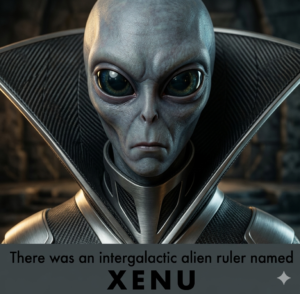



WHAT IS THE STATE OF CLEAR?


 Currently, only senior Scientology ministers can declare someone “Clear,” and the church bars external observers from evaluating those who attain it. Individuals at this level are advised against showing any extraordinary powers, including to junior members, while those in the clearing program may only speak about it with their direct supervisors.

 “From Clear to Eternity“ refers to a 1982 Scientology brochure and recorded briefing, specifically known as “Ron’s Journal 35” (RJ35), in which L. Ron Hubbard outlined the upper levels of the Scientology spiritual “Bridge to Total Freedom.” It featured 64 levels plus another 30 nameless steps. It’s basically designed so there’s always a higher mountain to climb. “Clear“ used to be the ultimate finish line, but then they moved the goalposts to OT VIII—with OT IX, X, and XI still waiting in the wings. It’s the ultimate carrot on a stick to keep people motivated and moving forward.