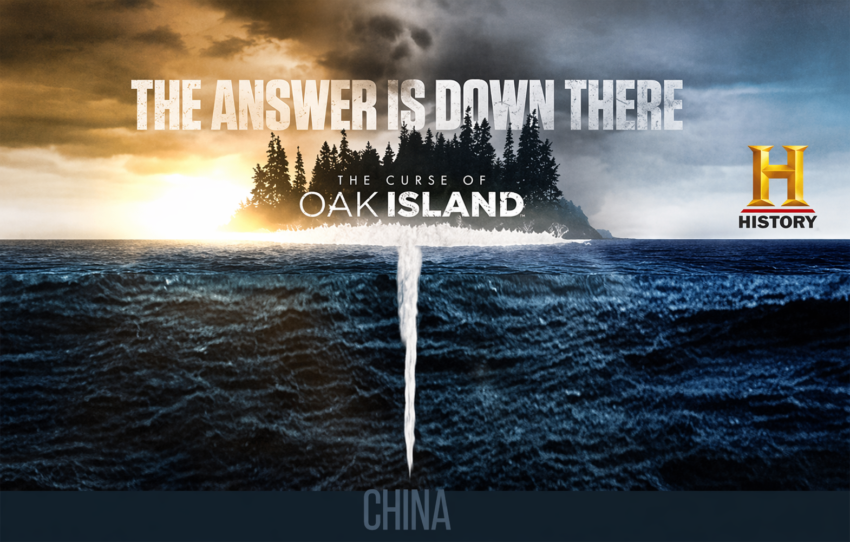
THE CURSE OF OAK ISLAND
The World’s Most Persistent Treasure Hunt — and the Television Empire Built on the Promise of Finding It
How It All Began: America’s Treasure-Hunting Soul
Long before the History Channel ever pointed a camera at a muddy Nova Scotian island, treasure was already woven into the American psyche like a golden thread through homespun cloth. The very geography of the New World seemed to promise buried riches to those bold enough — or reckless enough — to dig for them. From the days when conquistadors marched through the southwest whispering of Cibola, the Seven Cities of Gold, to the sea-salt legends of the Caribbean pirates, the promise of hidden wealth lying just beneath the earth or waves became a founding myth of the American adventure.
It is impossible to fully appreciate the enduring grip of the Oak Island saga without first understanding the broader American tradition of buried treasure lore. That tradition is not small. It is enormous, stretching from the sunlit coasts of Florida to the frozen forests of Vermont, from the Pacific surf to the limestone hills of Texas, and it runs through every generation of American life like an underground river — invisible most of the time, but never entirely gone.
Consider the treasures that history and legend have placed along North America’s shores. In 1715, eleven Spanish ships sank off the Florida coast during a hurricane, scattering an estimated $400 million in gold, silver, and jewels across the seafloor. Salvage companies like 1715 Fleet-Queens Jewels, LLC, continue to find significant hoards from that disaster to this day, including over $1 million in coins recovered in recent years. The story of the Whydah Galley — the flagship of pirate Samuel “Black Sam” Bellamy, sunk off Cape Cod in 1717 — added a chapter of swashbuckling romance to the tradition; when the wreck was discovered in 1984, it yielded more than 200,000 artifacts, including cannons, African jewelry, and thousands of coins.
“Six lives, scores of personal fortunes, piles of wrecked equipment, and tens of thousands of man-hours have been spent so far, and that’s not to mention the blown minds and broken spirits that lie in the wake of what is at once the world’s most famous and frustrating treasure hunt.”
— Randall Sullivan, The Curse of Oak Island: The Story of the World’s Longest Treasure Hunt (Grove Atlantic, 2018)
Closer to home, treasure hunters have long stalked the forests of New England. In Vermont, persistent stories describe a hidden cache of Spanish gold guarded by rattlesnakes in a Fair Haven cave. In Connecticut, tales circulate of a Continental Army convoy carrying gold and ammunition that was ambushed by Tories in 1779, with the chest supposedly still buried near a stream in East Granby. Along the Canadian shores of Lake Ontario, legends persist of a French gunboat from 1758 carrying military documents and a barrel of gold, run aground near what is today Prince Edward County, when a British ship under Captain Bradstreet cut off its escape. That gold, the Ottawa Rewind research blog reports, was reportedly buried in the sands of Little Sandy Bay and never recovered — feeding local folklore for nearly three centuries.
The Treasures of Lima, perhaps the most hypnotic lost-treasure legend of the entire Western Hemisphere, allegedly contains 500,000 gold coins, silver ingots, and golden crowns worth well over £160 million — supposedly buried on Cocos Island, Costa Rica, after being stolen from Peru during the Spanish colonial era, though it may be a blend of documented history and campfire mythology. Even today, in 2025, salvagers off the Florida coast recovered more than 1,000 gold and silver coins from the 1715 Spanish fleet, along with gemstones and gold chain fragments. These are not ancient fictions. They are living hunts.
Against this vast backdrop of obsessive searching and occasional discovery, Oak Island rises — a 140-acre island off the coast of Nova Scotia, neither dramatic in its geography nor rich in its documented history. And yet, for more than two centuries, it has served as the singular focus of America’s treasure-hunting imagination. Why? The answer lies somewhere between psychology, geology, and the peculiar genius of modern television production.
The Money Pit: History’s Most Dangerous Hole in the Ground
The story, as recorded in the earliest surviving documents, is simple enough. In the summer of 1795, a sixteen-year-old named Daniel McGinnis went fishing on Oak Island and stumbled upon a depression in the earth beneath an oak tree bearing curious markings. Believing it consistent with buried treasure, he enlisted two companions — John Smith and Anthony Vaughan — and began digging. They found flagstones two feet down, and what appeared to be oak platforms every ten feet thereafter. The earth was unusually loose. Tool marks scored the pit walls. The three young men reportedly abandoned their excavation at thirty feet due to what later accounts called “superstitious dread.”
“The Oak Island mystery is stories and legends about buried treasure and unexplained objects found on or near Oak Island in Nova Scotia, Canada. Hypotheses about the treasure range from pirate gold to Shakespearean manuscripts to the Holy Grail and the Ark of the Covenant, with the Grail and the Ark having been buried there by the Knights Templar.”
— Wikipedia, “Oak Island Mystery”
It took years before the story received organized attention. Around 1802, the Onslow Company sailed from central Nova Scotia with a serious excavation plan. They drove the pit to roughly ninety feet, documenting layers of logs at ten-foot intervals along with charcoal, putty, coconut fiber, and a large stone inscribed with puzzling symbols. Then came the water — sixty feet of it flooding the shaft overnight, as if the island itself had thrown up a defense. The Onslow Company’s attempts to drain and bypass the flood via secondary shafts failed.
The Truro Company arrived in 1849 with better equipment and worse luck. They re-excavated to 86 feet before the inevitable flooding returned. Switching to a pod-auger drill, they passed through a spruce platform at 98 feet, then hit what their account describes as “metal in pieces” — a phrase that has haunted Oak Island lore ever since. Another shaft, dug 109 feet to the northwest, flooded immediately when it breached the supposed flood tunnel. The Truro Company then discovered architectural sophistication that lends real credibility to the idea of intentional construction: at Smith’s Cove, they found evidence of an engineered flood tunnel system, with coconut fiber and beach rocks arranged as a filter system that channeled tidal seawater directly toward the Money Pit. Whether this was the work of pirates, colonial engineers, or medieval secret societies, it was not an accident of geology.
The 1861 Oak Island Association pushed deeper, but with catastrophic results. A platform at 98 feet collapsed, dropping material — and perhaps treasure — deeper into an unseen void below. A boiler explosion during one attempt killed one worker: the first of the curse’s claimed victims. In the decades that followed, a parade of syndicates and adventurers attacked the island with progressively more sophisticated equipment — and found progressively more discouraging results. Gilbert Hedden’s 1930s excavation, Fred Dunfield’s bulldozer rampage in 1965, and multiple caisson operations in subsequent decades all pushed to extraordinary depths but produced the same maddening result: tantalizing evidence, no conclusive treasure.
The Nova Scotia government took notice early. In 1849, a formal application to dig for treasure on Oak Island was submitted to the provincial government — and refused. That paperwork survives as the earliest official record of regulatory interest in the site. In 1954, Nova Scotia did something no other North American jurisdiction had done before or since: it passed the Treasure Trove Act, legislation specifically governing treasure-hunting on the island. The province claimed ten percent of whatever was found, collected “in kind,” meaning government representatives could choose which ten percent they wanted. The Act was administered by the Department of Natural Resources — because in the eyes of provincial bureaucrats, buried treasure was, legally speaking, a natural resource, managed under the same framework as mining claims.
“Oak Island is the only place in Canada with its own treasure-hunting law. Three acts, seven decades of bureaucracy, and the permits that shaped the search.”
— TheCurseofOakIsland.com, “The Treasure and the Law: The Oak Island Treasure Act”
The Treasure Trove Act was eventually replaced in 2011 by the Oak Island Treasure Act and later amended through the Special Places Protection Act, creating a heritage permit system that required government-appointed archaeologists and gave the province ownership of all non-monetary finds. The bureaucratic structure surrounding this small island grew, in other words, more elaborate with each passing decade — testimony to both the enduring fascination with what might lie beneath, and the growing recognition that whatever is there has historical as well as monetary significance.
The Lagina Brothers: Dream Chasers from Michigan
The current phase of the Oak Island saga began, as Brenda Arledge writes in Medium’s Never Stop Writing, with a single magazine article. Rick Lagina was eleven years old in 1965 when he checked out a Reader’s Digest issue from his school library. The article was titled “Oak Island’s Mysterious Money Pit.” He shared it with his younger brother Marty, and the two quietly carried that dream with them into adulthood — through careers, marriages, and the ordinary passage of decades — until they finally had the resources to act on it.
“The Curse of Oak Island has a little bit of everything — mystery, intrigue, treasure hunting, and centuries of history woven into one stubborn legend. It’s a story that has been told and retold for more than 230 years, and somehow it still refuses to give up its secrets.”
— Brenda Arledge, “The Curse of Oak Island: Why This 230-Year Mystery Still Captivates Us.”
Rick Lagina, the unyielding dreamer—a retired postal worker from the quiet heartland of Kingsford, Michigan—ignites the quest with raw passion, his soul forever captive to the island’s siren call. Enter his brother Marty, the steel-willed engineer and titan of industry, whose empire in natural gas exploration forged a fortune through Terra Energy’s audacious rise, now wielding a relentless, data-honed blade to carve truth from the chaos. United with visionaries Craig Tester and Alan Kostrzewa, they seized the island’s reins, unleashing The Curse of Oak Island in 2014—a History Channel juggernaut that has gripped the world, defying skeptics and unearthing secrets from the depths.
The show has now aired thirteen seasons as of early 2026, making it one of the longest-running reality series in History Channel history. It has attracted millions of viewers in the United States, the United Kingdom, and dozens of other markets, spawning fan websites, academic-adjacent compendiums, social media communities, and at least one serious scholarly treatment — Randall Sullivan’s 2018 book, The Curse of Oak Island: The Story of the World’s Longest Treasure Hunt, published by Grove Atlantic’s Atlantic Monthly Press. (PDF).
Sullivan, a veteran journalist who first wrote about Oak Island for Rolling Stone in 2004, describes the island as something closer to a spiritual experience than an archaeological project — “a Rorschach test for dozens of historical loose ends and broken threads, most of the major conspiracy theories and a good many of the minor ones.” His observation about the island drawing “obsessive-compulsives, crackpots, and the sincerely curious to it like no place on Earth” is not hyperbole. It is precise sociology.
The Archaeological Record: A Legitimate Academic Endorsement
Before dismissing the entire enterprise as entertainment chicanery — a critique we will address in full in a later section — it is worth pausing to acknowledge what the genuine historical and archaeological evidence actually shows. Because here’s the thing about Oak Island that skeptics sometimes too quickly elide: something happened there. The archaeological record, evaluated soberly and without the distorting lens of television production, is genuinely remarkable.
The artifacts recovered at Oak Island constitute a legitimate body of historical evidence that would attract serious attention in any other context. Consider what the Lagina team and their predecessors have found at the site, as compiled by Sky History’s review of the top twenty-five discoveries:
The Money Pit itself — a deliberately engineered excavation of sophisticated design, complete with oak timber platforms at regular ten-foot intervals, has no natural geological explanation. It was built by human hands, for human purposes. This is not contested by serious researchers.
Coconut fiber, found at 60 feet, presents one of the site’s most puzzling anomalies. The nearest coconut trees to Nova Scotia are approximately 1,500 miles away. Whether used as rope material to lower treasure or as drainage filtration in the flood system, this material was transported to the island at considerable effort for some deliberate purpose.
“Two fragments were recovered at borehole H8 in the Money Pit area. These were initially identified as human bone, and later testing showed one was of European ancestry and the other Middle Eastern.”
— Sky History UK, “The Top 25 Treasures Discovered on Oak Island”
Human bone fragments of both European and Middle Eastern genetic origin, recovered from deep boreholes in the Money Pit area, suggest that, at a minimum, multiple individuals of diverse geographic backgrounds were present on the island at some point in its history. This is not evidence easily explained away.
The so-called “swages” — iron objects found at Lot 21 on the western side of the island, dated as far back as the 14th century — suggest the presence of metalworking operations centuries before European colonization of Nova Scotia became established. The team’s archaeological consultants identified them as blacksmith tools consistent with medieval European manufacture.
Carbon-14 testing of wooden structures in the swamp area has yielded dates between 1630 and 1700 for the Eye of the Swamp and related features. A stone road structure tested to approximately 1200 AD. The TOT-1 caisson episode, documented in Season 12, Episode 24 (“Into the Void”), found what archaeologist Helen Sheldon identified as a colonial-era square nail — pre-cut iron consistent with the late 1600s to mid-1700s — in the Lot 5 excavation area.
“It was mentioned that there appeared to be connective tissue between the Stone Road feature dated to 1200 AD, The Eye of the Swamp dated to 1680 AD, and the Stone Platform dated to the 17th Century. It was stated that these features seem to connect to the new areas, like the Cobblestone Pathway and alleged Vault that had been more recently discovered.”
— The Oak Island Compendium, Season 12, Episode 24, “Into the Void” Analysis
This is far from trivial. The Season 12 team also identified what may be connected cobblestone pathways and structural features in the North Swamp, along with carbon-dated support stakes from the late 1600s to early 1700s. Dr. Ian Spooner’s geological analysis confirmed that the cobbles discovered were beach stones placed by human hands, not natural formations. Taken together, these finds indicate sustained human activity on Oak Island spanning centuries — from the medieval period through the early colonial era. That is significant evidence, and it deserves the serious academic attention it has thus far largely been denied, precisely because the television production surrounding the evidence has made it difficult to evaluate it on its scholarly merits.
The documentary record is dense enough that The Oak Island Compendium — an independent research site dedicated to analyzing artifacts and features on a season-by-season basis — has catalogued more than 271 distinct artifacts and 341 documented historical events. The site approaches the evidence with methodological rigor that the television production itself often lacks. Its episode-by-episode artifact analyses provide the most reliable scholarly lens through which to evaluate the physical evidence.
Artifacts and Fascination: Why Viewers Keep Watching Without a Payoff
One of the most interesting sociological puzzles surrounding The Curse of Oak Island is why it continues to attract millions of viewers season after season despite never delivering the spectacular discovery it perpetually promises. The show has now aired more than 260 episodes. It has produced no chest of pirate gold, no cache of Templar manuscripts, no hoard of Marie Antoinette’s jewels. And yet the ratings remain solid, the fan community passionate, and the network committed.
The answer lies partly in the genuine fascination of the artifacts that have been found — and partly in a psychological dynamic that the show exploits with considerable sophistication.
This video and others like it demonstrate the repetitive “Hook” that keeps viewers engaged:
Among the other compelling individual finds: a jeweled brooch recovered near Lot 21 in an area associated with the original 1795 McGinnis discovery. Gary Drayton is credited with discovering the brooch (a silver filigree oval brooch with a garnet or glass stone) near Lot 21 on Oak Island. This find occurred during Season 8 (Episode 1, “The Torchbearer”) of The Curse of Oak Island, in an area tied to early searcher activity close to Daniel McGinnis’s 1795 depression site, and Drayton— the metal-detecting expert known as “Metal-Detecting Ninja”—unearthed it using his signature pinpointer while sweeping a path near stone features. Gary Drayton is covered in our post, “The Bobby Dazzler King of Oak Island: Examining Gary Drayton’s Path from Mudlark to TV “Expert.”
A granite stone found 90 feet down the Money Pit, reportedly inscribed with symbols that one translation renders as “Forty feet below, two million pounds are buried” — though the stone itself has since been lost. A piece of chain found coupled with bone fragments, leading some theorists to speculate about enslaved workers who may have built the pit and been interred in it afterward. And, perhaps most intriguingly, the wood fragments were recovered from extraordinary depths during modern drilling operations.
The wood fragment question is one that this author, an amateur researcher and content creator who has followed the show with close attention, identified as central to the whole enigma: how could original builders have reached depths of 200 feet or more with only hand tools? Modern boring rigs — massive caissons capable of driving steel cylinders into waterlogged clay and fractured limestone — have reached borehole depths approaching and exceeding 200 feet. Core samples from boreholes like H8 and TOT-1 have yielded hand-hewn beams and what appear to be worked wooden materials. But geological analysis suggests an alternative explanation: these deep wood fragments may represent cribbing materials — protective lining logs from 19th-century excavations — that collapsed through geological voids created by the island’s limestone karst formations over the decades. A “solution channel” running through the limestone substrate beneath the Money Pit could have transported debris from shallower collapses to extraordinary depths. Pre-industrial miners could achieve depths of 100 to 110 feet with hand tools and skilled cribbing technique — the 90-to-110-foot range achieved by the Onslow and Truro Companies in the early 1800s being consistent with that limit. Depths beyond that almost certainly reflect the cascading consequences of those earlier excavations rather than original construction.
And yet — the bones. The medieval swages. The coconut fiber. The engineered flood tunnel. These artifacts cannot be explained away as debris from 19th-century search operations. They predate those operations.
The show has proven remarkably effective at presenting this mixture of genuine archaeological mystery and production-engineered ambiguity as a seamless whole, keeping viewers perpetually suspended between genuine curiosity and manufactured suspense. The pattern, as analyst Rukka Nova wrote for Vocal Media, is achingly consistent: an exciting theory is introduced; equipment detects something “unusual”; the team reacts with optimism; the result is inconclusive; the mystery deepens; the cycle resets.
“Finding nothing is actually the best possible outcome for the show. As long as there is just enough ambiguity, the series can continue indefinitely. And it has.”
— Rukka Nova, “The Real Reason Oak Island Will Never Find the Treasure”
The Truman Show Beneath Nova Scotia: Oak Island as Simulated Reality
In 1998, director Peter Weir released The Truman Show — a film in which an ordinary man named Truman Burbank discovers that his entire life has been a staged television production, broadcast to the world without his knowledge. The central conceit of the film is that simulation can be so comprehensive, so carefully constructed, so emotionally authentic in its individual moments, that its subjects — both Truman himself and the billions watching him — cannot distinguish it from reality. The “real” emotions are real. The individual discoveries are genuine. The geography is actual. But the framework within which all of it occurs is manufactured, controlled, and sustained entirely for the benefit of the audience and the profit of the production.
It is, by this analysis, a remarkably apt metaphor for The Curse of Oak Island.
Consider the structural parallels. The island is real. The Lagina brothers are real, their passion genuine, their friendship with the late Dan Blankenship touching and historically documented. The artifacts are real. The boreholes are real. The money spent — reportedly upward of $30 million over the course of the series — is very real. And the mystery, in its original form, is almost certainly real: something happened on Oak Island, probably in the 17th century, that left engineered structures, imported materials, and human remains in the earth.
But the framework within which all of this is experienced — the narrative arc, the seasonal cliffhangers, the “we’re closer than ever” declarations at the end of every episode, the careful pacing of revelations, the strategic deployment of expert commentary, and above all, the perpetual non-resolution — that framework is manufactured. It is manufactured by the History Channel production apparatus, which has a very clear financial incentive to ensure that Oak Island never concludes. As Rukka Nova observes in a second Vocal Media piece, the show’s biggest discovery was never buried in the ground.
“Oak Island’s biggest discovery wasn’t treasure. It was a business model. And once you see it, the entire show makes sense.”
— Rukka Nova, “Oak Island’s Biggest Discovery Was Hidden From Viewers”
The production’s revenue streams are, from a business standpoint, impressive and entirely separate from the treasure hunt itself. Advertising revenue, international syndication deals, streaming residuals, merchandise, and spin-off potential all depend not on the discovery of gold but on the continuation of uncertainty. In this sense, Oak Island’s “treasure” has already been found — it is found at the cash register every quarter, in the form of ratings and licensing fees.
Fan and media speculation points to $16-20 million per season in History Channel revenue, based on production budgets ($5-7M/season for field ops alone), ad rates, syndication, and international licensing—potentially totaling $200-300 million across 12-13 seasons with 20-25 episodes each. These derive from indirect data like Nova Scotia film incentives (30% of costs) and rough ad valuations, but they remain unconfirmed guesses from Reddit, YouTube, and blogs.
Reddit communities dedicated to Oak Island — including r/OakIsland and r/OakIslandDiscussion — have developed sophisticated and occasionally heated analyses of this dynamic. Community members have documented patterns of editorial choice that support the “Truman Show” thesis: results that are vague when specificity would end the mystery; dates that span such wide ranges as to be nearly useless for historical reconstruction; follow-ups to “breakthrough” findings that quietly disappear without resolution. Several former participants and consulting experts have hinted — carefully, given their contractual obligations — that certain findings were downplayed because they were “not compelling television.” Boring truths, as one Vocal Media piece notes with understated precision, do not make good TV.
There is a name for the psychological mechanism that keeps viewers coming back despite knowing, at some level, that the payoff is perpetually deferred: the sunk-cost fallacy. Viewers who have invested hundreds of hours and genuine emotional engagement in the Lagina brothers’ quest find it increasingly difficult to abandon the show before it resolves — even as they recognize, on some level, that resolution may never come.
Behavioral Economics: Sunk Cost Fallacy
Individuals commit the sunk cost fallacy when they continue a behavior or endeavor as a result of previously invested resources (time, money or effort) (Arkes & Blumer, 1985). This fallacy, which is related to loss aversion and status quo bias, can also be viewed as bias resulting from an ongoing commitment.
For example, individuals sometimes order too much food and then over-eat just to “get their money’s worth”. Similarly, a person may have a $20 ticket to a concert and then drive for hours through a blizzard, just because she feels that she has to attend due to having made the initial investment. If the costs outweigh the benefits, the extra costs incurred (inconvenience, time or even money) are held in a different mental account than the one associated with the ticket transaction (Thaler, 1999).
The show exploits this dynamic with the skill of a Las Vegas casino designer: reveal enough to maintain hope, withhold enough to prevent closure, reset the cycle with each new episode. “Boring truths don’t make good TV,” as Vocal Media’s analysis concludes. “A mundane explanation ends the mystery. An ambiguous one keeps audiences watching.”
Controversies, Internal Conflicts, and the Curse of the Deed
The shadowed saga of Oak Island is inextricably woven with the brutal feuds of those who clawed for dominion over its cursed soil—a chronicle where ambition, betrayal, and legal chicanery proved as lethal as the island’s infamous floods and collapses. Nova Scotia’s Treasure Trove Act of 1861, amended and reinforced through decades of provincial regulations, erected an ironclad regime demanding treasure trove licenses for any excavation, mandating explicit landowner consent from all controlling parties. This bureaucratic gauntlet transformed deeds and permissions into weapons sharper than any pickaxe, ensnaring searchers in protracted wars that often buried progress deeper than any shaft.
No chapter cuts more poignantly than the epic of Dan Blankenship, the tenacious Florida contractor who descended upon the ravaged isle in 1965, mere months after Robert Dunfield’s catastrophic bulldozer rampage had gouged the Money Pit anew—scouring away topsoil, exposing ancient cribbing to ruin, and flooding chambers in a frenzy of mechanized folly. Undeterred, Blankenship forged a half-century odyssey of unyielding devotion, transforming himself into the island’s most meticulous chronicler before the Lagina juggernaut arrived. He hand-dug test pits, pioneered seismic surveys, and masterminded the legendary 10-X borehole in 1971—a daring 180-foot probe that pierced wood platforms, sheared metal, and captured haunting diver footage of potential voids below, evidence that still tantalizes theorists today. For decades, he dwelled in a modest house on-site, patrolling through blistering summers and howling Maritime winters, embodying a lone sentinel against the mystery’s relentless maw.
The tragedy crested like a tidal surge in the early 2000s, when Blankenship—his health fraying but spirit unbroken—was legally exiled from the very ground he had claimed as his life’s battlefield. Oak Island Tours Inc., the company he co-owned with longtime partner David Tobias, devolved into a venomous arena of recrimination. Tobias, clutching the controlling vote as majority shareholder, wielded veto power like a despot’s scepter. When the duo’s treasure trove licenses lapsed in July 2003, four rival applications flooded the provincial Registrar’s desk—including Tobias’s own Oak Island Exploration Co. Blankenship scrambled to renew, but law demanded unanimous landowner consent—a consent Tobias icily denied, stranding his partner’s bid in limbo. A faceless civil servant, armed with statutes but bereft of the island’s labyrinthine lore, had no choice but to reject Blankenship outright, adjudicating a blood feud that had simmered since the 1980s over money, methods, and mistrust. Tobias’s faction pressed on briefly, but by 2006, the Michigan Group (Lagina precursors) bought him out, paving the Laginas’ path—leaving Blankenship to watch from afar as his painstaking legacy fueled a television empire.
“I turned 80 in May and won’t get another chance.”
— Dan Blankenship, as reported by the Chronicle Herald, via The Oak Island Treasure Act analysis
Blankenship’s son Dave eventually became a fixture on the television series, serving as the Laginas’ most valuable institutional resource — a living library of on-island experience. According to TV Insider’s reporting, Dave Blankenship’s departure from the show following an injury was a genuinely affecting moment for longtime viewers, symbolizing the closing of a chapter in the island’s human story. His father, Dan, died in 2019 at the age of 95, having spent more than half a century searching without finding what he sought.
The academic and archaeological community has maintained a complicated relationship with the Oak Island project throughout the television era. Professional archaeologists are generally skeptical of the show’s methodology, which relies on random drilling based on intuition and loosely connected theories rather than the controlled excavation, documentation, context, and peer review that define legitimate archaeological practice. The show “focuses on dramatic reactions, teasers, cliffhanger narration, and ‘Could it be?’ speculation,” as Vocal Media’s analysis pointedly observes, where professional archaeology focuses on “controlled excavation, documentation, context, and peer review.”
At the same time, the show has employed credentialed archaeologists — including Helen Sheldon and Dr. Ian Spooner — as consulting experts, and the artifact analyses documented by these professionals have genuine scholarly value that is often obscured by the production’s entertainment imperatives. The Oak Island Compendium’s independent analyses, free from production constraints, provide the most academically useful record of what has actually been found and what the evidence legitimately suggests.
The question of what “the treasure” even is has become a controversy in its own right. The treasure theories span an almost absurd range: Marie Antoinette’s jewels (the timing is plausible — the French monarchy’s treasures were being dispersed in exactly the period when the Money Pit was allegedly constructed); Shakespearean manuscripts (a theory advanced by those who believe Francis Bacon staged the Shakespeare canon and needed to hide proof); Spanish pirate gold from Caribbean raids; the Holy Grail and the Ark of the Covenant buried by fleeing Knights Templar; and most recently, evidence connecting the island to the Knights of Malta, based on the 1630-1700 carbon dating of swamp structures. The absence of a single coherent treasure theory is itself a kind of evidence — evidence that the “treasure” may be so many things to so many people precisely because the show has cultivated and monetized that ambiguity from the beginning.
The Deep Drilling Achievement: Engineering Facts and Their Implications
The technical accomplishments of the Lagina team’s drilling program deserve separate treatment, both because they are genuinely impressive and because they are essential to understanding what the show’s most dramatic evidence actually represents.
Modern equipment, like caissons and core drills, allows the team to probe far deeper than any historical effort. The TB-1 caisson — documented in Season 12, Episode 15 (“Channeling the Solution”) — reached a depth of approximately 164 feet before encountering what appeared to be the solution channel, the limestone void system running beneath the Money Pit area. The TOT-1 caisson, installed in the same season’s final episode, was positioned approximately ten feet south of the TB-1 site after TB-1 had to be abandoned due to a ground collapse — testament to the genuine engineering dangers that attend the work.
“The depth of the caisson was about 164 feet. She also mentioned there appears to be no plug in the caisson and is cutting through rock. The caisson had most likely entered the Solution Channel that resides beneath this area.”
— The Oak Island Compendium, Season 12, Episode 15 Analysis
The key engineering question — whether any of the wood found at depths approaching or exceeding 200 feet could represent original construction rather than cascaded debris — turns on an understanding of the island’s subsurface geology. The “solution channel” is a natural limestone karst feature: a dissolved void in the bedrock that runs through the Money Pit area. Limestone karst is common in Nova Scotia and is capable of creating natural voids that can swallow surface materials and redistribute them unpredictably. The wood fragments that viewers find so dramatic could, in principle, have originated at shallower depths and migrated downward through karst dissolution over decades or centuries. The collapse of the 1861 Oak Island Association’s platform at 98 feet, which dropped material into an unseen void below the excavated zone, offers a historical precedent for exactly this kind of cascading redistribution.
Reddit’s r/OakIsland community has engaged in detailed technical discussions of the wood fragment evidence, with contributors noting that the species and condition of the wood recovered from great depths can offer clues about its origin. Wood from a 17th-century deposit would be expected to show different preservation characteristics from wood from a 19th-century collapse, though these distinctions are difficult to establish definitively from television footage alone.
What the Season 12 and Season 13 drilling programs have established is that the island’s subsurface is far more geologically complex than earlier search efforts appreciated. The solution channel acts as a kind of underground drainage system that may have frustrated every excavation attempt, not by the cleverness of original engineers but by the implacable physics of karst hydrology. If the treasure — whatever it is — was placed in a chamber above the natural void, the void’s collapse over time may have redistributed it in ways that make conventional excavation essentially futile. Only the caisson technology now being deployed has any realistic chance of penetrating this zone safely.
Season 13 and the Boulder Vault: A Genuine Breakthrough?
As of March 2026, the series is airing its thirteenth season on the History Channel, and the production is generating its most dramatic claims to date. The team is investigating what appears to be a potential vault or chamber found beneath a 40,000-pound boulder, with what production describes as a “hatch” structure suggesting deliberate concealment. New evidence points to visitor activity potentially dating to the 14th century, consistent with the Knights Templar and Knights of Malta theories that have gained traction in recent seasons.
A March 2026 YouTube clip published by the History Channel’s official channel, titled “Beneath the Boulder: A Breakthrough? (S13),” shows the team’s reaction to what appears to be a significant anomaly beneath the massive stone. The team is utilizing advanced drilling and imaging technologies — including ground-penetrating radar, electromagnetic surveys, and fiber-optic camera systems — to assess the feature without destroying it.
Whether this represents a genuine vault, a natural geological feature, or another near-miss in the show’s long parade of “breakthroughs” remains to be seen. The production structure virtually guarantees that whatever is found will be presented in the most dramatic possible terms while stopping short of the definitive discovery that would end the series. But it is worth noting that the boulder location — separate from the Money Pit area and its tortured history of collapsed shafts and redistributed materials — offers the possibility of a more interpretable result than the water-saturated, geologically disturbed Money Pit zone.
The Detective’s Verdict: How This All Ends
Every good detective story reaches its final reveal—the moment when the investigator, like Columbo in the last minutes of an episode, quietly gathers the scattered clues, ties them together, and then delivers the solution that had been hiding in plain sight all along. Let us try that same approach with Oak Island.
The physical evidence, evaluated on its scholarly merits and stripped of production gloss, supports the following conclusions with reasonable confidence:
(1) Human activity on Oak Island predating European colonization of Nova Scotia occurred, possibly as early as the 12th to 14th centuries, based on the stone road dating and the medieval European metallurgy of the swages.
(2) A significant engineering project occurred on the island in the late 17th to early 18th century — the period consistent with the flood system construction, the carbon-dated swamp structures, and the coconut fiber at depth. This project was sophisticated, deliberate, and expensive in human labor.
(3) The project involved actors of diverse geographic origin, as evidenced by bone fragments of both European and Middle Eastern genetic ancestry.
(4) Whatever was placed in the Money Pit area was subsequently redistributed and possibly destroyed by the cascading consequences of two centuries of increasingly aggressive excavation and by the geological dynamics of the underlying limestone karst.
This last point is the most devastating for treasure hunters and the most liberating for historical analysts. The treasure, in its original form, may no longer exist as a recoverable deposit. What the island preserves instead is an archaeological record of the effort that went into hiding something — evidence of extraordinary human ingenuity, labor, and purpose that has been partially obscured by subsequent searchers’ own efforts to find it.
How will the television series end? Three scenarios present themselves. In the first — the most production-friendly — the team finds something significant enough to constitute a “discovery” without being comprehensive enough to close the mystery. A chamber with artifacts. A hidden room beneath the boulder. Something visually compelling and historically interesting that can be framed as vindication without resolution. The show wraps its thirteenth season on a high note, returns for a fourteenth with new angles to investigate, and the cycle continues.
In the second scenario, the series ends not with a discovery but with a decision. Rick and Marty Lagina — both in their seventies — announce that the work will continue but that the television production has run its course. If the island passes into the hands of the Oak Island Tourism Society or a heritage preservation body, the archaeological record is properly documented and submitted to peer review, and the question of what lies in the Money Pit is resolved, at least partially, by the kind of methodical scientific analysis that television has never allowed.
In the third scenario — the most honest and the most unsatisfying — the show is cancelled by the network for the mundane reason that ratings have finally declined to an unsustainable level, and Oak Island joins the long list of American treasure hunts that ended not with a discovery but with an invoice. The money is gone. The equipment is removed. The island reverts to the quiet of Mahone Bay, keeping whatever secrets it has.
As for Rick and Marty Lagina — whatever the show’s fate, they have already achieved something considerable. They have brought rigorous modern technology to bear on a genuine historical mystery, recovered and documented artifacts of real scholarly significance, and demonstrated that the island’s subsurface structures are far more extensive than any previous investigator suspected. They have funded serious archaeological work that, stripped of its entertainment framing, constitutes a meaningful contribution to Nova Scotian historical research. And they have introduced millions of viewers to the deeper questions — about pre-Columbian contact, about the Knights Templar and the Knights of Malta, about the mechanics of 17th-century engineering — that give the Oak Island mystery its real intellectual substance.
“Oak Island had long been a Rorschach test for dozens of historical loose ends and broken threads, most of the major conspiracy theories and a good many of the minor ones, and just about every tale of lost treasure out there. The island drew obsessive-compulsives, crackpots, and the sincerely curious to it like no place on Earth.”
— Randall Sullivan, The Curse of Oak Island (Grove Atlantic, 2018)
Conclusion: The Real Treasure Was the Questions We Asked Along the Way
There is a version of this story in which Oak Island is simply a hole in the ground — a geological curiosity magnified by folklore, compounded by obsession, and monetized by television. In that version, the Money Pit is a natural sinkhole that early settlers mistook for a treasure vault, and two centuries of increasingly expensive digging have primarily destroyed the original features that might have resolved the question.
But there is another version — one supported by coconut fiber transported 1,500 miles, by medieval iron swages, by human bone of Middle Eastern genetic origin, by an engineered flood tunnel of genuine sophistication, by carbon dates stretching back to the 12th century — in which something extraordinary actually happened on this small island off the coast of Nova Scotia. Something planned, expensive, secret, and important enough to protect with an engineering system that has defeated every excavation attempt for two centuries.
The Curse of Oak Island, both the mystery and the television series, endures because it lives in the space between those two versions. It offers the genuine thrill of historical mystery without ever resolving it. It provides the emotional satisfaction of treasure hunting without the deflating reality of coming up empty. It is, in this sense, the perfect American entertainment product: all promise, perpetual deferral, and just enough authentic evidence to keep the dream alive.
Whether that constitutes a curse or a gift depends entirely on what you came looking for. Those who came for gold have been disappointed. Those who came for history have found something genuinely valuable. And those who came to watch two brothers from Michigan chase a boyhood dream — they have been richly rewarded, season after season, in the currency of story.
 And that, when all is drilled down, flooded out, dramatically re-flooded, re-drilled with a bigger caisson, sifted through a lab with a $40,000 XRF scanner, debated by a rotating cast of experts who all say “this changes everything” and then quietly disappear, may be the only treasure Oak Island was ever truly capable of yielding. Unless, of course, you were holding out hope that if Rick and Marty just kept drilling, they’d eventually punch through to China and find the treasure on the other side. At this point, given the budget and the timeline, that plan is not entirely off the table.
A Note on Research Methods and Accuracy
In recent years, some have voiced concern that artificial intelligence may distort facts or introduce inaccuracies into serious research. That criticism deserves acknowledgment. However, AI has now evolved into the most powerful research instrument available to any dedicated scholar—capable of analyzing vast datasets, cross‑referencing historical records, and surfacing overlooked connections across sources. This work represents a collaboration between the author’s historical inquiry, verified primary documentation, and the advanced analytic capabilities of AI research tools. Here, AI was not used as a ghostwriter or a shortcut for scholarship, but as a disciplined research partner devoted to rigor, accuracy, and transparency.
Every factual claim in this work has been subjected to active verification. Where AI‑generated content was used as a starting point, it was tested against primary sources, peer‑reviewed scholarship, official institutional documentation, and established historical records. Where discrepancies were found—and they were found—corrections were made. The author has made every reasonable effort to ensure that quotations are accurately attributed, historical details are precisely rendered, and theological claims fairly represent the positions they describe or critique.
That said, no work of this scope is immune to error, and the author has no interest in perpetuating inaccuracies in the service of an argument. If you are a reader—whether sympathetic, skeptical, or hostile to the conclusions drawn here—and you identify a factual error, a misattributed source, a misrepresented teaching, or a claim that cannot be substantiated, you are warmly and genuinely invited to say so. Reach out. The goal of this work is not to win a debate but to get the history right. Corrections offered in good faith will be received in the same spirit, and verified corrections will be incorporated into future editions without hesitation.
Truth, after all, has nothing to fear from scrutiny—and neither does this work.
Primary Resources:
• https://www.reddit.com/r/history/comments/8vrec4/what_are_some_notorious_cases_of_buried_treasure/
• https://ottawarewind.com/2015/01/05/the-legend-of-lost-gold-buried-treasure-on-the-shores-of-lake-ontario/
• https://en.wikipedia.org/wiki/Oak_Island_mystery
• https://www.oakislandmystery.com/media/com_form2content/documents/c2/a2557/f61/Tab%203.pdf
• https://www.reddit.com/r/OakIsland/comments/1ip0mr7/the_wood_fragments_they_brought_up_from_the/
• https://www.theoakislandcompendium.com/post/season-12-episode-24-into-the-void-episode-analysis
• https://www.facebook.com/groups/1417080515299172/posts/2238514783155737/
• https://www.theoakislandcompendium.com/post/season-12-episode-15-channeling-the-solution-artifact-and-feature-analysis
• https://finestknown.com/1805-2-2-2-2
• https://www.tvinsider.com/1225886/has-curse-of-oak-island-treasure-been-found-lagina-brothers/
• https://medium.com/never-stop-writing/the-curse-of-oak-island-4434693a8eec
• https://www.history.co.uk/shows/the-curse-of-oak-island/articles/the-top-25-treasures-discovered-on-oak-island-so-far
• https://www.reddit.com/r/OakIsland/comments/1iykbde/when_the_show_finally_ends_and_there_was_no/
• https://vocal.media/geeks/oak-island-s-biggest-discovery-was-hidden-from-viewers