
An essay in Christian apologetics:
A Traditional Christian Response to a Mormon Missionary Tract
❖ ❖ ❖
Introduction: A List That Has Outlived Its Origin
Few Latter-day Saint apologetic instruments have enjoyed the quiet longevity of the so-called ‘17 Points of the True Church.’ For more than half a century, the list has circulated on mimeographed cards, in stake-conference handouts, on the back pages of missionary discussions, and across countless social-media threads. Its appeal lies in its simplicity: seventeen criteria, each tethered to a biblical proof-text, said to mark out the one authentic church Christ established. Anyone may run the test, the tract implies, and only one church on earth will pass.
The list’s actual provenance is more modest than its reputation suggests. According to the Foundation for Apologetic Information and Research (FAIR), the list is associated with a man named Floyd Weston, who is said to have helped compile it as a young man and to have shared it widely in firesides and personal testimonies for the rest of his life. FAIR itself takes pains to note that the list “has not been used in any official Church publications or adopted by the Church in any other way,” and acknowledges that “the claims of the restored gospel stand independent of Weston’s list.” Yet, despite its semi-official status, the list functions as a working catechism for many Latter-day Saint missionaries. Christian believers who encounter it deserve a careful, charitable answer.
My question is about that fellow who wrote the ‘17 Points of the True Church’ and the validity of his story… my testimony is in no way based on the ‘17 Points,’ and I feel that it is overused and overemphasized within the Church.
— Anonymous Latter-day Saint inquiry to FAIR Apologetics
That telling concession—“overused and overemphasized”—comes not from a critic but from a faithful Latter-day Saint. It suggests an important asymmetry. Many evangelistic encounters that begin with the 17 Points proceed as if the list were an unanswerable case. In reality, it is a piece of denominational folklore that has gradually accreted a kind of authority by repetition. The discipline of careful reading—reading each proof-text in context, weighing each claim against the whole canon of Scripture, and asking whether each criterion actually does what the tract says it does—quickly reveals that the document is far less formidable than its admirers suppose.
This essay offers a patient, scholarly response. It is written without polemic, without ridicule, and without the assumption that Latter-day Saint believers are insincere or unintelligent. The aim is the opposite: to honor our LDS neighbors by taking their argument seriously enough to examine it. The path of the essay is, first, to set out the philosophical premise that the tract quietly depends upon—the conflation of claiming and proving. Second, it surveys the hidden interpretive assumptions that the list smuggles into every conversation. Third, it walks through the seventeen criteria thematically, attending to the biblical citations the tract supplies. Fourth, it offers a complementary list of seventeen biblically grounded marks of the true Church. Fifth, it acknowledges the candid voices within Latter-day Saint scholarship who themselves urge restraint in how the “only true church” doctrine is used. A brief conclusion follows.
❖ ❖ ❖
I. Claim Is Not Proof: The Philosophical Premise
Before examining any single point, the essay must address an assumption that underlies the entire document. The 17 Points list assumes that a church may be authenticated by accumulating descriptive matches—that if one organization happens to bear a certain name, observe certain practices, and assert certain prerogatives, the cumulative weight of correspondence amounts to proof of divine commission. This is a reasonable place to begin a conversation, but it is not a sound place to end one. Correspondence is not sufficient causation, and assertion is not establishment.
A claim, however confidently spoken, is a human construct. Reality is not. To declare “this is the true church” is to issue a proposition that must be tested against evidence, internal consistency, and the broader witness of Scripture. The proposition does not become true by being repeated, nor by being held with sincere conviction, nor by being affirmed in unison by tens of millions of devout members. The Apostle Paul himself, in language unmistakable for its plainness, instructed the Thessalonians to “prove all things” and to “hold fast that which is good” (1 Thessalonians 5:21). Sincerity is admirable; sincerity does not adjudicate truth.
This is not a stray epistemological observation. It is a documented psychological reality. Cognitive scientists have given a name to the phenomenon by which repeated statements come to feel true regardless of their evidentiary status: the illusory truth effect. The seminal 1977 study at Villanova and Temple Universities, replicated repeatedly since, demonstrated that participants rated repeated statements as more believable than unrepeated statements, even when they had been warned that repetition was irrelevant to truth-value. Familiarity, the researchers found, can override rational evaluation. A 2015 study at Vanderbilt confirmed that even participants who knew the correct answer to a factual question could be moved away from it by simply hearing the false alternative often enough. The brain, when processing a familiar claim more fluently than a novel one, misreads ease of processing as evidence of veracity.
Repetition makes statements easier to process (i.e., fluent) relative to new statements, leading people to the (sometimes) false conclusion that they are more truthful… Knowledge does not protect against illusory truth.
— Fazio, Brashier, Payne & Marsh, Journal of Experimental Psychology: General (2015)
This is not an argument that Latter-day Saints are uniquely susceptible to such bias—every human being is. It is, however, a reminder that the cumulative force of a recited list, an oft-told conversion narrative, or a missionary card displayed weekly should not be confused with the force of a logical demonstration. Dr. Kenneth Acha, writing for Servants University, frames the principle in a single sentence: “Just because I am convinced that I am right doesn’t mean that I am right.” The Dunning-Kruger phenomenon, he notes, reliably leads those least informed about a domain to rate themselves most highly within it. The Apostle Apollos, in Acts 18, is the New Testament’s gentle case study: a man eloquent, learned, and convinced, who nevertheless required Priscilla and Aquila to explain “the way of God more perfectly.” Conviction had not protected him from incompleteness. Humility before evidence remains the only safeguard.
These observations do not by themselves refute the 17 Points. They establish a methodological discipline. The Latter-day Saint missionary who confidently presents the list is not unkind, dishonest, or foolish; he is simply asking the inquirer to do something the human mind does only with effort—namely, to evaluate each premise on its own merits rather than yielding to the rhetorical momentum of the whole.
❖ ❖ ❖
II. The Hidden Assumptions Behind the Seventeen
Read carefully, the 17 Points presuppose at least four convictions before the first criterion is examined. None of these convictions is self-evidently biblical, and each deserves a hearing before the list can be evaluated on its own terms.
Assumption 1: That the ‘true church’ is a single, visible, organizational entity
The list presumes that the Church Christ founded is an ecclesiastical organization with discoverable institutional features—an address, a hierarchy, a list of practices that can be checked off. The New Testament, however, speaks of the Church in terms that are predominantly relational and pneumatic. Christ promised to build His Church on the confession of His divine Sonship (Matthew 16:16–18), assured His disciples that wherever two or three are gathered in His name, He is there in their midst (Matthew 18:20), and described His Body as composed of those grafted into the True Vine (John 15). Paul addressed his epistles not to a worldwide denomination but to the saints “at Rome,” “at Corinth,” “at Philippi.” Even the FAIR website concedes that the assumptions underlying the 17 Points are “highly dependent upon a worldview widely assumed by Utah Mormons, but which rarely reflects the situation of those who are not members of the Church.”
Assumption 2: That descriptive features can be promoted to prescriptive requirements
Many of the criteria on the list take a phenomenon described in the New Testament and treat it as a binding requirement on every subsequent generation. That a particular convert was baptized by immersion, that hands were laid on a particular believer, that a specific officer was appointed in a specific way—these become absolute marks rather than historically contingent practices. Sharon Lindbloom of Mormonism Research Ministry observes that by this logic, the list might just as well demand that the true Church require new converts to spend three days fasting in blindness, since that is how the Apostle Paul began his Christian walk in Acts 9. The methodological problem is the silent move from description to prescription.
Assumption 3: That the entire Church utterly disappeared from the earth
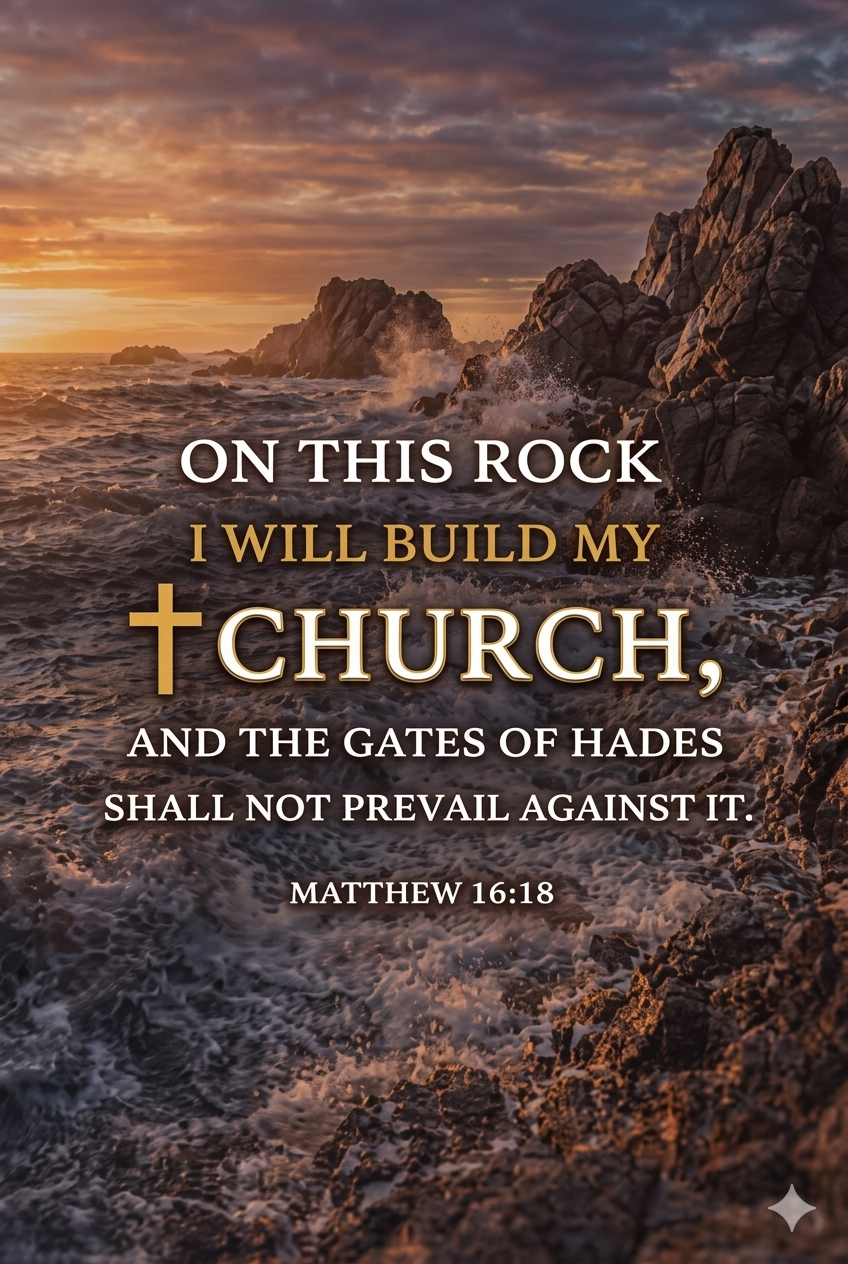
The list’s fifteenth criterion—that the true church must be a ‘restored’ church—requires the prior conclusion that the original Church was wholly extinguished. This is a substantial historical and theological claim. Christ Himself declared that “the gates of hell shall not prevail against” His Church (Matthew 16:18), and Paul ascribed to God the glory “in the church by Christ Jesus throughout all ages, world without end” (Ephesians 3:21). Even sympathetic Latter-day Saint scholars acknowledge tension here. Elder Alexander B. Morrison, in his Deseret Book volume on the Apostasy, frankly concedes that “the view that changes in the early church resulted in the descent of a blanket of stygian darkness over the entire earth… simply doesn’t stand up to the scrutiny of modern scholarship.”
Assumption 4: That a positive checklist can replace the central Gospel question
Most consequentially, the 17 Points list never asks the question Paul placed at the center of his preaching: how is a sinner reconciled to a holy God? The list contains no point on justification, no point on the sufficiency of Christ’s atonement, and no point on saving faith. The omission is not incidental; it is the silence that allows everything else on the list to stand. As we shall see, the items that are present are too thin to bear the weight of the conclusion the tract draws.
❖ ❖ ❖
III. Examining the Seventeen Points
The seventeen criteria are best examined thematically rather than seriatim. Many are variations on a common idea; several depend on a single hermeneutical move; one or two stand by themselves. The following groupings preserve the integrity of the list while permitting a coherent response.
A. Subjective Claims That Cannot Decide Between Rival Churches (Points 1, 5, 12, 13)
Four of the seventeen points are claims of the kind that any religious organization may make, and many do. Point 1: Christ organized the church. Point 5: The church must claim divine authority. Point 12: Officers must be called by God. Point 13: The church must claim revelation from God. Each of these is offered as a discriminating mark, but in fact, none of them discriminates anything. The Watch Tower Bible and Tract Society of Jehovah’s Witnesses claims that Christ organized its church, possesses divine authority, ordains officers by God’s call, and receives revelation. The Roman Catholic Church makes precisely the same four claims. Eastern Orthodoxy does the same. So do innumerable Protestant denominations, charismatic ministries, and independent congregations. The claim cannot do the work of authentication, because the claim is universal. As Bill McKeever of Mormonism Research Ministry plainly notes, “all cultists believe they are called of God” and “all cultists claim revelation from God.” The mere assertion settles nothing.
B. Bible Passages Wrenched from Context (Points 2, 5, 6)
A second group of points cites Scripture in a way that, on examination, does not support the claim being made. Point 2 insists that the true church must bear the name of Jesus Christ, citing Ephesians 5:23. The verse reads: “For the husband is the head of the wife, even as Christ is the head of the church, his body, and is himself its Saviour.” It says nothing whatever about the formal name of the church. Sharon Lindbloom’s observation is decisive: “Nothing here speaks to the name of the true church.” Furthermore, by the tract’s own logic, the LDS body would have been a false church from 1834 to 1838, the years during which it was officially known simply as ‘The Church of the Latter-day Saints’ without the name of Christ in its title.
Point 5 cites Hebrews 5:4–10. Read in context, this passage is not about the church’s authority; it is a Christological comparison between the Old Testament priesthood and the unique high priesthood of Jesus, “called of God a high priest after the order of Melchisedec” (Hebrews 5:10). The passage exalts the singular priestly office of Christ Himself; it does not establish a template for ecclesiastical succession.
Point 6—that the true church must have no paid ministry—is one of the more interesting cases. Sharon Lindbloom’s analysis is worth quoting at length:
In 1 Corinthians 9 Paul talks of his desire and commitment to preach the gospel free of charge. This is Paul’s personal conviction, not a command for the church. Paul makes this clear in his preceding remarks when he argues that ministers of the Gospel are entitled to material blessings from those whom they serve. Paul writes, “In the same way, the Lord commanded that those who proclaim the gospel should get their living by the gospel” (1 Corinthians 9:14). So in context we find that, rather than a command for an unpaid ministry, Jesus commanded the opposite!
— Sharon Lindbloom, Mormonism Research Ministry
Moreover, the practical premise of the point is contestable on its own ground. As McKeever notes, Latter-day Saint General Authorities at Church headquarters in Salt Lake City do, in fact, receive remuneration in the form of stipends and living allowances; the all-volunteer character of LDS ministry properly applies only to the local lay leadership of wards and stakes, not to the highest ecclesiastical levels of the institution.
C. Theological Departures from Historic Christianity (Points 10, 11)
Two of the points commit the writer to specific theological positions that distinguish Latter-day Saint teaching from the historic Christian creeds. Point 10 affirms that God and Jesus are separate and distinct individuals; Point 11 affirms that both have bodies of flesh and bone. Christians of all confessional families gladly affirm the personal distinction between the Father and the Son—that is the heart of Trinitarian theology, not a denial of it. What historic Christianity rejects is the further claim, particular to Latter-day Saint theology, that the Father and the Son are two separate deities, each possessing physical, corporeal bodies.
The biblical witness on the nature of God is unequivocal: “God is a Spirit: and they that worship him must worship him in spirit and in truth” (John 4:24). Solomon, dedicating the temple, prayed: “will God indeed dwell on the earth? behold, the heaven and heaven of heavens cannot contain thee” (1 Kings 8:27). To Israel God declared, “I am God, and not man” (Hosea 11:9). The Shema thunders through both Testaments: “Hear, O Israel: The Lord our God is one Lord” (Deuteronomy 6:4). Jesus Himself quoted it as the foremost commandment (Mark 12:29). The risen Christ’s physical body, gloriously real and material in Luke 24, does not retroactively impose corporeality on the Father, who “dwelleth not in temples made with hands” (Acts 17:24). Even Joseph Smith’s own early theology, expressed in the 1835 Lectures on Faith (Lecture Fifth), described God the Father as “a personage of spirit” before later teaching reversed the formulation.
D. Practices Treated as Marks Rather Than Means (Points 7, 8, 9, 16)
A further group of points concerns specific practices. Baptism by immersion, the laying on of hands for the Holy Spirit, divine healing, and baptism for the dead are each offered as criteria of the true Church. Christians of many traditions joyfully practice the first three (with varying convictions concerning mode and timing), and biblical evidence amply supports each in its own context. None of these practices, however, was given as a discriminator between competing visible churches in the last days. They were means of grace, ministry, and witness, not litmus tests.
Point 16—baptism for the dead, drawn from 1 Corinthians 15:29, deserves particular note. The passage is, by common scholarly recognition, one of the most contested verses in the Pauline corpus. Evangelical pastor John MacArthur observes that “there are at least forty different views about what that verse means.” Notably, Paul’s grammar shifts to the third person (“what shall they do… why are they then baptized…?”). He distances himself from the practice. He does not endorse it; he refers to it, in passing, to make a separate argument about the resurrection. No other New Testament passage commands or describes baptism for the dead, and no orthodox stream of Christian practice has ever sanctioned it. To build a mark of the true church on a single, exegetically disputed, third-person reference is to weigh a load the verse cannot bear.
E. The Restoration Claim (Point 15)
Point 15 asserts that the true church must be a restored church. The criterion does double duty, both naming a characteristic and silently smuggling in the historical premise that the entire list requires. As noted above, restoration presupposes total apostasy. But Christ promised the perpetuity of His Church, and the historical record—despite real medieval corruption that genuinely demanded reformation—never shows the complete extinguishment of authentic Christian witness. Faithful believers existed in every century: the desert fathers, the Celtic missionaries, the Waldensians, the early reformers, the unnamed multitudes who confessed Christ in obscurity. Even Latter-day Saint apostles acknowledge this. Elder Boyd K. Packer himself observed that “we owe an immense debt to the protesters and the reformers who preserved the scriptures and translated them. They knew something had been lost. They kept the flame alive as best they could. Many of them were martyrs.” One does not need a 19th-century restoration to inherit a 1st-century gospel.
F. By Their Fruits (Point 17)
The final point appeals to Christ’s teaching in Matthew 7:20: “by their fruits ye shall know them.” The original context is striking. Jesus is warning His disciples not against false churches but against false prophets—“which come to you in sheep’s clothing, but inwardly they are ravening wolves.” The test is meant to expose teachers whose doctrine produces destructive fruit. Bill McKeever notes the irony: the very passage cited as an LDS proof-text is one that historic Christianity has long invoked when measuring claims of nineteenth-century prophetic revelation against the canonical word. The standard cuts both ways.
❖ ❖ ❖
IV. A Faithful Response: Seventeen Biblical Marks of Christ’s Church
It is fair to ask what affirmative marks Scripture itself sets forth for Christ’s true Church. Amy K. Hall of Stand to Reason, building upon decades of comparable Christian responses, has helpfully assembled an alternative seventeen points drawn directly from biblical teaching. Several are presented here in summary, not as a counter-tract but as a constructive contribution to the conversation:
1. The true church must base its doctrine on what the Bible teaches (2 Timothy 3:16–17; 2 Peter 1:21).
2. The true church must teach that there is only one God (Isaiah 43:10; 44:6, 8).
3. The true church must teach that God has been God from all eternity (Psalm 90:2; Malachi 3:6; James 1:17).
4. The true church must worship only one God—the LORD, Jehovah (Exodus 34:14).
5. The true church must teach that God does not have a physical body (John 4:24; 1 Kings 8:27; John 1:18; 1 Timothy 1:17).
6. The true church must teach that within the one being of God there are three Persons (Matthew 3:16–17; 28:19–20).
7. The true church must teach that the eternal, fully divine person of Jesus took on a human nature when He came to earth (Philippians 2:5–8; John 1:14).
8. The true church must worship Jesus (Matthew 2:11; 28:9).
9. The true church teaches that the Gospel is the death, burial, and resurrection of Christ for our sins (1 Corinthians 15:1–4).
10. The true church teaches that those who believe the Gospel are born again and indwelt by the Holy Spirit (John 3:1–8; 2 Corinthians 5:17).
11. The true church teaches that a trusting faith in Christ is all one needs to be saved to eternal life (Acts 16:30–31; John 6:28–29; 1 John 5:11–12).
12. The true church must not teach that eternal life can be reached only after doing certain works (Ephesians 2:8–9; Romans 11:6; Galatians 3:2–3).
13. The true church must not make the issue of what we eat or drink a requirement of the Gospel (Mark 7:18–20; Romans 14:14–18; Colossians 2:13–17).
14. The true church teaches that we are forgiven when we confess our sins (1 John 1:9; Hebrews 10:10, 14–18).
15. The Lord commands His people to financially support those devoted to ministry (1 Corinthians 9:7–14; 1 Timothy 5:17–18).
16. The true Church was established by Jesus, has never been overcome, and has existed throughout all generations since He came (Matthew 16:18; Ephesians 3:21).
17. The true church must compare all new revelations with the Bible and reject whatever disagrees (Deuteronomy 13:1–3; Galatians 1:8; Isaiah 8:19–20; Acts 17:11).
Notice that these are claims about doctrine and practice that the New Testament actually does make in the imperative voice. They concern the Gospel itself—the nature of God, the work of Christ, the manner of salvation—rather than ecclesiastical features that can be performed by competing institutions.
❖ ❖ ❖
V. Voices Within Latter-day Saint Scholarship
A patient response to the 17 Points should also acknowledge that the broader claim it serves—the assertion that the LDS Church is “the only true and living church upon the face of the whole earth” (Doctrine and Covenants 1:30)—has been treated with notable nuance within Latter-day Saint scholarship itself. Three voices may be cited.
Robert L. Millet, former dean of religious education at Brigham Young University, devoted an extended essay in the Religious Studies Center volume A Witness for the Restoration to clarifying what the phrase does and does not mean. “It does not mean,” Millet writes, “that men and women of other Christian faiths are not sincere believers in truth and genuine followers of the Christ… [or] that we believe most of the doctrines in Catholic or Protestant Christianity are false or that the leaders of the various branches of Christianity have improper motives.” Millet repeatedly distinguishes between an institutional claim and a personal disparagement, and quotes Joseph Smith himself: “I cannot believe in any of the creeds of the different denominations, because they all have some things in them I cannot subscribe to, though all of them have some truth.”
The late Kate Holbrook—historian at the Church History Department of the LDS Church—offered an even more candid reflection in LDS Living magazine. The doctrine of the true church, she observed, can feel “exclusive, as if we’re discounting the value of other faith traditions, or arrogantly boasting in ourselves.” Holbrook’s pastoral response is striking: “The Church is true because it contains eternal truths… At the same time, as Elder Dieter F. Uchtdorf taught us, ‘the Restoration is an ongoing process.’ This is part of what it means that our Church is ‘true and living’: the Church is always becoming true as it grows and adapts.” The framing is generous, but it implicitly concedes the very point a Christian observer would press: a church that is “becoming true” is not yet, in any absolute sense, the unique repository of truth that the 17 Points presuppose.
A still more striking acknowledgment comes from the LDS-friendly site GatheredIn.One, which argues from within Latter-day Saint scripture that “the only true and living church” of D&C 1:30 is best understood as a heavenly or spiritual reality of which all earthly churches are imperfect symbols. “Christ’s one true church (as well as the church of the devil) are spiritual churches which transcend organizational and priesthood lines,” the author writes, citing Doctrine and Covenants 10:67–68 (“whosoever repenteth and cometh unto me, the same is my church”). Whatever one makes of that reading exegetically, it is a remarkable concession that the institutional reading of the doctrine—the reading the 17 Points requires—may not be the necessary one even within Latter-day Saint scripture.
These internal voices do not establish the Christian case. They do, however, demonstrate that the 17 Points list is far more apologetically aggressive than the more careful Latter-day Saint scholarship that exists alongside it. The list belongs to a folk-apologetic tradition. The mature LDS discussion has moved on; the list, somehow, has not.
❖ ❖ ❖
Conclusion: Reality Is Not Negotiable
The 17 Points of the True Church is a piece of religious literature whose rhetorical strength substantially exceeds its evidentiary substance. Born in mid-twentieth-century Latter-day Saint personal apologetics and propagated by repetition rather than scholarship, the list assembles a series of criteria that—on careful inspection—either fail to discriminate among rival churches, depend on biblical citations stripped from their context, smuggle in contested theological premises, or rest on a description-to-prescription move the New Testament does not authorize. None of these observations is intended as an insult to the sincerity or intelligence of our Latter-day Saint neighbors. They are observations about an argument, not the people who make it.
Beneath the particular failings of the list lies a deeper question: what makes anything true? Truth, in the classical and biblical understanding alike, is the conformity of mind and statement to reality. A claim does not generate truth by being asserted, by being repeated, by being held with great conviction, or by being affirmed by a large community of sincere people. Truth is found, not made. The seventeenth-century mathematician Blaise Pascal observed that “men never do evil so completely and cheerfully as when they do it from religious conviction.” The same may be said of error. The fervor with which a proposition is believed is no part of its evidentiary case. Reality operates independently of our wishes.
The Christian invitation is therefore neither to ridicule the 17 Points nor to dismiss its admirers, but to invite a fellow inquirer into a different and older test. Acts 17 records the response of the Berean Jews to Paul’s preaching: “these were more noble than those in Thessalonica, in that they received the word with all readiness of mind, and searched the scriptures daily, whether those things were so.” That is the test. Whether the 17 Points—or any other tract, doctrine, claim, or church—corresponds to what the Scriptures actually say, in their actual context, about the actual Christ. By that test, the historic Christian Gospel stands. By that test, the 17 Points do not.
❖ ❖ ❖
Primary Sources and Suggested Reading
Each of the following sources was consulted in preparing this essay. URLs are provided for the reader’s further investigation.
• Amy K. Hall, “Discussing ‘17 Points of the True Church’ with Mormons” (Stand to Reason) https://www.str.org/w/discussing-17-points-of-the-true-church-with-mormons
• Mark E. Petersen, “Signs of the True Church,” General Conference, April 1979 https://www.churchofjesuschrist.org/study/general-conference/1979/04/signs-of-the-true-church?lang=eng
• Boyd K. Packer, “The Only True Church,” General Conference, October 1985 https://www.churchofjesuschrist.org/study/general-conference/1985/10/the-only-true-church?lang=eng
• Bill McKeever, “Examining the ‘17 Points of the True Church’” (Mormonism Research Ministry) https://mrm.org/17-points
• Sharon Lindbloom, “From the Mailbag: 17 Points of the True Church” (MRM) https://mrm.org/from-the-mailbag-17-points-of-the-true-church
• FAIR Latter-day Saints, “Criticism of ‘17 Points of the True Church’” https://www.fairlatterdaysaints.org/answers/Criticism_of_Mormonism/Criticism_of_%2217_Points_of_the_True_Church%22
• Robert L. Millet, “Joseph Smith and ‘The Only True and Living Church’” (BYU Religious Studies Center) https://rsc.byu.edu/witness-restoration/joseph-smith-only-true-living-church
• Kate Holbrook, “What does it mean to believe the Church is ‘true’?” (LDS Living) https://www.ldsliving.com/what-does-it-mean-to-say-that-the-church-is-true-church-historian-kate-holbrooks-answer/s/11599
• “Re-examining what the scriptures say about the ‘Only True Church’ Doctrine” (GatheredIn.One) https://gatheredin.one/5922/reexamine-lds-the-only-true-church-doctrine/
• Kenneth Acha, “Just Because I Strongly Believe Something Doesn’t Make It True” (Servants University) https://www.servantsuniversity.com/just-because-i-strongly-believe-something-doesnt-make-it-true/
• “Illusory Truth Effect” (Wikipedia) https://en.wikipedia.org/wiki/Illusory_truth_effect
• “The Only True Church: Boldness Without Overbearance” (BYU Religious Studies Center, Vol. 7 No. 3) https://rsc.byu.edu/vol-7-no-3-2006/only-true-church-boldness-without-overbearance
• James White, “17 Points of the True Church” (Alpha and Omega Ministries) [server returned 403 during preparation] https://www.aomin.org/aoblog/mormonism/17-points-of-the-true-church/
Here is the full text from James White’s post [Click HERE to close]
–
The Church of Jesus Christ of Latter-day Saints prints a small card that is normally entitled “Seventeen points of the True Church.” At times the front of the card will read “Does it meet the Test?” Whatever the form, many Christians have been handed this card. What of its claims? Are the 17 listed points true? Do the claims made by the LDS Church stand the test of the Bible?
This article will examine, briefly, the claims made by this little card. It is not intended to be an in-depth doctrinal treatise on each point, as the card hardly attempts to be, either. Instead, it is meant to give the Christian reader more background into just what the Mormon Church is claiming, and how this does not in any way reflect the teachings of the Lord Jesus Christ and the Apostles as recorded in the Word of God, the Bible. We will follow the outline of the card itself. (Some cards list more or fewer points. This card seems to be the most prevalent).
#1. Christ organized the Church. Ephesians 4:11-14. This is true. However, we might ask our Mormon friends, since Ephesians 4:11 lists evangelists and pastors, where are these “offices” in the LDS Church? Since “apostles” in the original Greek language refers simply to a “sent one,” does it not make sense to understand this to refer to missionaries, the very ones who, like Paul and Apollos, spread the word concerning Christ throughout the entire known world? Should we not also point out that the very same book here quoted (Ephesians) also says in chapter 3, verse 21, that God would receive glory “in the church by Christ Jesus throughout all ages, world without end”? How does this square with the Mormon teaching that the Church of Jesus Christ disappeared after only a few years?
#2. The true church must bear the name of Jesus Christ. Ephesians 5:23. Exactly how Ephesians 5:23 relates to this is difficult to say. At any rate, the point normally made by Mormons in regard to this is that the name on the letterhead of your church must include the phrase “Jesus Christ.” Just how official names are involved in saving someone is again not clear. Biblically, the Church is called the Church of Christ. It is also called the Body of Christ. Does that mean we should make sure the phrase “Body of Christ” is on our letterheads, also? Or is it more consistent to see that the Church as it is expressed universally is the Church of Christ, and the local assembly takes the name that would best describe it – such as the Church at Rome, the Church of the Thessalonians, the Church at Philippi? The Bible nowhere commands us to attach a specific name to our local congregation. Christians are Christians whether they worship in the same building and in the exact same manner or not.
#3. The true church must have a foundation of Apostles and Prophets. Ephesians 2:19-20. This, again, is true, as far as it goes. Unfortunately, the LDS Church takes it too far. The Mormons take this to mean that the true church must have official positions entitled “Apostle” and “Prophet,” which, of course, they have. This is not what Ephesians 2:19-20 teaches. First, the context includes verses 21 and 22, and these must be read also. The text actually says that the church is built on a foundation. Stop there. The word “built” as translated in the King James Version translates the Greek participle epoikodomethentes, which, properly syntaxed is translated “having been built.” It is an aorist passive participle. It refers to a past action, one that (in this case) has been completed. To say that today we must continue to build the foundation of apostles and prophets is to misunderstand the text. Next, we would like to point out that the Bible identifies Jesus Christ as the foundation (1 Corinthians 3:10-11). The Church is built upon this foundation, and is continually growing unto an “holy temple in the Lord.” The question must be asked, how many times does one lay a foundation? If one is continually laying a foundation, how will the house be built? The answer is obvious. The Mormon Church is still trying to lay a foundation that was laid two thousand years ago. Since this is so, it is obvious to see that in this passage Paul is referring to something other than a continuing office of apostle and Prophet.
The phrase “of the apostles and prophets” is in a genitive construction that can easily give the sense that the foundation of the apostles and prophets is Jesus Christ Himself. This would be completely consistent with Paul’s use of themelios (foundation) in other letters. Again we see how examining the actual text of the Bible we can avoid errors such as the kind propagated by the Mormon Church.
One final thing. In the lists of “offices” in the church (e.g., 1 Corinthians 12:28), the apostles” are placed before the “prophets.” Aside from the fact that there were obviously many “prophets” in the Church (rather than the one of the LDS Church), it is clear that the Mormon hierarchy of Prophet then Apostles is backwards, at least Biblically speaking. It is also plain to see that “apostles” (literally, “sent ones”) and “prophets” functioned quite differently than the LDS Church believes they did.
#4. The true church must have the same organization as Christ’s Church. Ephesians 4:11-14. This point overlaps with the discussion given above. We have already pointed out that the organization the Mormon Church has forced upon the Bible is not an accurate understanding of just how the ancient church was organized. As examples of this have already been brought up, we will move on to the next point.
#5. The true church must claim divine authority. Hebrews 5:4-10. The Christian Church does claim divine authority, for each and every believer, male or female, is a king and priest unto God (Revelation 1:6). However, again the LDS Church has forced its own theology upon the Scriptures instead of allowing the Bible to be the guide. Mormon leaders claim to have divine authority in that they have the “Melchizedek Priesthood.” Younger men are called to the “Aaronic Priesthood,” and at age 18 they can received the Melchizedek Priesthood. Though space does not allow a complete discussion of the topic of the priesthoods, it should be pointed out that the Mormon doctrine falls short of the truth at a number of points:
1) It ignores the fact that there is no distinction made between male and female in their relationship with Christ. This is not to say that in the home God does not ordain a certain order, as He obviously does. However, to claim the stupendous things that the Mormon Church does for its “priesthood” and yet deny those privileges to women (and blacks for 148 years) is certainly outside Biblical teaching.
2) It ignores the fact that the Aaronic priesthood was fulfilled and done away with at the cross of Calvary. When Christ died, the veil in the Temple was torn in two, from top to bottom. The function of Aaronic priests, that of making animal sacrifices and, once a year, going through the veil to offer the atonement for the nation, was finished for all time. The intermediacy of a priesthood was done away with because of the immediate access each believer has to the throne of grace through the shed blood of Jesus Christ. To re-establish an organized, intermediate priesthood as the LDS Church has done, when God has done away with it at the cross, is nothing short of blasphemous! Though it is truly amazing to anyone who has studied the New Testament book of Hebrews, Joseph Smith once wrote, “…it is generally supposed that sacrifice was entirely done away when the Great Sacrifice [i.e., the sacrifice of the Lord Jesus] was offered up, and that there will be no necessity for the ordinance of sacrifice in the future: but those who assert this are certainly not acquainted with the duties, privileges and authority of the priesthood … These sacrifices, as well as every ordinance belonging to the Priesthood, will, when the Temple of the Lord shall be built, and the sons of Levi purified, be fully restored and attended to in all their powers, ramifications, and blessings.” (Documentary History of the Church, volume 4, page 211). Again we see the depth of error that can be attained by ignoring the Biblical teachings on a subject.
3) It ignores the Biblical fact that there is but one High Priest (the Mormon Church has many), and only one worthy to hold the Melchizedek Priesthood, that being Jesus Christ (Hebrews 7:24-25). To claim to hold that priesthood is an affront to the person of the Son of God.
#6. The true church must have no paid ministry. Isaiah 45:13, 1 Peter 5:2. The reader is asked to examine the two references given to gain yet another example of out-of-context reading. Neither passage has anything to do with paid or unpaid ministers. One has to do with Cyrus, king of Persia, and the other with the motivation of the heart of the minister. Also, note that the sections of the New Testament that directly address this issue are ignored. Paul clearly taught that a minister had the right to pay in return for his work (1 Corinthians 9:1-14). Paul calls it a “right” of the minister to reap material benefit from those who receive spiritual leadership. It might be pointed out that the leadership of the LDS Church in Salt Lake certainly do not live unrewarded. How does this square with their teaching?
#7. The true church must baptize by immersion. Matthew 3:13-16. We agree. Again, however, the LDS Church goes beyond what is written and adds to this the ideas that 1) baptism is for remission of sins (when Jesus was baptized, was it for remission of sins? We are forgiven of our sins because of the blood of Christ, not the water of a baptistry (1 Peter 1:18-21), and 2) that the only persons “authorized” to baptize are those who hold the “Aaronic” priesthood. This error has already been discussed in #5 above.
#8. The true church must bestow the gift of the Holy Ghost by the laying on of hands. Acts 8:14-17. Aside from the fact that it is Holy Spirit, not Holy Ghost, it must be pointed out that again the LDS Church is ignoring the majority witness of Scripture. Laying on of hands for the reception of the Holy Spirit occurs only three times in the New Testament: Acts 8:17 as a sign of unity between the Jewish and Gentile believers, Acts 9:17 as an identification of Saul, and Acts 19:6 where the baptism they had undergone was not Christian baptism but the baptism of John. In the vast majority of cases no mention is made of any special ceremony of laying on of hands being necessary for the Holy Spirit to come upon someone. Laying on of hands does show unity and support of an individual, and as such there is nothing wrong with it. But the Scriptures teach that the Holy Spirit comes into a person’s life at the point of conversion (Romans 8:9, Acts 10:44-48), not at some secondary time later on. If this were not so, then Romans 8:9 would be false, as it identifies the Holy Spirit as that which makes a person Christ’s (see also Ephesians 1:10-14).
#9. The true church must practice divine healing. Mark 3:14-15. One of the gifts of the Spirit is that of healing (1 Corinthians 12:28). Of course, not all have this gift (v. 29). The actual operation of the gift is seen to be a corollary to prayer, as the special gift of touching someone was of apostolic authority, not present today. We have seen many people healed through the power of prayer in the Christian church, as God still is the great physician, and He still works miracles. However, to claim to have God on a string, and have Him in your control so as to be able to heal anyone, is not Biblical. Even the great apostle Paul had to pray that a close friend would not die, as his gift was for particular uses, not personal gain (Philippians 2:25-30, 2 Timothy 4:20).
#10. The true church must teach that God and Jesus Christ are separate and distinct individuals. John 17:11 and John 20:17. The true church must first teach that there is one true God. The number of passages that teach this is astounding. Just for an example see Deuteronomy 4:35, 39, 6:4, 32:39, 1 Chronicles 16:25-26, 2 Samuel 7:22 (1 Chron. 17:20), Psalm 86:10, Isaiah 43:10, 44:6-8, 44:24, 45:5-6, 46:9, John 17:3, 1 Corinthians 8:4-6 and so on and so on. Mormonism teaches that there are many, many Gods, while God denies any such thing (Isaiah 44:8). Hence, Mormonism is off track right from the start. This is the most basic revelation of God, and when one misses it, nothing after that will make any sense. It is true that the Father is not the Son nor is the Son the Father. As far as the above statement reflects this, it is true. However, the Mormon viewpoint is that the Father and Son are two separate and distinct individuals, and hence two separate and distinct gods (see Teachings of the Prophet Joseph Smith, page 370)! This is completely contradicted by the Bible, and is based upon the error of polytheism. Mormons cannot understand the Christian doctrine of the Trinity because they reject the Bible’s teaching of monotheism (one God).
#11. The true church must teach that God and Jesus Christ have bodies of flesh and bone. Luke 24:36-39 and Acts 1:9-11. Here the Mormons take two references to the fact that Jesus Christ became flesh (John 1:14) and infer from them that God the Father also has a body of flesh and bone. What does God say about this? “You thought that I was just like you; I will reprove you, and state the case in order before your eyes” (Psalm 50:21, NASB). “…for I am God, and not man, the Holy One in the midst of thee…” (Hosea 11:9). “God is not a man, that he should lie; neither the son of man, that he should repent” (Numbers 23:19). Instead, Jesus taught that God was spirit (John 4:24). God is not limited to time and space as we are, but rather is eternal (Psalm 90:2), unchanging (Malachi 3:6), and omnipresent (Jeremiah 23:24, 2 Chronicles 6:18). What Mormons need to realize is that the gospel is not that man can become God, but that God became a man.
#12. The officers must be called by God. Hebrews 5:4, Exodus 28:1, Exodus 40:13-16. As the Old Testament passages here quoted have little to do with the New Testament Church, we will look at Hebrews 5:4 (which also has little to do with the subject at hand, but it’s closer than the others!). First, we agree that the leaders of the church should be called by God, and, in the Christian church, they are. However, again the Latter-day Saints are seen to be adding to what is written. The Mormons interpret this within their framework of “priesthood authority,” again leading to error. It might be asked whether their Aaronic priests are called in the same way as was Aaron? A quick look at Exodus chapter 29 and Leviticus chapter 8 will reveal that they certainly are not!
#13. The true church must claim revelation from God. Amos 3:7. This position can only be maintained by ignoring what comes after Amos 3:7. Luke 16:16 says “The law and the prophets were until John; since that time the kingdom of God is preached….” The New Testament presents a very different picture. Jesus Christ, the final and complete revelation of God (Hebrews 1:13) has made “further revelation” obsolete and unnecessary. To claim to have such a “revelation” is to say that Jesus really wasn’t what and who He said He was, and who the Bible describes Him as being. In actuality, it is the simple fact that Mormonism’s teachings cannot be supported from the Bible that drives the leadership to find another source of authority. Everything that has ever claimed to be “further revelation” has failed the test of Scripture, including the Book of Mormon, the Doctrine and Covenants and the Pearl of Great Price.
#14. The true church must be a missionary church. Matthew 28:19-20. We heartily agree at this point, and are forced to ask why it is that the Mormon Church has thrived on taking people from other churches rather than trailblazing into unknown areas, as the Christian Church has done for hundreds of years?
#15. The true church must be a restored church. Acts 3:19-20. An examination of the text chosen to represent this claim will show just how weak this argument is. Acts chapter 3 is not in any way discussing the Church. This is seen in two ways. First, verse 21 says that the restitution of all things “was” spoken by the mouth of all his holy prophets since the world began.” As Paul points out in Colossians 1:25-27, the mystery of the church was not made known to the past ages and generations (see also 1 Peter 1:10-12), hence this certainly is not talking about the church. Second, the prophets spoke of the restoration of Israel to its own land, and the restoration of the theocracy under David’s Son. This is what Peter is discussing in Acts 3. Besides all of this, we must ask when it was that Christ returned, as verse 19 says this would happen at the “restitution of all things.” As we pointed out, the true church founded by Christ did not fail (see #2-#4 above).
#16. The true church must practice baptism for the dead. 1 Corinthians 15:16 and 29. The Christian church had never practiced baptism for the dead in the sense that the LDS Church wants us to believe. They are forced to take 1 Corinthians 15:29 out of its context and force their own peculiar meaning on it. First, the Bible does not teach that baptism saves anyone (even 1 Peter 3:21, upon close examination, does not do so), hence it certainly would not be needed to “redeem the dead” as Mormons put it. 1 Corinthians 15:29 is found in the “resurrection chapter.” The needed clue to its meaning is found in the language in which it was originally written, that being Greek. The word “for” is the Greek term huper. It refers to the taking of someone’s place, or to substitution. Baptism “for” the dead is not baptism of a living person in behalf of or for the benefit of a dead person, but rather the immersion of a living person in the place of or into the former position of a now deceased person. It is the baptism of a new convert who takes the place in the church of one who has died. The baptism of a young child, for example, the day after an elderly saint of the Lord has passed away could be viewed as the younger person coming to “fill” the position of the person who has gone home to be with the Lord. This vein of thinking is carried on in the context when Paul says in the next verse, “Why are we also in danger every hour?” (NASB). Being a Christian in those days was a dangerous business. Paul’s whole point in the entire passage has to do with the fact that if the dead are not raised (v. 12) there is absolutely no point in bringing new converts into this dangerous position through baptism when there is no future life to promise them, no reward in the future for their faithfulness. Why not just let everyone die off without filling their positions in the church, since, if there is no resurrection, “we are of all men most to be pitied” (v. 19). Belief in baptizing the living to somehow help in saving the dead demonstrates a complete misunderstanding of the New Testament teaching concerning the nature, extent, and purpose of salvation.
#17. By their fruits ye shall know them. Matthew 7:20. Indeed, but that is not the only test we are given, thankfully. We know people of many religions, and many of them are kind, decent, moral, loving people. Does this mean that they are all right? Of course not. At the same time, we know people of many different religions that are mean, nasty, unloving, hateful, dishonest, etc. and etc. Does that mean those religions are false? No, it doesn’t. We know Mormons that fit in both the above categories. Does this prove Mormonism true or false? Neither. Instead, we are given other tests to utilize. The main one is, what do you teach concerning Jesus Christ (e.g., Colossians 2:8-9)? The Mormon Church teaches that Jesus is the spirit brother of Lucifer (see, for example, “Ensign”, June 1986, page 25). This is completely untrue, as the Bible says Jesus created all things (John 1:3, Colossians 1:16-17), which would include Lucifer (Ezekiel 28:13-15). Hence, how can the Creator be the spirit-brother of his creation? Such is nonsense. The fruit of this teaching is falsehood concerning the person of Jesus Christ. Again, even using the test prescribed by the LDS Church, we find Mormonism wanting.
This little card ends with, “Why are these things important? HEBREWS 13:8.” Yes, Jesus Christ is the same yesterday, today and forever. How different from the Mormon teaching that God was once a man who evolved (or progressed) to Godhood! Much more important than this is the dire warning of the Bible: “But though we, or an angel from heaven, preach any other gospel unto you than that which we have preached unto you, let him be accursed. As we said before, so say I now again, If any man preach any other gospel unto you than that ye have received, let him be accursed” (Galatians 1:8-9). Those are serious words indeed. and the LDS people would do well to heed them.
❖ ❖ ❖
Colophon
This essay was composed by Dennis Robbins with research and drafting assistance from Anthropic’s Claude Opus 4.7 (May 2026), working as a scholarly collaborator under the author’s direction. All argumentation, source selection, theological judgments, and final editorial decisions are the author’s own. The essay is offered in the spirit of charitable scholarly engagement and is published at The Righteous Cause (novus2.com/righteouscause), in fellowship with East Valley International Church, Gilbert, Arizona.
A Note on Research Methods and Accuracy
In recent years, some have voiced concern that artificial intelligence may distort facts or introduce inaccuracies into serious research. That criticism deserves acknowledgment. However, AI has now evolved into the most powerful research instrument available to any dedicated scholar—capable of analyzing vast datasets, cross‑referencing historical records, and surfacing overlooked connections across sources. This work represents a collaboration between the author’s investigative inquiry, verified primary documentation, and the advanced analytic capabilities of AI research tools. Here, AI was not used as a ghostwriter or a shortcut for scholarship, but as a disciplined research partner devoted to rigor, accuracy, and transparency.
Every factual claim in this work has been subjected to active verification. Where AI‑generated content was used as a starting point, it was tested against primary sources, peer‑reviewed scholarship, official institutional documentation, and established historical records. Where discrepancies were found—and they were found—corrections were made. The author has made every reasonable effort to ensure that quotations are accurately attributed, historical details are precisely rendered, and theological claims fairly represent the positions they describe or critique.
That said, no work of this scope is immune to error, and the author has no interest in perpetuating inaccuracies in the service of an argument. If you are a reader—whether sympathetic, skeptical, or hostile to the conclusions drawn here—and you identify a factual error, a misattributed source, a misrepresented teaching, or a claim that cannot be substantiated, you are warmly and genuinely invited to say so. Reach out. The goal of this work is not to win a debate but to get the history right. Corrections offered in good faith will be received in the same spirit, and verified corrections will be incorporated into future editions without hesitation.
Truth, after all, has nothing to fear from scrutiny—and neither does this work.