
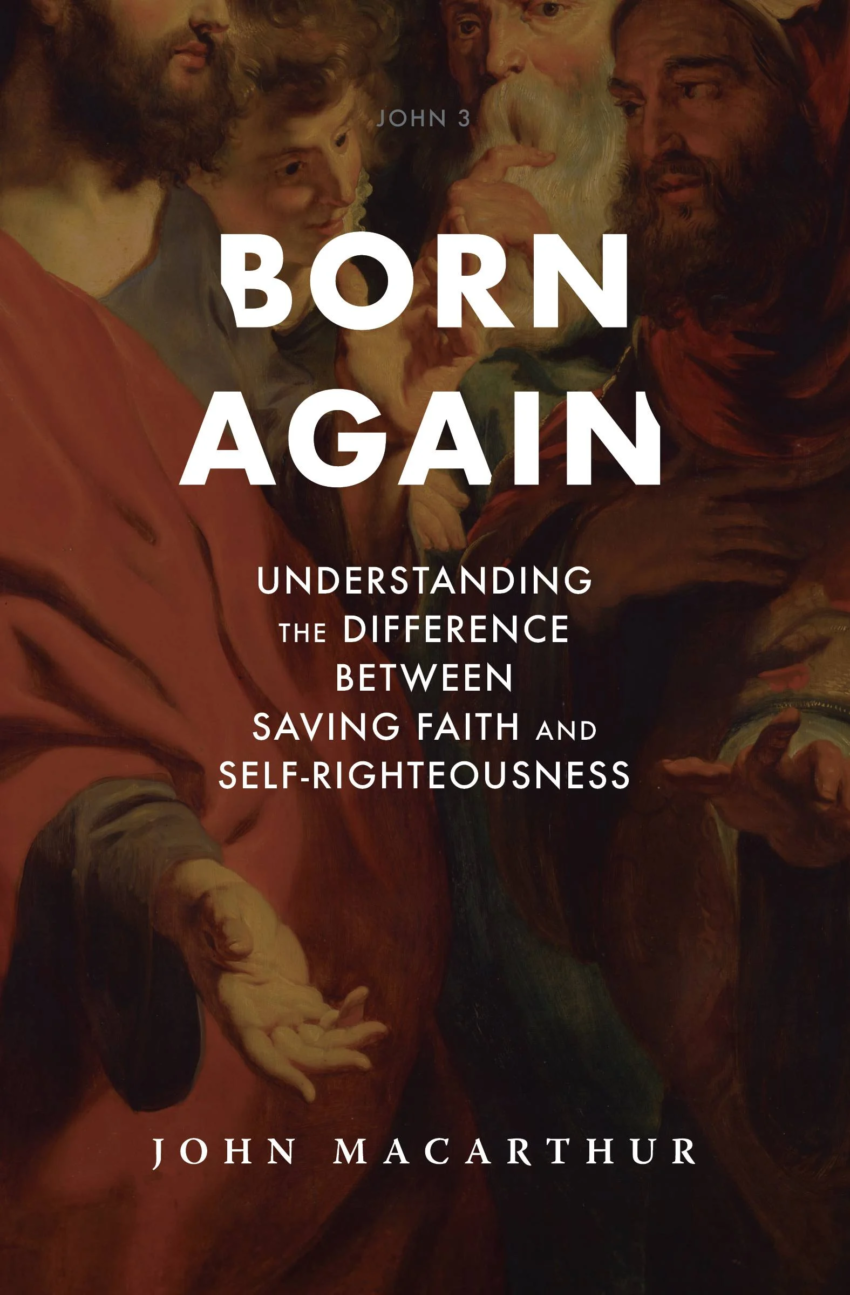
Few phrases in the Christian vocabulary have been more widely used — or more thoroughly emptied of meaning — than “born again.” It appears on bumper stickers, in political polling categories, and in casual conversation as a rough synonym for anyone who takes their faith seriously. Ask ten people what it means to be born again, and you are likely to receive ten different answers, most of them vague, several of them wrong, and at least a few of them directly contradicting what Jesus actually said.
That is precisely the problem John MacArthur sets out to address.
Drawn from his landmark New Testament Commentary series, Born Again works through the third chapter of John’s Gospel verse by verse, anchoring the reader to the only account in Scripture where Jesus himself defines and explains the new birth in extended conversation. His audience that night was not a skeptic or an outcast — it was Nicodemus, a Pharisee, a ruler of the Jews, a man who by every external measure was the most religiously accomplished person in his community. And Jesus told him plainly that none of it was enough.
The book draws a clear line between genuine saving faith and the self-righteous religion that Jesus was directly confronting — a distinction that MacArthur argues is not merely a first-century problem. It is the defining fault line running through the contemporary church. When faced with the question of how to become born again, too many are quick to recommend a rote prayer or a series of steps to follow — instructions that reflect the very doctrinal error Christ was confronting in the first place.
For the Christian apologist engaging with Latter-day Saint theology, this book carries particular weight. The LDS system is, at its core, a works-based framework — a religion of ordinances, worthiness interviews, temple endowments, and progressive exaltation through moral achievement. It is, in other words, a sophisticated modern version of what Nicodemus represented: sincere, disciplined, institutionally serious religion that has nonetheless missed the one thing Jesus said was non-negotiable. You must be born again. Not endowed. Not exalted. Not worthy. Born again — from above, by the Spirit of God, through faith in the Son.
MacArthur does not write polemically. He writes exegetically, which is far more devastating. He simply opens the text and lets Jesus speak. What emerges is a portrait of regeneration that no amount of priesthood conferral, temple ritual, or moral striving can replicate or replace — because the new birth is not a human achievement. It is a divine act.
Born Again is a short book. It is also an essential one — for the believer who wants to understand what happened to them at salvation, for the seeker who senses that something is still missing, and for the apologist who needs to show a Mormon neighbor why the most important question in religion is not what have you done but what has God done in you.
Loading Viewer...