
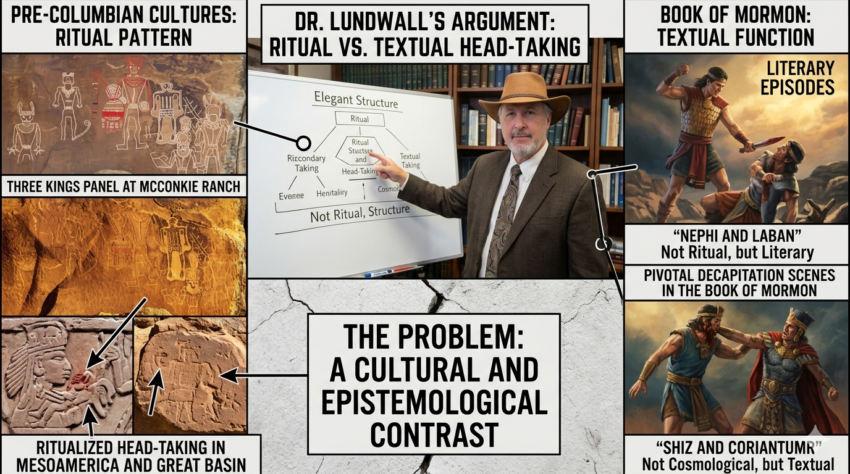
AI image collage created by Google Gemini.
[Click here] to read the full transcript of this podcast [Click again to close]
Hi, everybody. Welcome to Mormonish. I’m Rebecca. And I’m Landon. And I’m John. Exactly. I was going to say, you need to just jump in because you need no introduction. Let’s do it again. Let’s do it one more time. Keep rolling tape.
Hi, everybody. Welcome to Mormonish. I’m Rebecca. I’m Landon. And I’m John. There it is. Oh my gosh, it’s like the trifecta, I feel like. This is incredible. Yeah, John needs no introduction. He can pop in and out to any podcast we’re doing at any time, any moment. He is always welcome.
But today is a very, very interesting episode that we’re going to do. So a lot of us went to Sunstone. Probably a lot of you have been seeing posts about it, reading things about it. It was amazing. There were some incredible presentations. none more incredible than dr john lundwall’s presentation and so because we have a lot of favors to call in right with john we said you have to come on our podcast you have to do that presentation so that everybody can see it it can’t just be only at sunstone because it was pretty incredible so we’re just going to let him take it away this is really unique really unusual extraordinarily interesting and you guys are going to love it any comments landon on it
Where else but the Book of Mormon do you get to read or talk about taking of heads? This should be fun. That is what we’re talking about today, taking of heads. So go get your popcorn, turn up your volume, and we’re going to let Dr. John take it away.
All right. Thanks. Before we get started, let me just say, Rebecca, you’re looking spectacular tonight. Well, thank you. I’m trying to spend some more time in the sun instead of like a dark closet, my podcasting closet. So I feel like I got a little sun this weekend. So that’s a good thing. That’s fantastic. Landon, you’re there. Yep. Thank you, John. John always calls it how it is, doesn’t he?
All right. I’m going to share my screen and we’re going to start. Wow. The title alone. All right, I gotta say, you know, normally with academic presentations or something like Sunstone, I don’t use AI art, but I got this image over here. I got to pull up my. That is something else. I typed in I typed in the generator. Show me an ancient Israelite in a stone alley at night holding a sword, standing over a person lying on the pavement. Make the Israelite white and delightsome. And so this is what AI gave me. It gave me Nephi as Fabio. Yes. Gorgeous, luxurious hair. And look at that tunic he’s wearing, showing all that upper thigh. Right. And he seems to have Laban right under his foot, right where Laban is.
Okay, okay, okay. Not a lot of blood for someone who’s just supposedly decapitated. I think he’s about to do the deed. I think this is drunken Laban and he’s holding him down. He’s about to do it. But I’m impressed. That’s some pretty provocative AI, I will say. All right, look, I guess I’ll give a content warning tonight. I mean, I’ve gone over some of this material in some of the podcasts I’ve done with you, Rebecca and Landon, but tonight we’re going to be talking about ancient ritual, a pre-Columbian ritual in the Americas, and it’s going to involve a lot of head-taking. So, You know, if people don’t want to see that, I will be showing a couple of mummified heads and scalps. So now’s the time to turn the channel.
But this all ties into the Book of Mormon and to basically the epistemologies of religion, how people worship. practice religion and part of the major problems of the book of Mormon are the literate assumptions in the text. So, um, so let’s begin here. I have, uh, I enjoy doing this because I get to show some of my research and what I photograph and look at out in the Utah desert. Here is a panel. It’s one of the most well-photographed panels in the American Southwest. It’s in northeastern Utah, McConkie Ranch, just outside of Vernal. This is called the Three Kings Panel. And these figures are life-size. They’re a good five feet tall. The Fremont who carved and painted them were about that size. And it is a very detailed panel. It’s high up on a rock promontory. And it has… Do you see my laser pointer? Uh-huh. Yep.
All right, it has this central figure, this giant figure. He’s called a Sun Chief. He’s got a flicker headdress there. They’ve actually found one of those in the archaeological, in a cave. There was a flicker headdress. It’s a bunch of, it was composed of about 3,000 woodpecker feathers. Most of them were yellow, but the front row was red, and those red woodpecker feathers were sourced from a couple hundred miles away. So you can see that there’s trade networks or they’re traveling in order to make this ritual regalia. He’s called a sun chief and he holds this shield, which is a sun shield. In the literature, this panel is called, he’s called a sun chief or a sun carrier. He’s covered in these gorgeous spirals. Do you see those? And generally in rock imagery, a spiral represents the seasons, the passage of the celestial luminary, sun, moon, stars. It can represent a variety of things around those themes. Yeah. I’m getting a message saying my internet’s not working. Am I still on? Yeah, you’re fine.
Okay. Coming out of the shield is this staff. And hanging off the staff is this shape, this figure. Do you see that? It looks like a mushroom. It has this long elongation extension and then this mushroom cap kind of shape. Well, over here is another divine figure. It’s wearing a mask. It’s got a fringed horns or extensions. This figure also has the staff coming out of his right shoulder and hanging off that. Can you see this thing? There’s two eye sockets there. That’s a skull. So here we have a head and that is exactly what this thing is. This is a scalp. hanging off the sun shield. So we have these heads and scalps associated with our sun chief or sun carrier and our sun shield.
Now, look, in the 1970s, 1980s, 1990s even, it wasn’t very politically correct to identify these things as heads or scalps. But as you go through the Uintah Basin, Utah, Colorado, northeastern Utah area, You start seeing these head-taking motifs, heads and scalps, first by the dozens, then by the scores, then by the hundreds. They’re carved throughout the rock art strata. And here I have a couple examples. I have this, we call him the oar-headed figure because he has this bucket cap with these oars coming out. This one we call Bigfoot because he has these huge feet. Okay. But he has a decapitated head off under his left arm. This figure here. has those horns and he’s holding suspended from that little string there, a decapitated head. There’s that long extension. Hard to see, but there’s actually red pigment coming off the bottom of this head, which means originally this was painted and carved. You see these red pigments throughout.
Here’s actually an upside down figure, an anthropomorphic figure upside down painted in red generally that represents death you can see his uh or extensions are painted well uh here’s more examples uh these heads often have this crying eye motif do you see the tears coming out of the eyes here yep It’s very common. In fact, this figure also has a crying eye motif. We’ll talk about that in a second, but the head produces tears, and those tears are analogous to the… Eventually, it becomes analogous to rain. And so this figure here isn’t holding a head. He’s holding a stone knife. And this little object that has these knobs on it, and that is most likely a scalp stretcher. So he’s still related to head taking. You can see his eyes also have the crying eye motif. Is the elongated area like the neck or? Yeah, so that is going to be the neck, viscera or spine. Okay. Okay. Of the deceased. Okay. The human body produces liquids. The tears, semen or the vaginal area, but the top of the spine actually contains a pocket of of, you know, liquid, which they would have well been aware of. The the head itself is being basically sustained by this liquid. Right. So they’re analogizing this to the cycles of nature. Well, we’ll get into it.
All right, so we’re back at this Three Kings panel. Here it is high on this rock promontory. There’s the rock imagery. And it’s by this large crack, they would climb up the back. It’s a steep, not particularly easy ascent, but they would walk through here, walk up on this ledge, and that’s where they carved and painted their figures. Lots has been written on it because of the detail of it, of the size of it, of the particular location of it. But until our team, the Utah Cultural Astronomy Project, showed up, no one had ever done something rather simple. And actually, I did this… A year ago when I was there, I asked myself, will the sun ever rise in this crack right here through the stone? And so I got out my planometer and my compass and I made my measurements and I looked at my calendar and I thought, well, according to my calculation, the sun should rise in that crack at the equinox. So I returned at the equinox to take this photograph. And so sure enough, the Sun Chief, the Sun Carrier, is at a location, this entire panel is at a location where the equinautical sun perfectly frames the rock art and shines through that crack from the point of view of standing in front of it.
Now, of course, the free mind didn’t carve that crack. This is all a natural phenomenon. But what they did is they watched, and they saw that the sun rose at that particular spot at the equinoxes. And so that’s more than likely why they… put their rock imagery at that spot because it is carrying the sun. In fact, here’s a picture of the winter solstice. This is when the sun rises in its farthest south, and it rises actually at the bottom of this rock promontory. The rock arts up here. That’s where the equinox rises. Here is another shot. of the equinoctial sun rising through that crack. And the entire bluff, therefore, becomes a sort of cosmological calendar where when it rises at the bottom, that’s winter solstice. When it shines through the stone, that’s the equinoxes. And when it rises high overhead, that’s the summer solstice. So the entire site is a cosmological stage, a theater of the sun, where a sun priest could watch this phenomenon engage the circuit of the year.
Now, as it turns out, there’d be several academics who might argue that they would have noticed this, but several miles away from this site, we have another site Here’s our oar-headed figure. This figure is a pictograph painted red. It’s about three feet tall, one meter tall. It’s in a small wash canyon. It’s about 30 feet wide. This is the western wall of the canyon facing east. So as I’m taking this picture, behind me is the eastern wall facing west. And in the eastern wall is a notch of rock, a V-shaped notch of rock. And when the sun rises at the summer solstice, the sunlight spills through that V-shaped notch of rock on the western wall and casts the, yeah, on the eastern wall and casts this chevron of light that fills in this headdress perfectly. Oh, my gosh. That is perfect. Look at that. That’s incredible. That is incredible.
So as you watch this, you know, we photograph it, but if you stay there, As the sun rises in the sky, the sun’s shadow line moves down the rock. And a few minutes later, after it fills the headdress, it wraps his curved staff. Now, if we come back here, this figure is often holding this fringe staff, but this was the first time I saw this staff as an extension of his arm. Normally, he’s holding it. It’s a straight staff, and you can tell it’s a staff, but in this figure, the staff is his arm. It extends out of his arm. So I hadn’t seen that before, and I thought that was interesting. But as I watched the sunrise at summer solstice, I realized, well, they’ve painted this figure to catch this chevron of light in his headdress. But as the sun shadow line moves down, it wraps up. his curved staff. And in fact, I don’t know if you can tell, but his right leg is over twice as long as his left leg. Do you see that? Okay. And as the sun shadow line moves down, he ends up, there’s his right leg. He ends up standing perfectly on the sun shadow line cast at the summer solstice sunrise. In other words, the Fremont, have used this sun shadow line at summer solstice as a template to paint the size, position, and proportion of this figure at the summer solstice.
So why would they do that? I mean, that’s that’s pretty amazing. And that shows us that they’re paying attention to the cycles of nature. And look, we actually photographed this phenomenon throughout the entire year. So we you know, you have to be there pre dawn in the high altitude deserts of Utah. And so we photographed it every day, 30 days before the solstice, because that gives us 60 days of data, 30 days before, 30 days after. But then we photographed it cross-quarter days, equinoxes, winter solstice, and days in between. So we have a year-long photographic record of the sun’s shadow line. And this phenomenon that I just showed you, filling in the headdress, wrapping the staff, standing on the sun’s shadow line, that only happens at summer solstice. Seven days a year, three days before the solstice, the solstice, three days after that. Beyond that, the alignment doesn’t happen. So this is literally painted on the rock to catch the summer solstice sun. And what is happening is the summer solstice sun is actually cosmicizing that image. It is imbuing it with divine power at the summer solstice. And so it becomes a living, breathing image. at the summer solstice when it is, uh, cosmicized by, by that sun shadow line. We lost Rebecca. Are we good? Oh yeah. Yep. We’re good.
Well, um, after a year of photographing it, uh, it, it took me a while to see it. It actually took me a year to see it because I was there for a year photographing it. But there is this very faint image underneath his left arm. It’s right there. Do you see it? Actually, it’s invisible for most of the year. you have to be there standing in the right light at the right time of day in order for that to pop out. And that is it popping out and you can barely see it. But, you know, I was there for weeks and I did not see it, but then, you know, this is, um, This is an equinox shot. So on the equinox that popped out and I realized, you know, there’s that mushroom shape with the long neck extension. So I realized, oh, my gosh, he’s got a scalp underneath his left arm. And I didn’t know that. Well, as you again travel through the Uintah Basin, here’s the same figure, the oarhead with the inverted bucket. This is actually not that far away from the site we just looked at. And here he is. There he is holding that fringe staff that’s straight. But he’s also holding a knife. Do you see that? And this mushroom shape, which is a scalp. This one is a square shape with that neck extension.
Look, all these holes in the rock are bullet holes. The the. The vandalism on these sites is oppressive. I mean, it’s so depressing. It takes my breath away sometimes. So people go and they say, oh, there’s rock art. Let’s shoot it. And so I can always locate rock. I can be out in the middle of nowhere, 100 miles away from anything, and I’ll find the rock art just by finding the vandalism. If I see bullet holes or Big initials. I go, oh, yeah, that’s where the rock art’s at, because I don’t know why people just don’t shoot 50 feet away. But there you go. All these holes are bullet holes, except for these two. Those two holes are packed and you can actually see the pack marks as they’re using whatever implement they’re using to pack those out. So these are eyes and that’s a skull. With a neck, so that’s a decapitated head. This is a defleshed, it’s a scalp, basically. He’s actually holding a knife. It’s hard to see in this image. He’s holding a knife. So here we have that head. This solar figure, and he is a solar figure, is a head-hunting figure. And what year is this? What are we talking? What’s the time frame? That’s an excellent question, Rebecca. So dating rock art is notoriously difficult to do. However, this is the latter end of the strata of the rock imagery in this area. So…
Of course, actually, archaeologists argue about the latter end and what that means. But the day range would be at the earliest 900 C.E. and at the latest about 1350 C.E. 900 to 1350 CE or AD, I think most archaeologists would argue that this is probably in the 1050 to 1350 range, though actually some of the villages that have been excavated that are producing a lot of maize and these figures are associated with the fertility cycle of maize uh they are up and running in full bloom in the ninth century a.d um in fact this area is one of the areas that we have one of the earliest adaptations of um of watering, oh my gosh, I’ve got a brain cramp, irrigation, of irrigating the crops. They have found irrigated ditches that they can date to about 200 to 250 AD. And so they are growing maize up here at that early date using irrigation. And, again, there’s a climactic pattern that happens between about 900 and 1200 through the deserts of Utah. There was a warming period where the winters were shorter and the summers were wetter. And that provided an excellent environment to grow crops, maize, beans, squash. And so that’s when these villages grew, the population grew. Around the 13th century, a massive drought hit. This corresponds to like the Little Ice Age in Europe, right? So it’s a climatic shift that’s global, but it affects the American Southwest. It actually affects North America. Because around 1250 to 1300, most Fremont villages are abandoned. Most of the ancestral Puebloan villages in the American Southwest are abandoned. And in fact, Cahokia, you know, in Illinois is is abandoned around 1300 A.D. Chaco Canyon in New Mexico is abandoned about the same time. So, I mean, this is one of the great mysteries of archaeology. Clearly it’s attached to climactic changes, but we also get signs of violence. And so, you know, there’s stressors that are happening in these cultures. And so in any case, we get these head hunting motifs at about that time. That was a long answer. Sorry. You get me on my soapbox. I can go for another hour. No, it’s an important answer to understand the context. So it’s good.
This is centuries after the Book of Mormon timeline. I know. It’s important to know that. Mays doesn’t make it east of the Mississippi till about 1000 A.D. So if the Heartland model is is supposed to be the Book of Mormon model, what are these millions of people eating? Because large scale agriculture isn’t happening. They, you know, they are collecting rice grasses and, you know, berries that the forests of the Midwest of the Ohio Valley, the rich with game, but There are no urbanized cities that require urbanized agriculture. And that kind of agriculture, again, doesn’t make it in that location until relatively late. And then it collapses. There are hunter-gatherers until after 1000 AD before they really start becoming agriculture. That is correct. And actually… was it the greatness of the evidence that we watched the scripture central? Yeah. The nice gentleman went to one of the mounds in Tennessee. And then we looked in the, there was a shot of the museum. Yeah. They didn’t really focus on it, but you could see in the glass cases, the stone and bone tools. Yeah. I remember. Okay. So yeah, That’s what they’re using, stone and bone tools, pre-industrialized, pre-urbanized, hunter-gatherer. Again, they do have all kinds of very sophisticated strategies. They will grow certain kinds of grasses and harvest certain kinds of plants. But again, the Book of Mormon demands urbanization and urbanized agriculture. You don’t get to get around that. The Book of Mormon demands it. And you don’t have that in the Heartland model. So that it’s one of the reasons why, you know, BYU scholars say it has to be in Mesa, America, because you have that in Mesa, America. You just don’t have everything else. So, you know, there are problems. I got off on a tangent. Where am I?
All right. This panel is great. So look, we have hundreds of head taking motifs in the Uintah Basin. They’re often associated with crying eye motif. So they’re associated with tears and water. They’re associated with that fringe staff, which is interpreted as a rain staff. And so it’s associated with water, rain and fertility. At several sites, the images are actually cosmasized by the sun. The first site, the sun appears at key notations through the year at the promontory. At other sites, it’s the sun shadow line that they’re using and cosmasizing the image. So these head motifs are also associated with the solar year with solar shrines. And here is a really interesting image. I don’t know. Here’s the humanoid torso. Do you see that? He’s got an arm and he’s holding a stone knife. And do you see his head? It’s almost impossible to see. Here’s a close up. There’s his head. Do you see his two eyes? And he’s got a hole in his skull. And the truth is I photoshopped this head brightening and adding contrast because the truth is you don’t even see it as you walk up to it. You only see it as you’re standing 12 inches away from it. And you realize, oh, my gosh, there’s a head there. And so the head is so lightly pecked. And yet they’ve pecked the thick torso and the arm. And so they’re indicating something with that. They’re indicating that the head is something different, that it is basically peeking out of the stone. It’s barely visible. And if I were going to demonstrate some sort of spirit or soul, that’s how I would do it in rock art. But exactly what they’re doing, that’s up to interpretation. But what we do know is these head-taking motifs then are associated with tears, water, fertility, the solar year, solar shrines, and with divine function.
So again, we went over this a little bit in some of the other podcasts. These oral cultures, this culture has no writing. And so oral cultures think analogically. If two things have similar features or functions, they relate them. So the human head contains all the functions of being. It’s where we see, it’s where we smell, it’s where we hear, it’s where we taste, but it’s also where we breathe life into. It’s also where we speak, and speaking is the projection of will. It’s how we manipulate our environment. So all the divine functions are in the head of the human being. Now, also, when a woman gives birth, the first thing that happens is her water breaks. So water pours from the womb, and the first thing that appears out of the womb is what? A head. So water precedes the head. And of course, when the baby is born, the first thing it does most of the time is cries, and the head produces water. So water produces the head, and the head produces water, and the head contains all the divine functions. Of the cosmos. And so here then is that part of the human being that is the divine part that comes from water, that brings water, and that is connected to the divine realm. So if I wanted to perform a rain ceremony to bring divine tears, rain to my crops, and I wanted to offer the gods a sacrifice, what would I offer? Well, analogically, you’re gonna offer that, which is equal to the divine tears, and that is the head that is produced by water, that produces water through the tears, that crying eye motif. And so it’s an analogical trade. Where these people are offering heads in exchange for the divine eats, the divine substance of the cosmos rain. Let’s see. Yeah. In fact, in the Pueblos, they have a scalp pole for the rain ceremonies, which is they hung scalps on and the scalp had a name. It was called the seed being or the rain being. The scalp was that which brought forth seeds and rain. And so they would do their rituals and dances with scalps and heads associated with the fertility cycle and the solar cycle. Any questions? We don’t think this way. No, we don’t. But I can see, I can sort of get a sense of how they think and how it does make sense in a way, the correlation between water and a head and tears and all the divine functions. Yeah, it’s really interesting.
Do we know whose heads they were taking was this their own members as you know kind of a so this we do this ritual or enemy okay yeah so so um how often were they taking heads we don’t know could have been weekly monthly yearly or once every five or eight years right how um whose heads were they taking Well, you know, in urbanized Central America and Mexico, they were actually the pictures complicated because even royalty would sometimes be the human sacrifice. And so the people within the community would be the sacrifice. But very often it was the people outside of the community. They would go and take, you know, they would go and take prisoners for sacrifices. So the picture is complicated. Um, and, uh, and of course in the, here in Northeastern Utah, we have no writing and no records. So all we have is this rock imagery and, uh, there actually have been some excavations where some skeletons have been found without heads. So that tells us, you know, something happened there. Uh, but, um, but a lot of those questions remain unanswered. All right. So how far back does this go? And where does this go? This head taking, what turns out head taking is actually ubiquitous around the world. You’ll find this kind of thing happening in, you know, many ancient cultures all around the globe over thousands of years. But here I have two examples from South America. This is a schist disk. It dates between 600 and 900 BCE. Okay. So early first millennium BCE, we have a Leonide figure here. holding a decapitated head and coming out of the head are these fronds or plants that vines coming out at the four quarters. This is called the sprouting head motif. And again, here at six to 900 BCE in the Andes, we have an image of a decapitated head associated with fertility and with agriculture. This is a pre Nazca head. So this is an actual mummified head of a woman. And, you know, everything’s intact. She, too, has this hole coming out of her skull, out of which is a rope, which they’ve attached by which to hang the head. Now, originally, when this is so, this is dated… 100 BCE to 450 CE in that date range. Okay? They’ve done chemical analysis. Her hair is actually… Has heavy traces of the cocoa plant. And so… You know, if you… eat or drink and tease a lot of the cocoa leaf, it is a natural anesthetic. It can provide, you know, and stimulant. And so the archaeologists that first discovered this thought this was a trophy head. So the rope then is hung up. as a trophy after you’ve taken it, you know, in a military raid. But the more they have found these, the more they have, you know, actually questioned whether this is a trophy head, because many of these hanging heads are found in a non-trophy context, rather in a religious ritual context. Around cemeteries, for example, so they’re associated with rituals of death, but they’re also associated with agriculture. And then she appears to be actually part of the community. She’s not a foreigner, but, you know. She belongs to the people where the head was found. And so, so again, these are complicated issues. What exactly is happening there? You know, it’s important to note, though, 6 to 900 BCE, 100 BCE to 400, 450 CE. We are square within the Book of Mormon timeline.
Here we have a different scene. This is the ball court at Chichen Itza. Now, the ball court at Chichen Itza is 12-1300 A.D., so it’s well after the Book of Mormon timeline. But you find a ball player here on the left holding. Do you see the head he’s holding? So the ball itself is a skull, so the ball is a head. And they’re playing, you know, they’re hitting the ball like a soccer ball off their hips or legs. And the ball represents a divine head. And here we have a defeated figure on the other team. He’s missing his head. In fact, there it is right there. But out of his neck are sprouting these seven serpents, which represent and look coming out of the serpents or what? All these vines. squash, plants. This is a variation of the sprouting head motif where cosmic power, that’s the serpents. The serpent is an image of cosmic power. It lives in trees, swims through the river and soaks up the sun. So it, and then it sheds its skin. So it’s this image of cosmic power. You know, it exists in all three realms, underworld, mid-world, upper world, and is this resurrecting motif. And so it is a image of cosmic power that also produces fertility and agriculture. So the missing head then is producing this kind of power into the culture, into the world. I share that because even though this is a late date, here we have an Olmec stela found in, you know, this is near La Venta, Mexico. And look, he’s got the seven serpents coming out of his head just like this guy. But this stela is dated to, again, 600 to 900 BCE. So this is a very long-time cultural thing over hundreds of years over a wide area. Many centuries, South America and Central America. And in North America, our next slide is going to show that. And so over, you know, for the purposes of this discussion, over the entire Book of Mormon timeline. Okay. This is six to 900 BCE, the Peruvian example, six to 900 BCE. We have images of, I mean, most of it does disappear, but we do have images of the sprouting head motif in various contexts through the early first millennium BCE. Uh, there’s, you know, sites such as in Peru, um, a bajo such in bajo that temple there is 15 1600 BCE and it shows a lot of headless but actually the the people have been cut into pieces there’s arms there’s feet there’s hearts and there’s heads and again no writing we so it’s hard to tell what the context of that is if it’s if it’s showing some sort of military action or the power of the state, or if it’s religious or both. But definitely by the first millennium BCE, we have head taking as a important and natural component of a religious cosmovision that allows for the continuation of the cosmos and the agricultural cycle. Okay? This is embedded into their moral framework. And no infant baptism, right? They’re not worried about that. No infant baptism. No Jesus stelas, no crucifixions, no destruction of cities stelas, but we have this… You don’t get to get around that, and that is actually absolutely necessary. If there is an ancient Nephite civilization that’s monotheistic-ish, that exists for a thousand years, constituted by millions of people, by Mormon and Moroni, if you read the Book of Mormon text, it tells us that That the people had grown so numerous, they were more than the sands of the sea, and that buildings covered every square inch of the land. The text tells us this, right? From north to south, east to west, buildings cover everywhere, and there are millions of people. you know, with various worshiping. But by the way, they’re still reading Isaiah at the end of the Book of Mormon. And so you’ve got to be finding Isaiah texts in the archaeological record because that is fundamental to the religious cosmovision. But when you look at the archaeological record, this is what you see. I mean, you see a lot of other things. But I’m focusing on the head taking for a reason, because I’m going to compare that to the head taking scenes in the Book of Mormon here in a little bit. So you’re saying this does relate. Yeah. Yeah. I, I, I, have I bored you? No, I find this fascinating. I just see people going, what’s this got to do with the book of Mormon? Well, we’re getting there. Everybody knows that Dr. John shows us what is really there. And then it’s up to you to kind of have a little spark in your brain and say, wait a minute, if this is what’s there, okay. And they’re trying to tell me that that is what was there, Isaiah, infant baptism. There’s a problem. The epistemological models are so different that so they want to hide behind. It was all destroyed by the Lamanites. This is a false argument. Yeah. Again, with millions of people, you’re going to produce millions of texts. If 99% of it disappears, you’re going to have tens of thousands of examples. I should be finding Reformed Egyptian, Hebrew, monotheism scriptures. Art depicting. Yes, yes, yes. Again, with 99% of it gone. But what has happened is 101% of it is missing. And this is unforgivable and unallowable. You don’t get to do that. History doesn’t work that way. Right. You I am showing you the archaeological data, some of the iconography that exists in South Central North America. I’m back in North America. This is southeastern Utah. I’m showing this because in 1905, 1910, the scalp was found. It’s photographed. This is a proper scalp. It’s the defleshing of the entire skull. It preserves the eyelids, the nose, the lips, the hair. And out of the top of the scalp was this loop made of tendon. And that’s where they hung the scalp from. They hung the scalp. And the point is, is you can go and look at rock art imagery. Here we have these heads. Do you see them? And out of the top are these loops. Do you see that? There’s the loop. Oh, my God. Those are scalps. And there’s the scalp. What’s interesting is that was dated to basket maker culture, which is… 200 to 1200 BCE. This is found in Arizona. You know, most scholars will date this to the latter end of that. But this is the BCE’s in North America. They’re taking scalps. And we find this scalp imagery in the rock imagery contemporary and later. And so this is happening in North America, at least by 200 BCE. Now, again, we don’t have the actual context of why they’re hanging this scalp. Is it fertility? Is it a trophy scalp? We don’t know. But we do know that they’re doing this. And we can track it through the rock art imagery.
I just keep thinking about how Nephi, Lehi, and Iskalli were supposed to go to a land where nobody was, where they’d be safe, right? Away from all the troubles in Jerusalem. And if this is what they came out on, that’s a lot of trouble. Well, look, yeah, there are thousands of tribes, millions of people over South Central North America. And so the Book of Mormon quickly becomes a cell phone in the hands of Abraham Lincoln. There’s no referent for it. in the archaeological, anthropological, linguistic, or DNA evidence. Which is why the church says that they won’t say where it happened because it doesn’t fit anywhere. It’s unallowable. If they picked a location, you’d be able to prove it. No, no, no. I understand that’s what they say, and you cannot do that. The reason why you can’t do that is now you get to pick and choose, right? Well, it could happen in South America, Central America, North America. Well, I’m sorry, wherever you pick, There you are saying, well, actually, there are no the indigenous tradition is actually the Book of Mormon tradition. You’re displacing the authentic history and heritage of those people by imposing the Book of Mormon. So you have to pick the right place and the right time and the right people. Otherwise, you’re doing violence to the history and heritage of the indigenous people. So you have to do it and you have to pick right. You don’t get to say, well, it might be Bolivia, it might be Mexico, it might be Tennessee. Nope. That’s immoral. You can’t do that. So stop. Pick a site. Show me the archaeology, anthropology, linguistics, DNA. All right. There’s my rant. Oh, no, I’m just starting. How are we doing on time? Are we good? We are good. This is so fascinating.
So then we… This slide is just to show you over many centuries through the entire Book of Mormon timeline, we have sacrificial heads associated with religious, political, agricultural, and cosmological functions that are embedded in multiple cultures. And so… Whoops. Again, just real quickly, I’m not gonna spend a lot of time with this. We do have one account of it’s a religious creation account called the Popol Vuh. I’ve gone over parts of this on your podcast before. It’s a mind creation account. It’s probably written in the 1550s. And what it is, is the account we have is a phonetic recitation of an oral performance. So even with writing, the Maya tradition was the oral tradition all the way until European contact. The sacred text of the Popol Vuh was not a text. It was a dance. It was a ritual. It was a cosmological scenario. That is the religious cosmovision of all indigenous peoples pre-Columbia America, in South America, Central America, and in North America. There is no text-based religiosity happening anywhere pre-Columbian contact. And by the way, might I add, there were literate Mayan scribes And their writing served the oral tradition. But after European contact, within one generation, those literate scribes were reading and writing Spanish. Right? They picked it up in one generation. So why am I bringing that up? Because repeatedly I hear the Nephites had this writing system that But no one else had it. The Lamanites didn’t have it, despite the fact that the Book of Mormon tells us that the Lamanites were taught the same writing system. But the point is, within one generation, the memory keepers of the Lamanites would be writing in Nephite writing. So you got to show me the writing. You got to show me the literacy. You got to show me the Hebrew and the Reformed Egyptian, because that’s what they’re writing in. And you can’t. And you don’t get to get around that. I mean, this is, you know, it’s my favorite phrase, a death blow to the historical claims of the Book of Mormon period.
All right. Again, this is a quote from Dennis Tedlock about the Mayan creation account. If the ancient Poblavu was like the surviving hieroglyphic books, which is depicted here, it contains systematic accounts of cycles and astronomical and earthly events that served as a complex navigation system for those who wish to see and move beyond the present. If the authors of the alphabetic Poulpevue had transposed the ancient Poulpevue directly on a glyph-by-glyph basis, they might have produced a text that would have made little sense to anyone but a fully trained diviner and performer. What they did instead was to quote what readers of the ancient book would say when they gave long performances telling the full story that lay behind the charts, pictures, and plot outlines of the ancient book. I forget which episode I did with you guys, but I went over the opening salvo of the pyramid text. You remember that? Baboon’s anus, baboon’s anus. One of my favorite episodes. Who can forget the baboon’s anus? It’s very hard. It sticks with you. And then I compared that to the Pope of Vue. Yeah. And I’m just showing that literal translations of these ancient texts will not get us anything. close to the religion or cosmology contained in the book of mormon nothing and so if so again the byu scholars say it’s not heartland because we have urbanization and writing in central america but you go to central america and the writing you find is like the pyramid text It serves the oral tradition. It makes no sense to anyone except someone who’s a complete trained diviner and performer. These texts are astronomical largely. They’re watching the position of the sun, moon, and stars, how it relates to the agricultural cycle, the growing cycle, the migration of birds and animals, and the political cycle. Even the politics are intermeshed with this. And so the religion is this vast astrological agricultural system that is demonstrated in very, well, indecipherable glyphs. And we only know about it because there were a few surviving Mayan priests who gave us a Spanish version. transliteration. So I really am not going to go into this, but again, the opening of the the opening of the Popol Vuh has the, there’s the first four human beings and they are created by the gods and they have God’s sight. They’re able to see the future. They’re able to see the past. The gods don’t like that. And so they take God’s sight away from them. And so they have to invent God’s sight by creating this place called the Il Baal, which literally is translated a place to see. It is this place to see that is the book called the Popol Vuh, which means council mat. It’s the mat which the priest sat and danced on as they viewed the cosmos and the moving luminaries. So literally the religion of the Mayan priests is a cosmological dance. Okay. Um, This gets into the head-taking motif. So it’s important to bring up because simply the Poblavu explains that there are two sets of twins, one Hunapu and seven Hunapu. They go to the underworld and they’re killed by the underworld gods, which are the gods of death. And no one survives the gods of death. And one Hunapu’s head is placed in a calabash tree. The calabash fruit looks like a skull. And Blood Moon, which is the moon, walks by and the head spits in her hand and she becomes pregnant. And she gives birth to the next set of hero twins, Hunapu and Shubalenki. And they repeat the cycle. Of one in seven Hunapu, they go to the underworld, but they have the help of their ancestors. And so they are able to outsmart the gods of death and bring life back into the world. All of this centers around the ballgame and head taking. And so we have that motif embedded in the Popol Vuh, this sacred text and dance of the Mayan tradition. I bring that up because we have ball courts. I mean, this is we have ball courts dating to the middle of the second millennium BCE. Now, we don’t have writing back then, so are they taking heads in these ball courts, 15, 1600 BCE? well we don’t know but we have ball courts very early and they spread you can you can really determine the cosmovision of mesoamerica by following the construction of the ball courts the ball courts actually emerge into um north america uh you find uh ball courts in in you know southern north north america um and so Probably with that comes ritual head taking.
All right. Let’s make a transition. That’s the closer up view of your A.I. right there. Look at that. Let’s let’s talk about the Book of Mormon. Why did we go over this? Well, because I thought it was fun and I want to show a lot of my photographs. That’s right. It was amazing. If nobody understands what you do, Dr. John, I hope they’re getting a sense of it because you are a fascinating person. Well, my therapist says otherwise, but we won’t talk about that. I’ll have you talk to my attorney. All right. So I am showing that this head-taking motif is ubiquitous, prolific. It exists in the Americas through the entire timeline of the Book of Mormon. What do we find when we open the Book of Mormon? Surprisingly, we have two head taking scenes in the Book of Mormon. I’m like, oh, wow, that’s interesting. What’s it going to tell me? Are the heads going to bring rain? Is it going to start the agricultural cycle? Do they do a war around the heads for a political cycle? What are we going to see? Well, here I have Nephi as Fabio with luxurious hair. That is some hair. Landon, I think, is trying to grow his hair out. I’m trying that. Yeah, I want to be the Nephi look. Trying to get, yeah, get the Nephi look. That’s right. Landon, I love you, brother, but let me give you the number to my therapist. And attorney. Hey, I love your hair, Landon. You look fantastic. Well, thank you. All right.
So let’s read the first head-taking motif found in the Book of Mormon. It’s 1 Nephi 4. Do I need to set up the scene? All right. Let me set up the scene. You might want to. We actually have an increasing number of never Mormons that watch Mormonish, which is amazing. We’re so happy that you do. So sometimes we do need to give a little context instead of assuming everybody knows. All right. So Lehi leaves Jerusalem. Actually, page one, chapter one, first Nephi, Lehi has a vision. Jesus is standing there in anachronism. He’s holding a book, anachronism. This is 600 BCE. And out of the book, he prophesies the destruction of Jerusalem. So Lehi flees Jerusalem with his family. They’re out in the wilderness hiding from everyone. It’s important because the only archaeological evidence anyone can ever find is in the old world from people who are trying not to be found. That is kind of ironic. And so while in the wilderness outside of Jerusalem, Lehi has another dream, and he’s instructed to tell his sons, four sons, to go back to Jerusalem to obtain what? The plates of brass. The plates of brass, which we are told contained… The five books of Moses, anachronism. The genealogy of Lehi through the line of Joseph. All the writings of the prophets. So it contains all the records of the Old Testament, plus additional records, Zenos, Zeno. Right. So these plates of brass are going to have. How many words are in the Old Testament? I don’t have that on top of my head. It’s like 900,000. It’s going to be heavy plates. Yeah. You’re going to need several wagons to carry them out. But no, it’s one set of portable plates. And why do they have to go obtain this? Again, this is a death blow because the text tells us we must get these plates or else we cannot live our religion. We will fall into apostasy. Which means their religion is completely literate. They access God through reading a text. Now. That does not exist in 600 BCE in Jerusalem. Never existed in any culture pre-Columbia Americas. So that is a death blow. Sorry, you don’t get to get around it. There are no brass plates, but hey, that’s the setup. So Nephi and his brothers go to Jerusalem to get these brass plates, this magical book that contains all the writings of the prophets. all of Isaiah, including Deutero-Isaiah. And so here we read, I don’t know, Landon, do you want to read that? This is 1 Nephi 4, verses 10 through 12. “And it came to pass that I was constrained by the spirit that I should kill Laban. But I said in my heart, Never at any time have I shed the blood of man; and I shrunk and would that I might not slay him. And this spirit said unto me again, Behold, the Lord hath delivered him into thy hands. Yea, and I also knew that he had sought to take away mine own life. Yea, and he would not hearken unto the commandments of the Lord; and he also had taken away our property. And it came to pass that the spirit said unto me again, slay him for the Lord hath delivered him into thy hands. Yeah, I forgot to set up that scene. So the brothers go in. The oldest brother goes to Laban who holds these records and asks for them. And Laban throws them out. And then the brothers go to their old house, get all their old gold and silver and give it to Laban to try to buy the plates. And Laban throws him out. And then Nephi goes into the city, not knowing what to do. And he discovers Laban laying in the street, completely drunk. And the spirit tells him to take his life. And so in the next verses, Rebecca, can you read that? Mm hmm. I sure can. This is verse 15 of first Nephi chapter four, 15 through 17. Yay. And I also thought that they would not keep the commandments of the Lord according to the law of Moses, save they should have the law. And I also knew that the law was engraven upon the plates of brass. And again, I knew that the Lord had delivered Laban into my hands for this cause that I might obtain the records according to his commandments.
All right. The entire basis of the religious structure of Nephi and Lehi is in a text. They needed the law of Moses, but specifically they needed the law of Moses in a written text. And again, the text tells us if they didn’t have that, they would turn to savagery. They needed the book. In order to keep the law of Yahweh. Actually, it’s the law of Jesus because it’s Jesus throughout the entire text. And so what does Nephi do? He cuts the head off Laban. Here’s our decapitation scene. He takes the armor off of Laban and puts it on himself and takes the sword of Laban and he goes into the treasury where the records are kept and he pretends to be Laban. We have no idea where all the blood went. Apparently he didn’t get on any of the, uh, right. And, and apparently Laban looks very much like Nephi. Nephi, of course, is supposed to be a young teenager in the story. And so, you know, look, there’s a lot of problems just with the setup, right? That he goes in pretending to be Laban after he cuts off the head. Well, this is our head taking motif. And it all centers around a text, a book. You need the book in order to live the law. Now, here’s the thing. Priests. of the Israelites were living elements of the law of Moses without a text. And they could remember all of it. They remembered it in a dance. They remembered it in a ritual at the sacrificial altar where they offered sacrifices. And might I add human sacrifices. Many of the northern tribes, according to the text of the Old Testament book, you know, the Hebrew Bible practiced not only sacrifices, but human sacrifices. So they they offered sacrifices with their dances, with their hymns, with their psalms, all without a text. You kept the law without a text because for thousands of years, that’s what every culture did. Right. The person writing the Book of Mormon is unaware of that. they have a completely literate bias of history. They think that in order to live the law of God, you must have a written text. And so throughout the Book of Mormon, we’re constantly told to search the scriptures, to read the scriptures, to read Isaiah, to cite from the scriptures, and every prophet does so, and this is all completely anachronistic. And so I’ve just spent an hour showing you head-taking motifs and in the Americas, and now I’m showing you the first head taking motif in the Book of Mormon, and it serves a completely different purpose and function. This head serves a text. You have to have the text. If you don’t have the text, you can’t live the religion, despite the fact that in all the other examples that taking the head was the religion.
Well, I got to testify right now, John, because you’ve just been talking about the heads bringing the rain and it is pouring outside right now. Can you hear that at all, John? Can you hear the thunder? I don’t. The rain and thunder are so loud, I can hardly hear you. Can you hear that? Oh, my. We have had a series of thunderstorms in Utah that have been, I mean, I had that last week. Yeah. It actually damaged the roof. This is what I’m feeling like. It’s like pounding through the window. This is crazy. Hobo Mixing, the very spooky episode. I love it. All right. Wow. Oh, my goodness. You are getting very proficient with your AI, John. These look amazing. Yes. This is my second AI image of the second head-taking motif in the Book of Mormon, because it turns out it begins with a head-taking motif, and it ends with a head-taking motif. Actually, this is out of the Book of Ether. Now, again, to set that up, the Book of Ether is the Jaredites. And when do the Jaredites live? Actually, before the Nephites. Yeah, 3500 BC or something like that. Yeah, Tower of Babel, 2200-2300 BCE, according to traditional timelines, all the way until the Nephi, Lehi gets there to 600 BCE. So… The book of Ether covers, what, 1,500 years plus more of history. If you actually track the generations, that book does not work at all, given the timeline. But the very end of the book, there’s this great final battle, which mimics the great final battle of the Nephites. And there is the last king named Coriantumr, And he faces off against his last final enemy named Shiz. I like that name, by the way. I mean, some of these names are kind of cool. If I get a dog, I might name it Shiz. I feel like you should. I feel like Joseph Smith was kind of obsessed with the letter Z. There are so many of his names that end in Z or start with Z. The planet Zip, you know, the white Nephite Zelf. And they often in the Book of Mormon come in, you know, they come right next to each other. He starts saying names and then they become almost phonetically repetitive names. And so anyway, neither here nor there. But here we have the last battle, the last two people of the Jaredite civilization, Coriantum and Shiz. And well, Landon, will you read that? This is Ether chapter 15, verses 30 through 34. Yeah, this is my favorite, some of my favorite verses from when I was in, you know, you got the war. That’s right. Yeah, here we go. And it came to pass that when Coriantumur had leaned upon his sword that he rested a little, he smote off the head of Shiz. And it came to pass that after he had smitten off the head of Shiz that Shiz raised up on his hands and fell. And after that he had struggled for breath, he died. And it came to pass that Coriantum fell to the earth and became as if he had no life. And the Lord spake unto Ether and said unto him, Go forth. And he went forth and beheld that the words of the Lord had all been fulfilled. And he finished his record and the hundredth part I have not written. And he hid them in a manner that the people of Limhi did find them. Now the last words which are written by Ether are these, Whether the Lord will that I be translated or that I suffer the will of the Lord in the flesh, it mattereth not. If it so be that I am saved in the kingdom of God. Amen.
Okay, that’s a first person quote, right? Mormon is quoting the plates of ether, with that last line. So Ether, who is the last writer. So here we have this head-taking scene where Coriantumur decapitates Shiz. And it’s all being witnessed by Ether, who’s doing what? He’s writing everything down. He’s following around the people and he’s making notes. And everything gets recorded in a book. So the first head-taking scene, Nephi takes ahead in order to get a book. The last head-taking scene in the Book of Mormon, Coriantum takes a head and Ether records it in a book, hides it up so that Mormon can take this book and transpose it into the Book of Mormon text. So then we get a literate record From a literate religion of a people living from 20 to 2300 BCE to 600 BCE. This is absurd. This is farce. So. One, if technically if someone was going to write in that time frame, they would be recording, if it’s history, the victory of the king. Because that’s what we get in the Bronze Age. We don’t get any histories that the Book of Ether records. shows us but we do get victory scenes the kings like to brag about the battles they won and if the book of ether was a series of battles where the king was proclaiming his godship through victory we actually might be reading something that might be historical right but we don’t get that in the book of ether what we get is this battle where a head is taken uh but then we get these soaring sermons and then ether ends his record first person this is a quote whether the lord will that i be translated what the hell is that that’s hell hell It is hailing and beating the window down. I’m not kidding. You have brought down the wrath of the gods, John, with your episode here. All right. Maybe Shiz is trying to get into the window. I think maybe we should mute, Landon. There’s a lot of rain in our area. There we go. Your house isn’t flooding, is it? I don’t know. I’m sitting here watching you. I kind of hear banging blinds. Do you think there’s something going on? All right. Ether’s last word is whether the Lord will that I be translated or that I suffer the will of the Lord in the flesh. I mean, Jesus, this is. If it so be that I am saved in the kingdom of God. um no no this is all anachronism but again the head-taking scene centers around a text ether is recording a text you’re recording everything in a text so that the history and the gospel can be preserved in a text and passed down from generation to generation So then what we have here are two entirely different epistemological frameworks. On the left, we have the Mayan priest in the Ilbal in the place to see, practicing his religion by doing dances, observing the cosmos, and taking ritualized heads to bring the rain. And on the right, we have the Book of Mormon conception, which is everything’s contained in a text. You can’t live the law of the Lord without a text. No mention whatsoever is ever made of the cosmos, the dances, the rituals, or the necessity of taking heads in that context. It’s all text-based. Well, this is a 100% proof of the non-historicity of the Book of Mormon. Again, even in 600 BCE, First Temple Judaism, the Israelite priests are doing rain dances, animal sacrifices, and rituals. Their religion is not preserved and is not text-based. They do have text. They have a literate scribe of… priests i mean that’s the isaiah school eighth seventh centuries bce uh but their religion is still ritual still agricultural still cosmological so we have these uh this picture on the left is israelite religion and if lehi were going to go uh get something in order to preserve the law of moses He might be wanting the sacrificial knife or the sacrificial urn or the statue of Yahweh because attached to those things were the dances, songs, and rituals that you needed to perform to preserve the law. But the writer of the Book of Mormon does not perceive that or even conceive that. He thinks everything must be recorded in a text. So instead, they go to get the brass plates, which does not exist. That is a massive anachronism. In fact, don’t we see that when, is it Jacob or Isaac, when they go back to get, he basically steals his wife away from the father-in-law and he takes this idol with him and hides it under the saddle. That is correct. So that’s the story of Jacob. Jacob flees. This is where we get the name Israel, by the way. This is in the Bible. This is, yes, this is in the Bible. Jacob, that’s Abraham, Isaac, Jacob, book of Genesis. So he goes, his father-in-law’s name is Laban, by the way. He goes to get the idol from Laban, even as Nephi goes to get the book from Laban. And, you know, he goes through all these things. trials uh but yeah he he takes the tokens of the cult which are the idols which is exactly what nephi would be getting he wouldn’t be getting a book right and uh it’s and then after that jacob has a vision where i mean he wrestles that being all night The legs are displaced and at the rising of the sun, there’s a solar motif because he prays at the setting of the sun at midnight, right? This is where the person is in the depths of the underworld. And at the rising of the sun, he sees the face of God given a new name, Israel, and the covenant is made. And so all of this follows the solar cycle and at the center of the cult are the idols, right? Right there, you have the fingerprint of the old religion right there in the text. And the writer of the Book of Mormon is unaware of this. He thinks that the old religion is a text. It’s not. All right.
This is, I think, my last slide where I have said I have discovered Book of Mormon geography. It’s not the heartland. It’s not Mesoamerica. Because neither of those places have the levels of literacy required for the Book of Mormon. So actually, the Book of Mormon geography takes place entirely within the hat that Joseph Smith is… Translating. That’s an amazing picture. Your pictures are just incredible. This is amazing. So this is the third geographic model, the hat geographic model. The hat model. I’m on board with the hat model. That’s it. All right. I think that’s it. Questions, comments, observations. One thing you didn’t mention is, you know, we got that book that we found at Moon’s Bookstore. Oh, yeah. Where… they go through and show all the temples and the motifs and they show Jesus right here on his temples. And it’s somebody wrote it. And the Book of Mormon Central guys all said, this is a fascinating work. And it’s all about Peru and temples that were built there. You want to talk a little bit about that? Yeah. I have that somewhere. You have it somewhere. We bought it for you. Yes, you bought it for me. But I’m sure you probably can’t find it in your copious amount of books behind you. The Jesus figure is a crab anthropomorph wearing a necklace of heads. With a blade on top of his head. Yeah, well, he has that fan. It’s in the shape of a tumi knife, which is a half moon blade, which they were using to take head and heart sacrifices. And so, again, this was Hugh Nibley’s problem. I don’t know if you want to get into that, but Nibley has volumes of examples of these ancient cultures doing these ancient rituals. And he’s comparing it, of course, to the priesthood restoration, modern Mormon temple rituals. And so what do Mormons do? They go and they say, oh, look, we have the ritual that God revealed. And we go and we look at these other cultures and look, they’re doing rituals and they have similar motifs. Therefore, our religion is correct. What they fail to understand is that actually all those cultures were ritual based. right none of them were text-based so that blows the book of mormon and the pearl of great price out of the water because the pro break of great price also assumes a fully literate textual religion abraham holds the records keeps the records and passes them down from generation to generation oh wait so does enoch oh wait So does Adam. That’s all in the Pearl of Great Price. Adam, the priesthood of Adam, is writing. He teaches the children how to read and write so that they can keep the law of the Lord. Right? Oh, my gosh. Wrong. Wrong, wrong, wrong. So… So the Pearl of Great Price is a massive anachronism. But what Hugh Nibley was doing is saying, look at all these rituals. Well, of course, because they’re all ritual based. And look, if you have a thousand ritual motifs, you can find three or four that match what Mormonism has. Unfortunately, that’s incorrect methodology. You have to look at the other 996 motifs. And what do you find? Well, no, you find a crab God wearing a necklace of heads. Oh, but the woman at the bookstore, she pointed to the picture. She said, this is Jesus. Can’t you see his robe? Here he is. Sure enough, in that book, they showed a figure with the arm raised to the square and another arm sort of in this ritual motif that you can compare to, you know, the hand and arm gestures in the Mormon temple ritual. But again, what they don’t tell you is that motif is actually on that temple that I talked about with all the cutoff arms, legs, hands, and heads. So here they’re showing this temple ritual, but they omit that right next to it are these decapitated heads. Don’t need to worry about that. Just don’t even think about that. That represents the final destruction of the Nephites, John. That’s it. There’s always an explanation. It all fits. It has to fit. That’s the problem. You can always do that. Sure enough. Right. So you can always… You can always do that, but that’s, you know, I’ll never win the argument when the goalposts are always being moved so that they can succeed. But that’s not my goal. My goal is truth. So you’re going to show me that motif. Okay, what’s its context? What’s its archaeological, anthropological, temporal, ritual context, linguistic context? Show me that. Oh, look. all of this is a proof against your assertion. So this was Nibley’s problem is he cherry picked all these traditions to reinforce the mono-mormon theory. But as you start digging down into those traditions, almost all of it falls apart. So, yeah. So that’s that book. What I like about this is you showed how science works. You’re looking at these pictures of these heads, which people could argue, well, that’s not a head. You know, someone could say that.
And lo and behold, we find heads with loops on them, just like what was depicted. You should find what is predicted. Therefore, when we read the Book of Mormon and it says that they had, you know, weapons of steel, we should find weapons of steel. We should find texts that they say that there were texts. We should find Jesus motifs all over in the art. That’s what we should find because that’s what, you know, in your case, the rock art’s telling us we should find these heads. In their case, the text is telling us we should find these other things. Yours, you found it. This one, we can’t, you know, the Book of Mormon, which has far more things that we should be finding, we’re finding nothing. I it’s it’s inescapable. I mean, the whole. I mean, just the horse bones, right? And so they’re the article of the. Pleistocene horse and disarticulated strata belongs to a mini horse, right? And they say, here’s proof that there’s horses in the Americas during the timeline of the Book of Mormon. I’m sorry, the horses are pulling chariots that are pulling kings. You should see that iconography in the stelas, murals, stone, pottery, textiles of wherever that’s happening. You have to find that because it will be there. And even if 99% of it disappears, you’re still going to find it because the Kings do the most writing, do the most mural work, do the most artwork because they want to be remembered the longest. So again, nothing, zero, zip, zilch. Point after point, you know, still. I was just actually reading the Book of Mormon. don’t don’t make fun of me i was reading the book of mormon the other day we all read it way more than we used to as faithful members we all do and i noticed i’m trying to remember it was a battle that took place around 100 bce and the guy was using the sword of laban in the battle. I’m like, wait a second, that’s a 500-year-old sword, and he’s using the sword of Laban in the battle. What is going on there? It’s comic book stuff. I’m not kidding. If you read it like that, it’s like a big old comic book. I’ll never forget, we had Thomas Murphy on, you know, brilliant, wonderful Thomas, and we said, well, what? We were talking about Book of Mormon evidences, and we said, what would it look like if Nephites and Lamanites weren’t real and didn’t exist? He goes… Pretty much like it looks right now. Meaning that that is what the evidence supports. That is what is the natural conclusion from what you can find right now. Not this other. I don’t know how long the church can keep hiding. The expiration date has happened. It’s happened. So the Book of Mormon is unequivocally non-historical.
Well, they recently did a survey where they said, they sent it out to members, and of course, all of us looked at it and took it, and it said something like, you know, how would you feel if the Book of Mormon were not historical, but more, you know, figurative? I mean, that was one of the kind of questions, sort of. I mean, it wasn’t said exactly like that, but you could see what they were alluding to. But as you’ve talked about before, that’s impossible. It must be historical. It has to be approved for the Book of Mormon is its historicity. There has to be an angel holding gold plates, recording a thousand year, a 2000 year history of peoples, because if there isn’t that. Then if Moroni doesn’t exist and Peter, James and John and John the Baptist doesn’t exist, which means there are no priesthood keys, which means what are these guys doing? Natural conclusion. Yep. You, you, the standard of proof is it’s historicity. Now I promise you they, they will X, they have X communicated everyone who has shown that it’s not historical all the way up into the point where it’s now everyone admits it’s not historical and then they’ll just shift. and say, okay, it’s allegorical. Yeah. It’s, it’s scripture because it’s inspired, you know? So, Yeah, that’s where they’re going. I wouldn’t be surprised. Other things were changing so fast, like the shortened endowment that just happened. All kinds of things are changing. This is a completely different church than when I grew up in the 70s and 80s. I don’t. And in another 10, 20 years, what is it going to look like? I don’t know. I don’t know. All I know is that the Book of Mormon is not historical. And it must be in order for the truth claims of the church to have any chance of holding up. And it’s not. So, you know, eventually that truth will sink in. And I think it is, you know, it’s slow. But, you know. The problem that the church has is tipping points. It’s slow, slow, hemorrhaging, hemorrhaging, slow, drip, drip, drip, until you hit a tipping point, and then it all collapses. I don’t know when that’ll be or what that will look like, but if truth wins, that will happen. Absolutely. I think that’s true.
Let me ask you this question. How do people see Hugh Nibley today? I mean, I was just spending a whole bunch of time cleaning out my mom’s storage units. You know, she passed away. She has multiple copies of every single one of his books. She spent her whole life studying and reading Nibley. That’s all she would do. Notes on every page, you know, maps, inserts, you know. How is he viewed today? He isn’t viewed like he was yesterday. in the 80s or even the 90s i know i i actually i don’t see a lot of people citing nibbly yeah i don’t either so i think he’s fallen off i actually enjoy reading nibbly because he has a ton of ethnography yeah from other traditions and i you know i i can read it and not care about his you know, monomormon theory, I just read it for his bibliography. And his, I mean, he had a brilliant mind, but no, he’s not quoted because he, I mean, his methodology is deeply flawed. He passed the tipping point. Yeah, yeah. He is. Well, you know, I used to live next door to him. I tell the story all the time in college down south the campus on 700 North in Provo. You told me that. Yeah. Isn’t that funny? And I used to walk at the same time as he would up to class and he could always beat me even though he’s like 80, I think at the time. And I was only in my early twenties. He was so fast. I said good morning to him almost every morning for a year as I made my way up the southern steps of campus at 7, 630 a.m. I was walking on the campus to the Mazer building. He was leaving. Yeah. No, he was. And I’m like, who are you and what are you doing? What year was this? Maybe we were walking up the steps at the same time. 91. Yeah. 91, 92, somewhere around there. I think I was a little bit earlier because I’m older. But yeah, and then there was the time where he came over and asked my roommates and I to help him program his VCR. So that’s kind of my claim to fame that, sure, he may know all that stuff, but I helped him program his VCR. Well, which is amazing because you have no technical capability. I do not have any technical capability. It’s true. My technical capability died with that VCR programming. That was about it. Rebecca, I never could program my VCR. I wouldn’t know how to program a VCR. You would have to save me with the VCR. No, my roommate knew more than I did. I just kind of went along for, you know, moral support. And his wife was really nice and really friendly. But I’m telling you, and I’ve told this story before, my bedroom window, looking out faced his back of his house and his attic study where the light was always on and there was you could see kind of shadows and like a desk i’m sure he did a lot of study up there and one night i’m not kidding i didn’t dream this i saw some men carrying what looked like sort of a sarcophagus like a giant something up the stairs in the back and into that bedroom. So I don’t know what he was doing, some kind of research, but it was very mysterious. But I didn’t really understand who he was. It could have been Alvin. They might have been doing some research on the Alvin factor. But my other experience with you, Nibali, is just, you know, my parents just voraciously reading everything he wrote and Growing up in Washington State, they would drag me down to BYU to conferences, you know, where he was speaking. I mean, they just ate it up. They loved the mysteries. They loved all of that. I had the grandparents that went on the church tours, you know, the Mayan tours where they’d take them to the pyramids and say, look, here’s Jesus, crab head hunting, blade wearing Jesus, you know, So, I mean, I was immersed in it as a kid and I believed it because it was really exciting. You know, it was really, really attractive, I think, to some of us of a certain age. And there was no internet. We couldn’t check anything. All we knew was the slides. My grandparents, they’d go on their trips and they’d come home and they’d have their slides and we’d all gather around and they’d slideshow and popcorn. I mean, it was fantastic and fascinating. And it was all about the church, you know?
-Nibali was an intellectual tour de force. -Yes. He’s probably the most brilliant man I’ve ever met. On this point, highly intelligent, but intelligence has to be directed. -Yes. -He directed his intelligence into his mono-mormon theory. A highly intelligent person does not mean they are right. It means that they can create the most sophisticated arguments for their position, whether they are right or wrong. That’s why you don’t want intellectuals running the country, because most of them are wrong, but they’re very smart in convincing you that they’re not. That is an excellent point. This is truth. So Nibley, he is the smartest guy I’ve ever met. I went to his lectures. I talked to him in the mornings. I read his entire collected works. And at the same time, he reminds me of Joseph Campbell. This is one of my personal heroes. I, uh, read many of Joseph Campbell’s books out of his special collections. I was reading his notes in the margins of all his personal books. The guy also was an intellectual tour de force, and he directed his intellect into his monomyth theory. Nibley directed it into his monomormon theory. And, you know, they’re highly intelligent people that doesn’t mean they’re right. And in fact, on many points, they’re incorrect. And so ultimately Nibley’s methodology fails at many levels. I still enjoy reading Nibley, you know, because he writes a lot more. There’s like 500 of them. Yeah, I know exactly. It’s probably your collection. Oh, let me see. Oh my gosh. Yep. So here’s one of my Nibley books. You and my mom. I wish you would have met her. You see all the Post-it notes? Yep. That’s what I’m dealing with, with my mom’s collection. It is just, and you don’t know, do you pull the notes out and then get rid of the book? Do you save the notes? I don’t know what to do, but boy, you guys are a piece in a pod just right there. But I feel like Nibley, he had this place in the history of the church in the 70s and 80s and 90s where he just, he kind of, fed the need of these, like my parents, highly intelligent, you know, highly inquisitive. They weren’t getting exactly what they needed with their run-of-the-mill sacrament reading talks and Sunday school lessons. Then there’s Nibbly, right? And all of that in this incredible world, this mysterious, sophisticated, scientific world. And I think it’s what certain members needed. To stay in. It’s what I needed. It’s what sustained me through the 90s. But here’s the thing. Nibley’s great because he put the Book of Mormon on the academic table. And now we can use it. We can use that table to look at the book. And we can say, Nibley, thank you for doing that. But here’s why your methodology is wrong. Now let’s look at the text using other methodologies. And what do we find? And so now it’s open game. You know, before Nibley, this is the problem with apologetics. Before Nibley, it was priesthood authoritarianism. The prophets and apostles came out and said, thus sayeth the Lord, the Book of Mormon is true. Let me quote a few verses. Pay your tithing, pray and obey. That’s it. That’s the hermeneutics of the Book of Mormon. Nibley comes out and he gives all this cross comparison religions and texts and literature. Well, now you can do that. Right? Essentially, this is what I did tonight when I referenced a few of the passages of the Popol Vuh. If you actually read the Popol Vuh, it is a refutation of the world of the Book of Mormon. Right? Nibley is going to use it as support for the Book of Mormon, but no. Again, there’s your temple ritual, but if you just look six inches over, there’s your decapitated heads. Right? And all I have to say is there are no baboon anuses in the Book of Mormon that I’m aware of. You, Landon, ever see that? They’re in General Conference. Yes, that’s what I would say. They’re in the missing 116 pages. They’ve got baboon anus all over them. I understand. – Yeah, maybe you should explain what that means if people haven’t seen our past episodes. – Well, just link your show. – Yeah, I should link it. – Have them watch your show. I forget which one that was. – Yeah, but that was the name of a great king, right? – No, it was the imagery as you entered the temple, the Egyptian temple. – The Pyramid of Unas. – Yes, the Pyramid of Unas, that’s right. – It’s a sky door, probably Orion, right? It’s an astronomical reference. But again, how would you know that? I mean, it’s taken skull and they still argue about it, right? A tier scholars still disagree with each other over it, but it is an astronomical ritual, agricultural complex of ideas encoded in the pyramid text. They’re repeating the cycles of nature because they’re analogizing that with the soul. If the crop can be reborn every year, so can the human soul. So I am going to incorporate all the rituals and cosmology of the agriculture into my afterlife ritual, and I will grow, I will resurrect, just like the wheat with its pill visage from the graves, right? So that’s what they’re doing. But it’s all recorded in this mythological, cosmological language that is not like the Book of Mormon. I mean, the Book of Mormon is 40% Christian sermon. It is. How do you, how do you, how do you, I know that’s why I keep talking about infant baptism to me. Yes. So one last question. I know we’re getting to the end here. So what do you think the future of the Book of Mormon is? I mean, within the next five years, what happens with it? So much has changed already about the way people look at it. They’re putting up these surveys saying, well, what if we said maybe it was more allegorical? I mean, what do you think is going to happen or what needs to happen?
I think in the next five years, it will be shown to be inarguably non-historical. That’s my prediction. I mean, we’ve already done that on your show, but I think in the next five years, the rising generation of Mormons will know that. We’ll just know it. If you take out the historicity of the Book of Mormon, you’ve chopped off the head of the church. And there it is. The final metaphor. That’s right. You will have decapitated. Yeah. You know, it’s hard to say because. The thing with corruption is it’s chameleon and malleable. I know. We probably can’t even imagine what’s going to happen next. Honestly. No, you’re right. If I’m sitting on a stack of $150 billion and I know the Book of Mormon isn’t true and I don’t have a single priesthood key, what do I do? Well, you make up a new MacGuffin You’re not wrong. You shift. Thus saith the Lord, a new revelation. Yeah. Right. They’ll do whatever they have to do to protect the billions. What they won’t do is repent. I know that because I have 200 years of history of them not doing that. And they’ve had every opportunity every year. to do that, but they never do it. So maybe there’s a Hail Mary, maybe one of these prophets will stand up and repent. And to do that, you’ll have to disband the church, but he’ll be a prophet. Other than that, let’s just eat the popcorn and watch the circus and see what happens. Yeah. Well, it won’t be the next prophet. I don’t think he’ll be the one to apologize. Much shorter, much shorter temple endowment that just happened. All kinds of things are changing. This is a completely different church than when I grew up in the 70s and 80s. I don’t. And in another 10, 20 years, what is it going to look like? I don’t know. I don’t know. All I know is that the Book of Mormon is not historical. And it must be in order for the truth claims of the church to have any chance of holding up. And it’s not. So, you know, eventually that truth will sink in. And I think it is, you know, it’s slow. But, you know. The problem that the church has is tipping points. It’s slow, slow, hemorrhaging, hemorrhaging, slow, drip, drip, drip, until you hit a tipping point, and then it all collapses. I don’t know when that’ll be or what that will look like, but if truth wins, that will happen. Absolutely. I think that’s true.
Let me ask you this question. How do people see Hugh Nibley today? I mean, I was just spending a whole bunch of time cleaning out my mom’s storage units. You know, she passed away. She has multiple copies of every single one of his books. She spent her whole life studying and reading Nibley. That’s all she would do. Notes on every page, you know, maps, inserts, you know. How is he viewed today? He isn’t viewed like he was yesterday. in the 80s or even the 90s i know i i actually i don’t see a lot of people citing nibbly yeah i don’t either so i think he’s fallen off i actually enjoy reading nibbly because he has a ton of ethnography yeah from other traditions and i you know i i can read it and not care about his you know, monomormon theory, I just read it for his bibliography. And his, I mean, he had a brilliant mind, but no, he’s not quoted because he, I mean, his methodology is deeply flawed. He passed the tipping point. Yeah, yeah. He is. Well, you know, I used to live next door to him. I tell the story all the time in college down south the campus on 700 North in Provo. You told me that. Yeah. Isn’t that funny? And I used to walk at the same time as he would up to class and he could always beat me even though he’s like 80, I think at the time. And I was only in my early twenties. He was so fast. I said good morning to him almost every morning for a year as I made my way up the southern steps of campus at 7, 630 a.m. I was walking on the campus to the Mazer building. He was leaving. Yeah. No, he was. And I’m like, who are you and what are you doing? What year was this? Maybe we were walking up the steps at the same time. 91. Yeah. 91, 92, somewhere around there. I think I was a little bit earlier because I’m older. But yeah, and then there was the time where he came over and asked my roommates and I to help him program his VCR. So that’s kind of my claim to fame that, sure, he may know all that stuff, but I helped him program his VCR. Well, which is amazing because you have no technical capability. I do not have any technical capability. It’s true. My technical capability died with that VCR programming. That was about it. Rebecca, I never could program my VCR. I wouldn’t know how to program a VCR. You would have to save me with the VCR. No, my roommate knew more than I did. I just kind of went along for, you know, moral support. And his wife was really nice and really friendly. But I’m telling you, and I’ve told this story before, my bedroom window, looking out faced his back of his house and his attic study where the light was always on and there was you could see kind of shadows and like a desk i’m sure he did a lot of study up there and one night i’m not kidding i didn’t dream this i saw some men carrying what looked like sort of a sarcophagus like a giant something up the stairs in the back and into that bedroom. So I don’t know what he was doing, some kind of research, but it was very mysterious. But I didn’t really understand who he was. It could have been Alvin. They might have been doing some research on the Alvin factor. But my other experience with you, Nibali, is just, you know, my parents just voraciously reading everything he wrote and Growing up in Washington State, they would drag me down to BYU to conferences, you know, where he was speaking. I mean, they just ate it up. They loved the mysteries. They loved all of that. I had the grandparents that went on the church tours, you know, the Mayan tours where they’d take them to the pyramids and say, look, here’s Jesus, crab head hunting, blade wearing Jesus, you know, So, I mean, I was immersed in it as a kid and I believed it because it was really exciting. You know, it was really, really attractive, I think, to some of us of a certain age. And there was no internet. We couldn’t check anything. All we knew was the slides. My grandparents, they’d go on their trips and they’d come home and they’d have their slides and we’d all gather around and they’d slideshow and popcorn. I mean, it was fantastic and fascinating. And it was all about the church, you know?
-Nibley was an intellectual tour de force. -Yes. He’s probably the most brilliant man I’ve ever met. On this point, highly intelligent, but intelligence has to be directed. -Yes. -He directed his intelligence into his monomormon theory. A highly intelligent person does not mean they are right. It means that they can create the most sophisticated arguments for their position, whether they are right or wrong. That’s why you don’t want intellectuals running the country, because most of them are wrong, but they’re very smart in convincing you that they’re not. That is an excellent point. This is truth. So Nibley, he is the smartest guy I’ve ever met. I went to his lectures. I talked to him in the mornings. I read his entire collected works. And at the same time, he reminds me of Joseph Campbell. This is one of my personal heroes. I, uh, read many of Joseph Campbell’s books out of his special collections. I was reading his notes in the margins of all his personal books. The guy also was an intellectual tour de force, and he directed his intellect into his monomyth theory. Nibley directed it into his monomormon theory. And, you know, they’re highly intelligent people that doesn’t mean they’re right. And in fact, on many points, they’re incorrect. And so ultimately Nibley’s methodology fails at many levels. I still enjoy reading Nibley, you know, because he writes a lot more. There’s like 500 of them. Yeah, I know exactly. It’s probably your collection. Oh, let me see. Oh my gosh. Yep. So here’s one of my Nibley books. You and my mom. I wish you would have met her. You see all the Post-it notes? Yep. That’s what I’m dealing with, with my mom’s collection. It is just, and you don’t know, do you pull the notes out and then get rid of the book? Do you save the notes? I don’t know what to do, but boy, you guys are a piece in a pod just right there. But I feel like Nibley, he had this place in the history of the church in the 70s and 80s and 90s where he just, he kind of, fed the need of these, like my parents, highly intelligent, you know, highly inquisitive. They weren’t getting exactly what they needed with their run-of-the-mill sacrament reading talks and Sunday school lessons. Then there’s Nibley, right? And all of that in this incredible world, this mysterious, sophisticated, scientific world. And I think it’s what certain members needed. To stay in. It’s what I needed. It’s what sustained me through the 90s. But here’s the thing. Nibley’s great because he put the Book of Mormon on the academic table. And now we can use it. We can use that table to look at the book. And we can say, Nibley, thank you for doing that. But here’s why your methodology is wrong. Now let’s look at the text using other methodologies. And what do we find? And so now it’s open game. You know, before Nibley, this is the problem with apologetics. Before Nibley, it was priesthood authoritarianism. The prophets and apostles came out and said, thus sayeth the Lord, the Book of Mormon is true. Let me quote a few verses. Pay your tithing, pray and obey. That’s it. That’s the hermeneutics of the Book of Mormon. Nibley comes out and he gives all this cross comparison religions and texts and literature. Well, now you can do that. Right? Essentially, this is what I did tonight when I referenced a few of the passages of the Popol Vuh. If you actually read the Popol Vuh, it is a refutation of the world of the Book of Mormon. Right? Nibley is going to use it as support for the Book of Mormon, but no. Again, there’s your temple ritual, but if you just look six inches over, there’s your decapitated heads. Right? And all I have to say is there are no baboon anuses in the Book of Mormon that I’m aware of. You, Landon, ever see that? They’re in General Conference. Yes, that’s what I would say. They’re in the missing 116 pages. They’ve got baboon anus all over them. I understand. – Yeah, maybe you should explain what that means if people haven’t seen our past episodes. – Well, just link your show. – Yeah, I should link it. – Have them watch your show. I forget which one that was. – Yeah, but that was the name of a great king, right? – No, it was the imagery as you entered the temple, the Egyptian temple. – The Pyramid of Unas. – Yes, the Pyramid of Unas, that’s right. – It’s a sky door, probably Orion, right? It’s an astronomical reference. But again, how would you know that? I mean, it’s taken skull and they still argue about it, right? A tier scholars still disagree with each other over it, but it is an astronomical ritual, agricultural complex of ideas encoded in the pyramid text. They’re repeating the cycles of nature because they’re analogizing that with the soul. If the crop can be reborn every year, so can the human soul. So I am going to incorporate all the rituals and cosmology of the agriculture into my afterlife ritual, and I will grow, I will resurrect, just like the wheat with its pill visage from the graves, right? So that’s what they’re doing. But it’s all recorded in this mythological, cosmological language that is not like the Book of Mormon. I mean, the Book of Mormon is 40% Christian sermon. It is. How do you, how do you, how do you, I know that’s why I keep talking about infant baptism to me. Yes. So one last question. I know we’re getting to the end here. So what do you think the future of the Book of Mormon is? I mean, within the next five years, what happens with it? So much has changed already about the way people look at it. They’re putting up these surveys saying, well, what if we said maybe it was more allegorical? I mean, what do you think is going to happen or what needs to happen?
I think in the next five years, it will be shown to be inarguably non-historical. That’s my prediction. I mean, we’ve already done that on your show, but I think in the next five years, the rising generation of Mormons will know that. We’ll just know it. If you take out the historicity of the Book of Mormon, you’ve chopped off the head of the church. And there it is. The final metaphor. That’s right. You will have decapitated. Yeah. You know, it’s hard to say because. The thing with corruption is it’s chameleon and malleable. I know. We probably can’t even imagine what’s going to happen next. Honestly. No, you’re right. If I’m sitting on a stack of $150 billion and I know the Book of Mormon isn’t true and I don’t have a single priesthood key, what do I do? Well, you make up a new MacGuffin You’re not wrong. You shift. Thus saith the Lord, a new revelation. Yeah. Right. They’ll do whatever they have to do to protect the billions. What they won’t do is repent. I know that because I have 200 years of history of them not doing that. And they’ve had every opportunity every year. to do that, but they never do it. So maybe there’s a Hail Mary, maybe one of these prophets will stand up and repent. And to do that, you’ll have to disband the church, but he’ll be a prophet. Other than that, let’s just eat the popcorn and watch the circus and see what happens. Yeah. Well, it won’t be the next prophet. I don’t think he’ll be the one to apologize. Much shorter, much shorter temple endowment that just happened. All kinds of things are changing. This is a completely different church than when I grew up in the 70s and 80s. I don’t. And in another 10, 20 years, what is it going to look like? I don’t know. I don’t know. All I know is that the Book of Mormon is not historical. And it must be in order for the truth claims of the church to have any chance of holding up. And it’s not. So, you know, eventually that truth will sink in. And I think it is, you know, it’s slow. But, you know. The problem that the church has is tipping points. It’s slow, slow, hemorrhaging, hemorrhaging, slow, drip, drip, drip, until you hit a tipping point, and then it all collapses. I don’t know when that’ll be or what that will look like, but if truth wins, that will happen. Absolutely. I think that’s true.
Anyway. All right. Well, we’ve covered a lot and who knew we would spend like 20 minutes talking about Hugh Nibley. I love that because it’s such an interesting topic and I don’t, I don’t hear him discussed enough because he’s really pivotal and everything that happened over the last decades in the church. So. All right. Please comment. Let us know what you think about taking heads, Hugh Nibley, the rise and fall of the Book of Mormon, and the thunderstorm that we were podcasting in the middle of. If you could hear that. If you could even hear us talk through the hail hitting the window. I don’t know if you could. please like and subscribe to Mormonish Podcast. And if you’d like to be made aware of when new podcasts come out, you can hit that notification bell. If you would like to help financially support the podcast, we have links in the show notes to DonorBox for our 5013C. And we 100% absolutely appreciate each and every one of you that does make any kind of donation.
TAKING HEADS AND LOSING GROUND: Rock Art, the Popol Vuh,
and the Non-Historicity of the Book of Mormon
What if the most damning evidence against the Book of Mormon isn’t found in a library — but carved into the sandstone cliffs of northeastern Utah?
In this riveting extended presentation, originally delivered at the Sunstone Symposium and expanded for the Mormonish Podcast, Dr. John Lundwall takes readers on a journey that begins in the Utah desert and ends at the foundation of Latter-day Saint truth claims — and what he finds there is nothing short of seismic.
The argument begins deceptively simply. Life-sized petroglyphs at McConkie Ranch near Vernal, Utah — some of the most elaborate Fremont rock art in the American Southwest — are saturated with images of decapitated heads, severed scalps, and weeping skulls. These are not random acts of violence frozen in stone. They are theology. Across hundreds of sites throughout the Great Basin and Mesoamerica, from the cosmologically aligned Three Kings Panel to the Maya Hero Twins of the Popol Vuh, head-taking was a sacred ritual — a cosmological act that connected the human body to the cycles of rain, rebirth, and celestial renewal. In the ancient American world, the head was religion.
Then Lundwall turns to the Book of Mormon. It, too, opens with a beheading. Nephi takes the head of Laban to retrieve the brass plates. It closes with a beheading — Coriantumr severs the head of Shiz while the prophet Ether dutifully records the event. But here is where the two worlds collide with devastating force: in the Book of Mormon, heads are not taken as sacred ritual. They are taken in the service of a text. The severed head exists to secure the written record — because without the written record, the people of God cannot function. That assumption — that religion requires literacy, that faith lives in a book — is not ancient. It is thoroughly, unmistakably modern.
Drawing on his work with the Utah Cultural Astronomy Project, his field research across the desert Southwest, and deep engagement with the Popol Vuh, ancient Egyptian Pyramid Texts, and the academic legacy of Hugh Nibley, Lundwall demonstrates that the pre-Columbian world was overwhelmingly ritual, oral, and cosmological — and that the world described in the Book of Mormon is none of those things. The evidence from archaeology, anthropology, and comparative religion converges on a single conclusion that is no longer avoidable:
The Book of Mormon is not a historical record. And historicity, as the author makes unmistakably clear, is not optional — it is everything.
If you are a Latter-day Saint wrestling with hard questions, a former member seeking rigorous answers, or simply a curious reader drawn to the intersection of ancient religion and modern faith, this is the argument you have been waiting for.
A Claude AI Synthesis of the Mormonish Podcast, Episode 284 — with Dr. John Lundwall
Introduction: When the Rocks Talk Back
What does a life-sized petroglyph carved into a sandstone cliff in northeastern Utah have to do with the Book of Mormon? More than you might expect — and less than the apologists would like.
In a recent episode of the Mormonish Podcast, hosts Rebecca and Landon welcomed back Dr. John Lundwall to present, in extended form, the research he had delivered at the Sunstone Symposium. The episode had been billed by Rebecca as “none more incredible” than any presentation at Sunstone, and the subsequent conversation justified that billing in full. What followed was a meticulous, wide-ranging, and frequently humorous demolition of one of the central epistemological claims undergirding the Book of Mormon: that ancient Americans were a text-based, literate people whose religion was preserved through written records.
Dr. Lundwall’s argument is elegant in its structure. Beginning with the rock art of northeastern Utah — specifically the famous Three Kings Panel at McConkie Ranch outside Vernal — he traces a pattern of ritualized head-taking that pervades pre-Columbian Mesoamerican and Great Basin cultures. He then contrasts this pattern with the two pivotal decapitation scenes in the Book of Mormon, arguing that the head-taking in those pages serves an entirely different epistemological function — not ritual, but literary. Not cosmological, but textual. And that contrast, he argues, is precisely the problem.
The pre-Columbian world was overwhelmingly ritual-based, oral, and cosmological in its religious expression. The Book of Mormon world is text-obsessed, literate from the first chapter, and structured around the preservation of written records. Those two worlds are irreconcilable. And for those willing to follow the argument to its conclusion, the implication is equally irreconcilable: the Book of Mormon is not a historical record of an ancient American civilization.
Part One: The Three Kings Panel and the Head-Taking Tradition
The McConkie Ranch Site
Dr. Lundwall opens his presentation with a site he has studied extensively as part of the Utah Cultural Astronomy Project: the Three Kings Panel at McConkie Ranch near Vernal, Utah. This panel, high on a rock promontory at the end of the Three Kings Trail, is one of the most elaborately photographed Fremont rock art sites in the American Southwest. The official McConkie Ranch description notes that the central figure holds a large shield attached to a stick with a head-like object at the other end, and that the panel was created by adding individual figures over time.
The central anthropomorph and the shield were both made by painting over pecking. Some of the figures in this panel overlay others, and some figures appear to be more patinated than others. These things suggest that the panel was created by adding individual figures over time.
— McConkie Ranch, Three Kings Panel (mcconkieranch.com/panels/three-kings-panel)
Dr. Lundwall identifies the central figure as a “Sun Chief” or “Sun Carrier,” wearing a flicker headdress composed of approximately 3,000 woodpecker feathers — some sourced from hundreds of miles away, evidence of extensive trade networks. The chief carries a sun shield covered in spirals, which Lundwall interprets as representing the passage of the celestial luminaries: sun, moon, and stars. Hanging from the shield’s staff is what appears to be a scalp, and hanging from a companion figure with horns is a decapitated head. These elements, he argues, are not incidental. They are the point.
Head-Taking as Ritual: The Desert Southwest
As Lundwall surveyed the rock art of the Uintah Basin — spanning Utah and Colorado — he found head-taking motifs not by the dozens but by the hundreds. Figures throughout the strata carry decapitated heads, hold stone knives, and brandish scalp stretchers. Many of the severed heads display a distinctive “crying eye” motif — tears streaming from the eyes — which Lundwall connects symbolically to rain. The head produces tears; tears become rain; rain sustains the agricultural cycle. In this cosmological complex, taking heads was not violence for its own sake. It was religion.
The tears are analogous to rain. This figure isn’t holding a head — he’s holding a stone knife and a scalp stretcher. He’s still related to head-taking… The human body produces liquids. The tears, semen, the vaginal area, but the top of the spine actually contains a pocket of liquid which they would have been well aware of. The head is being basically sustained by this liquid.
— Dr. John Lundwall, Mormonish Podcast
The Salt Lake Tribune’s coverage of the Dry Fork Canyon petroglyphs near McConkie Ranch captures the same unsettling beauty of these images: these panels baffle and impress a modern gaze. The rock art speaks of a world in which the line between sacred and violent did not exist — because in that world, they were the same thing.
Astronomical Alignment: The Cosmological Stage
A key contribution of Lundwall’s fieldwork through the Utah Cultural Astronomy Project was the astronomical orientation of the Three Kings Panel. Using a planometer and compass, Lundwall calculated that the panel is positioned precisely so that the equinoctial sun rises through a natural crack in the stone, perfectly framing the Sun Chief and illuminating the panel at the equinox. At winter solstice, the sun rises at the base of the promontory. At summer solstice, it rises overhead. The entire bluff, therefore, functions as a cosmological calendar.
Miles away, the oar-headed figure — a three-foot pictograph painted in red — occupies the western wall of a small wash canyon. At summer solstice, the rising sun spills through a V-shaped notch in the opposite wall and casts a chevron of light that fills in the figure’s distinctive headdress precisely. These alignments are not coincidences. They are the product of generations of careful observation. And at the center of all of them is the head-taking motif.
Lundwall’s point is not merely archaeological. It is epistemological. These sites represent a religious tradition that was cosmological, ritual-based, and oral. The Sun Chief’s power was expressed not through written commandments but through ceremonial performance tied to the movements of the heavens. No books. No brass plates. No Isaiah.
Part Two: The Popol Vuh and the Hero Twins
The Maya Context
Dr. Lundwall then pivots from the Great Basin to Mesoamerica, introducing the Popol Vuh — the K’iche’ Maya creation narrative and mythological epic. The Popol Vuh, recorded in the sixteenth century but based on centuries of oral tradition, is the foundational text for understanding Mayan cosmology and ritual. As EBSCO’s research summary describes it, the Maya Hero Twins Hunahpu and Xbalanque are central figures in ancient Maya mythology, celebrated for their cleverness and strength. Born from the head of their father Hun Hunahpu — whose severed head was placed in a tree — the twins navigate the underworld, defeat the Lords of Death, and ultimately ascend as the sun and the moon.
Born from their deceased father, Hun Hunahpu, the brothers are summoned to the underworld of Xibalba by the Lords of Death. There, they go through many trials that test their wits, only to survive and defeat the Lords of Death in a ball game. Sacrificing themselves so that they can be reborn, the brothers are ultimately clever enough to outwit the lords…
— EBSCO Research Starters, Maya Hero Twins: Hunahpu and Xbalanque
The decapitation of Hunahpu — his head severed by a snatch-bat in the Dark House of Xibalba — is not a tragedy. It is a cosmological necessity. The head becomes the ball on the ball court. The twins trick the Lords of Death. Hunahpu is reassembled. They ascend. The entire narrative is saturated with head-taking, not as crime but as cosmic engine.
What the Popol Vuh Actually Proves
This is where Lundwall lands his sharpest critique. Hugh Nibley and subsequent LDS apologists have pointed to parallels between Mayan ritual motifs and Mormon temple ceremony — robes, gestures, sacred handshakes — as evidence that both traditions preserve an original revealed religion. But Lundwall inverts this logic entirely. If you actually read the Popol Vuh, it is a refutation of the world of the Book of Mormon. The similarities that apologists celebrate sit inside a text overflowing with human sacrifice, decapitation, and cosmological ritual that has no analogue in Nephite religion. You cannot cherry-pick the temple handshake and ignore the necklace of severed heads worn by the crab god.
There’s your temple ritual, but if you just look six inches over, there’s your decapitated heads. All I have to say is there are no baboon anuses in the Book of Mormon that I’m aware of.
— Dr. John Lundwall, Mormonish Podcast
The reference to the Pyramid of Unas is pertinent here. The Pyramid of Unas, built for the ninth and final king of Egypt’s Fifth Dynasty in the twenty-fourth century BC, contains the oldest surviving corpus of religious writing from ancient Egypt — 283 spells inscribed on the walls of its burial chambers. The imagery in those Pyramid Texts includes the “Cannibal Hymn,” in which the pharaoh consumes the gods to absorb their power for his resurrection. The astronomical and agricultural cosmology encoded in these texts mirrors the head-taking traditions of pre-Columbian America: both use death, dismemberment, and rebirth as analogies for the soul’s journey through the cycles of nature.
The Book of Mormon has none of this. It has no Cannibal Hymn. It has no ball court. It has no weeping heads producing rain. What it has instead are sermons — approximately forty percent of its content, by Lundwall’s estimate, consists of Christian-style preaching. That ratio does not describe a Bronze Age Mesoamerican text. It describes a nineteenth-century American religious document.
Part Three: The Book of Mormon’s Literacy Problem
The Decapitation of Laban — Head-Taking in Service of a Text
Lundwall now brings the argument home to the Book of Mormon itself. The text opens with a beheading. Commanded by the Spirit, the young Nephi encounters the drunken Laban in a Jerusalem alley, draws his sword, and decapitates him — then disguises himself in Laban’s armor to retrieve the brass plates. First Nephi chapter 4, verses 17 and 18 record the event with straightforward specificity:
And again, I knew that the Lord had delivered Laban into my hands for this cause — that I might obtain the records according to his commandments. Therefore I did obey the voice of the Spirit, and took Laban by the hair of the head, and I smote off his head with his own sword.
— 1 Nephi 4:17-18 (churchofjesuschrist.org)
Nephi’s justification is explicit: without the brass plates, his people cannot keep the law of Moses. Without the law in written form, they will dwindle in unbelief. The head is taken not to bring rain, not to honor a deity of death, not to mark a cosmic transition — but to secure a book. The head serves the text.
Lundwall contrasts this sharply with what we know of Israelite religion circa 600 BC. First Temple Judaism was not a text-based religion in the Book of Mormon’s sense. Priests maintained the law through ritual, dance, hymn, and sacrifice at the altar — without consulting a written copy of the Torah at every turn. They were an oral-ritual culture with a literate scribal class, not a society in which every family needed its own copy of the scriptures to function spiritually. The brass plates — a comprehensive scriptural library carried into the wilderness — are a massive anachronism.
The Book of Ether — Head-Taking at the End
The Book of Mormon does not merely open with a decapitation. It closes with one. In the Book of Ether, the last surviving Jaredite king, Coriantumr, faces his final enemy, Shiz, in the ultimate battle of a civilization that had spent centuries destroying itself. Landon reads the passage on air:
And it came to pass that when Coriantumr had leaned upon his sword that he rested a little, he smote off the head of Shiz. And it came to pass that after he had smitten off the head of Shiz, that Shiz raised up on his hands and fell. And after that he had struggled for breath, he died.
— Ether 15:30-31 (churchofjesuschrist.org)
The Jaredite chronology, as noted by the Church’s own timeline resources, encompasses a vast span reaching from the time of the Tower of Babel (roughly 2200-2300 BCE) to around 600 BCE when Lehi’s family arrived in the Americas. Coriantumr’s final battle is witnessed and recorded by Ether — the last Jaredite prophet — who hides his record so that it can eventually be found, translated, and incorporated into the larger Book of Mormon record.
The structural symmetry is not accidental. The Book of Mormon begins with Nephi taking a head to get a book. It ends with Coriantumr taking a head while Ether records the event in a book. Head-taking brackets the entire narrative. But in both cases, the function of the head is literary, not cosmological. The head exists to frame the record. In pre-Columbian religion, the head was the religion. That difference is everything.
The first head-taking scene: Nephi takes a head in order to get a book. The last head-taking scene in the Book of Mormon: Coriantumr takes a head and Ether records it in a book. So we get a literate record from a literate religion of a people living from 2300 BCE to 600 BCE. This is absurd. This is farce.
— Dr. John Lundwall, Mormonish Podcast
Part Four: Two Epistemological Worlds
The central argument of Lundwall’s presentation is not simply that the Book of Mormon contains anachronisms — though it does. It is that the Book of Mormon operates from a fundamentally different epistemological framework than the cultures it claims to represent. Pre-Columbian religion, whether in the Great Basin, Mesoamerica, or ancient Egypt, was cosmological and ritual-based. Its knowledge was embedded in dance, sacrifice, astronomical observation, and oral transmission. Decapitation was part of that sacred grammar — a rite that connected the human body to the cycles of nature, death, and rebirth.
The Book of Mormon’s epistemology is the opposite. The text insists, from its opening chapters, that you cannot keep the law of God without a written record. Prophets cite scripture, reference Isaiah, keep plates, engrave records, and pass them to successors. The entire theological structure of the Nephite civilization rests on the premise that religion is preserved in writing. That premise, Lundwall argues, is a nineteenth-century Protestant assumption projected backward onto a world that did not share it.
The BYU Studies article on Book of Mormon geographies notes that scholars have proposed multiple geographic models — Heartland, Mesoamerican, and others — as possible settings for the Nephite civilization. But geography is not Lundwall’s concern. The problem is not where the Book of Mormon took place. The problem is what it assumes about how ancient people organized their religious lives. No geographic model can resolve an epistemological anachronism.
The Church’s own Gospel Topics essay on Book of Mormon geography acknowledges that the Church takes no official position on the geographic setting of the narrative. This agnosticism has given apologists room to maneuver. But Lundwall’s argument suggests that no geography would help. Whether the setting is Mesoamerica or the Heartland or — as he jokingly proposes — “the hat model” (the text originated entirely in the hat Joseph Smith used during translation), the literacy problem remains.
I have discovered Book of Mormon geography. It’s not the heartland. It’s not Mesoamerica. Because neither of those places have the levels of literacy required for the Book of Mormon. The Book of Mormon geography takes place entirely within the hat that Joseph Smith is translating.
— Dr. John Lundwall, Mormonish Podcast
Part Five: Hugh Nibley, Joseph Campbell, and the Problem of Brilliant Methodology
No discussion of LDS apologetics and cross-cultural comparison would be complete without addressing Hugh Nibley — the most formidable defender of Book of Mormon historicity in the twentieth century. Nibley’s vast collected works drew on Egyptology, anthropology, comparative religion, and classical literature to argue that the Book of Mormon reflected genuine ancient patterns. The hosts of Mormonish — particularly Rebecca, who grew up watching grandparents return from LDS-sponsored Mayan tours, slides in hand — know the intoxicating effect of Nibley’s world.
The FAIR Latter-day Saints archive describes Nibley as the most influential apologist in the history of the Church. Lundwall does not dispute Nibley’s brilliance. He disputes his methodology.
Nibley is the smartest guy I’ve ever met. I went to his lectures. I talked to him in the mornings. I read his entire collected works. And at the same time, he reminds me of Joseph Campbell. They’re highly intelligent people — that doesn’t mean they’re right.
— Dr. John Lundwall, Mormonish Podcast
The parallel to Joseph Campbell is illuminating. According to Britannica, Campbell was a prolific American author and editor whose works on comparative mythology examined the universal functions of myth in various human cultures. Campbell devoted his career to demonstrating the unity of world mythology through his “monomyth” theory — the hero with a thousand faces. Nibley did something structurally similar with the Book of Mormon: he developed what Lundwall calls a “monomormon” theory, arguing that comparative evidence from world traditions supported LDS truth claims.
But as Lundwall notes, both Campbell and Nibley cherry-picked. When you have a thousand ritual motifs across world cultures, you can find three or four that resemble anything you want to confirm. The question is what you do with the other 996. In Nibley’s case, those other 996 include the crab god wearing a necklace of heads, the baboon imagery in the Pyramid Texts, and the entirety of what the Popol Vuh actually contains when read cover to cover. You cannot use the Mayan temple ceremony as a proof of ancient priesthood while ignoring the fact that the same temple was adorned with severed arms, legs, and heads.
Nibley’s lasting contribution, Lundwall argues, was that he put the Book of Mormon on the academic table. Once you invite scholarly scrutiny, you cannot control what it finds. Nibley opened a door he intended as an entrance, but which has increasingly become an exit.
Part Six: The Historical Argument and the Future of the Book of Mormon
The conversation closes with a frank exchange about the stakes. Lundwall and the hosts are in agreement that historicity is not optional for the Book of Mormon’s theological claims. The Church’s own resources at Scripture Central have argued that the Book of Mormon’s historical authenticity is foundational — that if there were no real Nephi, no real Mormon, no real Moroni, then there are no golden plates, no priesthood keys, and the entire restoration narrative collapses.
If you take out the historicity of the Book of Mormon, you’ve chopped off the head of the church.
— Dr. John Lundwall, Mormonish Podcast
The evidence, as Lundwall catalogs it, is relentless. There are no weapons of steel from the Book of Mormon period. There are no horses pulling chariots in Mesoamerican stelas or murals. There is no archaeological trace of wheat or barley in the New World during the relevant periods. There are no Jesus motifs in the rock art of supposed Nephite territories. There are no inscriptions that would be expected if a literate civilization of millions left a paper trail across a thousand-year history. Thomas Murphy’s blunt formulation, cited in the episode, captures the situation: if you asked what the evidence would look like if Nephites and Lamanites never existed, it would look pretty much exactly like what we have now.
In response to these accumulating problems, the Church has quietly been exploring how its members might relate to the Book of Mormon in a more allegorical or inspired-fiction framework — surveys have reportedly asked members how they would feel if the book were figurative rather than historical. Lundwall is skeptical that such a reframing can succeed without destroying what makes the Book of Mormon theologically central. The Latter-day Saint Mag’s coverage of evolving member perspectives reflects the same tension: the institutional Church needs the book to be historical, even as it increasingly cannot defend that historicity.
Lundwall’s prediction is direct: within five years, the Book of Mormon will be shown inarguably to be non-historical — at least within the rising generation of Latter-day Saints who have access to the internet and the accumulated weight of critical scholarship. The institution may survive by pivoting — finding a new “MacGuffin,” as he puts it, a new miraculous object or revelation around which to organize loyalty. But it will not repent. Two hundred years of history, he argues, suggest it never does.
Conclusion: The Head and the Hat
What makes Dr. Lundwall’s Sunstone presentation — and this Mormonish episode — so genuinely remarkable is not the individual data points, damning as they are. It is the elegance of the governing argument. The Book of Mormon is bookended by decapitations. Both are instrumental — heads taken not as religious acts but as narrative devices to secure the literary record. That structure reveals everything about the assumptions of the text’s author.
The pre-Columbian world — from the Fremont carvers of northeastern Utah to the K’iche’ scribes of the Popol Vuh to the pharaoh Unas in his pyramid at Saqqara — understood decapitation as cosmic sacrament. The Book of Mormon’s author understood decapitation as plot mechanics in service of scripture preservation. That is not an ancient American understanding. It is a modern American one, dressed in ancient costume.
The McConkie Ranch petroglyphs still look out over the Uintah Basin from their sandstone promontory. The equinoctial sun still rises through the crack in the rock each March and September, illuminating the Sun Chief and his severed head. The Fremont people who carved him are long gone, absorbed into other cultures or simply vanished. They left no brass plates. They left no Isaiah. They left heads carved in stone, aligned to the stars, weeping rain.
That, Dr. Lundwall argues, is what actually happened in ancient America. And it is not what the Book of Mormon describes.
Primary Resources Consulted
• McConkie Ranch — Three Kings Panel: https://www.mcconkieranch.com/panels/three-kings-panel
• Salt Lake Tribune — Dry Fork Canyon Petroglyphs: https://www.sltrib.com/artsliving/outdoors/2017/09/12/severed-heads-tell-a-violent-mystery-at-utahs-dry-fork-canyon-petroglyphs/
• Utah Cultural Astronomy Project (Facebook): https://www.facebook.com/p/Utah-Cultural-Astronomy-Project-100063832280667/
• Church of Jesus Christ — Book of Mormon Timeline: https://www.churchofjesuschrist.org/study/ensign/2011/10/book-of-mormon-time-line?lang=eng
• Book of Mormon Central — Food Plants: https://archive.bookofmormoncentral.org/sites/default/files/archive-files/pdf/miller/2023-06-01/05_food_plants_in_the_book_of_mormon_18-21.pdf
• BYU Studies — Book of Mormon Geographies: https://byustudies.byu.edu/article/book-of-mormon-geographies
• MormonR — Book of Mormon Geography: https://mormonr.org/qnas/DBDSwd/book_of_mormon_geography
• Dialogue Journal — Critique of Limited Geography: https://www.dialoguejournal.com/articles/critique-of-a-limited-geography-for-book-of-mormon-events/
• Church of Jesus Christ — Book of Mormon Geography (Gospel Topics): https://www.churchofjesuschrist.org/study/manual/gospel-topics/book-of-mormon-geography?lang=eng
• LibreTexts — Popol Vuh: https://human.libretexts.org/Courses/Arapahoe_Community_College/Hum_115%3A_World_Mythology_(Stafinbil)/11%3A_Americas_(North_Meso-_South)/11.02%3A_Popol_Vuh_-_Ancient_Maya_Story_of_Creation
• Latter-day Saint Mag: https://latterdaysaintmag.com/article-1-11581/
• Reddit — ExMormon Literacy Discussion: https://www.reddit.com/r/exmormon/comments/ythzec/in_literate_societies_writing_is_ubiquitous_where/
• Yale — Tedlock, Popol Vuh Introduction: https://yale.imodules.com/s/1667/images/gid6/editor_documents/cosmogonic_myths/tedlock-popol_vuh_introduction.pdf
• EBSCO — Maya Hero Twins: https://www.ebsco.com/research-starters/literature-and-writing/maya-hero-twins-hunahpu-and-xbalanque
• ThoughtCo — Hero Twins: https://www.thoughtco.com/hunahpu-xbalanque-maya-hero-twins-171590
• Church of Jesus Christ — 1 Nephi 4: https://www.churchofjesuschrist.org/study/scriptures/bofm/1-ne/4?lang=eng
• Temples.org — Final Stand of the Nephites: https://temples.org/stories/the-final-stand-of-the-nephites
• Church of Jesus Christ — Mormon 1-6 Student Manual: https://www.churchofjesuschrist.org/study/manual/book-of-mormon-seminary-student-manual-2024/44-mormon-1-6/443-student?lang=eng
• FAIR Latter-day Saints — Hugh Nibley Conference: https://www.fairlatterdaysaints.org/conference_home/august-2021-fair-conference/unforgettable-hugh-nibley
• Britannica — Joseph Campbell: https://www.britannica.com/biography/Joseph-Campbell-American-author
• Wikipedia — Pyramid of Unas: https://en.wikipedia.org/wiki/Pyramid_of_Unas
• Scripture Central — Historical Authenticity of the Book of Mormon: https://scripturecentral.org/knowhy/why-is-the-book-of-mormons-historical-authenticity-so-important
A Note on Research Methods and Accuracy
In recent years, some have voiced concern that artificial intelligence may distort facts or introduce inaccuracies into serious research. That criticism deserves acknowledgment. However, AI has now evolved into the most powerful research instrument available to any dedicated scholar—capable of analyzing vast datasets, cross‑referencing historical records, and surfacing overlooked connections across sources. This work represents a collaboration between the author’s theological and historical inquiry, verified primary documentation, and the advanced analytic capabilities of AI research tools. Here, AI was not used as a ghostwriter or a shortcut for scholarship, but as a disciplined research partner devoted to rigor, accuracy, and transparency.
Every factual claim in this work has been subjected to active verification. Where AI‑generated content was used as a starting point, it was tested against primary sources, peer‑reviewed scholarship, official institutional documentation, and established historical records. Where discrepancies were found—and they were found—corrections were made. The author has made every reasonable effort to ensure that quotations are accurately attributed, historical details are precisely rendered, and theological claims fairly represent the positions they describe or critique.
That said, no work of this scope is immune to error, and the author has no interest in perpetuating inaccuracies in the service of an argument. If you are a reader—whether sympathetic, skeptical, or hostile to the conclusions drawn here—and you identify a factual error, a misattributed source, a misrepresented teaching, or a claim that cannot be substantiated, you are warmly and genuinely invited to say so. Reach out. The goal of this work is not to win a debate but to get the history right. Corrections offered in good faith will be received in the same spirit, and verified corrections will be incorporated into future editions without hesitation.
Truth, after all, has nothing to fear from scrutiny—and neither does this work.