
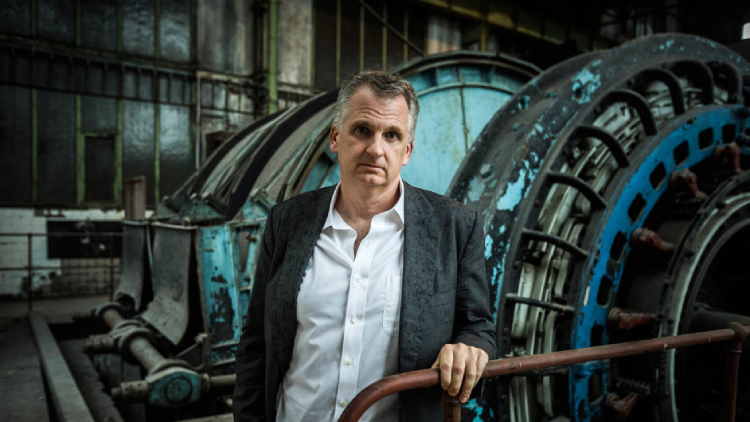
Who is Timothy Snyder and how much of an anti-Trump bias do his writings reflect?
Timothy Snyder in a recent 2,000+ word article in The New Yorker, “What does it mean that Donald Trump is a fascist,” introduces his anti-Trump screed with “Trump takes the tools of dictators and adapts them for the Internet. We should expect him to try to cling to power until death, and create a cult of January 6th martyrs.”
His concluding paragraphs:
When the historian Robert Paxton was asked about Trump and fascism a few weeks ago, he made an important point. Of course, Trump is a fascist, Paxton concluded. It was fine to compare him to Mussolini and Hitler, but there was a larger point. It took some luck for those two to come to power. “The Trump phenomenon looks like it has a much more solid social base,” Paxton said, “which neither Hitler nor Mussolini would have had.”
Fascism is a phenomenon, not a person. Just as Trump was always a presence, so is the movement he has created. It is not just a matter of the actual fascists in his movement, who are scarcely hiding, nor of his own friendly references to Hitler or his use of Hitlerian language (“vermin,” “enemy within”). He bears responsibility for what comes next, as do his allies and supporters.
Yet some, and probably more, of the blame rests with our actions and analysis. Again and again, our major institutions, from the media to the judiciary, have amplified Trump’s presence; again and again, we have failed to name the consequences. Fascism can be defeated, but not when we are on its side.
A rebuttal …
Timothy Snyder, the academic turned political doomsayer, graces us with another melodramatic dirge about Donald Trump’s alleged fascist tendencies. Let’s dissect this theatrical finale with the precision it so richly deserves.
Firstly, invoking Robert Paxton, a scholar whose name is synonymous with fascism studies, to make such a sweeping statement that Trump is not just any fascist but a fascist with a “more solid social base” than Hitler or Mussolini, is a stretch so grandiose it could span continents. Are we to believe that Paxton, in his twilight years, has lost his grip on nuanced historical analysis to make such a bold, yet baseless, comparison? Or is this Snyder’s creative interpretation, ripe with hyperbole to scare the bejesus out of his readers?
The notion that Trump has created a fascist movement so entrenched that it dwarfs the likes of historical figures whose rise involved the literal crushing of opposition, the control of media, and the orchestration of state terror, is not just an insult to history—it’s an insult to our intelligence. Trump’s rhetoric, while often bombastic and reprehensible at times, does not equate to the systemic dismantling of democratic institutions or the establishment of a totalitarian regime.
When Snyder talks about Trump’s “use of Hitlerian language,” one must ask, is he seriously suggesting that calling someone “vermin” is the equivalent of the Holocaust? This is not just a false equivalence; it’s a grotesque oversimplification of complex historical evils for the sake of political point-scoring.
And let’s address this cult of January 6th martyrs. If Trump were the master manipulator Snyder paints him to be, would he have been so inept in rallying his base effectively to hold power? The January 6th incident was indeed a dark day, but turning it into the cornerstone of a fascist mythology seems more like Snyder’s imaginative leap than reality.
Lastly, his critique of our institutions for amplifying Trump’s presence is rich, considering Snyder himself has made a career out of doing just that with his books and articles. The media, the judiciary, and yes, even academic historians like Snyder, have indeed played a role in the Trump saga, but not as unwitting facilitators of fascism. Instead, they’ve often been the chorus in this grand Greek tragedy, amplifying their own narratives for clicks, sales, and, dare I say, relevance.
To conclude, Snyder’s piece isn’t just a warning; it’s a performance, a high-stakes drama where he casts himself as Cassandra, forever warning of doom, while perhaps secretly hoping his prophecies come true to validate his own narrative. If fascism is indeed to be defeated, perhaps we should start by not indulging in hyperbolic comparisons that dilute the term’s meaning and historical gravity for the sake of political theater.
Who is Timothy Snyder?
Timothy Snyder is a professor of history at Yale University specializing in Eastern European history, particularly the Holocaust, totalitarianism, and the history of modern Europe. He is well-known for his books “Bloodlands: Europe Between Hitler and Stalin,” which examines the mass killings carried out by the Nazi and Soviet regimes in Eastern Europe between 1933 and 1945, and “On Tyranny: Twenty Lessons from the Twentieth Century,” a brief guide to resisting authoritarianism. His academic work has provided him with a platform to comment on contemporary political issues, especially since Donald Trump’s rise to prominence.
Anti-Trump Bias in Snyder’s Writings:
• Direct Critique: Snyder has been vocal in his criticism of Donald Trump, often drawing parallels between Trump’s actions and those of historical figures leading authoritarian regimes. His book “On Tyranny” was explicitly written in response to Trump’s election, offering historical lessons on how to resist tyranny.
• Focus on Authoritarianism: Snyder’s analysis frequently frames Trump’s presidency within the context of authoritarianism, fascism, or the erosion of democratic norms. He sees Trump’s tactics, like his relationship with the truth, his attack on institutions, and his consolidation of power, as hallmarks of a move toward tyranny.
• Public Commentary: Through various media platforms like interviews, op-eds, and social media posts, Snyder has consistently warned about the dangers he perceives in Trump’s political strategy and rhetoric. For instance, he has described Trump as a “fascist” in several contexts, linking his actions to historical precedents of fascist leadership.
• Historical Parallels: Snyder often uses historical analogies to critique Trump, suggesting that the United States under Trump was at risk of moving down a path similar to that of countries that have experienced fascist or authoritarian regimes.
• On X (formerly Twitter): Posts on X have highlighted Snyder’s predictions and analyses, like his warnings about potential violence post-election if Trump loses, indicating his ongoing engagement with Trump’s political impact.
Perspective on Bias:
• Critical View: Some critics might argue that Snyder’s focus on Trump’s authoritarian traits might oversimplify or overlook other political dynamics or the complexity of Trump’s administration, suggesting a bias towards viewing Trump through an anti-authoritarian lens.
• Defensive View: Supporters might counter that his criticisms are based on historical comparisons and are meant to alert citizens to potential democratic backsliding, thus not biased but a scholarly warning.
• General Observation: While Snyder does exhibit a critical stance towards Trump, his work is rooted in his academic study of totalitarianism and fascism, suggesting that his critiques are informed by his expertise rather than mere political bias.
In summary, Timothy Snyder’s scholarship on historical authoritarianism and democracy erosion seems to be leveraged to push an overtly anti-Trump narrative, potentially skewing his analysis with a clear political agenda. This approach might compromise the objectivity expected from scholarly work, as his critique of Trump often appears more like a political stance than an unbiased historical analysis.
Are there any Conservative critics who have challenged some of Snyder’s opinions?
Yes, some Conservative critics have challenged some of Timothy Snyder’s opinions, particularly in relation to his portrayal of contemporary political issues and historical interpretations:
Criticism of Equating Different Historical Regimes:
Some critics, like those from the World Socialist Web Site, have argued that Snyder’s approach in books like “Bloodlands” sometimes equates or conflates the actions of Nazi Germany with those of the Soviet Union under Stalin in a manner that they see as oversimplifying complex historical events. This critique suggests that his work might be used to imply a false equivalence between different forms of totalitarianism, which could be seen as dismissive of the unique nature of the Holocaust or Soviet repression.
Political Commentary and Bias:
Snyder’s more recent public commentary, especially in relation to Donald Trump and American politics, has been criticized for what some conservatives perceive as an anti-Trump bias. For instance, in the context of his book “On Tyranny,” some have accused him of alarmism or of drawing overly dramatic parallels between historical authoritarian regimes and contemporary American politics, which they argue might not hold up under strict historical scrutiny.
The 1776 Report and Critical Race Theory:
In his piece for The New York Times titled “The War on History Is a War on Democracy,” Snyder critiqued efforts like the 1776 Report and moved to limit the teaching of critical race theory in schools. Conservative critics have responded by arguing that there’s a significant difference between state-mandated memory laws in authoritarian regimes like Russia and the democratic debate over educational content in the U.S. They see his analogy as hyperbolic or misrepresentative of conservative educational initiatives.
Media and Public Intellectual Role:
Some have commented on Snyder’s shift from academic to public intellectual, suggesting that his more popular works and public statements might cater to a liberal audience’s fears, particularly in the Trump era, possibly at the expense of nuance or balance. His involvement in platforms like The Bulwark, known for its “Never Trump” stance, has led critics to view his work as part of a broader anti-Trump narrative.
General Political Critique:
There are mentions of criticisms regarding Snyder’s views on the role of Russia in American politics, where some conservatives might argue he overstates or simplifies Russia’s influence, particularly in relation to Trump’s presidency.
These critiques often come from the standpoint that Snyder’s work, while scholarly in nature, might sometimes prioritize a narrative that aligns with liberal or left-leaning political agendas, especially when discussing current events or when his historical analysis is applied to modern political contexts. Critics argue for a more balanced or different perspective on these issues, pointing out the complexities and nuances that might be lost in his broader, often alarmist, narratives.
Who are the principal Conservatives who have challenged Snyder’s works?
Several Conservative critics have challenged the works of Timothy Snyder, particularly focusing on his interpretation of history, his political commentary, and his views on contemporary issues. Here are some of the key figures or sources:
1. Mark Mazower – A historian known for his work on modern European history, Mazower has questioned Snyder’s approach, particularly in “Black Earth,” where he criticizes Snyder’s warning about future ecological catastrophe as neither convincing as history nor as an exhortation.
Mark Mazower is a distinguished historian with a robust academic background:
• Bachelor’s Degree: Mazower completed his BA in Classics and Philosophy from the University of Oxford in 1981.
• Master’s Degree: He obtained an MA in International Affairs from Johns Hopkins University in 1983.
• Doctorate: He earned his D.Phil. in Modern History from the University of Oxford in 1988.
Academic Career:
After his doctoral studies, Mazower has held various academic positions. He taught at Birkbeck, University of London, the University of Sussex, and Princeton University before joining Columbia University.
At Columbia University, he holds the position of Ira D. Wallach Professor of World Order Studies and is the Director of the Columbia Institute for Ideas and Imagination.
Research and Expertise:
His areas of interest include modern Greece, the Balkans, 20th-century Europe, and the history of international norms and institutions. His work often explores the interplay between history, politics, and international affairs.
Honors and Recognitions:
• Honorary Citizenship, Republic of Greece (2022)
• D. Litt., honoris causa, Catholic University of Leuven (2019)
• D. Litt., honoris causa, University of Athens (2015)
• Member of the American Academy of Arts and Sciences and Fellow of the British Academy.
His scholarly contributions have been recognized through various awards for his books, indicating his significant impact in the field of history.
From the Grok app research:
Mark Mazower, a respected historian at Columbia University, has engaged with Timothy Snyder’s works in several reviews and articles. One of the most critical reviews from Mazower regarding Snyder’s scholarship focuses on “Black Earth: The Holocaust as History and Warning.” In an article for the Financial Times, Mazower expresses skepticism about Snyder’s approach, particularly his warning about ecological catastrophe linked to fascism, stating that it “ends up convincing neither as history nor as exhortation.” This critique highlights a concern that Snyder’s attempt to draw parallels between historical events and contemporary issues might stretch historical analysis beyond its scholarly bounds, potentially undermining the historical integrity of the Holocaust for the sake of a modern political message.
Another notable critique involves Mazower’s commentary on the broader implications of Snyder’s historical interpretations, though not directly named, in discussions about historical scholarship and the approach to authoritarianism and totalitarianism. For instance, in his broader commentary on historical writing, Mazower has sometimes critiqued the trend towards viewing history through a lens that might oversimplify or dramatize for current political purposes, a critique that could implicitly apply to Snyder’s works like “On Tyranny” where such narratives are prominent. However, specific articles from Mazower directly attacking Snyder’s interpretations might be less common than general discussions where his work is critiqued in context with other historians’ methodologies or when discussing the ethics of historical analogy in political discourse.
These insights are drawn from various sources and commentaries where Mazower discusses historical scholarship, particularly when addressing the dangers of oversimplification or sensationalism in historical analysis for political ends.
2. Omer Bartov – A Holocaust historian, Bartov has critiqued Snyder’s approach for not bringing new evidence or arguments to the table, essentially dismissing “Bloodlands” for lacking originality in its synthesis of existing research.
Omer Bartov is a prominent historian with extensive academic credentials:
Education:
• He received his BA from Tel Aviv University.
• Bartov completed his D.Phil. at St. Antony’s College, University of Oxford.
Professorial Positions:
• He is the Samuel Pisar Professor of Holocaust and Genocide Studies at Brown University.
• Additionally, he holds the title of John P. Birkelund Distinguished Professor of European History and also serves as a Professor of History and Professor of German Studies at the same institution.
Research and Focus:
• His early research focused on the Nazi indoctrination of the Wehrmacht and the crimes committed during World War II, analyzed in books like “The Eastern Front, 1941-1945” and “Hitler’s Army.”
• He has explored the links between total war and genocide in works such as “Murder in Our Midst,” “Mirrors of Destruction,” and “Germany’s War and the Holocaust.”
Bartov’s interest in representation led him to study the depiction of Jews in cinema, examining the recycling of antisemitic stereotypes.
• His more recent work has shifted towards interethnic relations in the borderlands of Eastern Europe and the historical dynamics in regions like Galicia, including the Holocaust’s impact on local communities.
Awards and Fellowships:
He has been recognized with numerous awards and fellowships, including:
• A member of the American Academy of Arts and Sciences since 2005.
• John Simon Guggenheim Fellowship (2003-2004).
• National Jewish Book Award for his book “Anatomy of a Genocide.”
• Yad Vashem International Book Prize for Holocaust Research.
Publications:
Bartov has authored and edited multiple books, contributed to numerous journals, and written extensively on modern Germany, France, the Holocaust, Israel-Palestine, and representations of war, genocide, and Jews. His works have been translated into several languages.
His scholarly contributions have made him one of the world’s leading authorities on genocide, with a particular focus on the Holocaust, and his work often intersects with contemporary political discourse, especially regarding Israel-Palestine issues.
One of the most critical articles by Omer Bartov about Timothy Snyder’s work is:
“Bloodlands: Europe Between Hitler and Stalin” by Omer Bartov, published in Slavic Review, Vol. 70, Issue 2, Summer 2011. In this review, Bartov critiques Snyder’s book for not presenting new evidence or arguments, suggesting that the synthesis of existing scholarship, while admirable, does not lead to new insights or interpretations.
Another notable critique can be found in:
“How Not to Write the History of the Holocaust” from The Chronicle of Higher Education, published in March 2016. Here, Bartov discusses Snyder’s “Black Earth,” arguing that Snyder’s ambition in reinterpreting Holocaust history overshoots his reasoning. He questions some of Snyder’s interpretations and historical comparisons, particularly regarding the role of state structures in the Holocaust.
These reviews are significant because they come from Bartov, a prominent historian in Holocaust studies, providing a critical perspective on Snyder’s approach to historical synthesis and interpretation.
3. Marlene Laruelle – A scholar specializing in Russian nationalism, she has commented on Snyder’s characterization of Russia, suggesting that his portrayal might oversimplify or exaggerate certain aspects to fit a narrative critical of Russia’s actions.
Marlene Laruelle holds the following academic credentials:
• Ph.D. in History from the National Institute of Oriental Languages and Cultures (INALCO) in Paris, where her thesis focused on “Le mythe aryen en Russie au XIXe siècle. La création d’une cosmogonie nationale, entre science et idéologie.”
Habilitation in political science from Sciences Po (Paris), with her work centered on “Politiques et idéologies des nationalismes dans l’espace russe et postsoviétique.”
Her academic journey also includes:
• B.A. in Slavic Studies from INALCO, Paris.
• M.A. in Slavic Studies from INALCO, Paris.
These qualifications have been pivotal in her career, leading to her role as a Research Professor and Director at several programs at The George Washington University, including the Institute for European, Russian and Eurasian Studies (IERES), the Illiberalism Studies Program, and the Central Asia Program.
Marlene has written:
PONARS Eurasia Policy Memo: In her piece titled “Is Russia Really “Fascist”? A Reply to Timothy Snyder,” published on September 5, 2018, Laruelle critiques Snyder’s depiction of Russia as a fascist state. She argues against Snyder’s historical parallels between Putin’s Russia and Nazi Germany, suggesting that his analysis is overly simplistic and ideologically driven. She refutes the idea that Russia’s actions, like the annexation of Crimea, can be directly compared to historical fascist aggressions like the Anschluss. This article is notable for its direct engagement with Snyder’s arguments, particularly from his book “The Road to Unfreedom,” focusing on what she sees as distortions, inaccuracies, and selective interpretations in his portrayal of Russian politics.
“Is Russia Fascist? Unraveling Propaganda East and West”: While this is a book rather than an article, it contains extensive critique on Snyder’s views among others. In this work, Laruelle deconstructs the arguments made by scholars and public intellectuals, including Snyder, who label Russia as fascist. She addresses Snyder’s and others’ claims by questioning the validity of applying the term “fascist” to modern Russia, arguing that such labels are often politically motivated and do not hold up under scholarly scrutiny. Her analysis includes a critical look at how Snyder’s historical analogies might serve more as tools for character assassination than as objective analysis
4. The World Socialist Web Site (WSWS) – Although not exclusively conservative, WSWS has published extensive critiques of Snyder, accusing him of historical revisionism, particularly in relation to his book “Bloodlands.” They argue that Snyder’s work aligns with right-wing historical narratives, especially in equating Nazi and Soviet crimes in a way that might rehabilitate fascist ideologies.
Timothy Snyder’s Bloodlands: Right-wing propaganda disguised as historical scholarship
This is part one of a five-part review of Timothy Snyder’s book Bloodlands.
As this review will show, what Snyder presents in Bloodlands is not an “empirical” project. In fact, it cannot be called “history” in the actual sense of the term. Exploiting his prestige as a professor at Yale University, one of the most elite institutions in the world, Snyder presents an account of some of the most important historical experiences of the 20th century that is based on an amalgam of half-truths, lies, distortions and horror stories. Its central axis is the revival of the justification of fascism provided by Ernst Nolte, with modifications and additions that are derived primarily from the ideological arsenal of the Polish and Ukrainian far right.
5. City Journal – This publication, known for its conservative stance, has published pieces criticizing Snyder’s historical analogies and his comparison between Russian memory laws and American educational debates. They highlight what they perceive as Snyder’s oversimplifications and misrepresentations of historical and contemporary issues.
The following article reflects a conservative perspective, questioning the validity of Snyder’s historical analogies and his alarmist portrayal of current political figures and events in the context of historical fascism or authoritarianism.
City Journal, Lee Siegal: Blurring Distinctions
It was the advent of Donald Trump—mentioned no less than 100 times in Snyder’s latest book, The Road to Unfreedom: Russia, Europe, America—that catapulted Snyder from academic star to intellectual celebrity. Shortly after the 2016 election, he published On Tyranny: Twenty Lessons from the Twentieth Century, in which he warned Americans that Trump could launch a fascist revolution.
The book disturbed many historians, who believed that Snyder was trafficking in alarmism. But Snyder reaped a small fortune from his prophecy, despite the gathering authoritarian gloom, establishing himself as the liberal media’s resident credentialed doomsayer.
This distinguished Yale historian has become a kind of American apparatchik, validating and enforcing the elite media’s party line in such snappy articles as “How Hitler Pioneered ‘Fake News’” (New York Times), “Trump’s Big Election Lie Pushes America Toward Autocracy” (Boston Globe), and “Trump’s ‘Delay the Election’ Tweet Checks All Eight Rules for Propaganda” (Washington Post).
Snyder has become a one-man industry of panic, a prophet whose profitability depends on his prophecies never coming true. He could flourish only in a country so far removed from “totalitarianism”—a word he freely applies to America—as to seem historically blessed with eternal freedom.
6. The Imaginative Conservative – This blog has discussed Snyder’s “The Road to Unfreedom,” critiquing his understanding of American political history and his portrayal of Trump’s election as akin to authoritarian moves, suggesting Snyder’s narratives veer towards paranoia and conspiracy.
“The Road to Unfreedom” – The Imaginative Conservative: This review criticizes Snyder’s portrayal of U.S. political dynamics, particularly his comparison of American political figures and systems to Russian oligarchs and authoritarian practices. The critique suggests that Snyder’s historical analysis might be colored by his disappointment with the 2016 U.S. presidential election outcomes, portraying him as engaging in conspiracy and paranoia.
Source: The Road to Unfreedom ~ The Imaginative Conservative (theimaginativeconservative.org)
The Road to Unfreedom
By Benjamin Lockerd|October 10th, 2018
I have been asking my liberal and progressive friends for some time to recommend to me a book of political philosophy that argues for their ideas, but I have not gotten a single recommendation and was beginning to wonder whether all those intelligent and highly-educated people were reading anything more serious and thoughtful than the latest screed by Paul Krugman in the New York Times. Finally a colleague, an emeritus professor of history, recommended this book to me. I found it extremely interesting and informative.
Thus far, it is a valuable book by an expert in the field. However, Prof. Snyder has an immediate political goal in narrating this history. His clunky title, The Road to Unfreedom: Russia, Europe, America, should be The Russian Road to Trumpian Tyranny, for that is the true thesis of the book. It ends up being a slightly (ever so slightly) more sophisticated version of what one gets every day from one’s disgruntled leftist friends: Donald Trump colluded with the Russians and stole the election! He is destroying American democracy! Prof. Snyder’s method is argument by assertion (a logical fallacy) and guilt by association (another), with a heavy dose of unsubstantiated innuendo. It is tediously repetitious and tendentious. It is, finally, embarrassing.
In the end, Prof. Snyder writes about Russia not to warn us that we must take a strong stance against Russian interference but rather with the express purpose of proving that President Trump is nothing but a Putin puppet and would never have been elected without the interventions of the Russians. There is much to be concerned about in the connections of Paul Manafort, Michael Flynn, Carter Page, Jared Kushner, and other Trump associates with Russians. The malicious interventions of the Russians through fake Facebook sites are alarming indeed. But Prof. Snyder’s book does not settle the question of “collusion” and does not prove that Russia turned the election. By the way, how does one speak of Carter Page without mentioning the Steele dossier (a document containing many unsubstantiated claims concocted by a former British spy and paid for by the Clinton campaign, which was the primary evidence used by the FBI to obtain authorization to use wiretaps in investigating Page)?
These critics dissect Timothy Snyder’s work with a fine-tooth comb, zeroing in on several key points. Firstly, they challenge his approach to historical causality, suggesting that Snyder might oversimplify complex historical events by drawing overly direct lines between past and present, potentially missing the nuanced causes behind historical phenomena. Secondly, there’s contention over his conflation of different historical regimes; some argue that equating the actions of, say, Nazi Germany with Soviet totalitarianism, or drawing parallels between these and modern American politics, might serve more as rhetorical devices than as rigorous historical analysis. This is particularly scrutinized in his treatment of fascism and authoritarianism, where critics feel he might stretch historical analogies to fit current political narratives, thereby risking historical accuracy for political expediency.
Moreover, Snyder’s interpretation of contemporary political events comes under fire for what some perceive as a lack of neutrality. Critics argue that his analyses of modern political dynamics, especially concerning Donald Trump and the state of American democracy, are steeped in a clear anti-Trump bias. This bias, they contend, might cloud his judgment, leading to interpretations that serve more as political commentary than as scholarly insight. This critique extends beyond the academic realm, touching on political commentaries where his views are seen as part of a broader narrative that might not fully capture the complexity of contemporary political landscapes.
In essence, while Snyder’s work has undeniably contributed to our understanding of totalitarianism and the fragility of democratic institutions, his critics urge a more cautious engagement with his interpretations, especially when his historical scholarship ventures into the realm of modern political critique. They advocate for a balance where historical lessons inform but do not dictate or distort the analysis of current events, calling for a distinction between scholarly rigor and political activism in historical writing.
The so-called “Must Read” book…
Book Review: On Tyranny By Timothy Snyder (A Hard Pass)
The Verdict: So close, yet so far. Sadly, On Tyranny is hackneyed partisanism under the guise of a serious work, and not really worthwhile reading for non-partisans and anti-authoritarians who can look at recent events with some degree of objectivity.
Full Review: I really wanted to like On Tyranny, since the subject matter is so important, but the author makes the concept of tyranny almost laughable via his gross misjudgment of contemporary events, which undermines the entire work.Snyder is so close here if he is implying that oligarchy might be a real source of contemporary tyranny. But rather than go deep and explore the tendency of democracies to degenerate into oligarchies and what it means for us today in light of globalization, Snyder goes shallow and it becomes clear that this book was written in 2017 because the author, absurdly, believed that Trump was going to suspend elections in 2018. There are plenty of legitimate criticisms of Trump, but that he was the next Hitler waiting for the next Reichstag Fire to install himself as furher is not one of them.
This perspective on the suspension of democratic elections is even more patently ridiculous with hindsight, since there was never any suggestion that Trump would even suspend elections in 2020, when there was arguably an actual emergency in the form of Covid-19, let alone in 2018 when there was no ostensible emergency. And the author warns us that tyrants always use emergency powers to their benefit in order to consolidate their power! This is often true for real tyrants, but it is not true of Trump simply because he is not one, at least not when it comes to the laughable idea of him suspending elections
Moving on, we are also told that Trump was dangerous because he criticized the media. Need I say that criticizing the media is no indicator of tyranny. Corporations and institutions are never beyond reproach and they are also subject to the Iron Law of Oligarchy in the way that all complex organizations and democracies are. Moreover, derelict journalists are often an essential accessory to the authoritarian state. Many were executed right along with Nazi officers at the Nuremberg tribunal for example.
This assertion that criticizing the media is somehow a bad thing is likely predicated on the (mostly false) assumption that we still have a free press. Yet I (and many others) have been arguing for years that we in fact have a derelict, captured, corporate press beholden to various advertisers and special interests.
I have tried to make it clear in my writing that much of the corporate media have been derelict since long before Trump took office, and I think that this is clear to us anti-authritarians and nonpartisans who can look at current events with some degree of objectivity.
Overall, it is hard to take seriously a scholar who so grossly misjudged recent history and peppered a work on such an important topic with absurdity. On Tyranny is a hard pass.
Other reviews…
Here are several critical book reviews of Timothy Snyder’s “On Tyranny: Twenty Lessons from the Twentieth Century”:
The Guardian (2017-03-07):
Reviewer: Richard Evans
Critique: Evans acknowledges the urgency of Snyder’s work in defending democracy in the age of Trump but critiques it for lacking depth in historical illustration and for being somewhat hastily produced. He suggests that while Snyder provokes thought about resisting tyranny, the book could benefit from more detailed historical context and the inclusion of broader philosophical insights on combating authoritarianism.
The Berkshire Edge (2017-09-23):
Reviewer: Not explicitly named, but the review reflects a contrarian perspective.
Critique: The reviewer appreciates the intent behind “On Tyranny” but finds the academic approach less engaging, suggesting that it feels like a lecture. There’s a skepticism regarding Snyder’s view that Americans might not be as wise as Europeans in recognizing threats to democracy, arguing that Snyder might underestimate current American political engagement in resistance movements.
The New York Times (2017-04-19):
Reviewer: Daniel W. Drezner
Critique: Drezner describes “On Tyranny” as having “considerable heft” for its size but critiques it for veering towards hyperbole. He notes that while Snyder’s historical analogies to fascism and totalitarianism are compelling, his predictions about the fragility of American democracy might be exaggerated given the checks and balances still in place against Trump’s actions.
We Need to Talk About Books (2019-03-18):
Reviewer: An anonymous review but with critical insight.
Critique: While recognizing the book’s intent and value in offering prescriptions against tyranny, this review criticizes Snyder for potentially oversimplifying complex political phenomena for the sake of a compelling narrative. The reviewer also notes Snyder’s critical stance on social media and his defense of traditional media, suggesting a lack of balance in his analysis.
The Washington Post (2017-02-24):
Reviewer: Carlos Lozada
Critique: Lozada describes “On Tyranny” as a memorable work with clarity and urgency but also points out that it might be seen as overwrought, possibly due to its timing during the Trump administration. He appreciates Snyder’s lessons but questions whether the book’s alarmist tone could be self-defeating if the dire predictions do not materialize.
These reviews collectively highlight both the strengths of Snyder’s book in terms of its historical insights and its warnings against authoritarianism, but also critique it for potentially hyperbolic rhetoric, lack of depth in some analyses, and a perceived political bias, especially in linking contemporary American politics with historical tyrannies.
Thank you! I have read all of Snyder’s books except the last one.
When I read his books, I felt very conflicted. I wondered, “has he changed history to suit his opinion?” I could only find one book review that argued against his writing.
He perpetuates that Americans are stupid and that we must source opinions such as his own.
I stopped watching mainstream media years ago. I was suspicious of the continual progressive bias.
Why should I trust a scholar with such obvious bias?
Thank you for providing accessible information.